Snp

SNP still on track to wipeout Labour and Conservatives in May

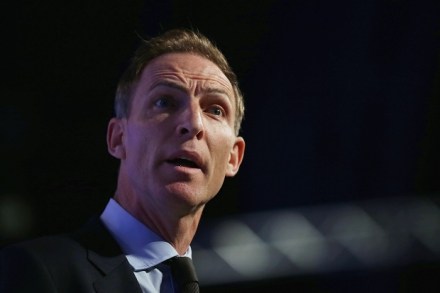
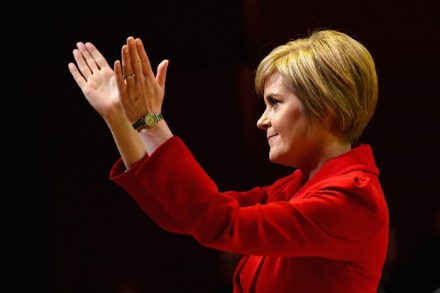
David Cameron is visiting Scotland today to set out his blueprint for Scottish home rule. Might he expect to see a lapse in the nationalist sentiment during his first visit since the referendum? No, according to a new poll from STV. The SNP remain on 52 per cent of the vote — exactly the same as in October. According to STV, this would give the SNP 55 seats in Westminster, while the Conservatives and Liberal Democrats would be left without any MPs north of the border. The Scots also appear pleased with the new SNP leadership: nearly 70 per cent stated they are satisfied with Nicola Sturgeon’s performance as First Minister. It’s clear that Jim Murphy has got one heck of a job on his hands.
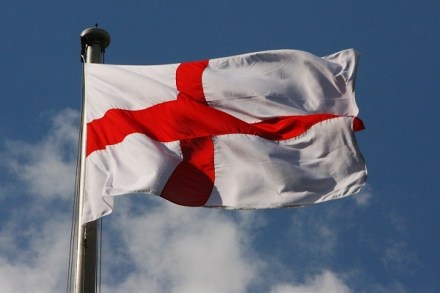
Tory MPs split over how far to push English votes for English laws

Tory backbenchers have just finished a long meeting about English Votes for English Laws. The 1922 Committee of Tory backbenchers have just spent the last hour and a bit debating the matter with William Hague in attendance. The question at issue was whether the Tories should bar all MPs other than English ones from voting on English-only issues. Or, whether they should limit their plans to only allowing English MPs to vote on English laws at committee stage and giving them a veto before third reading. The leadership is thought to favour the latter option and Malcolm Rifkind and Ken Clarke both spoke up for it. But there was considerable support for option one. Brian Binley argued that this was what Cameron had committed to the morning after the Scottish referendum.

Murphy’s mission

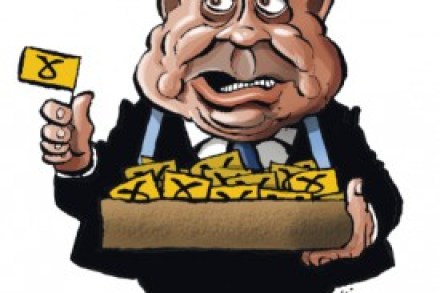
The proverbial visitor from Mars would assume that the Scottish Nationalists had won—not lost—September’s referendum. Alex Salmond has given another crowing interview today, you can read mine with him from The Spectator’s Christmas issue here, in which he offers advice to England on how to rediscover itself. While the crisis in Scottish Labour continues. In an interview with The Guardian, Labour’s new Scottish leader Jim Murphy drives home how big a challenge the party faces there, ‘We’re 20% behind. Just to get even we have to close the gap by 1% a week.’ Murphy is also remarkably frank about the quality of the leaders that preceded him.

Why Alex Salmond’s help could hinder Labour

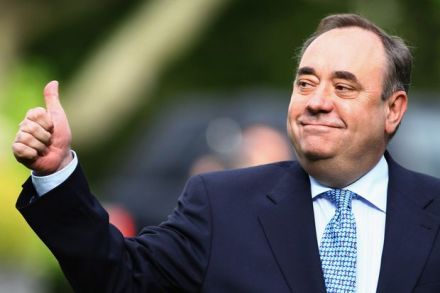
Anyone surprised by Alex Salmond’s comments in the Independent about SNP MPs possibly voting on English matters if it helped Labour is clearly missing out on the wealth of wisdom that comes from reading James Forsyth’s pieces, given our political editor’s interview with the former first minister revealed the very same thing last week: The SNP surge has delighted many Tories, because it could cost Labour as many as 30 seats. Given SNP MPs’ self-denying ordinance about voting on devolved matters (such as health, education and policing), the more seats they win, the easier it should be for Cameron to govern in a hung parliament. But Salmond has some bad news for the Prime Minister: not voting on devolved matters, he said, is ‘my choice.

The Union needs balance

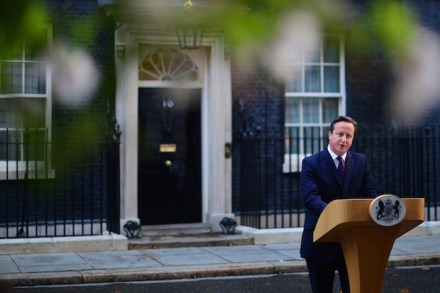
Today’s Guardian long-read on the Scottish referendum is a great piece of journalism. Both Alistair Darling and Danny Alexander argue in it that when David Cameron stepped out of Downing Street and announced his support for English votes for English laws he allowed the SNP to snatch victory from the jaws of defeat, to argue that Scottish voters had been hoodwinked.   Now, to be sure, Alex Salmond make much of Cameron’s announcement. In his Spectator interview he says that it showed that Cameron thinks Scots ‘heads zipped up the back’ and that he didn’t get the enormity of what had just happened.

Memo to the Scottish Catholic bishops: stop sucking up to the SNP

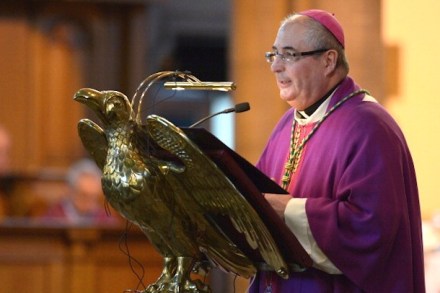
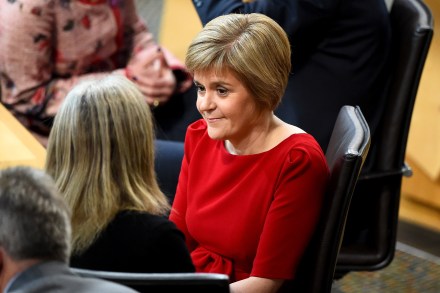
The Most Rev Philip Tartaglia, Catholic Archbishop of Glasgow, is at it again: There is a feeling around that we are in a special moment when we can shape a new Scotland. Our new First Minister, who is happily with us here this afternoon, has proposed a more consensual form of government, less partisan, less party-political, and less adversarial. I think everyone would welcome that … We are all equal in Scotland … all free to express our views and follow our consciences. The Archbishop was speaking earlier this month at an ecumenical service attended by Nicola Sturgeon. By all accounts she was pink with pleasure at his lavish tribute. But I doubt that she was surprised.

From coalition to chaos – get ready for the age of indecision

A recent email from Samantha Cameron started an intriguing debate in the Prime Minister’s social circle. It was an invitation to a Christmas party at Chequers and word quickly spread on the Notting Hill grapevine that the PM was convening an unusually large gathering of friends at his country retreat. So, the guests wondered: were they being asked around because the Camerons were having a last hurrah at Chequers, sensing that they would be evicted by the electorate? Or was the bash being thrown because they were in celebratory mood, convinced that the political tide has turned their way? This confusion is understandable. We might only be three months away from the start of the election campaign but only a fool would predict the result with much confidence.

Nicola Sturgeon’s plans for the Crown Estate — my response to the Scottish government

My article about Nicola Sturgeon’s plans for the Crown Estate caused some excitement within her administration. All untrue, they say. They have written a response (below). So what could have happened? It’s worth look at in some detail, as it gives an insight into how government works. The Crown Estate is in the news because Lord Smith’s Commission into extra powers for the Scottish Parliament recommended that Crown Estate assets in Scotland – and their profits – be handed over to the Scottish Parliament. And, in his report, Lord Smith added: 'Responsibility for financing the Sovereign Grant will need to reflect this revised settlement for the Crown Estate.

Nicola Sturgeon shows how she means to go on by picking a fight with the Queen

Downing Street, we are told, wants to 're-set' the relationship between Westminster and Holyrood after the referendum. UK ministers apparently want an atmosphere of 'co-operation; to exist between the two governments. Well, that’s great but it only seems to be going one way. Just take a look at what Nicola Sturgeon has decided to do over the funding over the Royal Family. Under the Smith Commission proposals, Scotland is going to get control over all Crown Estate assets north of the border. At the moment, the Crown Estates profits are used to fund the Royal Family. So, if the Crown Estate loses a chunk of its assets, it will lose a chunk of its profits and the Queen will lose out.

Who cares that Liz Lochhead has joined the SNP?

Is it acceptable for writers to sport their political allegiances publicly? In more sensible times you'd hardly need to consider the question since its answer would ordinarily be so bleedin' obvious. These, of course, are neither sensible nor ordinary times. So it is with the fauxtroversy over whether or not it is acceptable - or, worse, appropriate - for Liz Lochhead to have joined the SNP.  This is a real thing, it seems and yet another example of how politics corrupts most things it touches. Lochhead, you see, is not just a poet she is Scotland's Makar (or poet laureate) and therefore, god help us, it's all very different. For some reason.

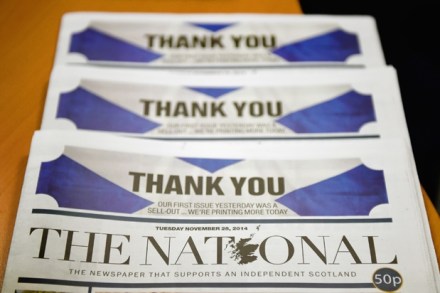
The National shows just how much danger the Union – and Scotland – is still in

Nearly 20 years ago, during one of the many impasses on the road to ‘peace’ in Northern Ireland, Gerry Adams reminded his opponents that the republican movement would set the terms of any agreement. The IRA reserved a power of veto. ‘They haven’t gone away, you know,’ he said. Scotland is not Ulster, of course, but the Scottish nationalists haven’t gone away either. Anyone who thinks the referendum settled this country’s constitutional future hasn’t been paying attention. The long war continues, albeit — and mercifully — in figurative terms. If anything, defeat has encouraged the nationalists to redouble their efforts. The SNP is the only political party in Scotland that can credibly claim to be a mass organisation.

PMQs: Ukip’s presence unnerves both the Tories and Labour

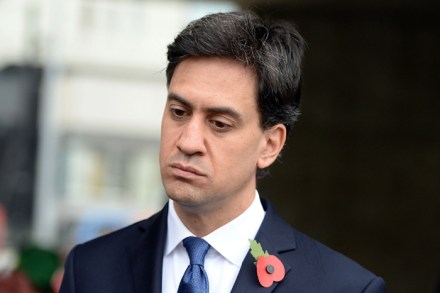
Ed Miliband is determined to talk about the NHS as much as possible at PMQs while David Cameron wants the economy to be Topic A. The result: Miliband asks about the NHS and Cameron replies by saying that you can’t have a strong NHS without a strong economy. At the moment, there is no sign of either side being able to break this PMQs stalemate. listen to ‘PMQs: Leaders battle over the NHS’ on audioBoom With the leaders stuck in a groove, the backbench questions are now where the action is. The SNP’s Pete Wishart previewed one of the SNP’s 2015 lines of attack, warning of a Ukip-UK as the main parties try and catch up with Nigel Farage. Cameron’s reply wasn’t bad though; he said that the SNP and Ukip were linked by their desire to divide people.

The saga of Ed Miliband and White Van Man reveals a politics based on grievance and cowardice

Say this for the current state of British politics: it keeps finding new lows. A while back I made the mistake of suggesting voters might already have priced-in Ed Miliband's shortcomings. The leader of Her Majesty's loyal opposition might be a doofus but we know that and, if not exactly tickled by the thought, can cope with it. Reader, I think I may have been mistaken about that. Recent events suggest Miliband's haplessness exists on a higher plane than anyone previously thought possible. One can only assume he secretly doesn't want to win the next election. This, at any rate, seems the only sensible verdict to reach based upon the evidence presented to the court. We have entered a new phase. A veritable Carnival of Dumb.

The politician who can fill a venue quicker than Kylie

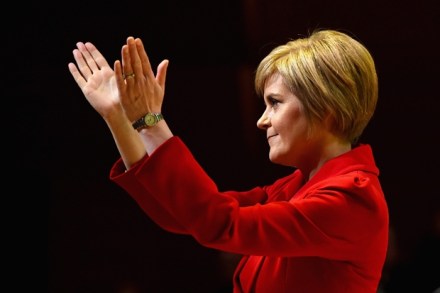
What’s the most significant political story of the week, Ukip winning Rochester or Emily Thornberry’s resignation? Well, I suspect, it might be neither of them and that the really big event this week happened north of the border, Nicola Sturgeon being sworn in as First Minister. For the new SNP leader is riding a quite remarkable wave of popularity. Right now, she’s addressing a rally at the Glasgow Hydro, a 12,000 seat venue that she sold out faster than Kylie Minogue—what other politician in Britain could hope to do that?   As I say in the column this week, what makes Sturgeon’s popularity all the more remarkable is that she is a career politician.

Farewell Alex Salmond, hello Nicola Sturgeon

And so the Age of Nicola dawns. Elected First Minister by the Scottish Parliament yesterday; sworn in this morning. Taking First Minister's Questions this afternoon. Alex Salmond's departure was a long drawn-out affair but it will not take Nicola Sturgeon anything like as long to leave her own distinct impression on Scottish politics. I am not sure why folk at Westminster thought the referendum defeat would plunge the SNP into crisis. That might have been the case if the result had been 65-35 but that, despite what some thought, was never, ever, a likely outcome. Senior SNP strategists knew winning might be difficult but they also reckoned that anything above 40 percent support for independence would be enough to change the dynamics of Scottish - and British - politics for good.

Meet the new Queen of Scots: Nicola Sturgeon’s unstoppable rise

[audioplayer src="http://traffic.libsyn.com/spectator/TheViewFrom22_20_Nov_2014_v4.mp3" title="James Forsyth and Alex Massie discuss Scotland's new First Minister" startat=730] Listen [/audioplayer]‘She sold out the Hydro arena faster than Kylie Minogue,’ said one awestruck unionist of Nicola Sturgeon this week. Scotland’s new first minister has come into office on a tide of support that many in Westminster find hard to imagine. Not only is she packing out concert venues, her party is also consistently scoring above 40 per cent in the polls. If she can keep this momentum going, she will rout Scottish Labour at the next general election. Defeat in the independence referendum has not halted the nationalists’ momentum — quite the opposite.

Scotland’s Neverendum begins and there’s nothing Unionists can do to stop it

Oh look, it's a Neverendum. Who could have predicted that the SNP (and the wider Yes movement) would treat defeat in the independence referendum as just a temporary set-back? Well, some people did. Here's a thing from April: 55-45 will now be reckoned a decent result [for Unionists] but it’s not an outcome that will settle the matter. Not even for a generation. Of course, during the campaign itself the Nationalists had to pretend that a No vote would put the question of independence to bed for a generation. They were kidding and anyone who chose to believe assurances that the SNP had no desire for a Neverendum is guilty of egregious gullibility. Because without independence what is the SNP for? What else binds its disparate parts together? What else settles all other arguments?

Alex Salmond’s School of Denial

Alex Salmond is on his way out. The First Minister gives every impression of enjoying - or at least making the most of - his farewell tour. And why not? Far from weakening the SNP, defeat in September's referendum has - at least for now - strengthened the party. Its supremacy is unchallenged and while recent polls putting the Nationalists on 50 percent of the vote are unlikely - surely! - to last forever this is the kind of problem worth having. Nevertheless, the First Minister's final days in office have also reminded us that policy and, indeed, philosophy are not necessarily Salmond's strengths. Unusually, First Minister's Questions proved a useful exercise this week. Both Jackie Baillie, Labour's temporary head at Holyrood, and Ruth Davidson pressed Salmond on education.

How Ed Miliband lost his winning hand

Ed Miliband’s internal critics used to complain that he had a 35 per cent strategy. They claimed that his unambitious plan was to eke out a technical victory by adding a chunk of left-wing Liberal Democrats to the 29 per cent of voters who stayed loyal to Labour in 2010. Those close to Miliband were infuriated by this attack, insisting that their election strategy was far more expansive. Today, however, 35 per cent would sound pretty good to Labour, now becalmed in the low thirties in the polls. Miliband might never have had a 35 per cent strategy. But he did have a strategic insight that makes Labour’s current predicament all the more striking: he was determined to keep the left united.

Ukip is a party for people who hate London. That’s why Labour should be scared

It is interesting that neither Scotland nor Wales have been much bitten by the Ukip bug. The supposedly sensible view is that both of these countries are more kindly disposed towards the European Union than are the English — and that Ukip’s contempt for the European Parliament and its politicians is seen as another example of that rather too familiar English jingoism and xenophobia, commodities which are not terribly popular either north of Berwick or west of Monmouth. It is also sometimes mentioned that immigration is far less of an issue in Wales and Scotland — unless we are talking about English immigration, which does indeed tend to make the Jocks and the Taffs reach for their tins of paraffin from time to time. Well, sure.