Snp

Scottish nationalism is hypersensitive and insular. So is the newspaper it has spawned

Last year Russia Today launched a poster campaign with a fanciful strapline: ‘This is what happens when there is no second opinion’. The extraordinary implication is that the conflict could have been avoided, if only we had listened to Putin. This is such an obvious fallacy that it’s hardly worth dwelling on. But RT (as it now likes to be known, as if people don't know what the 'R' stands for) is producing lightly disguised state propaganda. The viewers know it and so do the mercenaries that make it. In contrast, Scotland’s new pro-independence daily newspaper – ‘The National’– is written with earnest conviction. Its contributors are devout believers, and that’s what makes it so hilarious.

Tories ahead again in first post-Budget poll 

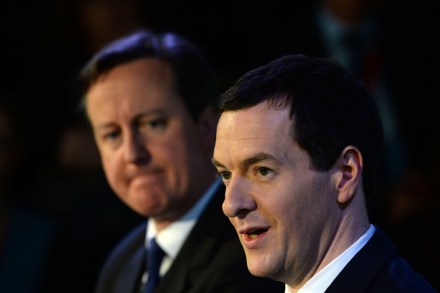
The Tories have pushed ahead of Labour again after George Osborne's successful Budget. In tonight's poll from YouGov/The Sun, the Conservatives are ahead by two points on 35 per cent while Labour are on 33 per cent. The Lib Dems have seen no shift, remaining steady on eight per cent, while Ukip is on 13 per cent and the Greens on six per cent. Budgets always tend to produce an immediate polling bounce for the incumbent party — assuming the Budget isn't badly received. The Tories, though, will be pleased that they are back in the lead after falling behind Labour in the past week. As with all the recent polls, it's worth noting that this lead, and the movements in this poll, remain within the margin of error.

Labour’s election chief in campaign struggle to hold onto his seat

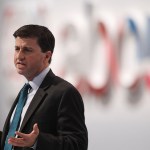
Douglas Alexander claimed this week that Facebook has made it difficult for politicians to campaign successfully. He said that Labour were struggling to win back voters in Scotland as a result of conspiracy theories being posted on social media. Perhaps Labour's campaign chief  was simply trying to make early excuses for his own performance in the upcoming election. Alexander is predicted to lose his Paisley and Renfrewshire South seat to a 20-year-old SNP candidate. In a bid to turn the tide, Alexander has been desperately tapping up friends for much-needed campaign cash. Mr S can reveal that the former lawyer has taken £28,000 since January.

The real threat to Britain (and it’s not the SNP)

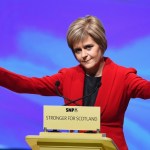
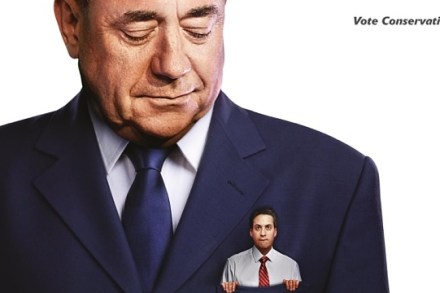
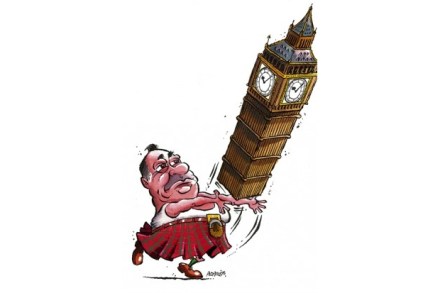
What a load of mendacious balls everybody talks about Scotland. It’s like a disease. It’s like, you know how they say Ebola probably started in some festering bat cave in Guinea? Well, the referendum campaign was that cave. We had secret oilfields and fantasies about the NHS and endless guff about austerity being done for evil Tory fun, and the VOW the VOW and, dear God, the relief when it ended. Only it didn’t end. Instead it spread. And it set the tone. People talk now, for example, about an SNP/Labour coalition. As though this would make sense, when they must know it wouldn’t at all. As though Ed Miliband would even fit in Alex Salmond’s pocket, and Salmond (or Nicola Sturgeon, but only Scottish people talk about her) would want him there.

Exclusive: Tories agree to TV debate offer

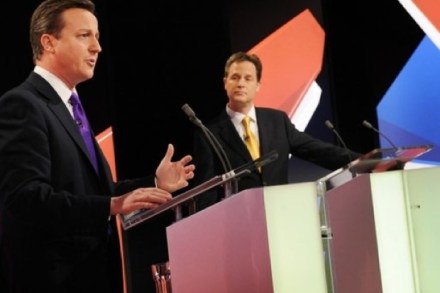
Downing Street has agreed to an offer from the broadcasters for one seven-way election debate on 2 April. The Tories felt that it was close enough to their final offer of one multi-party debate in the week starting 23 March to be acceptable. However, Labour has yet to agree. A Labour source said, ‘We’ve accepted the proposal from the broadcasters for three debates. There is no other proposal from the broadcasters.’ As well as this one seven-way debate, there would also be several election specials involving the various party leaders under this scheme. On 26 March, Cameron and Miliband would be interviewed by Jeremy Paxman and then questioned by a studio audience in a Sky / Channel 4 special.

Douglas Alexander: Facebook makes it more difficult for politicians to campaign

Labour is struggling to win back voters in Scotland because of social media conspiracy theories that are difficult to debunk, the party’s campaign chief said this morning. Speaking at a LabourList event, Douglas Alexander recounted a story about a voter who supported independence and bought into a conspiracy theories about the oil companies she read on Facebook. This echo chamber poses a great challenge for parties attempting to tell the truth, he said: ‘We’re used to a politics where we share facts but diverge on opinions. We are confronting — increasingly because of the rise of social media — a politics where people’s social media feeds can be an echo chamber for at the best of their opinion opinions and worst of their own prejudices.

Tories will continue Labour/SNP attacks, despite Miliband’s comments

Labour has decreed today it won’t go into a formal coalition with the SNP, but this won’t stop the Tories from attacking Ed Miliband over the possibility. Despite Miliband's proclamation that 'Labour will not go into coalition government with the SNP' and 'there will be no SNP ministers in any government I lead', a Tory source says 'we'll continue to campaign on this'. So expect more stunts and adverts highlighting the dangers of any union between Labour and the SNP.

Ed Miliband rules out a formal coalition with the SNP — but a deal could still be on the cards

Ed Miliband has today ruled out a formal coalition between Labour and the SNP. Labour hope that this will draw the sting from Tory claims that if you vote Labour, you’ll get SNP and put pressure on Cameron to rule out any deal with Ukip. But, as Nicola Sturgeon has been quick to point out, the SNP weren’t keen on a formal coalition. Rather, what has been talked about is something more akin to a confidence and supply deal with the SNP agreeing to vote for Miliband’s Queen Speech and Budget in return for specific concessions.  This is something that Miliband, for the obvious reason that he might need it in the event of a hung parliament, doesn’t want to rule out. So, expect the Tory attacks to keep on coming.

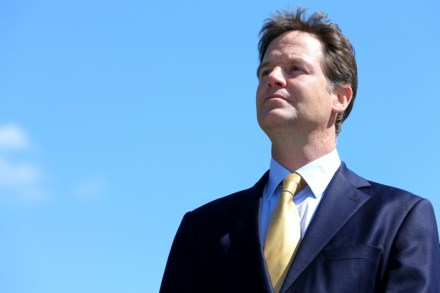
Nick Clegg: The Liberal Democrats are the continuity choice at the election

The Liberal Democrats sense an opportunity in all this speculation about who the Tories and Labour would do deals with in the event of a hung parliament. They believe that they can position themselves as the responsible party that will keep the country in the centre ground in contrast to the other smaller parties. Today, in his speech to the party’s spring conference, Clegg ruled out joining any coalition that involved the SNP or Ukip. He also tried to use the moment to reinforce voters’ worries about either main party governing on their own. He argued that the Tories would cut needlessly—‘Cows moo. Dogs bark. And Tories cut.

How George Osborne got the Liberal Democrats to agree to an ‘interesting Budget’

George Osborne and Ed Balls have just done their pre-Budget interviews with Andrew Marr. The show, though, was dominated by talks of post-election deals rather than the contents of the Budget. Ed Balls said that Labour had ‘no need, no plan, no desire’ to do any kind of deal with the SNP. But, as Andrew Marr kept pointing out to him, he wouldn’t rule it out. While when George Osborne was asked about any kind of arrangement with Ukip, he simply took the opportunity to repeat the claim that ‘voting for Nigel Farage makes Ed Miliband the likely Prime Minister’. It was a pity, though, that more time wasn’t spent on the Budget as I suspect it will be more substantive than expected. One Downing Street source described it to me as ‘interesting’.

A Vince intervention that will please the Tories

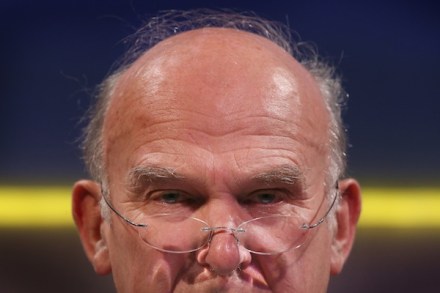
Later today, Vince Cable will launch his traditional conference attack on the Tories. He’ll denounce them for their positions on Europe and immigration. But his pre-conference interview in The Guardian will have, for once, delighted the Tories. For in it, Cable rules out a deal with the SNP. Now, this is a turn-around from Cable. Just last month, he said "We're perfectly happy to work with the SNP. There's no taboo on the SNP.

Labour edges towards firmer line on SNP coalition

If mainstream politicians are a bit confused and downbeat at the moment, Scottish Labour MPs are the most miserable of the lot, facing a savaging in constituencies they never thought would slip out of their party’s hands. But last night Ed Miliband gave them reason to be a bit less miserable, just for a little while anyway. On Free Speech, the Labour leader came much closer to ruling out a Labour-SNP coalition than he has before, saying ‘I am saying it’s nonsense. I absolutely am saying it’s nonsense. It’ not gonna… you know… you just said it’. He also pointed out that the SNP had ruled out a coalition with Labour. Of course, the real chances of a coalition were pretty low, given it would seriously damage both parties involved.

Ed speaks some human

When Ed Miliband ran for the Labour leadership in 2010, his supporters boasted that he spoke human. Tonight, in a question time session with a group of young people broadcast on BBC3, Miliband showed flashes of his ability to connect with an audience. But, overall, it was a patchy performance. Miliband was very good on some subjects and dealt neatly with some left-field questions. However, he still doesn’t have the right answer to the question of whether he would do a deal with the SNP after the election in the event of a hung parliament. He dismissed the ideas as ‘a piece of nonsense from the Tories’. But, in contrast to a grand coalition with the Tories, he didn’t actually rule it out. Predictably, Miliband got asked about drugs.

Why Scottish public schools are in a field of their own

In 1919 the literary critic G. Gregory Smith coined the term ‘Caledonian antisyzygy’, by which he meant the ‘zigzag of contradictions’ that so dominated the national literature that it might be reckoned a useful summation of the Scottish character itself. ‘Oxymoron,’ Smith observed, ‘was ever the bravest figure, and we must not forget that disorderly order is order after all.’ Perhaps so. Certainly, the Scottish public schools endure an often ambivalent, even awkward, relationship with their native land. The most prestigious are outposts of England in Scotland, custodians of an idea of Britishness that’s increasingly out of favour north of the border.

The latest economic statistics are a disaster for the SNP (not that it matters)

That, pictured above, is what the Scottish government wants you to remember about the latest GERS (Government Expenditure and Revenue Scotland) figures released today. It's not, at least according to these calculations, an untruth. Per capita revenues from Scotland are indeed higher than per capita revenues for the UK as a whole once - importantly - a geographical share of North Sea revenues are assigned to Scotland. Hurrah! Winning! Except, of course, these are Revenue and Expenditure figures. And the latter confirm that, once again, per capita spending in Scotland is significantly higher than in the UK as a whole. Some £1,200 per head higher. 1200 is a larger number than 400.

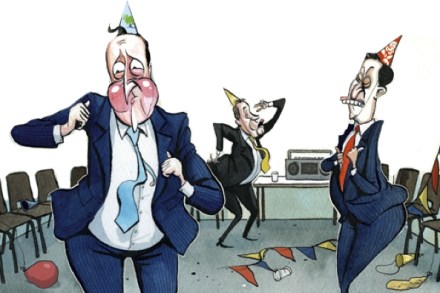
David Cameron wants to party like it’s 2011

This was a landmark week in this long election campaign. It was the first this year in which two pollsters (YouGov and Lord Ashcroft) each posted a Conservative lead outside of the margin of error. A 4 per cent lead for the blues may not sound like much – but it represents the largest Conservative lead on YouGov in more than three years. Indeed, of the 12 polls published so far this March, Labour have led in just 4 – compared to 27 leads out of 39 throughout February. It may be nothing. But I somehow suspect otherwise. If you said to me following the 2010 election that Ukip would have been on 15 per cent, the Liberal Democrats would have collapsed to single figures – and still, Labour would fail to have a poll lead – I wouldn't have believed you.

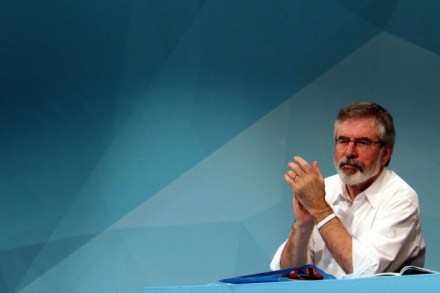
Sinn Féin has begun to think of itself as the ‘Irish Syriza’

Imagine a party that’s a cross between the SNP, Syriza and Ukip - one that is anti-establishment and combines the self-regard of the plucky outsider with an intermittent lead in the opinion polls. Imagine that and you’re getting close to the character of Sinn Féin, as manifest in its party conference this weekend. The last you may have heard of Sinn Féin was as a purely Northern Irish outfit, getting on just dandy with the DUP if intermittently embarrassed by reminders of its past during the Troubles. Well, think again. The party regularly outpolls the major party of government in the Republic, Fine Gael, and seems likely to do just fine in the election in Northern Ireland.

Miliband under pressure over SNP pact

Labour has found Sir John Major rather useful in this Parliament, with his criticisms of government policy and praise of Ed Miliband’s energy price freeze. But his op-ed in today’s Telegraph in which he demands that Ed Miliband rule out a coalition with the Scottish National Party is rather less helpful. What makes this call even more unhelpful is that many Scottish Labour MPs are desperate for Miliband to rule out a pact because of the damage that shacking up with the SNP would do for their brand in Scotland. They will also have emerged from a bloody battle in which many of their number will have lost seats to the SNP, and so the visceral hatred between the sides will hardly have abated.

Spectator letters: How to save the Union; who cares for Paolozzi’s murals

A disaster for unionists Sir: I share Alex Massie’s view that ‘this election is going to be a disaster’ for us unionists (‘Divided we fall’, 28 February). It is almost too painful to recall that it will mark the 60th anniversary of a great victory in May 1955 when the Tories, standing as Scottish Unionists, won more seats north of the border than their opponents and helped give Anthony Eden a secure majority. Under the baleful influence of George Osborne, who could not care less about the constitution, there seems little chance that the Tories will redeem themselves by proposing the one remaining policy that could save the Union: a new constitutional settlement for the UK based on the federal model.

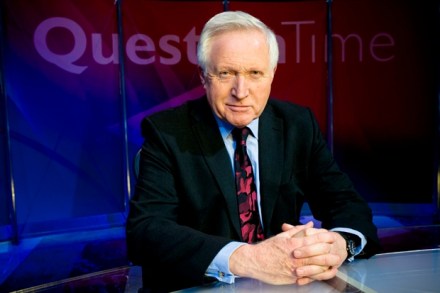
My plan for Question Time: mug up and fail anyway

I was invited on Question Time this week, which gave me a few sleepless nights. Natalie Bennett’s disastrous interview on LBC was a reminder that appearing on a current affairs programme in this febrile pre-election environment can be a bit of a minefield. Admittedly, I’m not the leader of a political party but that’s no guarantee I won’t make a fool of myself — a moment that will be preserved for ever on YouTube. There are no opportunities for glory on Question Time, but plenty for embarrassment. The most you can hope for is to get through the experience in one piece. By now you may well have seen what happened — but I am writing this on Tuesday evening, full of nerves. My biggest fear is that someone might ask a ‘funny’ question.