Snp

Portrait of the week:  Tony Blair intervenes, Peter Murrell pleads guilty and temperatures hit a May high

Home Sir Tony Blair, the former Labour prime minister, said in a 5,700-word essay: ‘The Labour party is playing with fire; or, more accurately, with its future, and that of the country.’ He said the party shouldn’t choose a new leader before deciding policy. In the first part of his government-commissioned report into economic inactivity by young people, Alan Milburn highlighted the 957,000 people aged between 16 and 24 who were not in work, training or education. Rachel Reeves, the Chancellor of the Exchequer, suspended import tariffs on chocolate and biscuits and gave away children’s tickets on buses during the month of August. She reduced VAT from 20 per cent to 5 per cent on children’s meals and zoo tickets from 25 June to 1 September.
‘Do you know the local MP?’ ‘Aye, she runs the sauna’: my Shetland dispatch

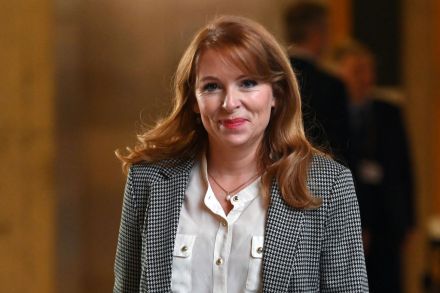
The Shetland Islands The SNP have had better weeks. It’s strange to think that it was only this month that the party won a staggering fifth term in office, despite independence being no closer, and a record of failure on everything from education to drug deaths. Perhaps the most remarkable result for the SNP leader John Swinney was the election of Hannah Mary Goodlad in the Shetland Islands. Since 1950, this was the first time these islands had voted for someone other than the Liberals or Lib Dems. Goodlad triumphed after a vigorous campaign featuring windswept social media videos and three visits from Swinney; before her election, she ran an outdoor sauna business.

When did Sturgeon first notice her husband’s kleptomania?

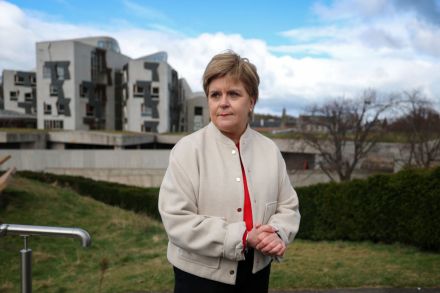
What would you say if your spouse bought a luxury campervan? I know what I would say – something along the lines of: ‘Get that thing away from me. I refuse to spend wet weekends campervanning around the Highlands, and I don’t care whether the bathroom facilities are “luxury” or not.’ In other words, any spouse of mine would get a tongue-lashing. But then I have a spiritual aversion to campervans, having spent many a childhood summer stuck behind them on single-track roads in the Highlands, watching their foul residents bespoil many of Scotland’s best beaches. We cannot know what Nicola Sturgeon’s reaction was to this luxury monstrosity. She would have us believe that when Peter Murrell took receipt of his top-of-the-range campervan she had nothing to say.

What did Nicola Sturgeon know?

12 min listen

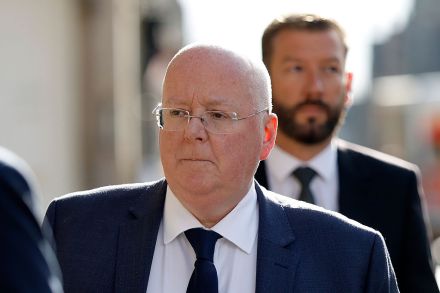
Peter Murrell, the SNP’s former chief executive and Nicola Sturgeon’s estranged husband, has admitted embezzling £400,000 in party funds. The guilty plea has revived questions about what senior figures in the SNP knew, how long the scandal had been going on, and what happens next. To discuss the story, including some of the ridiculous purchases including a couple of hairdryers (for a bald man) and £2600 salt and pepper shakers, James Heale and Michael Simmons join Megan McElroy.

Stephen Flynn on Reform, Sturgeon & a second referendum

26 min listen

The SNP’s Westminster leader Stephen Flynn, MP for Aberdeen South, joins Lucy Dunn for a special episode to assess the place of the SNP in British politics as we approach the end of 2025. The SNP were ‘decimated’ to just nine MPs at the 2024 general election – yet, if polls are to be believed, they are on course for another record win in the 2026 Holyrood elections. But can the SNP really frame this election as a ‘fresh start’? Flynn explains what he made of the ‘bleak fallout’ of 2024, why he is standing for election to Holyrood next year and what he makes of SNP heavyweights such as John Swinney and Nicola Sturgeon. Plus, could a push for a second independence referendum be on the cards soon? Produced by Patrick Gibbons and Oscar Edmondson.

Will Scotland switch course in 2026? with Gordon McKee

18 min listen

The Spectator heads into Christmas a little bit less Scottish as we bid farewell to our political correspondent Lucy Dunn. Before Lucy leaves for STV, she joins Coffee House Shots – with fellow Scots Michael Simmons and Labour MP Gordon McKee – for one final episode reflecting on the state of Scottish politics. They discuss whether the SNP has stabilised Scottish politics this year, make predictions for what could happen at the 2026 Holyrood elections and ponder whether the Scottish influence in Westminster has grown stronger under Starmer. Plus, from Reform to the SNP – how new is the threat of populism in Scotland? Produced by Patrick Gibbons.

Can the Lib Dems emulate Reform’s Scottish surge?

19 min listen

Jamie Greene, an MSP for the West of Scotland region, defected earlier this year from the Conservatives to the Liberal Democrats. Most defections in Scotland – indeed across the UK – seem to be from the Tories to Reform, so what is behind Jamie's motivations to go in a different direction? What are his reflections on the splintering of politics, particularly in Scotland, as we look ahead to next year's Holyrood elections? And does he agree that this is shaping up to be the most consequential Scottish Parliament election of modern times? In Jamie's view, Reform have shown to struggle with power in the areas they've been successful in, but admits that the Liberal Democrats could learn from Reform in some ways. Can the Lib Dems emulate Reform's Scottish surge?

Who is the real Nicola Sturgeon?

18 min listen

There has been a drip feed of stories over the past few days from Nicola Sturgeon's memoir Frankly which hits the shelves this week. In her book, the former First Minister of Scotland covers a slew of topics including SNP infighting and her relationship with the late Alex Salmond, her sexuality and the police probe into SNP finances, and the gender reform bill that contributed to her leaving frontline politics. Spectator writer and Scottish Daily Mail columnist Euan McColm and Isabel Hardman – who has reviewed the book for this week's Spectator – join Lucy Dunn to discuss. For Euan there is a humility in the prose that he just doesn't recognise in the Sturgeon of real life – is she trying to discover herself? Produced by Patrick Gibbons.

Could Reform’s Scottish surge provoke indyref2?

20 min listen

Scotland's First Minister John Swinney unveiled his strategy for pursuing a second independence referendum this week, arguing that an SNP majority at next year's Holyrood elections is the only way to guarantee it. This is seen as an attempt to put Scottish independence back on the table as well as combat the rising popularity of Reform. Pollster Mark Diffley of Diffley Partnership joins Lucy Dunn to unpack the SNP's independence strategy. Mark points out that while Reform are consistently outperforming expectations, their support still primarily comes from ex-Conservatives. This, plus the unpopularity of the current UK Labour government, could provide the SNP with an opening to exploit and shore up nationalist support.

Surprise Labour victory as Reform’s fallout continues

14 min listen

Scottish Labour have a new MSP today as Davy Russell won the Hamilton, Larkhall and Stonehouse by-election, taking the seat from the SNP. Labour won with 31.6% of the vote with the SNP second on 29.4%, Reform close behind on 26.1% and the Conservatives a distance fourth with just 6% of the vote; this marks rare good news for both Keir Starmer and Scottish Labour leader Anas Sarwar. Both SNP and Reform will be disappointed not to have won, but Reform have been quick to highlight how close they came, considering how new the party is. Plus, there are signs that Reform took votes away from the incumbent SNP, demonstrating again that Reform can appeal to voters across the political spectrum – what does this mean for next year’s Holyrood elections?

Ash Regan on the rise of Reform in Scotland, what is a woman and why ‘no-one resigns anymore’

21 min listen

In this special edition of Coffee House Shots, Lucy Dunn speaks to the Holyrood leader of the pro-independence Alba party, Ash Regan. Regan was formerly a member of the SNP and even ran to be the party’s leader after Nicola Sturgeon resigned in 2023. She defected to the late Alex Salmond’s Alba party 18 months ago and ran for party leader after his death. On the podcast, she talks to Lucy about the difference between Alba and the SNP, the threat of Reform in Scotland, the ‘performative’ nature of Scottish politics, the Supreme Court ruling over what is a woman, and why she was right to resign over the Gender Recognition Bill.

What will Nicola Sturgeon’s legacy be?

12 min listen

Nicola Sturgeon has announced her intention to step down at the next Scottish Parliament election in May 2026. One of the original MSPs elected to Holyrood in 1999, Sturgeon has dominated Scottish and UK politics over the past two decades. The Salmond-Sturgeon era began in 2004 and she went on to serve as First Minister for the best part of a decade. Stewart McDonald, former SNP MP for Glasgow South 2015-24, and Lucy Dunn join James Heale on this special Coffee House Scots to discuss Sturgeon's legacy. She brought Scotland the closest to independence for 300 years, yet resigned in 2023 under a cloud over party management. Attention turns to next year's election, could the SNP's winning streak continue without her? Produced by Patrick Gibbons and Natasha Feroze.

How the SNP wasted £110 million on PR and spin

No country in the UK receives more public money per head than Scotland. An extra £2,200 is spent on every person living there than in England – and £1,900 more than the UK average. Yet public services north of the border are falling apart. Take education. Scotland spends more per pupil than anywhere else – £1,848 per head compared with £1,543 in England. Yet standards have plummeted while those in England have improved. The latest Pisa rankings show Scottish pupils to be a year behind their English counterparts, despite a testing bias in favour of Scottish children. When it comes to economic affairs, some £2,228 per head is spent on growth initiatives, welfare and subsidy in Scotland, compared with £1,805 in England.

Starmer’s Scottish headache

11 min listen

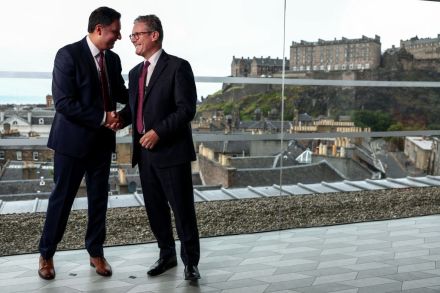
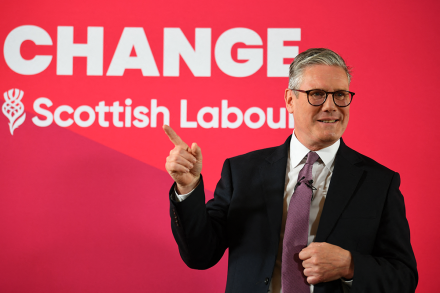
'What does a party get after nearly two decades in office, collapsing public services, an internal civil war and a £2 million police investigation? Re-election again - perhaps with an even bigger majority', writes James Heale in The Spectator this week. He's talking about the SNP, whose change in fortunes has less to do with their leader John Swinney and more to do with the collapse of support for Scottish Labour and their leader Anas Sarwar. Who could benefit from the increased fragmentation of voters in Scotland? Will demands for more time, money and attention cause even more issues for Rachel Reeves? As Scottish Labour meets for its conference in Glasgow this weekend, James and editor Michael Gove join Katy Balls to discuss the dynamics between Holyrood and Westminster.

Why the SNP can’t lose

What does a party get after nearly two decades in office, collapsing public services, an internal civil war and a £2 million police investigation? Re-election, again – perhaps with an even bigger majority. Last spring, under the hapless Humza Yousaf, the SNP’s grip on power in Scotland finally appeared to be loosening. But eight months on, the nationalists have managed a remarkable turnaround. The party now has a 15-point poll lead and it looks as though John Swinney will remain in Bute House at next year’s Holyrood elections. ‘The caretaker manager has got the job permanently,’ says one rival. The party’s change in fortunes owes less to Swinney’s skill as an operator and more to the spectacular collapse of Scottish Labour.

Sturgeon-Murrell split & Scotland’s Reform challenger

13 min listen

Former Scotland First Minister Nicola Sturgeon has announced she is separating from her husband Peter Murrell, former chief executive of the SNP. The announcement comes as the police probe into the SNP’s funds and finances remains ongoing, with Sturgeon and ex-SNP treasurer Colin Beattie under investigation while Murrell was charged with embezzlement in April 2024.  Katy Balls is joined by The Spectator’s editor Michael Gove, and data editor Michael Simmons, to discuss the separation, why the investigation is still ongoing four years later, and what chances Scottish Labour or Reform have against the SNP in 2025.

Are the SNP exploiting Labour woes?

13 min listen

The SNP presented their budget this week in Holyrood with the news that all pensioners would receive a winter fuel allowance and a pledge to scrap the two-child benefit cap. Questions remain about how they will make this budget work financially, but it is clear that they have one eye on the 2026 Scottish Parliament elections. How could this impact Labour north, and south, of the border? And, after a torrid year for the SNP, can First Minister John Swinney turn things around?  Iain MacWhirter and Lucy Dunn join James Heale to discuss.  Produced by Patrick Gibbons.

Salmond’s critics can’t ignore his lasting legacy

When he lost his Gordon seat in the 2017 general election, Alex Salmond told his count and those watching – friend and foe – that ‘you’ve not seen the last o’ my bonnet and me’. The line comes from Sir Walter Scott’s Bonnie Dundee, an ode to John Graham, the 1st Viscount Dundee, who led the 1689 Jacobite uprising to restore James VII and the House of Stuart. Quoting the lyric was pure Salmond. Not only was he fond of weaving poetry into his public statements – an art sadly lost to most political rhetoricians – it reflected his self-mythologising as a modern-day Scottish rebel against the British establishment. Salmond saw himself and his politics in romantic terms.

Alex Salmond was an unstoppable force of nature

It is hard to believe that I will no longer wake up on Monday mornings to the sound of Alex Salmond on the phone, either berating me for my latest offence against journalism or telling me what I should be saying about the most recent political scandal. The former SNP leader and First Minister of Scotland was of the old school: combative and relentless, always on the phone, never stopping, never at rest, a 24/7 politician. We always said he would never cease promoting the cause of Scottish independence while he still had breath in his body. He didn’t. Alex Salmond died in North Macedonia, shortly after giving a speech. He was the most astute, gifted, and energetic politician of his generation The Scottish political world is in genuine shock.

The Scottish Tories need a better election strategy

It is no surprise that the Scottish Conservative manifesto launch was centred on independence. While Scotland’s Tories talk about the SNP’s obsession with the subject, they are a little less happy to mention their own preoccupation with separatism. It’s rather more awkward for the Scottish Conservative and Unionist party to admit that, without independence on the table, their role in Scotland becomes a little less clear.