Catriona Stewart

Catriona Stewart is a freelance journalist, broadcaster and political commentator in Scotland and vice-chair of Women in Journalism Scotland. She is a former Herald columnist.

Swinney’s ‘anti-Reform’ summit didn’t achieve much

From our UK edition

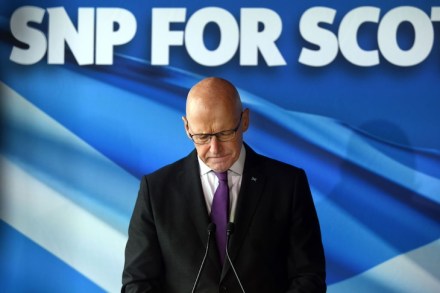
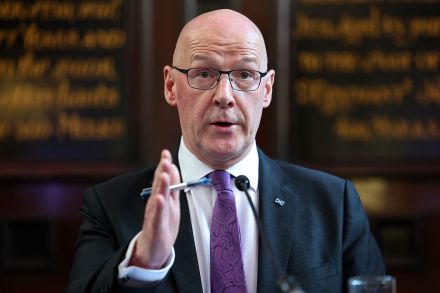
John Swinney’s cross-party civic gathering – or 'anti-Reform summit' – met in Glasgow on Wednesday, with political party leaders from across Holyrood prepared to discuss how to rid Scotland of the hard right. Yet what began as a 'Democratic Resilience Summit' rather backfired for those politicians keen to push back against Reform UK's surge in Scotland – as it turned into a chance for Nigel Farage's party to enjoy free publicity. Some 50 organisations from across civic society – including religious and third sector groups as well as every Holyrood party leader except Russell Findlay of the Tories – met in the centre of Glasgow to agonise over how to improve the lot of ordinary Scots.
What could the For Women Scotland judgment mean for women’s rights?

From our UK edition

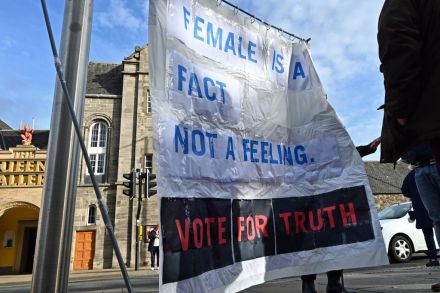
Following months of deliberation, the apex court in the United Kingdom is to rule on For Women Scotland vs The Scottish Ministers. The case has been brought by a grassroots group of gender-critical women backed by JK Rowling. It focuses on the legal constraints surrounding statutory guidance issued by the Scottish ministers on the Gender Representation on Public Boards (Scotland) Act 2018. Despite claims to the contrary, the Supreme Court will not on Wednesday decide an answer to the question ‘what is a woman?’ Rather, it is to rule on how ‘woman’ and ‘man’ are defined for the purposes of the law. This may seem a pedantic distinction but, in a climate where lack of clarity has caused mayhem, pedantry is to be welcomed.

Why won’t NHS Fife come clean about its trans tribunal costs?

From our UK edition

When Scotland’s Freedom of Information legislation was brought before the Scottish parliament 20 years ago, the serving deputy first minister Jim Wallace told MSPs that enhanced openness would lead to better scrutiny and, therefore, to ‘increased public confidence in decisions that are made which affect people’s lives’. The Freedom of Information (Scotland) Act has been, as Wallace foresaw, a useful tool for journalists and members of the public to reveal the inner workings of public bodies. One Scottish health board, however, is trying hard to dodge scrutiny. NHS Fife has found itself at the centre of a public storm as it fights an employment tribunal claim brought against it by nurse Sandie Peggie.

What’s behind Scottish Labour’s gender U-turn?

From our UK edition

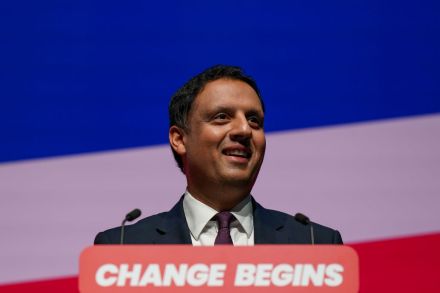
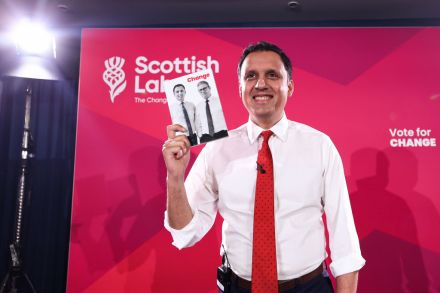
At long last, Scottish Labour has clearly and decisively set out its position on gender self-identification. Party leader Anas Sarwar and his deputy Jackie Baillie have now robustly stated the case that Scottish Labour supports single-sex spaces based on biological sex. Good, clear, precise messaging of the type entirely absent from the SNP leadership – and long overdue. Yet that clatter you hear is the sound of jaws dropping violently at the audacity. Shock at this astonishing volte face by Sarwar will be most keenly felt by two of his MSPs, Claire Baker and Carol Mochan, who were forced to resign their frontbench posts in the Scottish parliament when they declined to support the Gender Recognition Reform Bill.

The SNP budget was one big letdown

From our UK edition

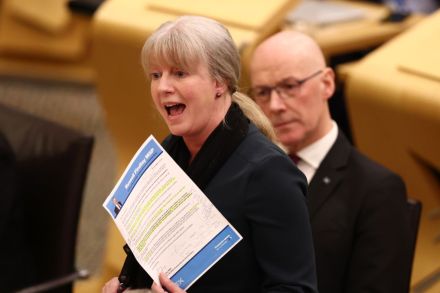
Shona Robison’s big fiscal announcement this week should have been the Scottish government’s plans to mitigate the deeply unpopular winter fuel payment cut imposed by UK Labour. The nationalists went early on revealing the scheme, however, doing so a week before the budget after being pushed by some smart manoeuvring from Scottish Labour.  Anas Sarwar, the party’s leader, had stated he would mitigate the winter fuel payment cut should he become First Minister in Holyrood’s 2026 elections. This position puts him in opposition to his Westminster boss, but Sarwar needs to demonstrate to Scottish voters he can use devolution to prioritise Scottish interests, no matter what Keir Starmer might be up to.

Why is Scotland still tying itself in knots over gender?

From our UK edition

Of all the self-inflicted harm to have felled politicians and undermined governments, was there ever a more curious case than that of self-ID and the SNP? In so bullishly battling the cause of Gender Recognition Reform (GRR), that would have allowed for trans-identifying people to self-declare their new gender, the SNP suffered the largest backbench rebellion of the Scottish parliament’s 25-year tenure, saw a minister defect to Alex Salmond’s Alba party, and lost two first ministers in rapid succession.       And after all such calamity, the SNP’s GRR Act was merely blocked by Westminster using a Section 35 order, a dead man’s switch designed to prevent Holyrood’s lawmakers passing incompetent bills that interfere in UK-wide legislation.

Will the Tories manage to hold on to rural Scotland?

From our UK edition

South of the border, a Labour majority is a foregone conclusion. Yet in Scotland, in almost all 57 seats, contests are predicted to be tight. ‘Knife-edge,’ is the phrase heard on repeat, most recently from First Minister John Swinney. While the Scottish central belt has drawn intense interest – given polls have consistently suggested there will be a Labour resurgence with even Glasgow looking to turn red – rural Scotland has received a little less attention. Sir Keir Starmer's party is less a player, with key battlegrounds here a race between the SNP and the Tories.

The Scottish Tories need a better election strategy

From our UK edition

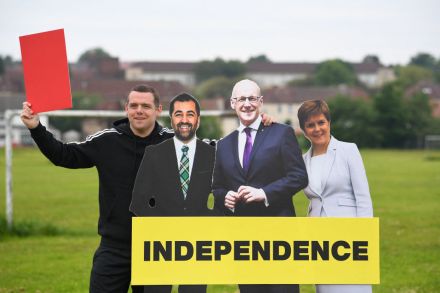
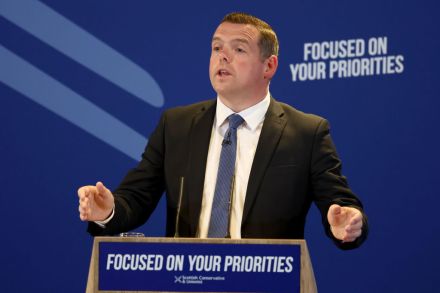
It is no surprise that the Scottish Conservative manifesto launch was centred on independence. While Scotland’s Tories talk about the SNP’s obsession with the subject, they are a little less happy to mention their own preoccupation with separatism. It’s rather more awkward for the Scottish Conservative and Unionist party to admit that, without independence on the table, their role in Scotland becomes a little less clear.

When will Labour get specific about its stance on gender reform?

From our UK edition

In a general election campaign that has oftentimes presented scenarios that feel like a fever dream, the surreal headlines keep coming. ‘Sir Keir Starmer agrees with Sir Tony Blair,’ we read this week, ‘that a man has a penis and a woman has a vagina’. Newspaper articles focused on two Labour leaders in simpatico and this is the outcome? ‘Tony’s right about that,’ Sir Keir said, in response to his colleague’s statement of fact: ‘He put it very well.’ That clattering noise is the sound of women’s eyebrows shooting from their heads to hit the ceiling; women who have said – and said repeatedly – this very thing, only to receive abuse. While the manifesto pledges may differ in substance, they have in common the fact they are both frustratingly vague.