Silicon valley

What do we mean when we talk about freedom?

When the Yale historian and bestselling author Timothy Snyder was 14, his parents took him to Costa Rica, a country lauded for its conservation of natural resources that is rated freer and happier than the United States. He recalls feeling liberated and unfettered as he hiked in cloud forests with his brothers, seeing monkeys, sloths and spectacular birds. One day, a local friend led the boys on a mysterious quest to view something special; after walking for three hours through a maze of paths, they arrived at a cascade hiding a cave, where they could gaze out at the green world through curtains of falling water.

Life among the world’s biggest risk-takers

The Italian actuary Bruno de Finetti, writing in 1931, was explicit: ‘Probability does not exist.’ Probability, it’s true, is simply the measure of an observer’s uncertainty; and in The Art of Uncertainty, the British statistician David Spiegelhalter explains how this extraordinary and much-derided science has evolved to the point where it is even able to say useful things about why matters have turned out the way they have, based purely on present evidence. Spiegelhalter was a member of the Statistical Expert Group of the 2018 UK Infected Blood Inquiry, and you know his book’s a winner the moment he tells you that between 650 and 3,320 people nationwide died from tainted transfusions.

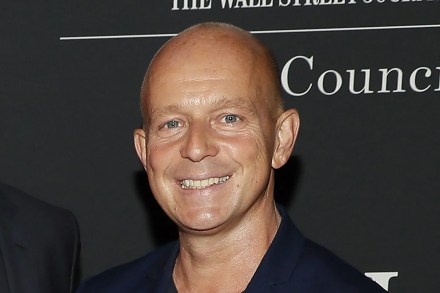
Steve Hilton wants to challenge Gavin Newsom for the chance to run California

From our US edition

This just in: Steve Hilton, former Fox News host and policy advisor to British PM David Cameron, wants to be the next media star to challenge California governor Newsom, Politico reports.   Newsom's mettle was previously tested by conservative radio host Larry Elder, who failed to get the governor out of office in 2021 during an unsuccessful recall effort. Elder received the most votes out of forty-six people running to replace Newsom, but since most voted against replacing the governor, that became irrelevant.   Not to mention California has not had a Republican in Sacramento since Arnold Schwarzenegger won a recall election against Democratic governor Gray Davis in 2003...   Hilton seemingly fled the UK to Atherton, California, in 2012 for his wife's job.

steve hilton

How Silicon Valley fell for Trump

From our US edition

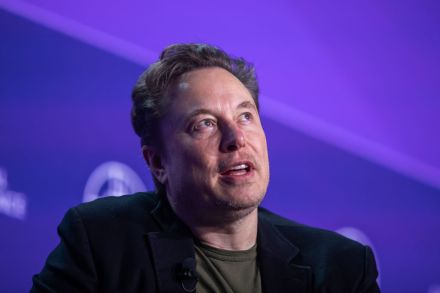
Just weeks after Joe Biden’s disastrous debate performance, the July 13 assassination attempt on Donald Trump radically shifted the election calculus yet again. Amid the intense, fast-moving news cycle, one event that would ordinarily have garnered wall-to-wall coverage went nearly unnoticed. “I fully endorse President Trump and hope for his rapid recovery,” Elon Musk posted to X on the day of the assassination attempt. In recent weeks, a legion of tech giants from the deep-blue stronghold of Silicon Valley have broken ranks and openly pledged support for the MAGA leader. With each new backer comes a slew of mega-donations to his campaign.

trump
elon musk

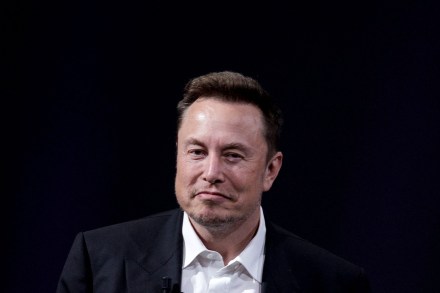
Elon is offering us a raw deal with X

From our US edition

Elon Musk, the owner of X — once known as Twitter, may she rest in peace — is making Americans an offer that they must refuse. When he purchased the social media platform last year for a whopping $44 billion, he led us to believe he was doing it in order to save free speech, an ideal in regard to which he said was an absolutist. Today, what he is actually offering instead is a censorship regime slightly more friendly to the right than his predecessor. It’s a recipe for disaster. Back during the bad old Twitter days of Jack Dorsey, most of us had a fairly consistent idea of how the site should moderate its content.

Market apocalypse? No, a welcome correction

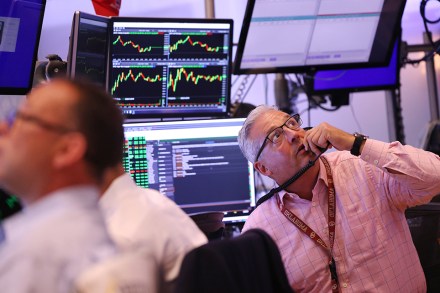
A bout of global stock-market turmoil and an outbreak of UK street violence as adjacent news items gave an apocalyptic feel to the start of the week. But as rioting continued, markets appeared to steady, led by Tokyo with a 10 per cent Tuesday rebound. We know the ugly sentiments that animate the thugs – but do we understand the sudden nerviness of investors? Once media clamour about 1,000-point falls subsided, two strands emerged, both American. First, fear – driven by bad employment figures – that the US economy is weaker than previously thought, fuelling a conviction that the Federal Reserve should have cut interest rates at its late-July meeting rather than waiting for the next in mid-September.

Olympics on steroids: the millionaire behind the Enhanced Games

Aron D’Souza likes to celebrate the new year with Peter Thiel, the venture capitalist billionaire who is good friends with Donald Trump and J.D. Vance. ‘Before Peter had kids, we’d go on these holidays around the world. Small group of us. Gay, tech, venture capital, founder-types,’ says D’Souza, an Australian businessman. ‘It’s quite a close-knit little community.’ Lately, because of the kids, they’ve partied at Thiel’s place, an $18 million compound on a man-made island off Miami’s turquoise coast. In December 2022, days before Thiel’s annual party, D’Souza came up with the idea of an ‘Enhanced Games’. The Olympics – but all the athletes dope. ‘That’s what I do over Christmas, when no one else is working,’ D’Souza says.

Elon Musk boards the Trump train out of California

From our US edition

Elon Musk is parting from his home state, publicly endorsing Trump minutes after the former president was almost assassinated at his rally in Pennsylvania. Musk also announced he will be donating $45 million to a pro-Trump political action committee and that he will be moving the headquarters of SpaceX and X from California to Austin, Texas.  He is among many other Silicon Valley billionaires who are announcing their support for Trump following the attack, including Bill Ackman, the Pershing Square Capital Management CEO. Musk cited California governor Gavin Newsom’s new law that bars school districts from requiring staff to notify parents of their child’s gender identification change as the “final straw,” as the law was “attacking both families and companies.

elon musk

Apple downplays the value of human achievement

From our US edition

In January 1984, Blade Runner and Alien director Ridley Scott shot an Apple computer Super Bowl commercial mocking Orwell’s Nineteen Eighty-Four — and it changed the television advertising landscape forever. It featured a woman in a white tank top and bright red shorts destroying a monochrome screen with a sledgehammer. This week, Apple CEO Tim Cook promoted a new ad titled “Crush” that gave the exact opposite message and led to a furious backlash on social media. The ad begins with lights coming on in a factory setting with cultural items and artifacts stacked on top of each other, all gathered on a giant industrial press. Then the press begins to lower as a Sonny and Cher song plays.

TikTok bill makes strange bedfellows

From our US edition

Congress struck a major blow against TikTok's Chinese ownership Thursday morning, by passing the Protecting Americans from Foreign Adversary Controlled Applications Act, which would require parent company ByteDance to sell its US entity within six months in order to retain access to American app stores and web hosting services. The bill, passed by a 352-65 margin, now heads to the Senate. It offered a rare time that former president Donald Trump found himself allied with progressive members of the Squad in opposition, while Representatives Mike Johnson and Hakeem Jeffries joined forces in voting for the bill, which would help combat the espionage concerns that intelligence officials in the Biden administration have repeatedly raised.

tiktok

The digital habit

From our US edition

In an era that claims to value the authentic, the direct and the natural, the word "processed" has negative connotations, as in “processed” food. Nevertheless, it describes exactly how perhaps nine-tenths of the human race — including, I imagine, the lost Indian tribes of the Amazonian wilderness — experience reality these days, which is to say processed through electronic media, social media and the oxymoronic smartphone.

digital

A history of intellect

From our US edition

It has it been widely noted that, as Western culture generally has grown steadily more materialistic in its values and interests (as if it were ever anything else, ungenerous critics might suggest) over the past half-century, it has become simultaneously more abstracted in its mental habits and orientation? Chesterton described a paradox as truth standing on its head to draw attention to itself. In this instance, we have an obvious example. But it’s a good question how this particular one came to be. Ancient Greece was an intensely intellectual world of ideas that were firmly grounded in empirical reality and in observed and confirmable truth.

intellect

The last battle: The Future, by Naomi Alderman, reviewed

The sirens sound in the street. The lockdown order comes. The images on the television are of chaos and illness, total societal collapse. The apocalypse is here, and where are the rich? Already holed up in their survival compounds, ready to ride out the end of the world before emerging to take control of what’s left of it for themselves. Billionaire preppers and their plans for Bond-villain bunkers have now pervaded the public imagination to the extent that this year we have two novels dealing with the phenomenon. First there was Eleanor Catton’s Birnam Wood, which took inspiration from Peter Thiel’s efforts to build a bunker in New Zealand.

The rise of vampirism in Silicon Valley

The Immortals, which begins on Radio 4 this week, is not for the faint-hearted. While it professes to be about the human quest for longevity and the elusive ‘cure’ for getting older, it focuses largely upon the transferral of blood plasma from healthy young people to reluctantly ageing people, or, as anyone with good sense might put it, the desperate descent from vanity to vampirism. I was on the verge of switching over to something more anodyne when a 46-year-old tech entrepreneur began talking about being injected with plasma from his 17-year-old son.

Violence in Silicon Valley: The Wolf Hunt, by Ayelet Gundar-Goshen, reviewed

‘I believe it’s the writer’s job to force the reader to look where they usually avoid looking,’ Ayelet Gundar-Goshen has said. The Wolf Hunt, her fourth novel translated from the Hebrew by Sondra Silverston, shines a light on racial tensions in America. Israeli-born Lilach and Mikhael Shuster live in Silicon Valley with their 16-year-old son Adam. Like many men in the community, Mikhael works in tech, although rather than developing apps his company makes weapons. Having given up an academic career to follow her husband, Lilach works as a cultural coordinator at a retirement home. ‘Most of the women here coordinated something,’ she observes wryly.

The new corporatism that’s killing capitalism

From our US edition

Over the years since the financial crisis, economic power and wealth has become ever more concentrated in fewer hands. This is something leaders have acknowledged, and policymakers have tried to do something about. And yet, despite brave talk of breaking up mega-giant companies, anti-trust efforts have been anemic, as most recently demonstrated by the failure to stop Microsoft from swallowing game maker Activision. The future looked a little brighter in the immediate aftermath of the pandemic. There were signs of a grassroots resurgence, with a strong uptick in new business formations in the United States. But since then, as interest rates have risen and regulatory pressures have increased, there has been a slackening off of new firms.

the new corporatism

The end of the Silicon Valley dream

It is difficult, given what Silicon Valley has become, to convey exactly what it was like in the 1970s and ‘80s. It was a remarkable centre of technology, but also the embodiment of the spirit of capitalism at its very best, as epitomised by garage start-ups like Apple. Greed, of course, is always a human motivation, but the early Valley culture was created by entrepreneurial outsiders who genuinely wanted to make the world better. In the early days of the tech revolution, some watchers imagined an almost utopian, communitarian society on the horizon.

The villains of Silicon Valley

Historians joke that some parts of the world – Crete and the Balkans, for instance– produce more history than they can consume locally. The California town of Palo Alto produces more economics than it can consume, and therefore more politics, and therefore more culture. But this comes at a price. Malcolm Harris, a thirtysomething Marxist writer who grew up there, begins his book by citing the alarming rate at which his high-school classmates committed suicide, and argues that Palo Alto is haunted by the historical crimes on which it is built. He then itemises them across two centuries of history, tracing their influence from Stanford University and Silicon Valley out across the world.

How Elon Musk turned Twitter into the post-TV Fox News

From our US edition

Elon Musk has decided it's too much work for him to be the chief executive of Twitter, a fraying social network, in addition to running Tesla and SpaceX and a potpourri of other startups. He recently named Linda Yaccarino, an NBC ad executive, as the new CEO so that she could focus on business operations and he could focus on product design and new technologies. As an employee of Musk's, Yaccarino has an impossible mission — to stem the bleeding, appease the advertisers, and, of course, keep her new boss happy. Good luck to her, I say, for Twitter's current fortunes are going in only one direction — south. When Musk acquired Twitter, he paid $44 billion for a company that no one else wanted nearly as much. Since then, its value has fallen to almost $20 billion.

Make tech great again

From our US edition

Mark Zuckerberg has dubbed 2023 Meta’s “year of efficiency.” The slogan is a corporate euphemism for layoffs, of course — and not an especially subtle one. Zuckerberg’s company has parted ways with tens of thousands of employees this year. Other tech firms are following suit. Crunchbase estimates that US tech firms fired more than 118,000 employees in the first quarter of 2023. These are lean times in Silicon Valley — and, as Joel Kotkin explains in this month’s cover story, there is more to this tale than Big Tech belt-tightening after a pandemic-era hiring spree. The Valley, Kotkin explains, is in trouble. A place that America, and the world, once looked to for an ambitious and optimistic vision of the future, has grown sclerotic.

tech