Silicon valley

Accelerating the ‘kill chain’ – a terrifying glimpse of future warfare

America possesses the most powerful military in history, but since 1945 it has not won a war against anyone other than Saddam Hussein. It appears not to understand why. In fact the only thing the US seems worse at than winning wars is learning lessons from its defeats. People such as the secretary of war Pete Hegseth think it’s all about woke. Lily-livered longhairs stateside stabbed the army in the back over Vietnam; then ‘stupid rules of engagement’ tied the military’s hands in Iraq and Afghanistan and caused the disasters there. The solution is to fight harder, if necessary even at the expense of ethics and the law. Another answer might be to get US forces fighting smarter.

Have the culture wars gone spiritual?

23 min listen

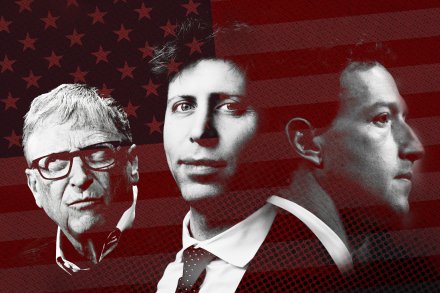
Why are Silicon Valley billionaires obsessing over Heaven & Hell, and what does it tell us about American society today? Spectator World's Arts Editor Luke Lyman joins Damian Thompson on this episode of Holy Smoke to talk about how a fascination with the Book of Revelation, the Antichrist and a techno-utopia – or techno-apocalypse – has gripped the 'tech bros'. Produced by Patrick Gibbons.

Even now, Nick Clegg offers too little too late

Earlier this year a former staffer of what was then Facebook, now Meta, wrote a gossipy tell-all memoir about her time in the office there. It was a huge hit – especially after the company’s chief global affairs officer Joel Kaplan secured a ruling to prevent its promotion. Careless People, by Sarah Wynn-Williams, proved that there was a considerable appetite for anything that describes what it’s like to work for big tech. All of which boded well for Nick Clegg, who was Kaplan’s predecessor as the public face of Meta to governments across the world – until his departure was unceremoniously announced a few days before Donald Trump’s return to the White House.

What do we mean when we talk about freedom?

When the Yale historian and bestselling author Timothy Snyder was 14, his parents took him to Costa Rica, a country lauded for its conservation of natural resources that is rated freer and happier than the United States. He recalls feeling liberated and unfettered as he hiked in cloud forests with his brothers, seeing monkeys, sloths and spectacular birds. One day, a local friend led the boys on a mysterious quest to view something special; after walking for three hours through a maze of paths, they arrived at a cascade hiding a cave, where they could gaze out at the green world through curtains of falling water.

Life among the world’s biggest risk-takers

The Italian actuary Bruno de Finetti, writing in 1931, was explicit: ‘Probability does not exist.’ Probability, it’s true, is simply the measure of an observer’s uncertainty; and in The Art of Uncertainty, the British statistician David Spiegelhalter explains how this extraordinary and much-derided science has evolved to the point where it is even able to say useful things about why matters have turned out the way they have, based purely on present evidence. Spiegelhalter was a member of the Statistical Expert Group of the 2018 UK Infected Blood Inquiry, and you know his book’s a winner the moment he tells you that between 650 and 3,320 people nationwide died from tainted transfusions.

Market apocalypse? No, a welcome correction

A bout of global stock-market turmoil and an outbreak of UK street violence as adjacent news items gave an apocalyptic feel to the start of the week. But as rioting continued, markets appeared to steady, led by Tokyo with a 10 per cent Tuesday rebound. We know the ugly sentiments that animate the thugs – but do we understand the sudden nerviness of investors? Once media clamour about 1,000-point falls subsided, two strands emerged, both American. First, fear – driven by bad employment figures – that the US economy is weaker than previously thought, fuelling a conviction that the Federal Reserve should have cut interest rates at its late-July meeting rather than waiting for the next in mid-September.

Olympics on steroids: the millionaire behind the Enhanced Games

Aron D’Souza likes to celebrate the new year with Peter Thiel, the venture capitalist billionaire who is good friends with Donald Trump and J.D. Vance. ‘Before Peter had kids, we’d go on these holidays around the world. Small group of us. Gay, tech, venture capital, founder-types,’ says D’Souza, an Australian businessman. ‘It’s quite a close-knit little community.’ Lately, because of the kids, they’ve partied at Thiel’s place, an $18 million compound on a man-made island off Miami’s turquoise coast. In December 2022, days before Thiel’s annual party, D’Souza came up with the idea of an ‘Enhanced Games’. The Olympics – but all the athletes dope. ‘That’s what I do over Christmas, when no one else is working,’ D’Souza says.

The last battle: The Future, by Naomi Alderman, reviewed

The sirens sound in the street. The lockdown order comes. The images on the television are of chaos and illness, total societal collapse. The apocalypse is here, and where are the rich? Already holed up in their survival compounds, ready to ride out the end of the world before emerging to take control of what’s left of it for themselves. Billionaire preppers and their plans for Bond-villain bunkers have now pervaded the public imagination to the extent that this year we have two novels dealing with the phenomenon. First there was Eleanor Catton’s Birnam Wood, which took inspiration from Peter Thiel’s efforts to build a bunker in New Zealand.

The rise of vampirism in Silicon Valley

The Immortals, which begins on Radio 4 this week, is not for the faint-hearted. While it professes to be about the human quest for longevity and the elusive ‘cure’ for getting older, it focuses largely upon the transferral of blood plasma from healthy young people to reluctantly ageing people, or, as anyone with good sense might put it, the desperate descent from vanity to vampirism. I was on the verge of switching over to something more anodyne when a 46-year-old tech entrepreneur began talking about being injected with plasma from his 17-year-old son.

Violence in Silicon Valley: The Wolf Hunt, by Ayelet Gundar-Goshen, reviewed

‘I believe it’s the writer’s job to force the reader to look where they usually avoid looking,’ Ayelet Gundar-Goshen has said. The Wolf Hunt, her fourth novel translated from the Hebrew by Sondra Silverston, shines a light on racial tensions in America. Israeli-born Lilach and Mikhael Shuster live in Silicon Valley with their 16-year-old son Adam. Like many men in the community, Mikhael works in tech, although rather than developing apps his company makes weapons. Having given up an academic career to follow her husband, Lilach works as a cultural coordinator at a retirement home. ‘Most of the women here coordinated something,’ she observes wryly.

The end of the Silicon Valley dream

It is difficult, given what Silicon Valley has become, to convey exactly what it was like in the 1970s and ‘80s. It was a remarkable centre of technology, but also the embodiment of the spirit of capitalism at its very best, as epitomised by garage start-ups like Apple. Greed, of course, is always a human motivation, but the early Valley culture was created by entrepreneurial outsiders who genuinely wanted to make the world better. In the early days of the tech revolution, some watchers imagined an almost utopian, communitarian society on the horizon.

The villains of Silicon Valley

Historians joke that some parts of the world – Crete and the Balkans, for instance– produce more history than they can consume locally. The California town of Palo Alto produces more economics than it can consume, and therefore more politics, and therefore more culture. But this comes at a price. Malcolm Harris, a thirtysomething Marxist writer who grew up there, begins his book by citing the alarming rate at which his high-school classmates committed suicide, and argues that Palo Alto is haunted by the historical crimes on which it is built. He then itemises them across two centuries of history, tracing their influence from Stanford University and Silicon Valley out across the world.

Boris is about to give Silicon Valley censors more power than ever

Four years in the making, the Online Safety Bill has now been sent to senior ministers for review — a process that allows them to protest, to shout if anything obvious that has been missed. In this case, the process is invaluable because something huge has been missed. The Bill, if passed, would empower the Silicon Valley firms it’s designed to suborn. It would formalise and usher in a new era of censorship of UK news — run from San Francisco. This Bill would backfire in a way that its Tory advocates have so far proven unable to understand let alone address. That’s why it needs to be halted, and a rethink ordered. The original aim is to make Facebook, YouTube, Twitter and others liable for any genuine filth promoted online.

The rise of the new autocracy

Gstaad Dinner parties are no longer verboten here, so I posed a question to some youngsters my son had over: did any of them feel morally entitled to their privilege? The problem with talking about privilege is that the discussion goes around in circles, original thoughts get lost, and what emerges says more about those conversing than about the subject at hand. Ditto when I posed the question to my son’s friends. There were no straightforward answers. Let’s face it, privilege is so enjoyable that the beneficiaries are mostly seen as undeserving, spoilt lightweights — by the underprivileged, that is. Envy has always been around, as has the urge to take away wealth from those not seen as having earned it.

A brief history of the death of God

A few weeks after Friedrich Nietzsche bragged to an admirer that he had completed a ruthless attack on our Lord, he collapsed, had convulsions, shouted like a madman and never recovered his faculties again. It was early 1889. He was 44 years old, his books had just begun to be noticed, and he lived for a decade longer, empty-eyed, silent and entirely unaware of the fame that was about to engulf him. Was his tragic end divine punishment for his sacrilege? My devout Catholic wife begs to differ. Our Lord is not vengeful, she insists. That’s the only thing wrong with him, I reply.

Prince Harry gets a job in Silicon Valley

Where does one find freedom these days? A billion dollar Silicon Valley tech company now appears to be the answer. Mr S was delighted to read in the Wall Street Journal this afternoon that Prince Harry, 36, will be taking up his first formal job post-Megxit as the chief impact officer at tech start up BetterUp in California.  The Duke of Sussex will be providing 'proactive coaching' for personal development, increased awareness and 'an all-round better life' at the startup which provides professional coaching, mental health advice and 'immersive learning.'  BetterUp was founded in 2013 and recently raised $125m from international investors to fund expansion which valued the company at $1.7bn.