Short stories

Whimsical defence mechanisms: Sail Away Land, by Ben Pester, reviewed

A spectre is haunting England in the surreal tales assembled in Ben Pester’s Sail Away Land, the follow-up to his debut collection Am I in the Right Place? (2020) and last year’s novel The Expansion Project: the spectre of tweeness. Confronted with scenarios involving nightmarish gatherings, paranormal entities and psychic electronic devices, his characters respond with a lobotomised, quaint strain of stoicism – the type that makes us say things like ‘It’ll come out in the wash’ when getting made redundant, and ‘Least said…’ when handed a terminal diagnosis. ‘You have left the grill on!’ repeatedly frets the title story’s nameless protagonist, like a Tony Hancock character, oblivious to the fact he is also apparently shrinking to the size of a rat.


Down memory lane: It Will Come Back to You, by Sigrid Nunez, reviewed

Readers of Sigrid Nunez’s long-form fiction will be familiar with her concerns about storytelling: the gaps between what happened, what is remembered and what can be understood only through fictionalising. Her new collection of 13 stories, written across several decades, returns to questions of memory and the unreliability of narrative. The stories tend to have mundane settings: an insomniac awake late at night; a traveller stranded by a flight delay. Nunez is less interested in dramatic incidents than in the way a passing encounter can alter one’s understanding of life. Her narrators frequently find themselves re-evaluating past certainties or realising that events they thought they’d understood resist neat explanations.

Adolescent anxieties: Schoolgirl, by Osamu Dazai, reviewed

In June 1948, the writer Osamu Dazai and his last love, Tomie Yamazaki, drowned themselves in the Tamagawa Aqueduct near Tokyo. It was a murky ending to a life which had begun in wealth and social status but which rapidly descended into alcoholism, depression, impoverishment – and literary genius. During his short life – he died at 38 – Dazai produced a substantial body of work: novels and stories which helped define Japanese literature of the 1930s and 1940s and which are enjoying a significant global reputation now. Often autobiographical in nature, playing games with the blurred borders between reality and illusion, they chart disordered, chaotic lives, exploring isolation, poverty and debauchery with a sly wit and brutal honesty.

Tales of quiet intensity: The News from Dublin, by Colm Toibin, reviewed

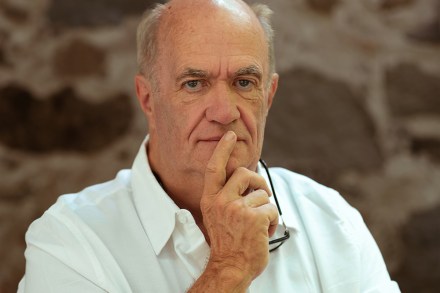
Colm Toibin is a master of understatement, his work characterised by great emotional intelligence coupled with redoubtable restraint. This is his third anthology of stories, following Mothers and Sons (2006) and The Empty Family (2010). He fills the gaps between words – what he doesn’t say – with as much meaning as the prose. Familiar themes emerge. There is the Irish diaspora in the US (as in Brooklyn and Long Island); the Catalan Pyrenees (the setting for ‘The Long Winter’ in Mothers and Sons); and Argentina (as in the novel The Story of the Night). Feelings of exile and being an outsider are aroused, while Catholicism still taps on the shoulders of those long lapsed.

Coming of age in Melbourne: Landscape with Landscape, by Gerald Murnane, reviewed

Gerald Murnane’s Landscape with Landscape opens with a splendidly disgruntled preface. The book is a collection of six longish stories and was originally published in 1985, when it was panned by a reviewer. ‘Some writers may claim not to be affected by reviews or even not to read them,’ he observes in his preface: ‘I make no such claim.’ And he explains how this brutal notice (‘I call to mind easily some of the nastiest passages’) led to poor sales and the disappearance of the collection, his fourth book. There is some comedy in this alongside the spiky pathos. Murnane is about as close to review-proof as any writer can get. Now 86, he is often mentioned as a likely contender for the Nobel Prize in Literature. He has high-minded admirers (J.M.

John Updike’s letters overflow with lust, ambition, guilt and shame

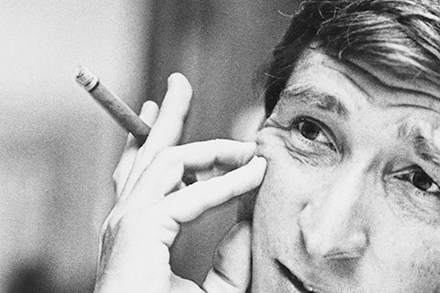
When John Updike died in 2009, aged 76, he left behind the last great paper trail. Novelist, short story writer, poet, essayist and art critic, he published with unstoppable fluidity in every genre. The sheer tonnage of his 60-odd books has now been augmented by A Life in Letters, a comparatively small sampling of the 25,000 or so epistles he sent out over the course of his life. This unwieldy volume serves up about 700 of them. I say he wrote with unstoppable fluidity (it was David Foster Wallace who dangled the question ‘Has the son of a bitch ever had one unpublished thought?’), but I should add that the letters and postcards (Updike loved a postcard) contain more than just pretty phrases.

Another collection of Harper Lee’s writings arises

From our US edition

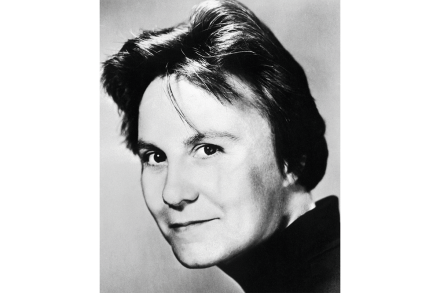
Harper Lee’s To Kill a Mockingbird hardly needs an introduction, as I expect everyone in the world has read it, or has seen the film starring Gregory Peck. (If you haven’t read it, perhaps you should.) Lee, incidentally, went to visit the film set, and had this to say about Peck: “an inspired performance. In some mysterious way, Gregory Peck’s Atticus Finch transcended illusion.” If that seems a tad clichéd and not especially insightful, then I’m afraid to say that this is the general tenor of the nonfiction pieces in The Land of Sweet Forever, alongside eight previously unseen short stories. Go Set a Watchman, a novel which was largely viewed as To Kill a Mockingbird in embryo, appeared ten years ago, to not much acclaim.

The lonely passions of Katherine Mansfield

Katherine Mansfield refused to be pinned down. Aged 17, she told a friend she planned to lead ‘all sorts of lives’, already chafing at the limitations of her parents’ bourgeois world. She warned her first lover that she liked ‘always to have a great grip of life, so that I intensify the so-called small things – so that truly everything is significant’. Living, to Mansfield, was a challenge to be confronted head-on, a restless and active process of ‘shedding and renewing’. Her passion for life fortified her through a horrifying succession of troubles. It fed her art; it also exhausted her.  ‘Life’, in its most capacious sense, is the subject of Mansfield’s fiction.

Martin Mull’s short stories bring levity to serious themes

From our US edition

Books of short stories are among the most difficult for writers to sell. Which is odd, as they’re often where the best writing is. A short story is rarely boring. It has to pack everything in, grip the reader right away, unfold its plot and make its point – a cultural truism or a subtle universal or a moral profundity – elegantly. It’s the one kind of writing I’ll always read when a friend says they’ve tried their hand at it.

Mull

The Life of Violet catches a side of Virginia Woolf that has been obscured

From our US edition

She was Adeline Virginia Stephen, then. Signing her letter “AVS”, in August 1907 the 25-year-old who became Virginia Woolf complained to her friend Lady Robert Cecil: “The effort it is to write… I feel like one rolled at the bottom of a green flood, smoothed, obliterated, how should my pockets still be full of words?” Long before the masterpieces that would make her name, she was working on a series of literary exercises. These attempted to remold the biographical form into one that could encompass and celebrate the lives, not of famous men, but of unfamous women and combine what she called the granite and rainbow of “life-writing”: stony fact and iridescent fantasy. Her letter continues: If you keep The Life, or Myth, don’t quote it – see my vanity!

Woolf

Hauntingly re-readable: Autocorrect, by Etgar Keret, reviewed

How to describe the Israeli writer Etgar Keret’s stories? Sci-fi scenarios, vignettes, thought experiments, fables, parables? They do not have plots so much as premises from which consequences, extrapolations and ironic complications stem. Unfortunately, the joy of these pieces makes them resistant to reviewing. You have to tell not show their ingenuity. For example, the opening piece, ‘A World Without Selfie-Sticks’, starts with the conceit of a man yelling at a woman who is the spit of his former partner. But it turns out she really did emigrate to Australia and this woman is her doppelgänger from a parallel universe. Not-Debbie is taking part in Vive la Différence, a gameshow where the contestant has to discover the absent element from our reality.

An ill wind: Poppyland, by D.J. Taylor, reviewed

As the term refers to the stretch of the north Norfolk coastline between Sheringham and Mundesley, only one of the stories in D.J. Taylor’s engrossing new collection strictly takes place in ‘Poppyland’. However, the others seldom stray far. In ‘At Mr McAllister’s’, one of two stories set in and around Norwich market, the feckless employee of a down-at-heel toyshop decides to change his life, starting with talking to the pretty girl on the fruit and vegetable stall. In ‘Those Big Houses up Newmarket Road’, set nearby, social embarrassment inspires a class-conscious schoolboy to dream big. Such ambitions are unusual in these carefully worked stories of broken homes and precarious employment.

Private battles: Twelve Post-War Tales, by Graham Swift, reviewed

When Granta magazine’s list of Best of Young British Novelists first appeared in 1983 it was a cue for me to immerse myself in the work of the named writers. There was the dazzling sardonic humour and knowing intelligence of Martin Amis; Ian McEwan’s twisty psychological thrillers; the cool prose of Kazuo Ishiguro, masking latent pain; and the fantastical, rich threads of Salman Rushdie. Rose Tremain’s anthropological insights and Pat Barker’s harrowing war stories were also transfixing. It took me a while to get to Graham Swift, but when I read Waterland, Mothering Sunday and the Booker-winning Last Orders, I was quietly absorbed. Swift didn’t aim for the pyrotechnics of his literary brothers. If they were strutting peacocks in the aviary of new writers, he was a sparrow.

Marriage, motherhood and money: Show Don’t Tell, by Curtis Sittenfeld, reviewed

Show Don’t Tell, a collection of 12 short stories by the American writer Curtis Sittenfeld, explores marriage, sex, money, racism, literature and friendship from the 1990s to the present. There is a fine line here between memoir and fiction, with many of the female protagonists being Midwestern, bookish Democrats – quite like Sittenfeld herself. In the eponymous story, Ruthie, a writer, dismisses the notion that ‘women’s fiction’ is perceived as giving off ‘the vibe of ten-year-old girls at a slumber party’. She reflects on internalised misogyny: ‘It took a long time, but eventually I stopped seeing women as inherently ridiculous.

Escape into fantasy: Stories of Ireland, by Brian Friel, reviewed

Before Brian Friel earned renown as a dramatist, he wrote short stories, many of which first appeared in the New Yorker. These were later published in two collections, A Saucer of Larks (1962) and The Gold in the Sea (1966). Now ten of the stories, selected by Friel before his death in 2015, along with three chosen by his widow, have been brought together in Stories of Ireland. These are deeply rooted in the counties of Tyrone and Donegal. Friel blends actual locations with fictional ones, such as Ballybeg, the setting for several of his plays, and the splendidly named Mullaghduff. They are home to tightly knit rural communities, where an old woman ventures no further than 52 miles in her life, a boy, who has never seen a ‘coloured’ man, asks ‘Will he attack us?

Visionary tales: Mrs Calder and the Hyena, by Marjorie Ann Watts, reviewed

One of the pleasures of reading, often looked down on in literary circles, is when one warms to an author’s characters. Among the many delights of Mrs Calder and the Hyena, Marjorie Ann Watts’s second collection of short stories, was my feeling that here were people with whom I would get along. Ostensibly, they are undistinguished – from the hinterlands of society, whether by virtue of status, wealth or age; yet they reveal some irrepressible glint of antinomianism, a rejection of conventional judgments and standards, a certain anarchic glee. In the title story, elderly Mrs Calder insists she is being accompanied by a hyena – ‘always a little on the edge of my vision, but definitely getting closer’.

Menacing masterpieces: Voices of the Fallen Heroes and Other Stories, by Yukio Mishima

The catalogue of 20th-century writers who committed suicide is long and sad: Sylvia Plath and Virginia Woolf, Ernest Hemingway and Sarah Kane, Stefan Zweig and Marina Tsvetaeva, to name only a few. Yet even amid this litany of literary misery, one name stands out for being perhaps more famous for their death than their work: Yukio Mishima (1925-70), who attempted a military coup before performing ritual suicide – hara-kiri – in the immediate aftermath of its failure. His long-planned, stage-managed, ostentatious and disturbing demise is not unconnected to his work, but it has dominated discussion of the writer ever since, significantly overshadowing his achievements – which were considerable, and led to his nomination for the Nobel Prize in Literature several times in the 1960s.

Modern-day ghosts: Haunted Tales, by Adam Macqueen, reviewed

I don’t approve of ghosts, from the sublime (I generally just mouth the words ‘Holy Ghost’ in church, as I don’t want to pledge allegiance to something I can’t help but envision looking like the traditional sheet-based model) to the ridiculous (I would charge all ‘mediums’ with fraud). If ghosts were invariably like poltergeists (the Mrs Thatchers of the spirit world), I might have more time for them. But as it is, I just want to shake them and tell them to sort themselves out. Having said that, Adam Macqueen’s Haunted Tales is a cracking little book. As befits a writer who went to Private Eye for work experience and never left, it’s knowing and waspish; nonetheless, the stories read like a labour of love.

Not for the faint-hearted: She’s Always Hungry, by Eliza Clark, reviewed

Eliza Clark’s first novel, Boy Parts, centred on a self-destructive woman taking explicit photographs of men. Her second, Penance, was about a journalist constructing a ‘definitive account’ of a seaside murder. Last year she was named one of Granta’s best young novelists; but she has now produced a sadly uneven short story collection. These 11 tales do not hang together thematically, aside from a broad emphasis on the corporeal. The good ones are full of brio: ‘The Shadow Over Little Chitaly’ is composed entirely of hilarious reviews of a takeway that offers Chinese food alongside pizza. The feedback is bizarre from the start: the first mentions that the restaurant is 125 miles away and the customer complains that they rang 117 times for a refund.

The life and legacy of Mavis Gallant, an American in Paris

From our US edition

"God help the English if she ever starts on us,” remarked Jonathan Keates in a blurb for Mavis Gallant’s Paris Notebooks. Far from being the ubiquitous “love letter” to a city, the essays and reviews within revealed people and their lives as they were, not as ideals. What Keates didn’t realize was that in Gallant’s short stories, everyone, regardless of nationality or gender, was fair game for her sometimes vicious, often dryly funny, always unblinking gaze. When she died in 2014, aged ninety-one, an obituary noted her profound irritation at her critics’ focus on The Collected Stories of Mavis Gallant: “Everyone who has reviewed it so far mentions exile.

Gallant