Sexism

If girls don’t like physics, it’s down to biology

I was delighted to see Claire Foy win an Emmy award for her portrayal of the Queen in the fine Netflix series The Crown. It may have helped assuage her annoyance at initially being paid £200,000 less than her co-star, Matt Smith, who did a fairly good impersonation of a young, brooding Duke of Edinburgh. Foy had more lines than Smith, is as capable an actor as Smith, was the leading role and, importantly, is at least as fit as Smith. This last point is vital because television often casts people on account of their attractiveness, because viewers like looking at attractive people rather than at hideous fat munters. Whatever, there is still sexism around and Foy’s treatment seems to be a good example of it. I can think of no other reason she was paid less, other than sexism.

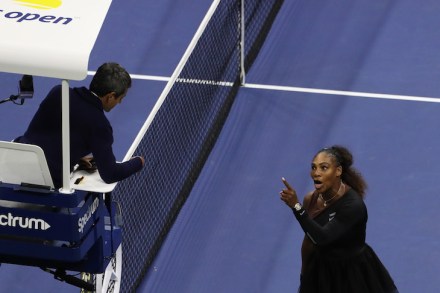
Serena Williams isn’t the victim of sexism – she’s just a sore loser

Serena Williams’s epic tantrum in last night’s US Open final wasn’t a noble stand against racism or sexism. It wasn’t about her being black, or a woman, or a mother — although of course it very quickly became about that, as tweeters and sports hacks climbed over each other to defend the Queen of Women’s tennis because she is a famous mega brand and her brand is about being black, a woman, and a mother. But in our hearts we all know what really happened. Williams behaved like a bad loser then pretended to be a victim of societal injustice to justify her bratty performance. It was a pathetic and depressing spectacle.

Fortnite’s fun, so it must be bad

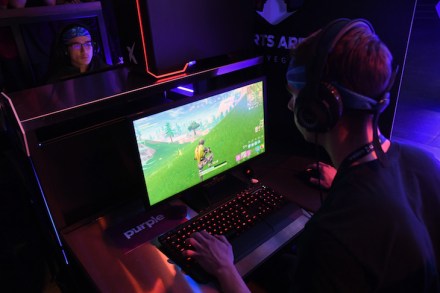
It was only a matter of time. The headteacher of a primary school in Ilfracombe in Devon has banned ‘Flossing’, the dance craze linked to the video game Fortnite, on the grounds that it’s being used to ‘intimidate’ other children. ‘Fortnite is about mass killing of other human beings and being rewarded by a dance of celebration if you are successful,’ she told the Telegraph. This is the latest example of the moral panic surrounding Fortnite, a video game in which up to 100 players compete against each other, either individually or in ‘squads’, to see who can be the last man standing.

High life | 12 October 2017

I smell a rat when it comes to Harvey Weinstein. Let’s take it from the start. The telephone rang very early in the morning and a woman’s voice told me that Harvey Weinstein wanted to speak to me. I was put on hold. I waited. And waited, and then waited some more. The reason I didn’t hang up was that I wanted to tell Harvey that if Queen Elizabeth had made me wait as long as he had I would have hung up. ‘But for you, Sir Harvey, I’ll wait an eternity.’ Well, Harvey is a Commander of the British Empire but I upgraded him a notch because, as strange as it may sound, he and I are buddies.

True grit | 14 September 2017

As literary editor of the Sunday Times in the early 1980s, when the rest of the editorial staff routinely papered their offices with mildly erotic female images, Claire Tomalin stuck up pictures of sexy men: ‘Some found it hard to believe I could do anything so shocking.’ Double standards, casual sexism and blanket prejudice were normal at the time, even on a relatively civilised national paper. I know because I had the same job a few years earlier at The Spectator. Men ran the world and women answered the phone. Claire had come down from Cambridge with a first in 1955, but the BBC refused her a job on the grounds that it did not employ female graduates.

Diary – 26 January 2017

Did you know that if you use the f-word while talking to a BT representative, they hang up on you? Here’s how our conversation went when I finally got through after several abortive attempts and ‘holding’ for at least 15 minutes. Me: ‘I’m ringing because the engineer who was supposed to come between 8 a.m. and 1 p.m. has not turned up. I’ve been waiting for over five hours. My name is xxx, my reference number is xxx.’ BT man: ‘Could you give me your date of birth and the first line of your address?’ Me: ‘My date of birth is xxx, my address is xxx. This is the third time I’ve been asked.

Is sexism really stopping more women from becoming MPs?

The reliably irritating Women and Equalities Select Committee under its unfailingly irritating chair, Maria Miller, has come up trumps again, with a proposal for increasing the number of women MPs. The committee initiated an inquiry in the summer of 2016 into gender representation in the Commons and it has now concluded that all political parties should set out how they intend to increase the proportion of women in Parliament by 2020. If they don’t, it says the Government should set a domestic target of 45 per cent of all representatives in Parliament and local government by 2030.

They

‘When I asked the bank,’ said my husband, ‘they were no help at all.’ My attention was distracted from his Kafkaesque predicament, which is both typical and too complicated to explain. Instead I was pondering the reference to the bank as they. This is well established in British English. The bank, Sainsbury’s or England (the cricket team) can be they, or equally correctly, it. Just be consistent. But my husband’s ramblings had reminded me that David Willetts, when talking on the radio about adult education, had said ‘someone in their thirties or forties’. The Willettsian usage has their, a plural personal adjective, referring back to someone, a singular antecedent.

Pussy galore

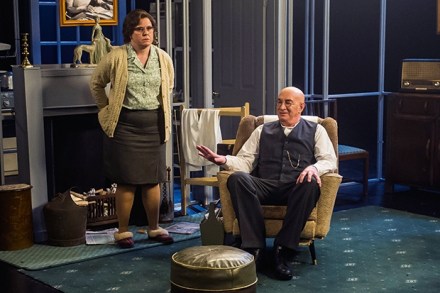
I think I might be turning into Alf Garnett. When I was growing up I saw him as an obnoxious, cantankerous, ranting old git that my grandparents’ generation seemed to find funny but who left me cold. Now I’m beginning to identify with him as an unfairly maligned and surprisingly youthful fount of wisdom whose tragedy is to be ignored by maddeningly unsympathetic womenfolk and infuriating kids. That was my thought, anyway, watching Till Death Us Do Part (Thursday, BBC Four) — a one-off remake of one of Johnny Speight’s original Sixties scripts, with The Fast Show’s Simon Day as Alf.

Baby with the bathwater

Bustle, an online newspaper ‘for and by women’, has published ‘six common phrases you didn’t know were sexist (that you’ll now want to ban from your vocabulary)’. One of them is ‘Don’t throw the baby out with the bathwater’. By chance this phrase was used by Sir Ernest Gowers, the enemy of officialese and cliché, in his book H.W. Fowler: The Man and his Teaching. ‘We can,’ Sir Ernest wrote, ‘rid ourselves of those grammarians’ fetishes which make it more difficult to be intelligible without throwing the baby away with the bath-water’. That would annoy someone called Julie Sprankles, a writer for Bustle.

Glastonbury’s ‘women-only’ venue deserves to sink into the mud

It was only a matter of time before Glastonbury, the world’s most middle-class festival, caught up with the latest political trend. In an announcement heralded as brave, pioneering and ‘necessary’, a group called ‘The Sisterhood’ have announced a women-only venue at the four-day festival. ‘In a world that is still run by and designed to benefit mainly men,' the group argue, ‘oppression against women continues in various manifestations’. The way to combat this global sexism, it seems, is to have a boy-free zone at festivals. The Sisterhood has designed the special zone to allow women ‘to connect, network [and] share their stories’ about sex work, domestic violence and the pay gap.

Sex worker

‘Of course,’ said my husband in his worst smirky way, as though waiting for an appreciative chuckle, ‘as soon as she found out he was a politician, she broke off the affair.’ That was not the only unoriginal remark about poor old John Whittingdale, who last week admitted to going out with a woman for six months without realising that she was a prostitute. Hearing about the thing on Sky News, I thought its use of sex worker for the woman was an eccentric example of political euphemism. But then I found the BBC using sex worker, and even reputable newspapers. The Times too called her a sex worker. In one report, the BBC referred to ‘a relationship that John Whittingdale had with a woman who turned out to be an escort’.

The female gaze

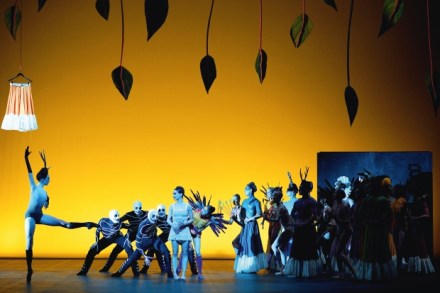
Tamara Rojo programmed three female choreographers for her English National Ballet spring bill because, she said, she had never danced a ballet by a woman, and wanted to see what women would produce. Just the two begged questions here. First, that female choreographers are being stifled by institutionalised sexism in the ballet establishment. Second, that female choreographers, if allowed to see the light of day, would offer a differently thought, differently imagined argument from the general tenor of those pesky male choreographers who dominate the stage.

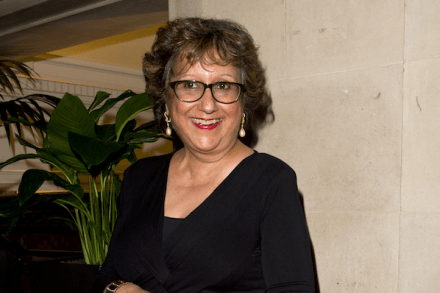
Yasmin Alibhai-Brown accuses the Independent of sexism over print redundancies

This week the Independent will publish its last ever print edition. With a reduced number of staff being kept on to work on the digital-only edition, around 75 journalists are thought to be being made redundant. So last night's Words by Women journalism awards proved to be a poignant affair with several soon-to-be ex-Indy journalists present. While Independent on Sunday editor Lisa Markwell said it was a 'bit emotional' -- while presenting an award -- as it was the first time she'd been called the paper's 'former editor', Indy columnist Yasmin Alibhai-Brown appeared to be experiencing a real mix of emotions when it came to her take on the paper's demise.

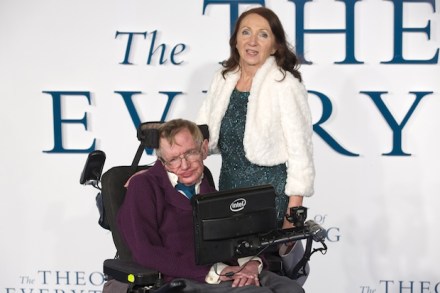
Stephen Hawking is a misogynist. And The Theory of Everything is a whitewash

We’re closing 2015 by republishing our ten most-read articles of the year. No9 is Tanya Gold’s piece from January, when The Theory of Everything was released. Stephen Hawking is a misogynist; and also, quite possibly, a narcissist. You wouldn’t know it from watching The Theory Of Everything, the new biopic from Working Title, in which you are invited only to weep when he discovers he has motor neurone disease at 21, and then marvel at his achievements in physics. It goes wild on the obvious cognitive dissonance of Hawking’s life and work — trapped in his body, yet transported in his mind to the stars.

Is ‘female’ still an insult?

‘More deadly than the male,’ said my husband archly. He was knowingly quoting Kipling, though I don’t know why he should, since Kipling was not fashionable when he was young. His cue was a remark he overheard from an academic former colleague puzzled by the frequency of female in student essays, where woman might have been expected. This usage is said to be ‘now commonly avoided by good writers, except with contemptuous implication’, said the Oxford English Dictionary in 1895, when it got round to considering words beginning with F.

Forty is a feminist issue

If Emily Hill is right in her cover piece for the magazine last week headlined ‘The end of feminism’, then women like me are in a whole world of trouble. And by women like me, I mean women over 40. The nub of Ms Hill’s argument was that all the big battles are won. She quoted the sparkling achievements of ‘women in their twenties’ and also ‘the under-40s’, who are out-earning men. What happens to women after they have broken through the glass ceiling is a question for an older, more cynical female writer. At your service.

My recipe for the new Milk Tray Man

Cadbury’s is searching for a new 'man in black' to spearhead its advertising campaign for the godawful Milk Tray chocolates range. However, a spokesman for the company has said that the macho-man stuff is old hat. 'It will be as much about traits such as thoughtfulness. Leaping off a bridge on to a moving train is not as relevant as it was perhaps in the 1960s, there has to be a little more to gift giving,' the corporate monkey revealed. Thoughtfulness – yes, indeed. I suggest they get the BBC’s Fergal Keane to hold a box of Milk Tray in one hand while stroking the head of a Syrian refugee with the other – all the while looking on with quiet admiration as a woman breastfeeds her baby in a branch of Starbucks. And the voiceover?

A compliment isn’t misogynistic. Why can’t feminists understand this?

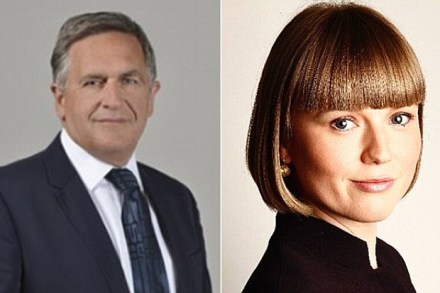
If you were in any doubt that we live in mean-spirited and vengeful times, then Complimentgate should put you straight. Complimentgate is the name I'm giving to the naming and shaming of a solicitor who had the temerity to say something nice about a woman's looks. For doing this, for paying someone a compliment, he has now become an object of Twitter-ridicule, fodder for the insatiable global outrage industry, which rails not only against people who are abusive online but also against people who are nice. No one is safe from their virtual slings and arrows. The man in question is Alexander Carter-Silk. Via LinkedIn, he sent what the press is bizarrely referring to as a 'controversial message' to one Charlotte Proudman, a barrister.

Jeremy Corbyn is right – it’s time for women-only carriages on trains

What can we as a society do about the relentless harassment of women by terrifying men? Menacing men, threatening men, priapic men. Something must be done — and quickly. I reached this conclusion after reading a deeply distressing article by the Guardian columnist Daisy Buchanan, who announced that she has imposed a curfew on herself after a series of deeply unpleasant incursions by bestial males. ‘I can’t believe women have to live like this in 2015,’ Ms Buchanan lamented, having revealed that she has also given up dancing in case the same sort of thing happens when she is on the way home from wherever it is she dances.