Scotland

I love Edinburgh. I’m not sure it loves me

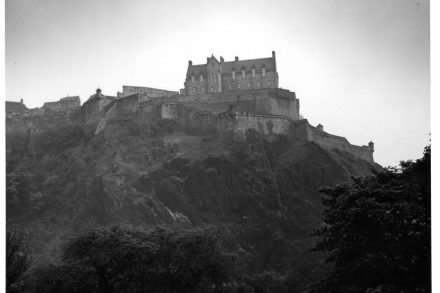
This year I shall have lived in Edinburgh for a quarter of a century. I fell in love with the city on the 23 bus travelling from the New Town to the Old Town. There was so much architecture. Gothic and Georgian, medieval, baronial. So many turrets and finials, tollbooths and towers. I was drunk on the stuff. Add pomp – a Royal Mile, a castle, a palace. Then the libraries, art galleries, museums. And that’s before you get to bookshops and Edinburgh’s proud moniker, the first Unesco City of Literature. What other city has a railway station (Waverley) named after a novel or a high street (Princes Street) with shops on one side and gardens on the other? The 23 bus was taking me to the psychiatric hospital just beyond Morningside Edinburgh doesn’t love me.

Letters: The dangers of the ADHD ‘industry’

Nothing left Sir: Rod Liddle is right to ascribe the establishment’s desire to suppress the truth in relation to grooming gangs to its fundamentally anti-working class mindset (‘We demand a right to truth’, 11 January). But he’s characteristically wrong to attribute this to ‘liberalism’. The contemporary left’s identity-politics agenda is born from the opposite: the postmodernist-derived idea that reality can be radically reconstructed through control of what is, and is not, communicated. Its various fantasies – and the public-sector interests that depend upon them – necessarily involve suppressing our powers of rational cognition.

The gross hypocrisy of the SNP

If there’s one thing the SNP truly excels at, it’s maintaining double standards. The extraordinary case of the Scottish government and the missing legal advice makes clear just how hypocritical the SNP is when it comes to conduct in public life. Scottish nationalists are swift to condemn opponents at the slightest whiff of impropriety but, as this matter demonstrates, when it comes to their own morality, they’re more easy-going. Back in 2021, then first minister Nicola Sturgeon was cleared of breaching the Scottish parliament’s ministerial code over her involvement in the case of complaints made by female civil servants against her predecessor, the late Alex Salmond.

Sale of the century: why is the Kirk selling off hundreds of churches so cheaply?

27 min listen

In this week’s Spectator, William Finlater reveals that some of the Church of Scotland’s most precious architectural heritage is being flogged off quickly, cheaply and discreetly. Most western denominations are being forced to close churches, but the fire sale of hundreds of Scottish churches is unprecedented in British history. In this episode of Holy Smoke, Damian talks to William about the Kirk’s apparently panicky reaction to losing half its members since 2000, and asks new Spectator editor Michael Gove – once a Church of Scotland Sunday School teacher – why his former denomination is staring into the abyss. Produced by Oscar Edmondson and Patrick Gibbons.

The tragedy of Scotland’s church sell-off

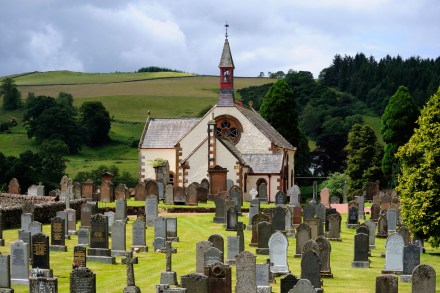
‘We are not a heritage society,’ insisted the Rev David Cameron, Convener of the Assembly Trustees of the Church of Scotland. Speaking to the BBC in January, Mr Cameron claimed the Church has a ‘surplus of buildings and large property’, and that there is a need ‘to address our estate’. A church or kirk is usually the most historically important building in any given town or village In other words, the Church of Scotland is selling off its churches. Not just one or two here or there, but a lot, and for cut-price rates. Of course, the Church insists that the move is ‘painful but essential’, aping the language of a corporate multinational’s HR department. Yet the sheer scale and decisiveness of the move belie the patronising smiles of the Church hierarchy.

Salmond’s critics can’t ignore his lasting legacy

When he lost his Gordon seat in the 2017 general election, Alex Salmond told his count and those watching – friend and foe – that ‘you’ve not seen the last o’ my bonnet and me’. The line comes from Sir Walter Scott’s Bonnie Dundee, an ode to John Graham, the 1st Viscount Dundee, who led the 1689 Jacobite uprising to restore James VII and the House of Stuart. Quoting the lyric was pure Salmond. Not only was he fond of weaving poetry into his public statements – an art sadly lost to most political rhetoricians – it reflected his self-mythologising as a modern-day Scottish rebel against the British establishment. Salmond saw himself and his politics in romantic terms.

Alex Salmond was an unstoppable force of nature

It is hard to believe that I will no longer wake up on Monday mornings to the sound of Alex Salmond on the phone, either berating me for my latest offence against journalism or telling me what I should be saying about the most recent political scandal. The former SNP leader and First Minister of Scotland was of the old school: combative and relentless, always on the phone, never stopping, never at rest, a 24/7 politician. We always said he would never cease promoting the cause of Scottish independence while he still had breath in his body. He didn’t. Alex Salmond died in North Macedonia, shortly after giving a speech. He was the most astute, gifted, and energetic politician of his generation The Scottish political world is in genuine shock.

Is Scottish Labour really back?

Labour’s first conference from government in 14 years might not be taking place against an ideal backdrop, with the Prime Minister and other ministers under scrutiny for accepting designer clobber and other goodies from party donors, but there is an unlikely glimmer of hope in the form of Anas Sarwar. Unlikely, that is, because Sarwar is leader of Scottish Labour and for almost a decade that great clunking juggernaut of electoral inevitability had sputtered to a halt and begun to rust. Reduced to just one seat north of the border and in a distant third place at Holyrood, the Scottish party had become an ominous lesson in how thoroughly Labour could be sidelined by a populist rival. There were times when serious Labour people wondered if the party would ever see majority government again.

Imperfections in wood can make for the loveliest carvings

I am married to a wood snob. When we bought our house in 1999, my husband insisted that all the shelves (he is an antiquarian book dealer, so there are miles of them) should be made of ‘real’ wood, with not an inch of Medium Density Fibreboard. The price made me squeal. But a quarter of a century on, while friends’ MDF shelving droops like cables between telegraph poles, ours remains beautifully strong and straight. Callum Robinson would understand why this matters.

Margaret Tudor – queen, regent and hapless intermediary

The history of princesses and queens has become well-trodden ground in the women’s history genre, particularly the Tudors. Linda Porter’s The Thistle and the Rose, a life of Margaret Tudor, queen consort to James IV and mother of James V, provides a refreshing change in subject. Margaret has had to share the stage with some of the most famous names and voices of the 16th century: Henry VII and his queen, Elizabeth of York; Henry VIII and his wives; and, of course, her namesake, Margaret Beaufort, the formidable Tudor matriarch who deftly helped place her son, the victor of Bosworth, on the throne.

Echoes of Tom Brown’s School Days: Rabbits, by Hugo Rifkind, reviewed

The year is 1993 and 16-year-old Tommo has been moved from a day state school of 2,000 pupils in brown blazers that ‘when it rained… smelled of shit’ to Eskmount, an elite Scottish boarding school, where boys wear kilts and put their ‘cocks on your shoulder’ when you’re working in the library (easier in a kilt) and routinely hang ‘smaller kids in duvets... out the window’. The horseshoe effect in schooling terms: the more expensive, the more savage. Hugo Rifkind’s Rabbits opens with a bang: ‘When the shotgun went off under Johnnie Burchill’s brother’s chin, word had it, the top of his head came off like the top of a turnip lantern.’ It is reminiscent of Donna Tartt’s The Secret History.

The Scottish Tories need a better election strategy

It is no surprise that the Scottish Conservative manifesto launch was centred on independence. While Scotland’s Tories talk about the SNP’s obsession with the subject, they are a little less happy to mention their own preoccupation with separatism. It’s rather more awkward for the Scottish Conservative and Unionist party to admit that, without independence on the table, their role in Scotland becomes a little less clear.

The good old ways: nature’s best chance of recovery

Britain is one of the most nature-depleted places on Earth. The consequences for human wellbeing and resilience, as well as for non-human life, are grave. Conservationists and others say it doesn’t have to be this way. But when it comes to recovery, what should we aim for? How much can we know about what was once present? How much is it practicable or sensible to restore? What does recovery, let alone ‘rewilding’, really mean in a rapidly heating world? Sophie Yeo does not have the answers to all of these questions. Nobody does. What she does offer in Nature’s Ghosts are insights that could help shape a better informed and more constructive debate.

Why has Douglas Ross resigned as Scottish Tory leader?

11 min listen

Just when you thought this election campaign couldn’t get any more tumultuous, Douglas Ross has announced he will resign as Scottish Conservative leader. He had lost the support of his colleagues – particularly those in Holyrood – following his decision to effectively take over a Westminster colleague’s constituency when that MP was seriously ill in hospital. Why now?  Michael Simmons speaks to Isabel Hardman and Katy Balls. The Spectator will be hosting a special Live edition of Coffee House Shots in the aftermath of the election. Taking place on Thursday the 11th July - a week after the election - at 7pm here in Westminster, you can join Fraser Nelson, Katy Balls and Kate Andrews as they try to dissect the election results, a new government, and what comes next.

Alex Salmond: We are not splitting the SNP vote

Is Alex Salmond feasting on the misery of an SNP that, having hit its high watermark, is now having to work hard to hold onto its Westminster seats? Not at all, according to the Alba leader, who told Andrew Neil on Times Radio today that he was in fact trying to help the cause of his former party by going after pro-independence voters who would otherwise have stayed at home. In so doing, of course, he was not-so-subtly suggesting that the SNP aren’t giving voters a reason to turn out at all.  There’s 20 per cent of people who are either going to stay at home or going to vote for a unionist party.

Scotland’s religious collapse

Last week, I had a drink with a Catholic priest friend who works with young people in custody. Inevitably, our talk turned to how radically unchurched they are – not badly disposed to Christianity, just unfamiliar with much of the doctrine and almost all the forms of worship, even though many had a Catholic granny or a non-practising parent. He mused over the startling speed of the secularisation of society. ‘Protestantism has collapsed,’ he said, and not in any triumphalist spirit. ‘Most people believe in or at least want to believe in some form of afterlife’ And so it has turned out in Scotland. The latest census, published last month, shows that for the first time a majority of Scots identify as ‘no religion’ whatsoever.

Sunak won’t be much help to the Scottish Tories

The first few days of this general election campaign have been characterised by Rishi Sunak’s dismal campaign management. From wet suits and sinking ships, his whistlestop tour of the four nations seemed more like a box-ticking exercise than anything else. The key to any Tory success is to augment the notion that independence is still a threat A prime minister from the Conservative and Unionist party must find some way to appeal to Northern Ireland and Scotland, the two parts of that union which in the longer term still represent a realistic flight risk. It was, however, hard not to reflect on Sunak’s irrelevance in these parts of the UK. Irrelevant in Northern Ireland because the party – making up less than 1 per cent of the vote – effectively does not participate.

Why are Scottish nationalists so thin-skinned?

Scottish nationalists are not happy. What’s new, I hear you ask. Did they lose another leader? Has Sainsbury’s been selling Somerset strawberries in Stornoway supermarkets? Nothing quite so grave, but they are displeased nonetheless. The cause is Rishi Sunak, who has offended them with his Big Serious Speech at Policy Exchange on Monday. It was just a single reference, but that is the most Sunak has done to confront the SNP since he entered No. 10.

Can John Swinney turn it around for the SNP?

John Swinney, newly inaugurated First Minister of Scotland and Leader of the SNP, has been in the job for a week. What have we learnt since he took up the job, and can he turn things around for the party in time for a general election?  James Heale speaks to Lucy Dunn and Fergus Mutch, former SNP adviser. Produced by Megan McElroy.

The Lisa Cameron Edition

32 min listen

Dr Lisa Cameron was born in Glasgow and grew up in East Kilbride, the constituency she now represents. After three elections under the SNP, she memorably defected to the Scottish Conservatives in 2023. At the time, Humza Yousaf described it as the least surprising news he’d had since becoming first minister.  On the podcast, Lisa tells Katy about the need for increased investment into mental health provision, her defection from the SNP to the Tories and why Scottish independence is a failed experiment.