Estella Shardlow

Estella Shardlow is a British writer and editor.

Pure shores: a Scottish sea safari

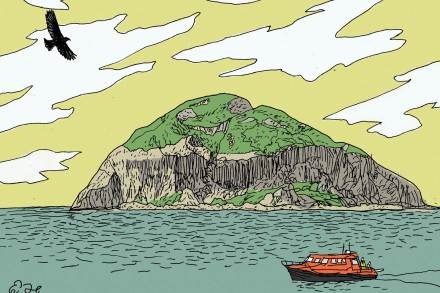
In the narrow strait between Jura and Scarba, the sea does strange things. Standing waves barrel over phantom surf breaks. Steely waters seethe and swirl, as if stirred by invisible hands. No wonder the gulf’s name, Corryvreckan, means “cauldron of the speckled seas” in Gaelic; this is the world’s third largest whirlpool, classified as “unnavigable” by the Royal Navy. Yet here I am, aboard a thirty-seven-foot rigid inflatable boat (RIB), riding the rapids. Skipper Sandy Campbell cuts the engine so we can try “boat surfing,” the swell dragging us apace past Scarba’s looming quartzite cliffs. Islanders of old dreamt up mystical explanations for this phenomenon.
Hebrides

The vision behind Woolsery

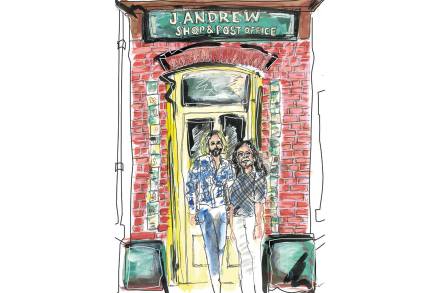
At first glance, it looks like any other sleepy village in southwest England. A medieval church and manor house face a fish ’n’ chip shop and post office across the green. There’s the obligatory pub, the Farmers Arms, where log fires crackle and ale-taps gleam beneath oak-beamed ceilings. Along the narrow lanes, whitewashed cottages peter out into rolling Devonshire hills. In true UK style, the place even has an obscure tongue-twister of a name: Woolfardisworthy. Population 1,123. Look closer, however, and you’ll realize this isn’t your standard British backwater. For every pint of cider being poured in the pub, there’s a craft cocktail infused with foraged botanicals and homemade cordials — think a crabapple cider margarita or a sea buckthorn gin sour.

village

A tale of two safaris

To grasp the untamed vastness of Samburu County, it’s necessary to get high. Above the thickets of acacia trees, thorny branches like barbed wire against the cloudless sky. Out of the Rift Valley’s rubbly trenches, dotted with bleached animal skulls and groves of candelabra-like doum palms clustered around some-time watering holes. To the peak of Sundowner Rock, for instance. After scrambling up its boulder-strewn slopes — wishing for the agility of the bug-eyed, Bambi-like dik-diks that prance about this terrain — I flop down on a sun-warmed granite slab and savor an eagle’s eye view of the bushland below. Legions of acacias and wiry shrubs mottle the red earth.

safari

Paris: a gold-medal minibreak

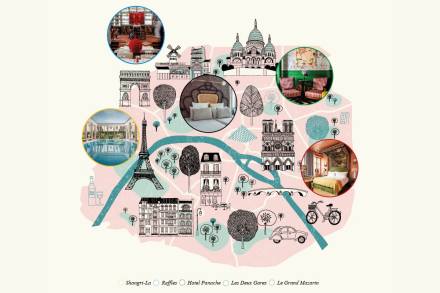
As the Olympic Games descend on the French capital this July, the contest that really matters for this sports-shy travel writer is where to stay. From historic heavyweights to new contenders, these Parisian properties stand head and shoulders above the rest. Best for wellness: Shangri-La Paris The cool marble interiors of Shangri-La’s Parisian outpost feel a world away from the tumult of the Champs-Élysées (in fact, it’s only a fifteen-minute walk). If the Grecian frescoes, silk wallpaper and sweeping, gilded staircase all seem distinctly regal that’s because the nineteenth-century building was originally the pied-à-terre of Prince Roland Bonaparte, Napoleon’s great-nephew.

Paris

Bar-hopping, Venetian style

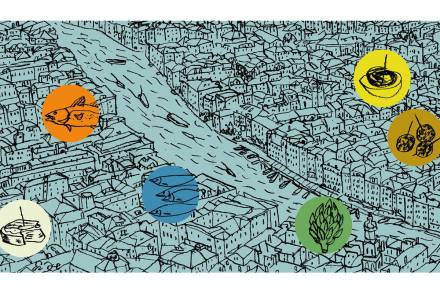
It’s a mist-steeped weekday morning in the Dorsoduro district. The kind when the rising lagoon licks at the old stones as if trying to devour the city, footsteps echo mournfully between peeling palazzi and even the marble statues seem to hang their heads. But not too early nor too dismal, it turns out, for wine. In Osteria Al Squero — named after Venice’s oldest boatyard, which it faces across the narrow canal — the lights are on. A huddle of Venetian men stands beneath the wooden beams with their grocery bags and small dogs, enjoying un’ombra. It means “shade” in Italian but also, here in the Veneto, a small glass of vino.

Venetian

Montréal serves up a surprising array of off-season delights

There’s cold, then there’s winter-in-Canada cold. The kind where I’m jamming hand-warmers into my ski gloves — yet still somehow my fingers go numb — and snowflakes keep their intricate patterns as they scatter over my clothes (back home in comparatively balmy England, they’d melt instantly). But what did I expect? I’d made it my New Year’s resolution to travel off-season. Think Rajasthan in the summer monsoon, Sicily’s midwinter citrus harvest, Portugal’s Atlantic Coast when the record-breaking waves roll in come November. I’m not the only one with this idea.

Montréal

Megève’s enduring magic

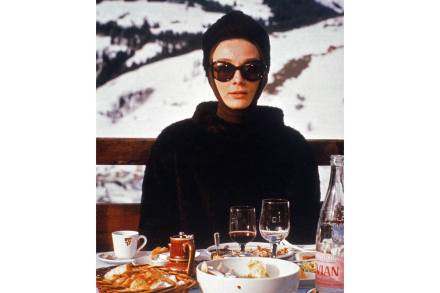
Kitted out in black Givenchy, huge sunglasses blocking out the snow glare, Audrey Hepburn is lunching al fresco in the French Alps when a meet-cute with Cary Grant ensues. It’s the opening scene of Charade, filmed just over sixty years ago in Megève — the chichi winter resort for both Hollywood royalty and true bluebloods during the 1960s. Back then, Brigitte Bardot, Yves Montand and Jean Cocteau were often seen swooping down its pistes. Imagine a snow-dusted Saint-Tropez and you’re on the right track. This medieval market town was hardly destined to become a darling of the beau monde. Megève was something of a backwater (the name even translates to “village in the middle of the waters”) until 1920, when Baroness Noémie de Rothschild spotted its potential.

Megève

The wellness retreat reborn

Rebecca Illing’s résumé doesn’t read like your typical hotelier’s: circus school graduate, free diver, marine conservation advocate and certified death doula. So when the thirty-seven-year-old Londoner inherited a rundown guest house in Portugal’s northerly Minho region, the property was destined to be reimagined as something more than a straightforward B&B. Illing had spent childhood summers at Paço da Glória, roaming its cork oak woodlands and swimming in the nearby Lima River. But the circumstances of her return in 2020 were less idyllic. Europe was entering lockdown, and she was grieving the sudden death of her brother.

retreat

Succession is a foodie’s nightmare

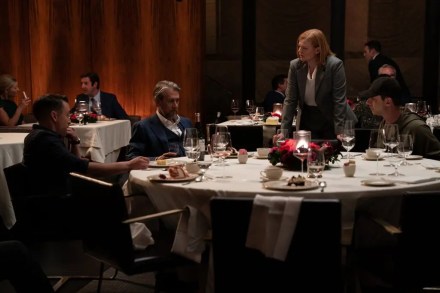
What does the man who has everything really want for dinner? A humble hamburger — at least, that’s what Succession seems to be telling us. In the season four opener, Murdoch-esque media mogul Logan Roy slips away from his lavishly catered birthday party and decamps to a low-key diner, where he mulls the meaning of life in the company of monosyllabic bodyguard Colin. “What are people?” asks the tycoon, before concluding, depressingly, “Economic units.” This existential crisis with a side of fries is (spoiler alert) Logan’s on-screen Last Supper, and it reveals more about him and his ilk than a disdain for canapés. Food is everywhere in Succession — yet rarely is anybody enjoying it much.

Succession