Scotland

Portrait of the week: Growth slows to zero, Scotland rejects assisted dying and Trump sends Marines to the Gulf 

Home Sir Keir Starmer, the Prime Minister, spoke to President Donald Trump of America about the importance of reopening the Strait of Hormuz, but resisted his call for Britain’s ships to be sent there. The government considered sending British-made Octopus drone-interceptors to the Middle East. Sir Keir said £53 million would help a million households reliant on heating oil – £53 a household; ‘It’s moments like this that tell you what a government is about,’ he said. The economy showed zero growth in January, according to the Office for National Statistics. The ONS added alcohol-free beer to the basket of goods used to calculate inflation. John Lewis awarded staff a

‘Evil visited that day and we don’t know why’ – Dunblane 30 years on

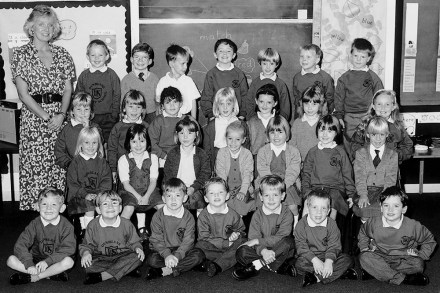
Shortly after 9.30 a.m. on 13 March 1996, a man walked into the gymnasium at Dunblane Primary School, near Stirling, Scotland. He was armed with two 9mm Browning self-loading pistols, two .357 Smith & Wesson revolvers and 743 rounds of ammunition. Within three or four minutes, he’d fired 105 rounds, resulting in the deaths of a teacher, Gwen Mayor, and 16 children. A further three teaching staff and 14 children were injured. He then took his own life. It could have been a great deal worse.  There was a suspicion that he intended to kill most of the school’s 600 pupils but that he’d arrived a few minutes late for

Does The Spectator hate the Welsh?

This St David’s Day weekend, I devote this column to a celebration of the world’s most under-appreciated ethnic group. Under-appreciated, certainly, in the pages of The Spectator, whose editorial policy suffers from a Pictish delusion that its readers are eager to hear of the appointment of a new procurator fiscal in Ayrshire, or political divides on Pitlochry council, while having zero interest in the finer country to the west. Sometimes mere exposure to Wales may be enough to inspire greatness, as in the work of Alfred Russel Wallace or Led Zeppelin Now in celebrating Wales, we need some ground rules. Since the Welsh are much more agreeable than other Celtic

Stephen Flynn on Reform, Sturgeon & a second referendum

26 min listen

The SNP’s Westminster leader Stephen Flynn, MP for Aberdeen South, joins Lucy Dunn for a special episode to assess the place of the SNP in British politics as we approach the end of 2025. The SNP were ‘decimated’ to just nine MPs at the 2024 general election – yet, if polls are to be believed, they are on course for another record win in the 2026 Holyrood elections. But can the SNP really frame this election as a ‘fresh start’? Flynn explains what he made of the ‘bleak fallout’ of 2024, why he is standing for election to Holyrood next year and what he makes of SNP heavyweights such as

The cult of Powell & Pressburger’s I Know Where I’m Going! 

I know where I’m going. I’m on the sleeper train chugging out of Euston and heading to Fort William. A wedding dress hangs on the wall in its transparent cover. I know from my printed itinerary that upon arrival at Fort William, there will be a car, then a ferry from Oban, and finally a gin and Dubonnet waiting for me at the Western Isles Hotel in Tobermory. But no one is getting married. Something much stranger than that is happening: an event that lies somewhere between a fandom convention and a secular pilgrimage. I’m on my way to the Outer Hebrides to celebrate the 80th anniversary of Michael Powell

Cullen skink is comfort in a bowl

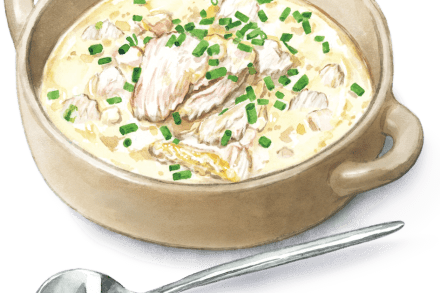
They say not to judge a book by its cover – but what about judging a recipe by its name? Some sound like a disease or worse. Spotted dick, toad in the hole, lady’s fingers, Dutch baby, I’m looking at all of you. Cullen skink is one that has been accused of having an off-putting name. But in its defence, Cullen skink is descriptive. There’s a suggestion that the word ‘skink’ comes from an Old German word for ‘beer’ or ‘essence’, but given that Cullen skink is a creamy, thick soup, with no beer constituent and no obvious German connection, this seems an unlikely origin. More plausible is the explanation

The gross hypocrisy of the SNP

If there’s one thing the SNP truly excels at, it’s maintaining double standards. The extraordinary case of the Scottish government and the missing legal advice makes clear just how hypocritical the SNP is when it comes to conduct in public life. Scottish nationalists are swift to condemn opponents at the slightest whiff of impropriety but, as this matter demonstrates, when it comes to their own morality, they’re more easy-going. Back in 2021, then first minister Nicola Sturgeon was cleared of breaching the Scottish parliament’s ministerial code over her involvement in the case of complaints made by female civil servants against her predecessor, the late Alex Salmond. Inevitably, opposition parties demanded

The brilliance of BBC Alba

During lockdown, a friend and I moved into a flat that had a difficult relationship with the TV aerial. Ineptitude and laziness combined to ensure that the only channels we were able to watch were BBC ones via the iPlayer app. So most nights – if there was no live sport – we found that our entertainment was at the behest of the state broadcaster. And what a drag it was. Every time, we’d reject the populist crap on BBC1, the parochial crap on BBC2, the braindead crap on BBC3, the boring crap on BBC4, the insane crap on BBC News, the wrist-slashing crap on BBC Parliament. And then we’d

North Uist’s whisky is one to watch

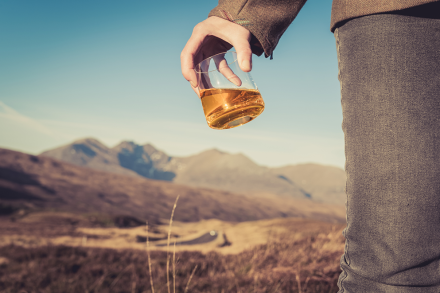
There are at least two Long Islands. One of them, eternally famous for The Great Gatsby, is a fascinating blend of glamour and meretriciousness. It is separated from the other one by 3,000 miles of ocean and a totally different culture. In this Long Island – actually about 70 islands of various sizes, also known as the Outer Hebrides – Sabbatarianism is frequent, but glamour and meretriciousness are as wholly absent as anywhere in Europe. Over many centuries, the Hebridean Long Island was often beset by conflict. Viking raiders, Scottish kings, great clan chiefs: all fought for supremacy. The Scottish Crown eventually won, though the clan chiefs exercised subsidiary kingships,

Raise the age of suffrage to 25

If I had been given the vote at the age of 16, I would have put my cross beside the name of the Communist party candidate, assuming that he was not a tankie. If he was, I would have had to think long and hard; a left-wing Labour candidate might well have been preferable. I was a moderate within the CP, you see – a fan of the Italian Communist party leader, Enrico Berlinguer – and I had no time for the wretched Stalinists who, swaddled in dystopian nostalgia, comprised a broad rump of the British party. They were nicknamed tankies because they thoroughly approved of Soviet interventions in Hungary

Style, wit and pace: Netflix’s Dept. Q reviewed

Can you imagine how dull a TV detective series set in a realistic Scottish police station would be? Inspector Salma Rasheed would have her work cut out that’s for sure: the wicked gamekeeper on the grisly toff’s estate who murdered a hen harrier and then blamed its decapitation on an innocent wind turbine; the haggis butcher who misgendered his vegetarian assistant; the Englishman who made a joke on Twitter about a Scotsman going to the chippy and ordering a deep-fried can of Coke… It would get lots of awards, obviously, but I doubt it would do that well in the ratings. As with Slow Horses, this is about enjoying the

Why were the Scots so much better at painting than the English?

This exhibition is awash with luscious brushstrokes, but then that’s to be expected: it’s full of Scottish painting. Before the barren era of conceptual art, which most hope is over, people often observed that the Scots could paint while the English could draw. Why is a bit of mystery, but it was true right through the 18th and 19th centuries and well into the 20th. The Dovecot Studios exhibition opens with John Duncan Fergusson’s portrait of his lover and first muse, Jean Maconochie, painted about 1902. It’s a fabulous eyeful of brush marks. Her pale pink, oval face nestles under her black billowing locks, flanked by two glowing pearls dropping

Ash Regan on the rise of Reform in Scotland, what is a woman and why ‘no-one resigns anymore’

21 min listen

In this special edition of Coffee House Shots, Lucy Dunn speaks to the Holyrood leader of the pro-independence Alba party, Ash Regan. Regan was formerly a member of the SNP and even ran to be the party’s leader after Nicola Sturgeon resigned in 2023. She defected to the late Alex Salmond’s Alba party 18 months ago and ran for party leader after his death. On the podcast, she talks to Lucy about the difference between Alba and the SNP, the threat of Reform in Scotland, the ‘performative’ nature of Scottish politics, the Supreme Court ruling over what is a woman, and why she was right to resign over the Gender Recognition

The polarising poet, sculptor and ‘avant-gardener’ who maintained a private militia

Not many artists engage in the maintenance of a private militia, and it seems fair to assume that those who do may be bound to polarise. The Scottish poet, sculptor, ‘avant-gardener’ and would-be revolutionary Ian Hamilton Finlay was just such a figure: and boy, did he polarise. To his fans, he is a cult figure in the true sense, a limitlessly inventive visionary whose Lanarkshire home and garden remain a site of pilgrimage. To his detractors – notably, a number of vocal Finlay-bashers in the English press – he was a crank, a provincial megalomaniac possessed of artistic, literary and dictatorial pretensions quite out of proportion to his ability. These

The lunacy of Gillian Mackay’s abortion bill

I had spent my life so far in blissful ignorance of a woman called Gillian Mackay. I mean, I knew she existed – but how she existed and what she did with her existence did not impinge because she was safely sequestered in that booby hatch of methadone, lady-men, corruption and pies which we know as ‘Scotland’ and thus would have no jurisdiction over my life. This is, I grant, a solipsistic attitude to have taken – and I realise that now it has been shattered. A new and unwanted homunculus has slipped into my life, then, and I fear it is time to talk about the smirking, pudding-faced Green

How the SNP wasted £110 million on PR and spin

No country in the UK receives more public money per head than Scotland. An extra £2,200 is spent on every person living there than in England – and £1,900 more than the UK average. Yet public services north of the border are falling apart. Take education. Scotland spends more per pupil than anywhere else – £1,848 per head compared with £1,543 in England. Yet standards have plummeted while those in England have improved. The latest Pisa rankings show Scottish pupils to be a year behind their English counterparts, despite a testing bias in favour of Scottish children. When it comes to economic affairs, some £2,228 per head is spent on

Why the SNP can’t lose

What does a party get after nearly two decades in office, collapsing public services, an internal civil war and a £2 million police investigation? Re-election, again – perhaps with an even bigger majority. Last spring, under the hapless Humza Yousaf, the SNP’s grip on power in Scotland finally appeared to be loosening. But eight months on, the nationalists have managed a remarkable turnaround. The party now has a 15-point poll lead and it looks as though John Swinney will remain in Bute House at next year’s Holyrood elections. ‘The caretaker manager has got the job permanently,’ says one rival. The party’s change in fortunes owes less to Swinney’s skill as an

The maudlin, magical world of Celtic Connections

Is it possible to find a common thread running through the finest Scottish music? If pushed, one might identify a quality of ecstatic melancholy, a rapturous yet fateful romanticism, in everything from the Incredible String Band to the Cocteau Twins, the Blue Nile to Frightened Rabbit, Simple Minds to Mogwai. The Jesus & Mary Chain have a song called ‘Happy When It Rains’, which seems about right. There were moments during the launch event for Celtic Connections, Glasgow’s annual and much-valued winter celebration of roots music from Scotland and far beyond, when this bittersweet admixture of moods was thrillingly conjured up. At other times, it simply felt a little contained,

I love Edinburgh. I’m not sure it loves me

This year I shall have lived in Edinburgh for a quarter of a century. I fell in love with the city on the 23 bus travelling from the New Town to the Old Town. There was so much architecture. Gothic and Georgian, medieval, baronial. So many turrets and finials, tollbooths and towers. I was drunk on the stuff. Add pomp – a Royal Mile, a castle, a palace. Then the libraries, art galleries, museums. And that’s before you get to bookshops and Edinburgh’s proud moniker, the first Unesco City of Literature. What other city has a railway station (Waverley) named after a novel or a high street (Princes Street) with

Letters: The dangers of the ADHD ‘industry’

Nothing left Sir: Rod Liddle is right to ascribe the establishment’s desire to suppress the truth in relation to grooming gangs to its fundamentally anti-working class mindset (‘We demand a right to truth’, 11 January). But he’s characteristically wrong to attribute this to ‘liberalism’. The contemporary left’s identity-politics agenda is born from the opposite: the postmodernist-derived idea that reality can be radically reconstructed through control of what is, and is not, communicated. Its various fantasies – and the public-sector interests that depend upon them – necessarily involve suppressing our powers of rational cognition. Culture-control leftism has been able quite brilliantly to simultaneously pass itself off as a manifestation of ‘progressive