Michael Auslin

Michael Auslin is the author of National Treasure: How the Declaration of Independence Made America.

Why America’s democracy needs the British monarchy

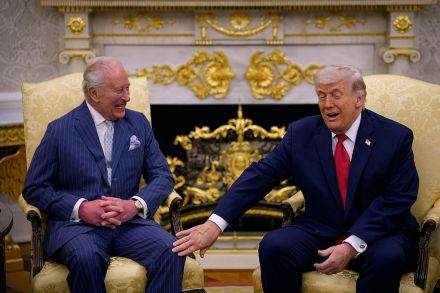
Perfect spring sunshine beamed down on King Charles III and Queen Camilla as they slowly made their way down the sloping lawn of the British Embassy in Washington this week. None of the hundreds of eager Americans gathered at the Embassy’s garden party had ever seen a British king in the nation’s capital. The last visit was in 1939, by King George VI, when a similar garden party took place in the shadow of the gathering storm in Europe.

The world puts an * next to China

From our UK edition

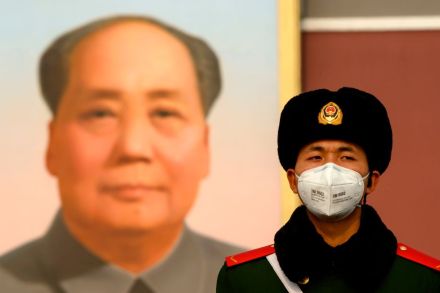
When Donald Trump publicly called into question China’s Covid-19 death rate claims at a recent White House press conference, the chart he pointed to had an asterisk next to China’s name. Thanks to Beijing’s lack of transparency during the pandemic, and subsequent coverup, scepticism over its official statements is now the norm. While seemingly trivial, the asterisk is the powerful symbol of a new era, in which distrust is perhaps the salient feature of the world’s relations with China. Americans are familiar with the asterisk from professional sports.

Is China serious about ‘war’ with America?

From our UK edition

48 min listen

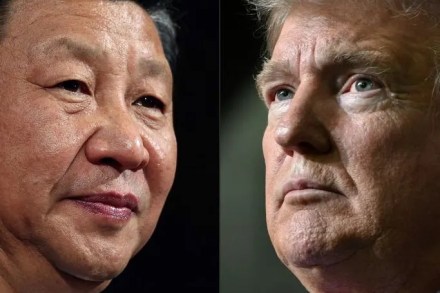
Freddy Gray is joined with Michael Auslin who is an academic and historian at the Hoover Institute and author of the Substack 'THE PATOWMACK PACKET'. They discuss China's response to Trump's tariffs, whether China is serious about threats of war and how concerned Trump is about China's relationship with Russia.

How Biden can help save Sunak

From our UK edition

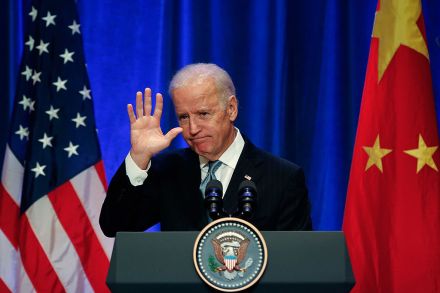
Spare a thought for Rishi Sunak. The Prime Minister must restore the UK’s fiscal stability, calm markets, and support the pound. He needs to unite a country facing increasing American-style social and political polarisation. He must also assure Britain’s allies and partners that it will remain a global actor, opposing Vladimir Putin’s invasion of Ukraine and Beijing’s belligerence. It is a tall order for any leader. But Sunak could be helped significantly by US President Joe Biden in a few key areas – the question is whether Biden wants to do so. The economic, political, and security health of Britain is no minor matter for the United States. As global norms further deteriorate, the UK remains one of the handful of vitally important democracies.

What has Pelosi’s Taiwan trip wrought?

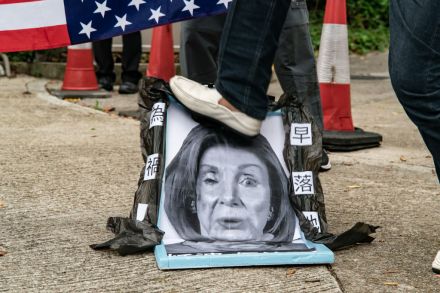
In becoming the highest-ranking American politician to visit Taiwan in a quarter-century, House Speaker Nancy Pelosi has become the dominant foreign affairs news story of the month, eclipsing, if briefly, Russia’s war in Ukraine. Yet beyond all the sound and fury, Pelosi’s trip changed nothing in the cross-Strait balance of power. What it did was to legitimize the “mission creep” bringing Taiwan and America closer together. Both supporters and critics of the trip were quick to invest Pelosi’s visit with major symbolic significance.

What Ukraine means for Asia

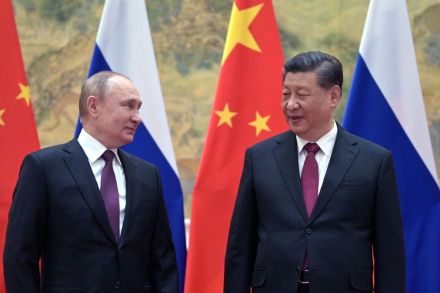
If Asia has entered the debate over the war in Ukraine, it is primarily through questions over the role China is purported to be playing in supporting Russia. Given the now-infamous declaration of a “partnership without limits” by Vladimir Putin and Xi Jinping during the Beijing Olympics just weeks before the invasion, many observers have searched for signs of Chinese aid, military or economic, to Russia in the conflict. The scope of devastation in Ukraine and the probable war crimes being committed by Russian troops understandably mean less attention has been paid to how the conflict might affect geopolitical stability in the Indo-Pacific region. The exception is Taiwan — there has been considerable speculation over the influence of Ukraine on Beijing’s calculations there.

asia

Why China has its eye on the Falklands

From our UK edition

Russia’s brutal invasion of Ukraine has paradoxically heightened China’s global reputation, if only because it has not yet invaded a weaker neighbour. Yet China remains a far greater threat over the long run than Russia. And recent disruptive behaviour by Xi Jinping should remind London, Washington and their allies that Beijing poses not merely a regional threat, but a global one. Though overlooked in the wake of Russia’s devastation of Ukraine, Beijing has flagrantly interfered in Britain’s national interests by proclaiming support for Argentina’s claims to the Falkland Islands. China’s timing was particularly provocative, given that 2022 marks the 40th anniversary of the Falklands war.

China and Russia are an alliance of disruptors

From our UK edition

Four years ago, Vladimir Putin and Xi Jinping made pancakes together in Vladivostok while thousands of their military forces conducted joint exercises in Siberia. This month, as China hosted the Olympics, Putin and Xi announced that a ‘new era’ in international relations had begun, one in which the two great authoritarian powers of the 21st century will reshape the liberal international order established in 1945 and reaffirmed in 1991. Some call it Cold War II, yet the blossoming relationship between Moscow and Beijing may best be thought of as an alliance of disruptors.

The West can only blame itself for failing to prepare for Huawei

From our UK edition

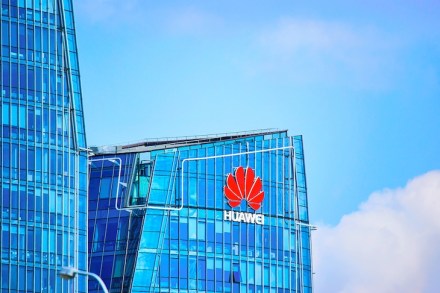
With Boris Johnson’s government deciding to allow Huawei into Britain’s 'non-core' 5G networks, London is charting a new path for Western nations dealing with Huawei. The UK is not the first European nation to accept Huawei as part of their national 5G systems, but it is perhaps the most significant. London’s success in limiting Huawei’s influence in the system, not to mention ensuring cyber security, will be the test of whether the world truly can live with Huawei, or whether resistance is futile against the dominant global telecommunications company. It also will force the American government to decide whether its current information-sharing arrangements with the UK are now at risk.

Modern Japan is a model of stability, thanks to its ancient imperial family

From our UK edition

Japanese Emperor Naruhito was formally enthroned this week, in the second of three major ceremonies marking his accession to the Chrysanthemum Throne. As Brexit chaos continues to paralyse Britain, impeachment roils American politics, and months of anti-China protests rock Hong Kong and flummox Beijing, Japan again offers an example of political and social stability regularly overlooked or dismissed. Even as the country recovers from a devastating super typhoon, it celebrates a new sovereign whose era name, Reiwa (beautiful harmony) is undoubtedly the envy of other great powers being tested at home and abroad. Some of Japan's stability may well come from the symbolic role the imperial family plays, and its conscious appeal to the past.

Britain’s Huawei gamble is sure to anger Donald Trump

From our UK edition

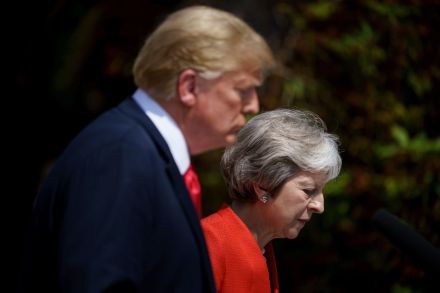
Just hours after Donald Trump's long-delayed state visit to Britain was finally confirmed, reports surfaced that Theresa May and her National Security Council have decided to let Chinese telecommunications company Huawei participate in building Britain’s 5G network. The decision is a direct slap in the face to Washington’s attempts to isolate Huawei, which itself is part of a larger campaign to aggressively counter Beijing’s pervasive and endemic cyberespionage. For a Britain weakened by the ongoing Brexit fiasco, May’s desire to allow Huawei to work on the 5G network risks not merely ruining Trump’s visit, but more importantly further straining ties with Washington. The struggle over Huawei and the West’s 5G future goes beyond Britain.

Could Huawei destroy the special relationship?

From our UK edition

Last week, the Trump administration warned the German government that if it uses 5G wireless technology built by China’s Huawei, Washington will curtail intelligence sharing with its Nato ally. American officials are concerned that Berlin’s willingness to host Chinese technology threatens Nato security, and will give cover to other countries considering letting Huawei into their telecommunications systems. Yet Washington’s blunt statement might also have been a shot across Britain’s bow. Far more than Germany, Britain is a key intelligence partner of the United States, the cornerstone of the so-called 'Five Eyes' community.

Britain is right to send its navy to the South China Sea 

From our UK edition

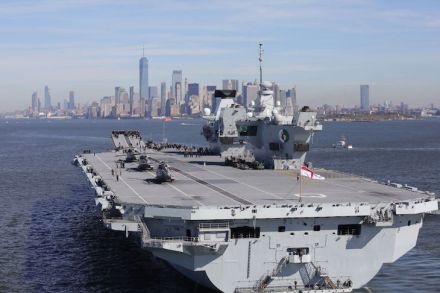
The Royal Navy and US Navy held joint exercises in the South China Sea last week, for the first time since China began building new military bases in those waters. The exercises sent a message to Beijing that it faces an evolving united front of nations committed to maintaining freedom of navigation in some of the world’s most vital waterways. The frigate HMS Argyll joined the USS McCampbell, a guided-missile destroyer, for nearly a week of drills and operations. This comes just a few months after HMS Albion conducted the Royal Navy’s first freedom of navigation operation last August near the contested Paracel Islands, drawing a sharp response from China.

China’s crackdown on Muslims in Xinjiang is sure to backfire

From our UK edition

After repeated denials, Chinese officials finally admitted last month that they have set up internment camps in the far-western province of Xinjiang, where up to one million ethnic Uighurs, almost all of whom are Muslim, are being held. Under China’s anti-terrorism law and ‘religious affairs regulation,’ the government in the Xinjiang Autonomous Region publicly introduced the 'Regulation on De-extremification.' What it describes is a new gulag, where re-education and the suppression of Uighur identity is its main goal. There are approximately 25 million Muslims in China today, but these new draconian laws in Xinjiang are aimed solely at the ethnic Uighurs, of which there are just over 11 million.

Making China great again

From our UK edition

Most reporting on Jeremy Hunt’s visit to China this week went little further than his slip of the tongue in describing his wife as Japanese rather than Chinese. Preoccupied by that trivial matter and any offence it might have given the new foreign secretary’s hosts (which seemed to be none), commentators missed the somewhat more substantial issue of why China is so keen to oblige Britain’s requests for a trade deal.

President Xi’s power grab will have global repercussions

From our UK edition

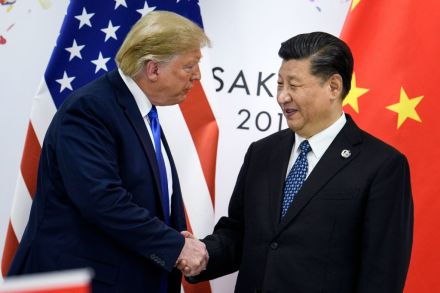
President Xi Jinping's second term was meant to come to an end in 2023. However, the news that the Chinese Communist Party’s Central Committee has moved to eliminate the constitution’s two-term limit for presidents suggests he plans on staying in power longer than this – and perhaps indefinitely.  The rest of the world will now have to figure out how best to deal with him. Xi is currently 64 years old, which means he could dominate Chinese politics until 2030. This would let him implement his ambitious 'Belt and Road Initiative', to link Eurasia through Chinese infrastructure and trade, and the 'Made In China 2025' plan, which aims to make China a manufacturing leader in advanced technologies like aviation, energy and IT.

Technology theft goes both ways – as China is discovering

From our UK edition

Beijing is starting to worry that the rest of the world will steal its advanced technology. The Chinese military is calling for stronger protection of the country’s intellectual property, particularly in sensitive defence areas. Supercomputers, drones, rocket launchers and the like, were singled out as areas where 'generations' of Chinese research cannot be allowed to be put at risk. Give China credit where it’s due: not in its technology, but in its gall. China is the world’s largest or second-largest economy (depending on how you count) because of its size, its hard-working labor force, its focus on STEM education, its relentless government policy, etc, etc. But also because it cheats.

China vs America: the espionage story of our time

Why aren’t spy stories sexy anymore? The revelations last year that Beijing destroyed America’s espionage ring inside China a few years ago, including executing a number of US informants, got a brief flurry of attention and then subsided beneath the waves. News reports of American bureaucrats arrested for passing information to the Chinese have also barely raised eyebrows. Now the ex-CIA agent suspected of being the mole that led to the collapse of America’s spy operations in China has been arrested, though on a lesser charge of simply possessing classified information. How long before Americans turn back to Donald Trump’s tweets or the latest #MeToo charges?