Sasha Lensky

Sasha Lensky is a pseudonym of a Russian citizen known to The Spectator. He writes anonymously due to censorship laws

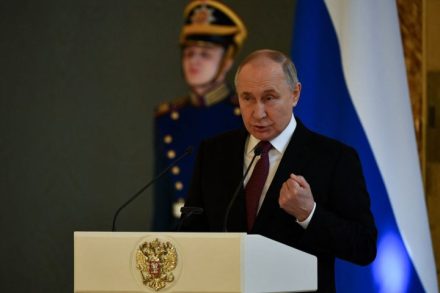
How Putin used doublethink to manipulate the Russian election

From our UK edition

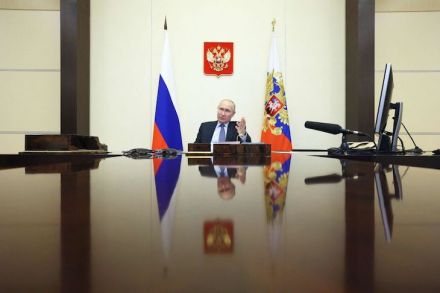
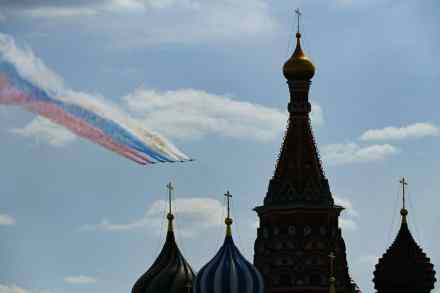
In many ways, the recent presidential shenanigans in Russia, officially dignified with the word ‘elections’, have become a strange ritual. They’re both utterly predictable in terms of their result and, at the same time a source of anxiety for all concerned. Putin has been in power now for 25 years, and no elections under his rule have corresponded even minimally to internationally recognised standards. Their main violation has been the extensive use of public sector workers, both to run the elections and vote the way the Kremlin tells them to. Thus the electoral machine is technically always ready to provide any result required of it.
What the rise of Islam means for Putin’s Russia

From our UK edition

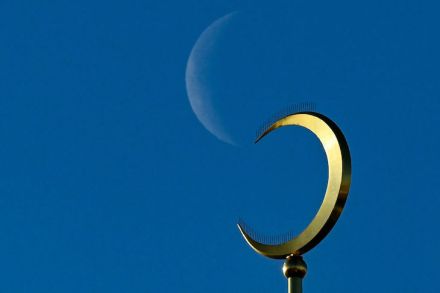
The term ‘Russians’, which the world likes to use for the 144 million citizens of my country, is often a misleading one. Granted, in the 2020 census, 71 per cent of those surveyed identified themselves with this label, with only three ethnic groups coming in above one per cent: Tatars (3.2 per cent), Chechens (1.14 per cent and Bashkirs (1.07 per cent). This all suggests a near mono-ethnic state with only minor influences from other nationalities and cultures. But nothing could be further from the truth. Many non-Russians, provided they master the language well enough, simply prefer to identify themselves with the ‘title nation’.

Russians feel bleaker than ever after Alexei Navalny’s death

From our UK edition

The news about Alexei Navalny’s death came as a shock to anti-Putin Russians like myself – he’d been a central figure of opposition in Russia for more than 15 years. Yet in other ways, not a surprise at all – for three years he’d been in the claws of a regime with a long-established history of getting rid of its better-known opponents. Navalny himself was realistic about his chances, saying in court he was ‘under the total control of men who adore applying chemical weapons to everything, and no one would bet three kopecks on my life now.’ But still, with Navalny you held onto the irrational hope it might turn out differently.

War with Russia won’t be what the West expects

From our UK edition

Is war coming our way? The warning last month from Admiral Rob Bauer, the chairman of Nato's Military Committee, indicates as much. 'Anything can happen at any time’, Bauer said, as he suggested Nato should prepare for a conflict with Russia in the next 20 years. No less alarming – in fact, rather more so – is the language emanating from Moscow. In a UN speech at the end of January, foreign minister Sergei Lavrov urged the West to listen to the Kremlin’s arguments ‘while there is still time'.

Can Europe match Russia’s remarkable rise in weapons production?

From our UK edition

'You need to understand that if Europe is under attack we will never come to help you and to support you,' Donald Trump reportedly told top European officials while he was U.S. president. In the present situation, with a war not seen on this scale since 1945 being fought in geographical (if not yet political) Europe, it’s now imperative for the region to review its reliance on the White House, its assumed ally and source of support since the end of WW2. This time round, it may well have to fall back on its own reserves and stamina – but does it have enough of either?

Why hasn’t Russia collapsed?

From our UK edition

Following Vladimir Putin’s invasion of Ukraine in February 2022 and the calamitous, early missteps of the Russian army, many Western experts fairly crowed over the possibility of Russia disintegrating. ‘It’s high time to prepare for Russia’s collapse,’ ran a typical headline on the Foreign Policy website, while a survey of 167 foreign-policy experts by the Atlantic Council think tank last January found that 40 per cent of them expected Russia to break up internally within ten years due to ‘revolution, civil war, political disintegration’ and so on.

How Vladimir Putin stays in power

From our UK edition

With Vladimir Putin’s invasion of Ukraine well into its attritional phase, Western aid to Kyiv seems to be drying up. No clear strategy at all, it seems, has been found for dealing with the Russian leader. Some hope internal divisions at the Kremlin will lead to a collapse, others that an anti-Ceausescu-style uprising – as in Romania in 1989, culminating in the leader’s brutal execution by his people – will miraculously give the coup de grace to the president’s ambitions. Certainly, if Putin were to rule in a genuinely authoritarian manner, either of these things could happen. But up to now he’s been far too wily and flexible for that. ‘Russia is basically North Korea these days, isn’t it?’ a British friend asked recently.

Why Putin doesn’t want to negotiate

From our UK edition

Discussion of peace talks between Ukraine and Russia has until recently, among most Western governments, been considered something of a no-go area and a sign of wilting faith. Yet with hopes vanishing that any counter offensive will bring a decisive change in the war, and another, headline-monopolising conflict breaking out in Gaza, this taboo in the West looks set to be broken. During a recent prank call to which she fell victim, Italian PM Giorgia Meloni probably spoke for many when she said there was ‘a lot of fatigue’ over Ukraine and that she herself had some ideas for finding ‘a way out'.

Ukraine’s Nato limbo is set to continue

From our UK edition

As the Nato summit on international security opens this week in Vilnius, one obvious issue will be the success or otherwise of the Ukrainian counter-offensive. Apart from the liberation of a few villages, where are the victories earlier forecast by figures like head of military intelligence Kirill Budanov, who predicted the Ukrainian army would be in Crimea by the end of spring? Hopes of a quick push to the Azov sea, inspired by the retaking of Kharkhiv last September, have hit a sandbar this time round: denser Russian defence lines and widespread use of landmines. Come autumn, the weather will be against the Ukrainians too, the muddy season making a counter-offensive more and more beleaguered. Is anything for the Ukrainians going right?

Why Wagner’s coup failed

From our UK edition

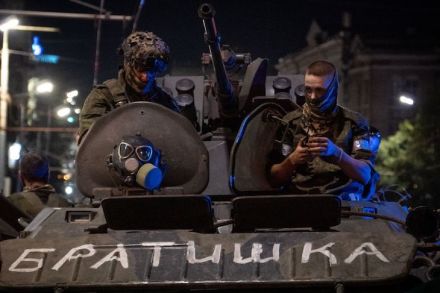
When Russia’s full-scale invasion of Ukraine was launched, the overall mood among those around me – Russians from a range of ages and social groups – was one of scarcely believable elation, even hope. ‘Judging from the news this morning,' one man said to me that day, 'the borders of the Russian Empire will soon be moving westwards.’ I didn't share his enthusiasm. ‘In two years’ time, we’ll be lucky if there’s a Russian Empire at all,’ I replied. Last Saturday, as Prigozhin and his Wagner group set out on their abortive coup, the picture was reversed: for the first time in 18 months, I felt a limited optimism about Russia's future.

Russian children are being groomed for the war in Ukraine

From our UK edition

As we pass the 15-month mark of Russia’s war against Ukraine, it’s clear the Putin government is in a fix. It cannot win this war nor afford to lose or stop it. But with another mobilisation politically risky and tens of thousands of Russian citizens now fallen on the battlefield, it’s evident they will need all the volunteers they can lay their hands on.   There is a problem facing the regime: the war itself is significantly less popular with the young in Russia than with the middle-aged and elderly. Over half the 55+ age-group in the country support the current war, while for 18- to 24-year-olds the figure falls to 26 per cent.

Russians live in fear of Putin’s dreaded draft

From our UK edition

On 9 May, Russia’s wet squib this year of a Victory Day, president Putin addressed his beleaguered troops in Ukraine directly. ‘There is nothing more important now than your combat effort,’ he said. ‘The security of the country rests on you today, the future of our statehood and our people depend on you.’ Readers of The Spectator may be interested to learn of the Russian state’s efforts to augment this crucial ‘defensive’ force. One day last week in provincial Russia, I was awoken at 3 a.m. by the ping of a new email from Gosuslugi, a state portal that facilitates public services (e.g. getting a passport or even checking your kids’ grades at school).

How Russia is weathering the storm of Western sanctions

From our UK edition

After war broke out in Ukraine a year ago, amidst a slew of shop closures, sanctioned products and predictions about the ruble falling to rock bottom, there was a wave of panic buying in Russia. Many expected supply chains to fully collapse by the end of 2022 as internal stocks of this and that ran out. Meanwhile pro-war Russians, or at least economic optimists, repeated the mantra that the world needed Russian oil and gas, and that Western companies could barely do without the vast Russian marketplace to sell their products in. Everything, they said, would return to normal. As of February 2023, we’re caught somewhere halfway between these two extremes.

The budget black comedy that foreshadowed the rise of Putin

From our UK edition

‘The truth is with us,’ said Vladimir Putin in a speech after the Ukrainian regions of Luhansk, Donetsk, Zaporizhzhia and Kherson ‘voted to rejoin’ Russia on 30 September. ‘And the power is in truth, and that means we will be victorious.’ Putin’s harping on ‘truth’ – even as he annexed four regions of Ukraine following referenda almost universally believed to be shams – has strong roots in Russian culture. Historically it has never been hard to sell the Russian people notions of their own rectitude, even at their darkest moments. The Russians, this world view assumes, are a uniquely spiritual people and incapable of actual malice – whatever they do – towards their neighbour countries.

Putin is cornered

From our UK edition

On the evening of Sunday 11 September, a general alert was announced in nearly all the regions of Ukraine. A mass launch of precision missiles by the Russian Black and Caspian Sea fleets had just been detected. This is not the first occasion in this war on which such an attack has happened. The difference is, the aggressor this time deliberately aimed for critical civilian infrastructure – and hit it. Within an hour, reports of explosions and fires were followed by power-failures in several regions, with two of them, Kharkiv and Donetsk, suffering complete blackouts.

Beer and loathing: Why Russians loved and hated Gorbachev

From our UK edition

A paradox about Mikhail Gorbachev for my generation of Russians – I was seven years old when he became general secretary in 1985 – is that he will be remembered as both liberal and killjoy, an uneasy combination that left him at times making enemies in all directions. The first is easy enough to understand. Gorbachev’s glasnost – a determination that political life (indeed, personal life) should become more open and transparent – was partly just canny politics. Any reasonable politician requires people to speak candidly to him and needs a feedback loop to govern effectively (indeed, it’s arguably Putin’s lack of one that led him into this war).

The two faces of Vladimir Putin

From our UK edition

‘Putin’s Philosopher’ Aleksandr Dugin, self-styled deep thinker and ideological architect of current Russian expansionism, has claimed there are two distinct version of the president. There is a ‘Lunar Putin’ – practical, cautious, a supporter of the capitalist economy and free trade, alert to international opinion. And a ‘Solar Putin’, a messiah, fully embracing his mission to restore the great Eurasian Empire and confront the collective West.  This split-personality may well be at the heart of recent inconsistencies in Russian policy.

The tide is turning in Russia’s war on Ukraine

From our UK edition

Could Russia triumph? There's a growing sense that, as the months wear on, Ukraine's resistance is faltering. The West is losing interest in the conflict and the unthinkable is being said: Putin is winning the war on and off the battlefield. The image of countless hordes of Russian troops grinding down the Ukrainian defences with a 3-to-1 advantage in artillery is at first glance quite convincing. Meanwhile, off the battlefield, the ruble rate is sky high, and sanctions seem to have no discernible effect on the war. Putin’s fiercest opponent Boris Johnson is leaving office, and the energy-dependency of Europe seems to play right into Russia’s hands. Putin now occupies nearly 25 per cent of Ukraine and is attempting, with limited success, to Russify these areas.

The end of the Russian dream

From our UK edition

I was born in the USSR in 1978 and was just becoming a teenager as the Soviet Union fell. For a schoolboy this was heady stuff. There was no more talk of ‘Good Old Lenin’ in class, and literature and history sessions suddenly became interesting. For the first time, we openly discussed the Stalinist Terror and the gulags, and sat around reading formerly banned books like Bulgakov’s Master and Margarita. We condemned the madness of the Cold War and rhapsodised about the golden future. The world was opening up and it seemed nothing could prevent its peoples from becoming lasting friends. This was Fukuyama’s ‘End of History’ and we believed in it. How clueless, in retrospect, both Fukuyama and we young Russians were. But how happy too.

Russia’s anti-Putin backlash is gathering strength

From our UK edition

The backlash in Russia to Putin’s war is now visibly getting underway. For the first time, the President risks becoming a disappointment to all sides of the political spectrum. Those who advocate for war see his military efforts in Ukraine as flaky and inadequate. Those who oppose it see those same actions as war crimes – both against Ukraine and Russia, their homeland. Waging war is a costly business. In April alone, Russia received 133 billion roubles less in oil and gas revenues than expected, and a fall in the standard of living is inevitable.