Rome

The making of America

From our US edition

The story of the United States was determined from the start by the manner of its birth. The original 13 English colonies may seem lost in the distant past. Yet it was their diversity that was the key to their union. The creation of the US reflected the tensions of 17th-century England, pitting the Puritan republicans of Massachusetts against the landed gentry of Virginia, Quaker New Jersey against Catholic Maryland. The Founding Fathers resolved these tensions by instituting the concept of states’ rights. Their Constitution was a tissue of compromise, yet it was robust. What served to unite 13 colonies still holds together the mightiest nation on Earth.

America

Ambition is in America’s DNA

From our US edition

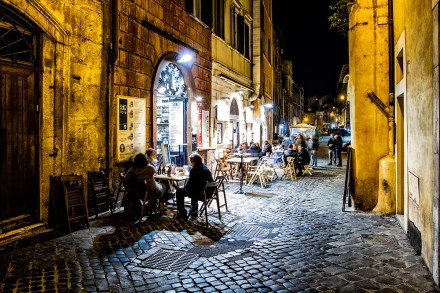
Rome Last month, I found myself sitting on a panel discussing the European Union’s digital asset strategy. The conversation revolved around the digital euro, tokenization, stablecoins, financial regulation and the future of capital markets. Outside the conference hall stood one of the great cities of human civilization. Rome encourages long thoughts. Every stone seems to remind visitors that history is not a straight line. Great nations rise, stagnate and sometimes disappear altogether. Walking through Rome after the conference, I started thinking less about digital currencies and more about something else entirely. America turns 250 this year. For any nation, two and a half centuries is a respectable run. For a republic, it is extraordinary.

Mapping the Emerald Isle: Land, by Maggie O’Farrell, reviewed

Maggie O’Farrell’s two previous historical novels, Hamnet and The Marriage Portrait, made her a household name. Land marks a return to her Irish roots: ‘Every family has its myths and ours was that my great-great-grandfather had worked on the early maps of Ireland.’ The year is 1865 and 31-year-old Tomás, a mapmaker, accompanied by his ten-year-old son Liam, is in the employ of the English redcoats and tasked with surveying and mapping Ireland from top to bottom, rocky outcrop to drumlin.

Welcome to Diocletian’s cashless society

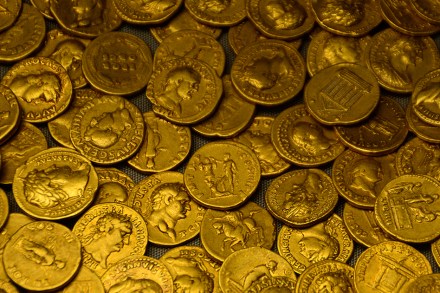
Money is a pagan god because it has value only as long as people believe it does. Refuse to believe, and the value disappears. In the 3rd century ad, the Roman empire was under intense pressure, and emperors resorted to increasing taxes and debasing coinage to fund its protection. The result was terrifying inflation. Cash became worthless. Soldiers refused to be paid in it and the state to accept tax in it. So ‘requisitioning of supplies’ – goods, materials, labour – became, in effect, taxation ‘in kind’ to pay for the military; and the army plundered at random to ‘collect’ it. The emperor Diocletian rationalised the system by organising this requisitioning of supplies into a coherent tax scheme.

Why should it be shameful to study the Classics?

Mary Beard opens this book with a recollection of her first meaningful encounter with the ancient world. It was 1960, and she was five years old, visiting the British Museum with her mother. Peering into one of the glass cases, she spotted an unassuming, oddly triangular loaf of bread from ancient Egypt. Seeing her struggle to obtain a better view, a curator lifted the object out. ‘Never under-estimate how powerful the simple act of unlocking a museum case can be,’ Beard reflects 66 years on. She describes Talking Classics as ‘more a memoir than a thesis’, but it is also a thought-provoking meditation on wonder. It was thauma, she reflects, that Aristotle held responsible for sparking philosophical thought to begin with.

Rome vs Jeff Bezos’s yacht 

Rumour has it that Jeff Bezos, the founder of Amazon, is selling his agreeable little yacht Koru because it will not fit into places like Monaco and Venice and costs far too much to run. Poor old Jeff! Had he studied Classics, he would have known this was not a wise project. In 240 BC, we are told, Archimedes designed for Hiero II, tyrant of Syracuse, the cargo boat Syracusia, protected by fearsome armaments, carrying 400 tons of grain and 500 tons each of pickled fish, wool and other cargo. It had interior panelling of cypress, ivory and aromatic cedar. Multi-coloured mosaics re-telling the Iliad covered the three floor-levels. There was a temple to Aphrodite, the ship’s guardian deity, and statues and artworks were liberally scattered about.

The Romans would tax anything 

When Nero committed suicide in ad 68, he left Rome deep in debt after military campaigns, building himself a fabulous ‘Golden House’, and the great fire of Rome (AD 64). His successor Vespasian, who fought his way to power in late ad 69, set to work at once. A hard-working man of humble origins and simple tastes, Vespasian was well suited to the task: ‘He got up early, even when it was still dark, and read the letters and the official breviaria’ (‘reports’; Latin brevis, ‘brief’). He sold off some imperial estates and nearly doubled provincial taxes, while extending Roman citizenship.

Should America be Venice or Sparta?

From our US edition

Americans never tire of asking themselves whether their country is turning into Rome. A Latin motto on the Great Seal of the United States proclaims a novus ordo seclorum – a “new order of ages.” But in the poem from which that phrase is adapted, Virgil’s fourth eclogue, the words mean a quite exact replay of past events: there will be, for example, another voyage of the Argo and another Trojan War. Our new order might likewise repeat the history of Rome. One philosopher who gave a great deal of thought to new orders and Roman history as a template was Niccolò Machiavelli, particularly in his Discourses on the First Ten Books of Titus Livy.

How Pope Leo XIV is quietly reshaping the Vatican

On the afternoon of Easter Sunday last year, Pope Francis was driven through St Peter’s Square in an open-topped Popemobile. A few weeks earlier he had nearly died from pneumonia, so pilgrims were thrilled to watch him blessing babies. They told journalists that it was a miracle to see the 88-year-old Argentinian in such good shape. At 9.45 the next morning the Vatican announced that Francis had just died from a stroke. And so began the preparations for a conclave that elected the second pope from the Americas. Cardinal Robert Prevost – ‘Bob’ to his friends – was a Chicago-born dual citizen of the United States and Peru. Until 2023 he’d been bishop of the Peruvian diocese of Chiclayo.

How the poor survived in ancient Rome

Those for whom the welfare state does not provide as much welfare as they would like might care to reflect on the plight of the Romans, for whom there was no such thing as the welfare state. A superb monograph by Kim Bowes, Surviving Rome: The Economic Lives of the Ninety Percent, drawing on papyrus and other finds from across the Roman and Egyptian worlds, shows in fascinating detail how the poor survived. She defines the poor as the c. 90 per cent who ‘worked with their hands’, most of whom were farmers renting their farm (rents were not cheap). One Soterichos rented a number of small, scattered plots, with small yields, and died in debt. His wife and children budgeted carefully and started breeding farm animals (very profitable).

Is Al Carns rich enough for the Romans?

Some Labour MPs are demanding that Colonel Alistair Carns, a former Royal Marine who served in the military for 24 years and was awarded the Military Cross for his service in Afghanistan, become leader of the party. The Romans would have approved, but might have felt he was not quite rich enough. Rome fought its rivals for control over the only resources anyone had: land and its products and people. The more territory a state controlled, the more powerful it would be. Those doing the fighting were led by the phenomenally wealthy landowners who, combining political authority with military command, controlled the Senate. Success in the field of battle virtually guaranteed an influential political career.

Le Sirenuse: the loveliest hotel in the world

From our US edition

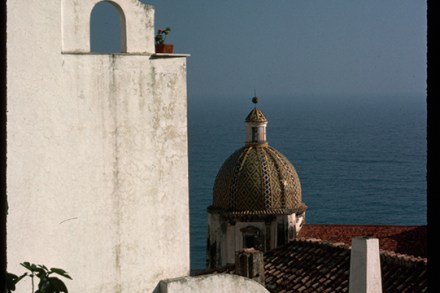
Look out from the balcony of your room at Le Sirenuse and you’ll see the trio of rocks jutting out of the Tyrrhenian Sea that gave the hotel, one of the last true greats in the world, its name. The three jagged islets form an archipelago, which is said by the Greeks to have been the home of sirens whose enchanting songs lured sailors to their deaths. Le Sirenuse, a scarlet palazzo wedged into the cliff-face of Positano, boasts similar powers of attraction. In a place known around the world for its beauty, Le Sirenuse stands out. It has developed a reputation as the loveliest hotel in the world; somehow, it exceeds that billing.

Don’t bother visiting Rome

As a general rule, once a city erects turnstiles to tourist attractions which were once free to visit, it is time to go elsewhere. Never more so than in the case of Rome. Last week the Italian capital introduced a €2 charge to visit the Trevi Fountain. Tight-fisted tourists like me will still be able to see the Trevi from a distance – it happens to stand in a public street. The charge will be only for sad Instagrammers who want to get close enough to chuck their coins in the water. The city’s tourism department has suggested the fee is needed to manage the throngs of vacationers. Even then, God forbid, they won’t be able to take off their sandals and take a dip – that will earn them a €500 fine. Which raises the question: why bother visiting the fountain at all?

rome

The Romans would have known how to deal with Epstein

To look through Jeffrey Epstein’s curriculum vitae on Google is to be left goggling at how this revolting creature could have gained credence among so many influential people. Roman censors would surely have dealt with him in pretty short order. Their job was to keep an eye on the moral and financial standing of every Roman in the state. For those who did not live up to the standard expected of a citizen, a mark (nota) was put next to his name on the census rolls, resulting in humiliation and loss of political status. Extravagantly flashing one’s wealth about, bad parenting, cruelty, disgusting behaviour, disreputable business practices, cowardice on the battlefield and suchlike would lead to infamia (public ignominy) and expulsion from official positions.

The pedants’ revolt

From our US edition

The scene is the imperial palace on the Palatine Hill in Rome in the 2nd century. The philosopher Favorinus is waiting to greet the emperor Hadrian when a grammarian corners him and launches into a lecture on the grammatical qualities of the word penus, meaning “provision.” “Well and good, master, whatever your name is,” Favorinus replies wearily. “You have taught us more than enough about many things of which we were indeed ignorant and certainly did not ask to know.” A thousand years later, the Muslim polymath Ibn al-Jawzi tells of an Arabic grammarian, notorious for punctilious use of archaic language, attempting to negotiate with a carpenter. “What is the price that this pair of doors costeth?” the scholar asks.

Intellectuals pedants

Odd man out: The Burning Origin, by Daniele Mencarelli, reviewed

This terse, unsparing novel can be summed up thus: after nearly a decade’s absence, the successful designer Gabriele Bilancini returns home to suburban Rome, where he wrestles with an identity crisis. His family and friends – his intimates before he moved to Milan and raced up the social ladder – feel like shameful reminders of his proletarian origins, which he keeps hidden – in ‘the way you hide a sin’ –  from the Milanese élite he is anxious to fit in with. In Milan, where he works and lives with his girlfriend Camilla, the daughter of his mentor, the celebrity designer Franco Zardi, Gabriele dresses smartly, limits lunch to ‘a salad with full protein’ and purges his speech of any signs of his unsophisticated upbringing.

Glamour and intrigue: The Silver Book, by Olivia Laing, reviewed

Olivia Laing has had a productive couple of years. The Silver Book arrives hot on the heels of The Garden Against Time, a memoir-cum-environmentalist treatise published in 2024. It is a novel of stunning imaginative power that was apparently written in just three months. Set in 1975, during the making of two great works of Italian cinema, Federico Fellini’s Casanova and Pier Paolo Pasolini’s Salò, it is suffused with the glamour and intrigue of these filmmakers’ worlds. It offers a fictional retelling of the events that led up to Pasolini’s murder – a crime that remains unsolved – on 2 November.

Which are the ‘Twelve Churches’ that made Christianity?

40 min listen

What links the Church of the Nativity in Bethlehem and St Peter's in Rome with the 16th Street Baptist Church in Birmingham, Alabama, and Canaanland in Ota, Nigeria? These are just some of the churches that Anglican priest and writer the Revd Fergus Butler-Gallie highlights in his new book Twelve Churches: An Unlikely History of the Buildings that made Christianity. The Anglican priest and writer joins Damian Thompson on Holy Smoke to explain how each Church not only tells a story but also raises a surprising dilemma for modern believers. Fergus aims to tell the history of the Churches 'warts and all' and argues that, from Turkey to Britain, today’s Christians must be prepared to defend their religious spaces.

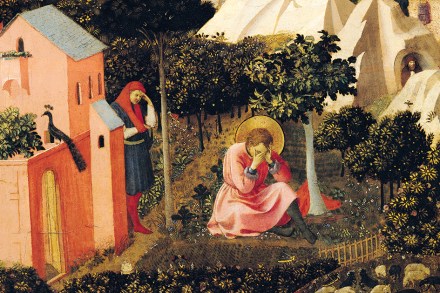
The spiritual journey of St Augustine

When I lived in south London, my Algerian barber used to tell me that he came from Souk Ahras, ‘the home town of Augustine’. I found it strange to hear a forbidding doctor of the early church described as a local boy made good, but Catherine Conybeare shows me that I should not have done. Algerians have remembered what the Church has often overlooked: that Augustine’s thinking owes everything to his birth in 354 in what was then Roman North Africa. Although five million of his words survive, they come to us from the hands of medieval copyists who were more interested in setting out his doctrines than in recording his life. They cut up his sermons and letters, removing irrelevant or cryptic local allusions.

Reform’s motherland, Meloni’s Italian renaissance & the adults learning to swim

46 min listen

First: Nigel Farage is winning over women Does – or did – Nigel Farage have a woman problem? ‘Around me there’s always been a perception of a laddish culture,’ he tells political editor Tim Shipman. In last year’s election, 58 per cent of Reform voters were men. But, Shipman argues, ‘that has begun to change’. According to More in Common, Reform has gained 14% among women, while Labour has lost 12%. ‘Women are ‘more likely than men… to worry that the country is broken.’ Many of Reform’s most recent victories have been by women: Andrea Jenkyns in the mayoral elections, Sarah Pochin to Parliament; plus, there most recent high profile defections include a former Tory Welsh Assembly member and a former Labour London councillor.