Rome

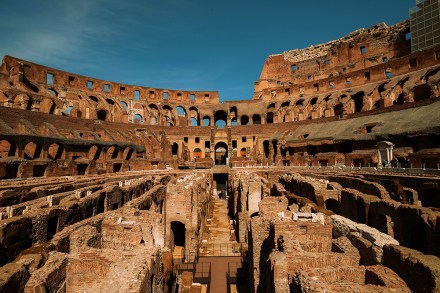
Enthralling: BBC4’s Colosseum reviewed

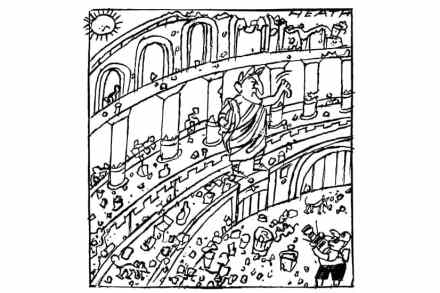
In the year 2023, the Neo-Roman Empire was at the height of its powers. A potentially restive populace was kept in check using a time-honoured technique known as ‘Bread and Circuses’. The ‘Circuses’ part consisted of a remarkable piece of technology in which spectacles could be beamed directly into the homes of the citizenry, filling them with awe, wonder, gratitude and a sense of their insignificance in the sweep of history.

Trans women take over DC softball

From our US edition

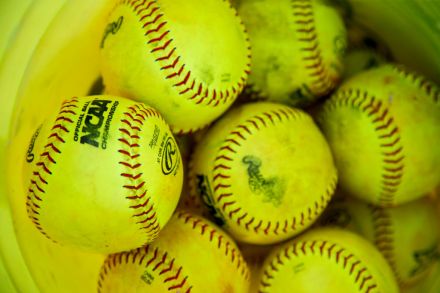
It’s not just women’s high school and college sports that need to be protected from biological men, apparently. The DC intramural softball circuit has become another battleground for “trans rights.” Cockburn has learned that Democratic and progressive co-ed teams are skirting league rules regarding how many women must play in each game by filling their spots with trans women — i.e. those born as males. The Center for American Progress, a left-wing think tank, fielded an over-six-foot trans woman in a recent game against a conservative media outlet. Some players on the team said that it didn’t matter much because the person was not very good at softball, while others got the impression that he/she was intentionally playing poorly to avoid criticism.

softball

‘I always made an awkward bow’: John Keats’s poignant farewell

On Sunday 17 September 1820, John Keats and his travelling companion, the young painter Joseph Severn, set sail for Italy, where it was hoped that the warmer climate would benefit the poet’s failing health. It didn’t. He died of tuberculosis in Rome the following February at the age of only 25. The last five months of Keats’s life – the sea voyage to Naples, including ten exhausting days stuck in the bay in quarantine; the overland journey to Rome; his last weeks spent in the rooms above the Spanish Steps that are now a museum – are the focus of this enthralling and original new study. Its author, Alessandro Gallenzi, the publisher of Alma Books, is well acquainted with Keats’s letters, having recently translated them into Italian.

Raphael – saint or hustler?

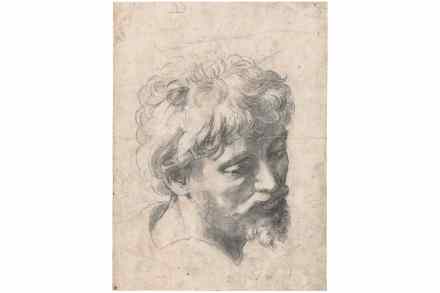
For tourists to Rome, the must-see event of 1833 was the exhumation of Raphael from his tomb in the Pantheon. For years the city’s Accademia di San Luca had been claiming possession of the artist’s skull and running a profitable line in souvenirs. That September, the question would be settled. Was the ‘most eminent painter’, lauded in his friend Pietro Bembo’s fulsome epitaph as having ‘lived virtuously 37 virtuous years’, really buried there? And did his skeleton have a head? Hans Christian Andersen was one of 3,000 ticket holders for the six-day lying-in-state. The skeleton was there all right, complete with head, but its dignity, reported Andersen, was somewhat dented by the rattle of bones when it was returned to the tomb.

Is it an exaggeration to talk of a ‘gender war’?

According to Nina Power’s forceful and rather unusual What Do Men Want?, we in the West are currently engaged in a ‘battle over sex’. And while that has been going on, ‘another war is being waged. This one is against men, the whole damn lot of them!’ To back up this ‘war on men’ idea, Power cites, among other examples, I Hate Men, a book by the French writer Pauline Harmange in which she damns men as ‘violent, selfish, lazy and cowardly... men beat, rape and murder us’. Power’s argument is that the all-out assault on men has gone too far. The mistake, she says, is in ‘treating people as mere examples of a negative category, rather than as complex individuals in their own right’.

Why I’m going to the National Conservatism conference in Rome

The Guardian has heavily criticised me for agreeing to speak at a conference on national conservatism in Rome, alongside several European political leaders. The paper has suggested a Tory MP should not speak at an event 'with far-right' figures on the subject of nationalism. But they are wrong – and here is why I will be going nonetheless. What is the fate of national independence and self-determination in the context of today’s European Union? Are the freedom of nations that were promised when the Berlin Wall fell a generation ago still desirable now? Both are fair questions, you might think and ones the conference will aim to answer. But any mention of the word ‘nationalism’ tends to send even some open-minded people into a tailspin.

New Rome, new home

From our US edition

I believe that Maximinus Thrax, whose brief reign ran from 235 to 238 AD, was the first Roman emperor never to have set foot in Rome. The Thracian brute started a trend. As the years went by, more and more Roman emperors gave the city a miss. Diocletian (284-305), who brought the crisis of the third century to an end, hated the city. Some later emperors settled on Ravenna as the seat of power for the Western empire. Constantinople emerged as HQ for the East. Rome retained a certain ceremonial significance but was increasingly irrelevant to the business of empire. The turn away from Rome happened for many reasons.

rome

If Hamilton is cringe, then America is done for

From our US edition

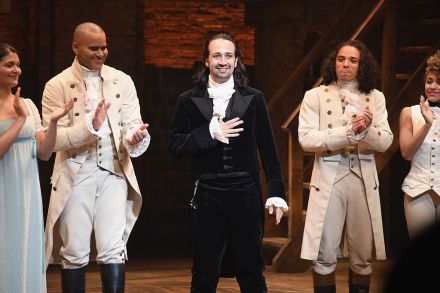
I’ve been reliably informed that Hamilton is now cringe. Constance Grady of Vox explains, drawing on a scene from the recent reboot of Gossip Girl: “You know, I saw Hamilton… before it went on Broadway,” brags one of the teens, hoping to impress his cool new girlfriend Zoya. “You into that play?” Zoya, the wokest of the group and the one with the most sophisticated literary taste, sighs deeply and rolls her eyes. “No doubt it’s a work of art,” she allows. “But …” Zoya doesn’t finish her sentence.

How to spend 48 hours in Rome

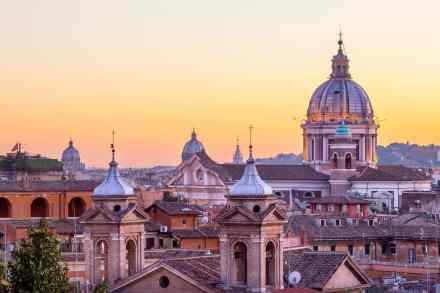
Contrary to the title of this article, do not spend 48 hours in Rome on your first attempt. Unless you have legs of steel, high levels of determination and a desire for non-stop sightseeing. The two pivots about which the city’s history turns – the Vatican and the Roman Forum – are best taken a day each and visited early, fuelled by €1 coffees and sweet, crumbly pasticcini off sticky local bar counters: 48 hours, done. But to focus on these titanic monuments of European history alone is to miss the real chatter of the city: couples meeting for Monday drinks by the Ponte Sisto, watching the sun go down on the Tiber from the Isola Tiberina, lingering under the vaults of (some) of Rome’s more than 900 churches.

Joe Biden takes his failures on tour

From our US edition

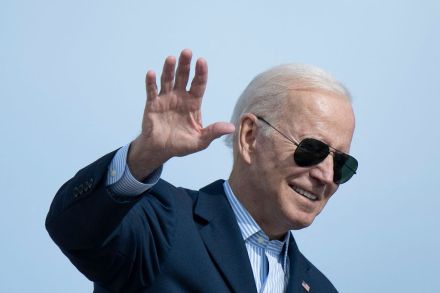
How’s the ice cream in Rome? Joe Biden is about to find out. Word is he is excited about the gelato, which is A-OK, since it may distract him from the fact that he has nothing to report when he gets there. The president — I mean, Joe Biden — was supposed to reestablish “normality” to an office so badly bruised by the mad tweeter — no, make that “ex-tweeter” — who came before. “Normality” was one big selling point. The other was Biden’s vaunted foreign policy experience. Reality check one: was Joe Biden’s performance at that town hall with Anderson Cooper last week an exhibition of “normality”? Or was it yet another disagreeable instance of elder abuse, parading a man suffering from senile dementia before the cameras?

failures g20 cop26 biden

How Rome’s rubbish became a political problem

‘Excommunication,’ reads a stone plaque on the wall of the church of St Theodore in Rome, ‘and a fine of 200 gold ducats for any person who should dare to unload… waste of any kind and cause a stink outside these precincts.’ This threat might have worked when the plaque was erected in 1703, but it certainly doesn’t work now. A few paces down the street, a waist-high pile of stinking rubbish bags festers in the autumn sunlight, pecked at by seagulls. In Rome, even the rubbish is eternal. Italy’s capital is strewn with litter — geological layers of the stuff. In a pile of last year’s crumbled leaves by my house on the Tiber embankment I found a beer bottle with a sell-by date of September 2020.

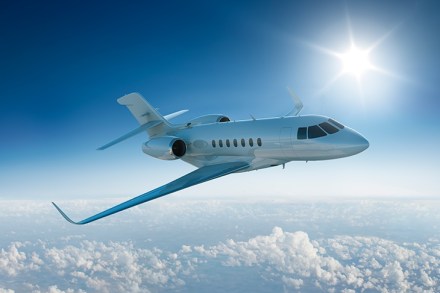
Tales from my private jet

Gstaad I was very sad to read of Rupert Hambro’s death. I didn’t know him well, but first met him long ago, along with his younger brother Rick, also gone. They were both quintessential English gentlemen: handsome, kind and with a great sense of humour. Rupert invited me to lunch quite a few times, but because of circumstance I was never able to reciprocate. The last one was at Wiltons, which he owned, I believe, but he never gave any indication that all was not well. In an age of crybabies and professional victims, Rupert stood out like a saint in hell. He leaves his lovely wife Robin, a Philadelphia-born beauty, and two children. Thinking of Rupert and Wiltons, I remembered a dinner I gave there long ago for my friend Nick Scott to meet some of The Spectator people.

An elegy on the end of elegance

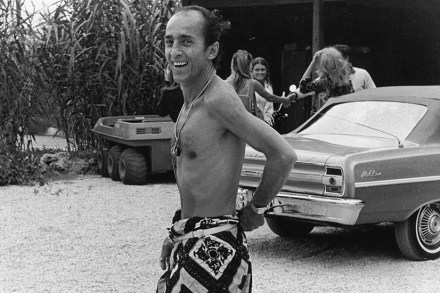
Gstaad During these dark, endless periods of lockdown, let’s take a trip down memory lane to a time when we still had real high life: parties galore, carefree girls in their summer dresses, and drunken dawns playing polo in dinner jackets. Life forms began to move properly about 500 million years ago, but I will take you back only 50 or so years, when chic creatures moved to the beat of the samba, the tango, the waltz and the cha-cha-cha. The Roaring Twenties roared because of the Great War’s privations, and the fabled, fabulous Fifties were a reaction to the second world war. People ached to have a good time — to splurge, to let go. Hunger and post-war austerity had turned even Paris into a gloomy, cold place.

A Chaucerian tale: Pilgrims, by Matthew Kneale, reviewed

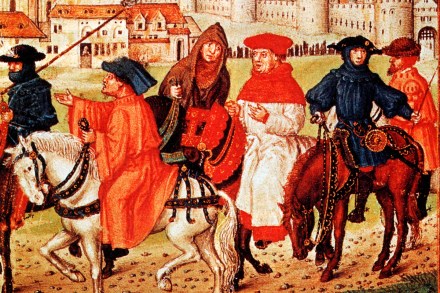
Matthew Kneale is much drawn to people of the past. In his award-winning English Passengers, he captured the sensibilities of a group of 19th-century seafarers bound for Tasmania in search of the Garden of Eden by chronicling their voyage in 21 singular, vibrant voices, and by weaving into their journey a heavy thread of racist and colonial endeavour. In his latest book, he returns to these themes of voyage and discovery, adventure and prejudice with his band of 13th-century pilgrims who have assembled in England as a ‘proper party’ in order to travel to Rome — without, they hope, being ‘stabbed or robbed or cudgelled to death along the road’.

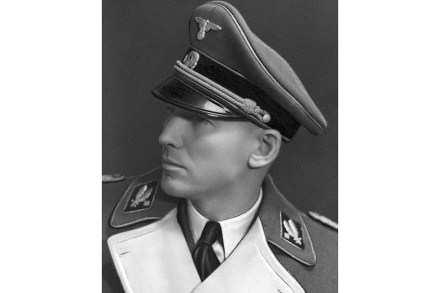
It’s still impossible for Horst Wächter to recognise his father as a Nazi war criminal

In 1926, while putting in place the repressive laws and decrees that would define his dictatorship, Mussolini appointed a new chief of police. Arturo Bocchini was 36, a lawyer and former prefect of Brescia, a cynical, vengeful, witty and corpulent Neapolitan. Under his 17-year tenure, fascist Italy became one of the most sinister and efficient police states of the years between the wars, with overlapping and rivalrous legal and illegal police bodies, fed by a vast army of informers and spies. Said to number around 10,000 at their peak, these men and women were to be found in every corner of Italian life, from the civil service to the Vatican, from industry to the Royal household, from the army to universities.

Guilt by association at Rome’s National Conservatism Conference

This week’s National Conservatism Conference in Rome was an important meeting of national conservatives from all over the world. Sadly, it has been sullied by disgusting attacks from British liberals against the Conservative MP Daniel Kawczynski for agreeing to take part. Publications from BuzzFeed to the Guardian pounced on Kawczynski’s decision to appear alongside European leaders such as Hungary’s Viktor Orbán and Italy’s Matteo Salvini as proof of ‘anti-Semitic’, ‘racist’ and ‘homophobic’ beliefs, held not only by Daniel but the political party to which he belongs, the Conservative party. The Tories subsequently proved themselves to be utterly witless in the face of the attack (a point to which I return to below).

What did the Romans ever do for us?

From our US edition

In 2006, as British Euroskepticism was gathering steam, Boris Johnson published a book called The Dream of Rome, in which he held up the Roman Empire as a successful model of European integration and as a foil to the unlovable European Union. That was a rather peculiar choice. You would hardly have expected the future Brexiteer to yearn for a time when Britain was but a marginal province of a ‘European super-state’, a label that Margaret Thatcher had once applied to the EU, yet which is a much better fit for imperial Rome. But Johnson also failed to realize that it had actually been the end of Roman power that launched Europe’s long, tortuous and unique journey toward modernity — a journey in which the sovereign United Kingdom came to play such an outsized role.

romans

Steve Bannon goes to war with the Pope

From our US edition

Former White House chief strategist Steve Bannon says Pope Francis is ‘beneath contempt’. Bannon is, of course, far from being the only Catholic to criticize the Pope, who is accused of watering down Catholic teaching. The pontiff’s stance on the migrant crisis – he has said migrants’ dignity should be a priority over national security – has also angered many Catholics, as has Francis’s recent suggestion that populism sows the hate that leads to Hitler. For Bannon, who despite having been married three times says that his Catholicism is central to his life, these things show that the Pope is on the side of the elite and not the little guy. His solution?

steve bannon