Rome

Should America be Venice or Sparta?

Americans never tire of asking themselves whether their country is turning into Rome. A Latin motto on the Great Seal of the United States proclaims a novus ordo seclorum – a “new order of ages.” But in the poem from which that phrase is adapted, Virgil’s fourth eclogue, the words mean a quite exact replay of past events: there will be, for example, another voyage of the Argo and another Trojan War. Our new order might likewise repeat the history of Rome. One philosopher who gave a great deal of thought to new orders and Roman history as a template was Niccolò Machiavelli, particularly in his Discourses on the First Ten Books of Titus Livy.

Le Sirenuse: the loveliest hotel in the world

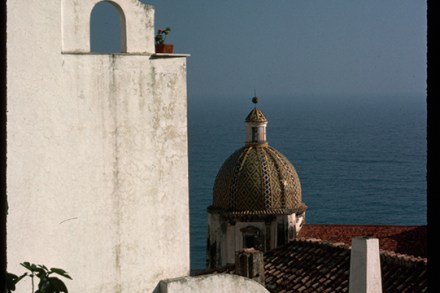
Look out from the balcony of your room at Le Sirenuse and you’ll see the trio of rocks jutting out of the Tyrrhenian Sea that gave the hotel, one of the last true greats in the world, its name. The three jagged islets form an archipelago, which is said by the Greeks to have been the home of sirens whose enchanting songs lured sailors to their deaths. Le Sirenuse, a scarlet palazzo wedged into the cliff-face of Positano, boasts similar powers of attraction. In a place known around the world for its beauty, Le Sirenuse stands out. It has developed a reputation as the loveliest hotel in the world; somehow, it exceeds that billing.

The pedants’ revolt

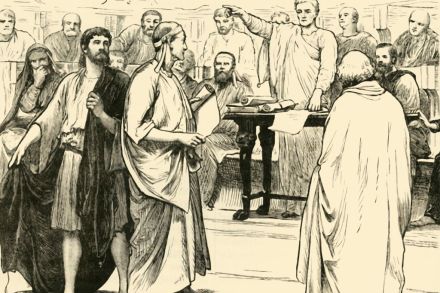
The scene is the imperial palace on the Palatine Hill in Rome in the 2nd century. The philosopher Favorinus is waiting to greet the emperor Hadrian when a grammarian corners him and launches into a lecture on the grammatical qualities of the word penus, meaning “provision.” “Well and good, master, whatever your name is,” Favorinus replies wearily. “You have taught us more than enough about many things of which we were indeed ignorant and certainly did not ask to know.” A thousand years later, the Muslim polymath Ibn al-Jawzi tells of an Arabic grammarian, notorious for punctilious use of archaic language, attempting to negotiate with a carpenter. “What is the price that this pair of doors costeth?” the scholar asks.

Intellectuals pedants

Why I’m ditching ‘authentic’ travel

I’ve always heard Americans describe the food in Rome as “authentic,” though maybe that’s only relative to our three square meals of Little Debbies, reconstituted meat and freeze-dried astronaut food. The things we eat are not authentic food. But abroad, authenticity means anything sourced locally and served by a very small old woman with limited English. If a nonna told me she’d fished anchovies out of the Trevi Fountain and plucked chicory from cracks in the sidewalk, I’d swoon and think: they really know how to do it right in Europe. Authenticity, to me, also means a little discomfort. Bones in your rabbit stew. Lugging a suitcase up a dirt road. Getting pickpocketed.

authentic

Rome is ready for its close-up

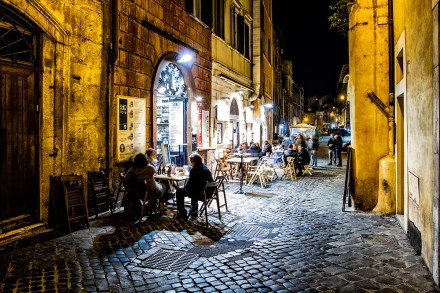
Rome Like a Parioli matron shedding her curlers, pins and hairnet in anticipation of a major family celebration, Rome’s monuments are emerging from shrouds of cladding and scaffolding ready for their close-up. The angels and river gods of the Ponte Sant’ Angelo and the Piazza Navona shine as blinding white as the day they emerged from Bernini’s workshop. The ancient granite basins of the Piazza Farnese fountains shimmer with an ethereal bluish light. The big occasion is the Papal Jubilee year of 2025, expected to draw a whopping 32 million visitors. That’s more than ten times Rome’s population, and half as many visitors again as in a normal year. If you’re planning a visit, do it soon before the city is entirely swallowed by crowds.

Rome

A brief history of parties

As Enoch Powell pointed out, “all political careers end in failure.” More often than not, those failures are self-inflicted. Without Partygate, for example, Boris Johnson might still be Britain’s prime minister. Although the debacle may not have been the final nail in his professional coffin, it certainly arranged the wake. His fans and critics alike were infuriated by the idea of public servants living it up while the rest of the nation was locked down during Covid in May 2020. That sort of scandal, however, is nothing new — anger at Partygate is nothing to some earlier episodes in history. Alexander the Great was an Olympian boozer who habitually went on weeklong binges after subjugating his enemies.

history
Rome

Hotel hopping in Rome

Summer in Rome. Expectation: breathe the soul of the classics, soak up the history, feel the romance. Reality: breathe in the AC, soak in a pool of sweat, feel ever so slightly unhinged. My plans to indulge in Italy’s time-honored tradition of la passeggiata — strolling around looking stylish, gelato in hand — were quickly nixed by the Cerberus heatwave. Dreams of meandering around perhaps the world’s most famous open-air museum gave way to lying recumbent with a handheld fan. Jumping from the relative cool of a sleeper-train carriage onto the platform at Termini station felt akin to opening an oven door and climbing in. Red alert warnings were issued as the mercury soared toward 119°F.

Meloni and her lieutenants plan their takeover of Europe

Cosenza, Italy On a dreary afternoon in May, hundreds of well-dressed Italians crowded into a regal government building in Cosenza, aptly named The Provincial Palace of the Hall of Mirrors. It was a campaign event for Fratelli D’Italia, Italy’s ruling political party. The supporters listened attentively for more than two hours. The mood was triumphant and the politicians spoke as if victory was inevitable. They spoke about a plan for when, not if, the right assumed greater power in Europe.  “This confidence is due to the fact that we, as Italy, have acquired centrality in a very important way,” said Giovanni Donzelli, the party’s national organization manager.  “This centrality is all thanks to the great work done by our leader Giorgia Meloni.

Meloni

Opening a bottle with… chef Heros de Agostinis

“Stealth wealth” became A Thing in 2023. TikTok was awash with “get the look!” fashion videos; magazines full of think pieces on crisp white shirts and camel cashmere. The idea is to ooze money — or at least look like you do — in classic, understated cuts and colors. What the Streeps and Paltrows have been doing for decades is now the standard for the aspirational and chronically online.  The trend came to mind as I tumbled into Rome’s five-star Anantara Palazzo Naiadi during the Cerberus heatwave. Slick with sweat, a suitcase half my size and missing one wheel, toenails unpainted and there to interview chef Heros de Agostinis, I wished I’d paid more attention. There are fancy hotels, then there are stratospherically fancy hotels like this one.

heros de agostinis

The Roman Empire’s years of glory

The Roman emperor Domitian began life as a spare. At the end of the first century CE, while his brother Titus was the heir to their father Vespasian, the younger boy’s “sense of resentment and frustration had festered,” writes Tom Holland. “Rather than stay in Rome, where his lack of meaningful responsibility was inevitably felt as something raw,” Domitian moved away with a wife whom his family disliked, “doomed forever to be a supernumerary,” paranoid, attracting gossip, avoiding any company in which “innocent mention of baldness” might be viewed as “mockery of his own receding hairline.” In most judgments by posterity this Prince Harry of the early empire fulfilled all this lack of early promise. Big brother Titus became emperor only briefly.

Roman

Trans women take over DC softball

It’s not just women’s high school and college sports that need to be protected from biological men, apparently. The DC intramural softball circuit has become another battleground for “trans rights.” Cockburn has learned that Democratic and progressive co-ed teams are skirting league rules regarding how many women must play in each game by filling their spots with trans women — i.e. those born as males. The Center for American Progress, a left-wing think tank, fielded an over-six-foot trans woman in a recent game against a conservative media outlet. Some players on the team said that it didn’t matter much because the person was not very good at softball, while others got the impression that he/she was intentionally playing poorly to avoid criticism.

softball

New Rome, new home

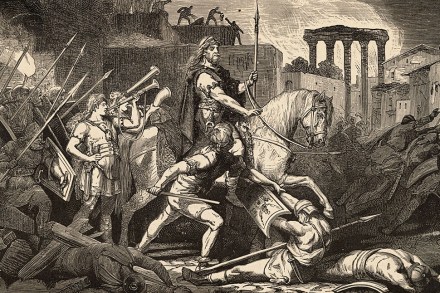
I believe that Maximinus Thrax, whose brief reign ran from 235 to 238 AD, was the first Roman emperor never to have set foot in Rome. The Thracian brute started a trend. As the years went by, more and more Roman emperors gave the city a miss. Diocletian (284-305), who brought the crisis of the third century to an end, hated the city. Some later emperors settled on Ravenna as the seat of power for the Western empire. Constantinople emerged as HQ for the East. Rome retained a certain ceremonial significance but was increasingly irrelevant to the business of empire. The turn away from Rome happened for many reasons.

rome

If Hamilton is cringe, then America is done for

I’ve been reliably informed that Hamilton is now cringe. Constance Grady of Vox explains, drawing on a scene from the recent reboot of Gossip Girl: “You know, I saw Hamilton… before it went on Broadway,” brags one of the teens, hoping to impress his cool new girlfriend Zoya. “You into that play?” Zoya, the wokest of the group and the one with the most sophisticated literary taste, sighs deeply and rolls her eyes. “No doubt it’s a work of art,” she allows. “But …” Zoya doesn’t finish her sentence.

Joe Biden takes his failures on tour

How’s the ice cream in Rome? Joe Biden is about to find out. Word is he is excited about the gelato, which is A-OK, since it may distract him from the fact that he has nothing to report when he gets there. The president — I mean, Joe Biden — was supposed to reestablish “normality” to an office so badly bruised by the mad tweeter — no, make that “ex-tweeter” — who came before. “Normality” was one big selling point. The other was Biden’s vaunted foreign policy experience. Reality check one: was Joe Biden’s performance at that town hall with Anderson Cooper last week an exhibition of “normality”? Or was it yet another disagreeable instance of elder abuse, parading a man suffering from senile dementia before the cameras?

failures g20 cop26 biden

What did the Romans ever do for us?

In 2006, as British Euroskepticism was gathering steam, Boris Johnson published a book called The Dream of Rome, in which he held up the Roman Empire as a successful model of European integration and as a foil to the unlovable European Union. That was a rather peculiar choice. You would hardly have expected the future Brexiteer to yearn for a time when Britain was but a marginal province of a ‘European super-state’, a label that Margaret Thatcher had once applied to the EU, yet which is a much better fit for imperial Rome. But Johnson also failed to realize that it had actually been the end of Roman power that launched Europe’s long, tortuous and unique journey toward modernity — a journey in which the sovereign United Kingdom came to play such an outsized role.

romans

Steve Bannon goes to war with the Pope

Former White House chief strategist Steve Bannon says Pope Francis is ‘beneath contempt’. Bannon is, of course, far from being the only Catholic to criticize the Pope, who is accused of watering down Catholic teaching. The pontiff’s stance on the migrant crisis – he has said migrants’ dignity should be a priority over national security – has also angered many Catholics, as has Francis’s recent suggestion that populism sows the hate that leads to Hitler. For Bannon, who despite having been married three times says that his Catholicism is central to his life, these things show that the Pope is on the side of the elite and not the little guy. His solution?

steve bannon