Tom Payne

Why Cicero’s life and times have never seemed more relevant

From our UK edition

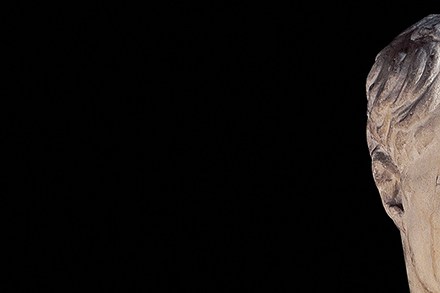
How should we think about Cicero? He was the orator who claimed that he did his best to save the Roman Republic from decadence. To more recent readers, he has come to seem regressive as well as ridiculous: he opposed the redistribution of land and loathed the idea of doling out grain rations. But it’s his self-promotion that makes us roll our eyes. Early in her biography, Catharine Edwards understates the obvious: ‘False modesty was never Cicero’s problem.’ What she does best throughout her surprisingly page-turning account is to reveal Cicero through his own words. (Admittedly, she has many, many words to choose from.) She quotes him reflecting on an early, junior role as a quaestor in Sicily: ‘What Sicilian quaestor has won greater renown or popularity?
A post-Brexit entertainment: The Proof of My Innocence, by Jonathan Coe, reviewed

From our UK edition

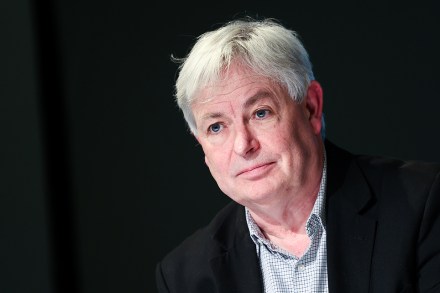
This is a novel that spans the Truss administration, from its heady dawn to its decline and fall 49 days later. The Proof of My Innocence starts as a satire, not so much of Truss and her world but the ideologists who thought that the prime minister’s brief, shining moment was their long-cherished future. They meet in a collapsing Cotswolds castle to hear from delegates such as Josephine Winshaw, who intones that everything now is woke: ‘Paying your TV licence was woke. Getting vaccinated was woke... buying avocados was woke, and reading novels was woke.’ Another speaker praises a reactionary novelist to a much smaller audience. Into this milieu steps Christopher Swann, a blogger. To him the radical economic libertarianism that Truss represents stems from early 1980s Cambridge.

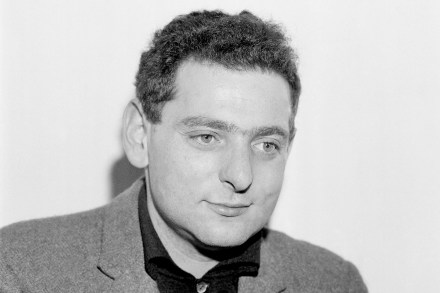
For a creative writing exercise in lockdown, revisit George Perec

From our UK edition

Those who have been on creative writing courses may be familiar with the ‘I remember’ exercise. The two words become a prompt for whatever you recall, and can lead to a fruitful ramble into senses and impressions worth plundering later. It could be useful during a lockdown (‘I remember the water cooler/my girlfriend coming round/trains’) and at any time can evoke feelings of nostalgia.The painter and poet Joe Brainard created the form, and his sequences of recollections snowballed into I Remember (1975), a sensual memoir of his childhood in Oklahoma (‘I remember my first erection’). The wonderful Georges Perec heard about it from a friend. He didn’t read Brainard, but adopted the form and made it his own.