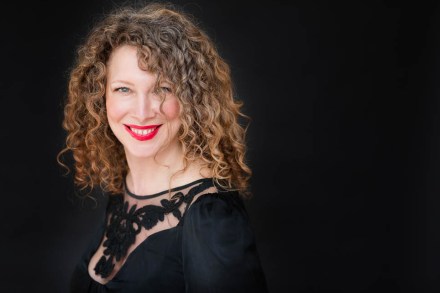
Genevieve Gaunt

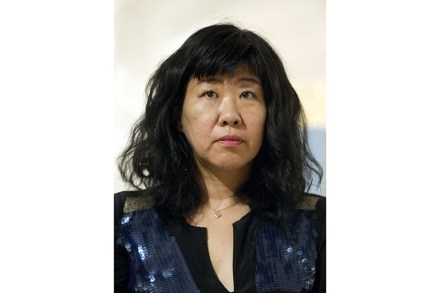
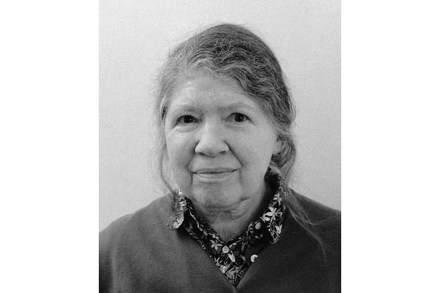
Tina Brown, Travis Aaroe, Genevieve Gaunt & Deborah Ross

From our UK edition

31 min listen

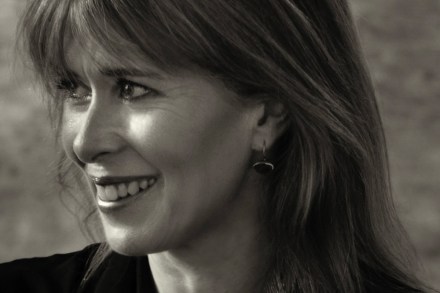
On this week’s Spectator Out Loud: Tina Brown explains her bafflement at how Jeff Bezos destroyed the Washington Post; Travis Aaroe warns against Britain putting its hopes in military man Al Carns MP; Genevieve Gaunt explores survival of the fittest as she reviews books by Justin Garcia and Paul Eastwick; and finally, Deborah Ross declares herself a purist as she reviews Emerald Fennell’s adaptation of Wuthering Heights. Produced and presented by Patrick Gibbons.

Searching for the one and only is futile, say the sexologists

From our UK edition

In a tiny town tucked into the desert an hour’s drive out of Nevada, a legal brothel operates. Its ‘menu’ of services range from less expensive sexual intercourse to the most expensive, ‘the White Whale’, starting at $20,000. Dr Justin Garcia, there with his colleagues doing research, asked the manager, a woman with bright yellow hair and a Minnie Mouse voice, what the White Whale was. She explained: ‘Oh, that’s the full Girlfriend Experience… sex isn’t necessarily part of it, but you’ll get a hell of a cuddle.

Is this the end of the cold case?

On March 6, 1959, nine-year-old Candice "Candy" Rogers of Spokane, Washington, went out after school to sell campfire mints door-to-door. Sweet-natured with strawberry blonde curls and a button nose, she was small for her age. Her mother, Elaine, had one clear rule that Candy must be home before dark. But Candy never came home. Her disappearance triggered a 16-day manhunt involving thousands of people, the Marines and the US Air Force. In fact, three airmen lost their lives on the second day when their helicopter hit high tension cables and plummeted into the Spokane River.  After two weeks of searching for Candy, all detectives could find were her scattered mint boxes.

A satirical portrait of village life: Love Divine, by Ysenda Maxtone Graham, reviewed

From our UK edition

Love Divine, the debut novella by Ysenda Maxtone Graham, is set in the leafy, fictional parish of Lamley Green and weaves together a tableau of stories about the community. The title comes from the hymn ‘Come Down, O Love Divine’; but beneath this bourgeois Church of England world of round-robins and milky tea is a satirical portrait of a parish with a dark underbelly. Maxtone Graham perfectly captures hypocritical English chit-chat, and the polyphony of perspectives works well. The central thread concerns Lucy Fanthorpe, 54, who is hit by the sudden death of her beloved husband Nick and the gradual realisation that he might have been having an affair. One of my favourite characters is Hugh, the lonely schoolmaster.

When two worlds collide: Well, This is Awkward, by Esther Walker reviewed

From our UK edition

Esther Walker, an established journalist and writer of non-fiction, opens her debut novel in the business world but segues into the concerns of balancing children and career. It’s a page-turner, silly yet serious; and, as with many good comedies, the humour comes from pain. Mairéad Alexander is a childless 44-year-old social media exec in London, caught in the hamster wheel of corporate work, hair bleaching and ‘buzzkill’ bad dates, when her life is tripped up by the unexpected arrival of Sunny, her 11-year-old niece. When we meet Mairéad she has recently sold her social media business for a packet and is now a consultant for the company that bought it. She finds herself working alongside poisonous colleagues with saccharine overtones and enduring the Gen-Z fashion police.

Hell is other academics: Katabasis, by R.F. Kuang, reviewed

From our UK edition

‘Katabasis, noun, Ancient Greek: The story of a hero’s descent to the underworld.’ R.F. Kuang’s latest novel is a promising adventure story full of magic and maths but let down by florid prose. When Alice Law, an American postgraduate student of ‘Analytic Magick’ at Cambridge, learns of the death of her chauvinist thesis supervisor Professor Grimes, she and her peer, Peter Murdoch, must rescue his soul from the eight courts of hell. Their journey comes with the debt of half a lifetime. But without Grimes, Alice is stuck in academic limbo on Earth, so she must pay this penalty and ‘beg for his life back from King Yama the Merciful, Ruler of the Underworld’. The hellscape they encounter differs from Dante’s vision.

Murderous impulses: The Possession, by Annie Ernaux, reviewed

From our UK edition

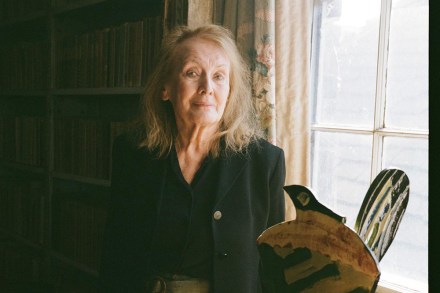
‘The first thing I did after waking up was grab his cock – stiff with sleep – and hold still, as if hanging on to a branch.’ The opening of Annie Ernaux’s essay might suggest that the ‘possession’ of the title is of a husband’s penis. But after our nameless protagonist leaves ‘W’, her husband of 18 years, it is with his new woman that she becomes obsessed – possessed with a ‘primordial savagery’. She is maraboutée, or bewitched. Ernaux writes not in the heat of desire but in retrospect. The translation by Anna Moschovakis is chicly austere. Like concrete poetry, small paragraphs sit adrift on the page; the text is as unmoored as our protagonist.

A cremation caper: Stealing Dad, by Sofka Zinovieff, reviewed

From our UK edition

Sophocles’s Antigone is a battle over the burial of a body and the war between law and divinity. What rules – the decree of a king or conscience? This is the crux of Sofka Zinovieff’s Stealing Dad. When Alekos, a Greek sculptor, is struck down in 2018 by a heart attack and drowns in a London canal, he leaves behind not just a spiky widow, Heather, but seven children and five colourful ex-wives. The children find it hard to imagine that his death could be so mundane: more fitting would have been ‘swimming the Hellespont or shredded by sharks’. Alekos is a ‘Zorba-like figure’ whose selfishness has caused chaos: ‘the human collateral damage consisted of furious women, abandoned offspring and wounded spirits’.

Marriage, motherhood and money: Show Don’t Tell, by Curtis Sittenfeld, reviewed

From our UK edition

Show Don’t Tell, a collection of 12 short stories by the American writer Curtis Sittenfeld, explores marriage, sex, money, racism, literature and friendship from the 1990s to the present. There is a fine line here between memoir and fiction, with many of the female protagonists being Midwestern, bookish Democrats – quite like Sittenfeld herself. In the eponymous story, Ruthie, a writer, dismisses the notion that ‘women’s fiction’ is perceived as giving off ‘the vibe of ten-year-old girls at a slumber party’. She reflects on internalised misogyny: ‘It took a long time, but eventually I stopped seeing women as inherently ridiculous.

Undercover in the Dordogne: Creation Lake, by Rachel Kushner, reviewed

From our UK edition

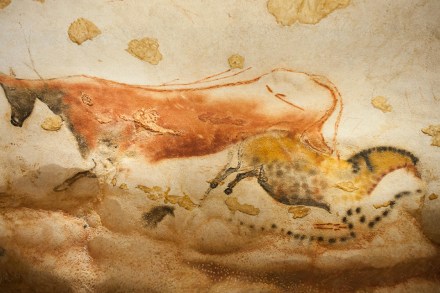
Creation Lake, by the American author Rachel Kushner, is a dazzling, genre-defying novel, satirical yet profound. In her 2018 novel The Mars Room, Kushner took us inside the US prison system and eviscerated it. Here she goes back a decade, as well as 40,000 years, interweaving into the main plot notes on the extinction of the Neanderthals. The book is a spy thriller which also interrogates the human condition, our origins, and the conundrum of mankind’s future.   The year is presumably 2013 (the song ‘Get Lucky’ blasts from every radio) and a 34-year-old American spy named Sadie Smith has landed in France, nursing a bruised ego after a failed FBI mission.

Echoes of Tom Brown’s School Days: Rabbits, by Hugo Rifkind, reviewed

From our UK edition

The year is 1993 and 16-year-old Tommo has been moved from a day state school of 2,000 pupils in brown blazers that ‘when it rained… smelled of shit’ to Eskmount, an elite Scottish boarding school, where boys wear kilts and put their ‘cocks on your shoulder’ when you’re working in the library (easier in a kilt) and routinely hang ‘smaller kids in duvets... out the window’. The horseshoe effect in schooling terms: the more expensive, the more savage. Hugo Rifkind’s Rabbits opens with a bang: ‘When the shotgun went off under Johnnie Burchill’s brother’s chin, word had it, the top of his head came off like the top of a turnip lantern.’ It is reminiscent of Donna Tartt’s The Secret History.

The awkwardness of love in middle age: You Are Here, by David Nicholls, reviewed

From our UK edition

Zip up Heathcliff in Gore-Tex, give Cathy laugh-out-loud lines, fold in the poignancy of E.M. Forster, embed quaint maps, blisters, a dash of existential terror and heaps of heartache and you have David Nicholls’s latest novel. If Nicholls’s One Day (recently adapted for Netflix) is a bildungsroman, then You Are Here explores learning to love again later on in life. In One Day we had Emma and Dexter, and here we have Marnie and Michael. Michael is a 42-year-old geography teacher living in York, and Marnie is a 38-year-old proofreader from London. Both have endured the casual cruelty of broken marriages and have withdrawn into themselves to avoid future hurt.

Unequivocally Japanese: The Premonition, by Banana Yoshimoto, reviewed

From our UK edition

Who are you without memory? This is the question that sits at the heart of The Premonition by Banana Yoshimoto, best known for her 1988 novella Kitchen, which was a smash hit in Japan and adapted for film. The Premonition is a similarly slender work and one that casts a delicate spell. Nineteen-year-old Yayoi has the perfect family – doting parents and a brother she adores – but she feels unsettled, as if she’s forgotten something vital in her past: ‘There, in the midst of such a beautiful evening, my heart must have been full of that premonition.’ Looking for answers, she goes to live with her eccentric aunt Yukino, who she feels is a ‘siren to those of us who had lost part of our childhood’, and the answers she discovers change her life forever.

The sleepless lives of great writers

From our UK edition

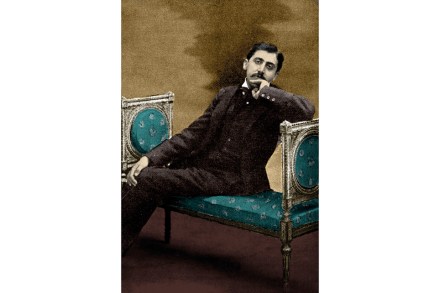
To sleep or not to sleep – that is the question the French writer Marie Darrieussecq asks in her latest book, which explores the insomnia that has haunted her for 20 years since the birth of her first child. From that date, she writes, it ‘has attached itself to me like a small ghost’. Darrieussecq is best known for her surreal novel Pig Tales (1996), but Sleepless is an account of her search for a cure to insomnia and the solace she finds in discovering writers such as Franz Kafka (‘the patron saint of insomnia’), Marcel Proust, Georges Perec, Sylvia Plath, Susan Sontag, Fyodor Dostoevsky, Mahmoud Darwish, Haruki Murakami, Aimé Césaire, Jorge Luis Borges and Tchicaya U Tam’si have all suffered from sans sommeil.

Macabre allegories: No Love Lost, by Rachel Ingalls, reviewed

From our UK edition

Rachel Ingalls might just be the best writer of the late 20th century you’ve never heard of. Born in Boston in 1940 (her father was a professor of Sanskrit at Harvard), Ingalls dropped out of school and studied in Germany before winning a place at Radcliffe College. Shakespeare’s quadricentennial drew her to London and in 1965 she came for good, living in north London until her death, aged 78, in 2019. Ingalls has been praised by the likes of Margaret Atwood, Joyce Carol Oates, Ursula K. Le Guin and Daniel Handler (a.k.a. Lemony Snicket). Faber’s Charles Monteith described her as ‘a genius – not a word I use lightly’ and published her debut in 1970. John Updike called her novella Mrs Caliban ‘an impeccable parable’.

Neo-gothic horror: Strega, by Johanne Lykke Holm

From our UK edition

In Johanne Lykke Holm’s neo-gothic novel Strega, Rafaela, claustrophobic in her parents’ ‘yellow’ and ‘dusty’ flat, dreams of working as a maid at the mountain-nestled Olympic Hotel. She luxuriates in a bath with a brochure, mesmerised by photographs of ‘girls in pearl-white aprons, girls eating ruby-red apples straight from the tree’. It’s a foreshadowing of the post-lapsarian limbo she is about to enter. Rafaela arrives with eight other girls at the remote and unheimlich alpine hotel: the proportions seem ‘off’ and there’s a ‘smell of dust and water and burned hair’. Even the lake feels carnivorous, claiming lives every year.

A family scandal straight out of a Hollywood film noir

From our UK edition

In 1973, in White Plains, New York, Donna Freed was told, in a ‘shroud of shame’ and without any soothing explanations, that she was adopted. The six-year-old’s life was plunged into a dark hinterland of anxiety. Freed spent the next 38 years fearful that the discovery of her birth mother would reveal ‘a terrible or seedy story, tragic circumstances, terror, violence, incest or rape’. In fact the truth awaiting her was a sensation straight out of a Hollywood film noir: a scandalous tale of dirty glamour, passion and pseudocide. Her parents were in fact embroiled in one of the juiciest death fraud cases of 1960s America. Duplicity is a Janus memoir, part adoption story, part true crime history.

The misery memoir of a devoted polyamorist

From our UK edition

The rules of sex can kill. In 1844 an angry mob shot Joseph Smith, the founder of Mormonism, for his polygamous ways. But in the counterculture today, polyamorists face less of a physical threat and more of a metaphysical one, as chronicled by the journalist Rachel Krantz in her tortured book Open: An Uncensored Memoir of Love, Liberation and Non-Monogamy. At its heart it’s the dark tale of a vulnerable woman falling for a manipulative man who slowly sucks the soul and marrow out of her. I wondered: why write this book, Rachel? You’re on the path to healing, so why peel your skin off with your nib and present it to the reader?