Refugees

The new age of the refugee

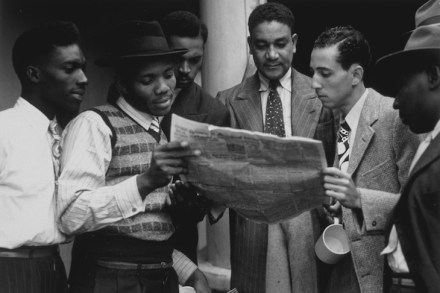
After years of estrangement in a foreign land, what can immigrants expect to find on their return home? The remembered warmth and blazing beauty of Jamaica have remained with some British West Indians for over half a century of exile. Yet 100 changes will have occurred since they left. Long brooding over the loss of one’s homeland can exaggerate its charm and sweetness. The first mass immigration to British shores occurred in the late 19th century, when Ashkenazim arrived by the thousand after escaping the pogroms in Tsarist Russia. Many changed their names and even their accents. The trappings of orthodoxy — beards, sidelocks — left them vulnerable to anti-Semitic abuse as they settled in cramped London streets north of Whitechapel Road.

Flee or die

Every nation has the right to control its borders, but we in the West are getting a bit too comfortable dehumanising other humans for failing to fill out forms in triplicate before fleeing the carpet-bombing of their cities. In recent months, Theresa May has rejected Calais’s child refugees; Donald Trump has seemingly tried (unsuccessfully, twice) to ban Muslims; and Australia has gone full ‘Dickensian judge’ and chucked its refugees on a prison island.

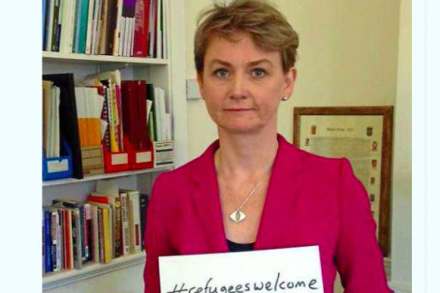
Yvette Cooper fails to practise what she preaches

Yvette Cooper was the surprise star of PMQs today after she made the Prime Minister squirm with a stinging question about Theresa May's election U-turn: ‘The Prime Minister yesterday said she was calling a general election because Parliament was blocking Brexit. But three quarters of MPs and two thirds of the Lords voted for Article 50 – so that’s not true, is it. A month ago she told her official spokesman to rule out an early general election, and that wasn’t true either, was it. She wants us to believe she is a woman of her word. Isn’t the truth that we cannot believe a single word she says?’ While her words appeared to do the trick in the Chamber, Mr S can't help but wonder: is Cooper herself a woman of her word?

Letters | 6 April 2017

All-round education Sir: While much of Ross Clark’s analysis of the direction that independent education has taken is spot on (‘A hard lesson is coming’, 1 April), he could not be more wrong on one issue. Many (or even most) parents who choose a private education for their children do not do so simply to achieve top academic outcomes: one look at the results league tables would disabuse him of this notion. What the average independent school does deliver is a rounded education (drama, sport, singing, D of E, CCF, debating and so on) with an emphasis on self-reliance, character and values, and competitive reward systems which acknowledge success rather than mediocrity.

In defence of aid

Paul Collier is right to say that the refugee crisis will not be solved with tents and food alone. But context is everything, and aid remains vital. In middle-income countries such as Jordan and Lebanon, getting refugees into jobs is essential. Businesses are part of the jigsaw. So is government legislation to ensure, for example, that refugees get work permits or can register as self-employed. So too are labour market interventions that generate incentives to get refugees working. However, in fragile and impoverished states that lack functioning markets and governments, different forms of aid are required.

Letters | 30 March 2017

No blanket solution Sir: Paul Collier is right to say that the refugee crisis will not be solved with tents and food alone (‘The camps don’t work’, 25 March). But context is everything, and aid remains vital. In middle-income countries such as Jordan and Lebanon, getting refugees into jobs is essential. Businesses are part of the jigsaw. So is government legislation to ensure, for example, that refugees get work permits or can register as self-employed. So too are labour market interventions that generate incentives to get refugees working. However, in fragile and impoverished states that lack functioning markets and governments, different forms of aid are required.

The rescue racket

What is happening in the 300-mile stretch of sea between Sicily and Libya, day in and day out — in other words, what ‘we’ are doing there — is beyond reasonable doubt insane. A sane person would assume that the 181,436 migrants (a new record) who made it by sea to Italy last year had done so under their own steam in flimsy fishing boats and dinghies at least some of the way across the Mediterranean. This, after all, is the message aid agencies and governments put out. In fact, every one of those 181,436 was picked up by EU and non-government aid-agency vessels off the Libyan coast just outside the 12-mile territorial limit, then ferried across to Europe.

Saving the children

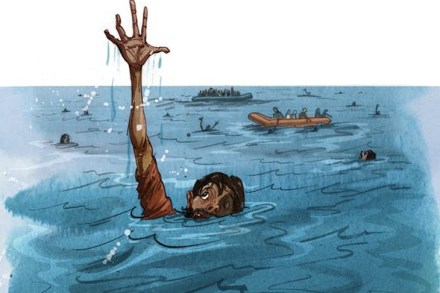
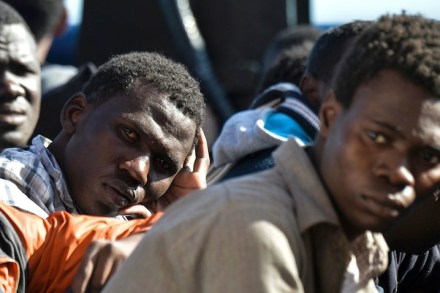
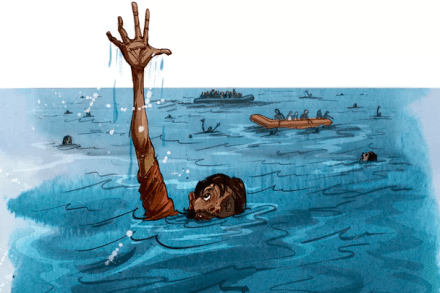
When a humanitarian tragedy disappears from our newspapers, there are two possibilities: that the crisis is over and life for survivors is gradually returning to normal — or that the human toll has become so routine as to no longer be considered newsworthy. Sadly, the deaths of migrants from North Africa and the Middle East as they attempt to cross the Mediterranean to seek a new life in Europe fall into the latter category. Eighteen months after the photographs of little Alan Kurdi’s body on a Turkish beach generated a huge swell of public emotion, entire families are still dying on a regular basis. In the first ten weeks of this year, some 525 people were lost crossing the Mediterranean. Europe is still no closer to ending this outrage.

The camps don’t work

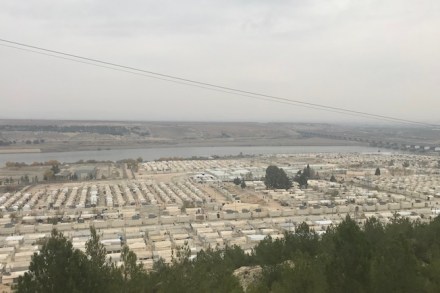
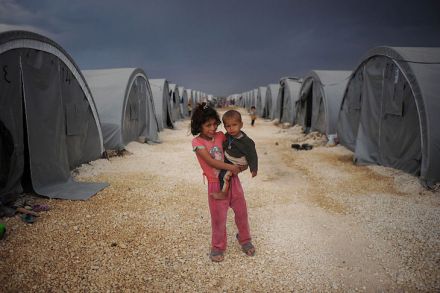
The civil war in Syria, and the resulting displacement of half the population, has been the tragedy of our times. We cannot turn our backs on the ten million people who have been forced to flee their homes. Every decent society knows this and knows that it’s our moral duty to come up with a workable way of helping the refugees. But while the scale of the displacement is substantial, it is not unmanageable. The 21st century should be capable of dealing with such catastrophes and we must prepare ourselves actually to do so. To rise to the challenge, we need to combine the instinctive compassion that mass suffering arouses with the dispassionate analysis necessary to craft an effective response. We need the heart supported by the head.

Going underground

When Wireless Nights hit the Radio 4 airwaves in the spring of 2012, I was not at all sure about Jarvis Cocker’s particular, not to say eccentric, manner of presentation, butting in, making his presence felt, never letting us forget that it’s his programme, he’s in charge. His coy comments were too self-conscious for my taste. He didn’t sound natural; his after-dark meanderings felt too contrived. Now I realise I had completely missed the point. Cocker’s deliberate mannerisms, his upside-down way of looking at things, his curiosity and desire to share with us his thoughts are all very much part of who he is, and once you get used to his style of delivery it all becomes very beguiling.

Descent into hell

In my work as a reviewer, a small, steady proportion of all the books publishers send me concern the Holocaust. With middle age has come a curious foreshortening of my perspective on modern history so that, paradoxically, the Nazis’ inhumanity has begun to seem less distant in time and, therefore, more horrible still. Fortunately I can reassure myself that, objectively, it happened long ago and that even the atrocities of eastern Europe and Rwanda are now a couple of decades safely in the past. Such consolations vanish when confronted by The Raqqa Diaries, which is shockingly of the present. It is a terrible reminder that we are unwise to impute any kind of teleology to history.

Frontier territory

In Ali’s Café, just inside Turkey on the Bulgarian border, Iraqi and Syrian refugees spend their days drinking tea. Now and then, someone goes into the back room to give bundles of money to smugglers who have promised to get him into the European Union. Only when piano chords strike up on the radio does Kapka Kassabova realise what Ali’s reminds her of: Rick’s Bar in the movie Casablanca, a transit realm ‘where the homeless of the day come in search of passage’. The Syrian refugees literally walked into Kassabova’s book.

More matter with less art

When A.A. Gill died last December, there was wailing and gnashing of teeth across the nation. I must admit this came as a surprise to me, but then I hadn’t read him for many years, having developed a ferocious dislike for the Sunday Times too long ago now to remember quite why. My memories of him were of an outrageous show pony, a wordsmith of great talent but surprisingly little taste, who essentially wrote about himself and his wonderful life (in the guise of restaurant and television reviews) in a needy, look-at-me, sub-Clarkson kind of way. He seemed to me to encapsulate everything that was wrong with the paper he wrote for, whatever that turns out to have been. But people were genuinely upset when he died, and not just because he was by all accounts a good egg.

United nations

The Indian Prime Minister has twigged something that President Trump has yet to understand. On Monday, celebrated as World Radio Day, Narendra Modi tweeted his congratulations to ‘all radio lovers and those who work for the radio industry and keep the medium active and vibrant’. Modi uses radio to reach out to those in his country who live in its most remote and inaccessible corners, giving a monthly address to the nation known as ‘Mann Ki Baat’ (or ‘To mind’). He says it’s his way of ‘sharing his thoughts’ with his citizens, and a useful way of extending the tentacles of government into those areas where television sets are uncommon, let alone computer screens or smartphones.

Trump’s 2020 campaign has kicked off – and Starbucks seem to be running it

I am no fan of Donald Trump, but I can stand far enough back from his presidency to see that many of his critics are inadvertently already doing his re-election campaign for him. Today, Starbucks has reacted to Trump’s US travel ban on citizens of seven Middle Eastern and African countries by defiantly saying that it will go out and hire 10,000 refugees. Can the coffee chain not see that this is exactly the sort of thing which attracts America’s white poor to Donald Trump: the suspicion that they are being overlooked in favour of cheap labour from abroad? In Starbucks’ case it isn’t just a suspicion – it has effectively confirmed that it wants to discriminate against American workers.

Algerian winter

It is more than possible that before any Brexit deal is discussed, let alone concluded, the EU will have effectively collapsed. And the key factor could be the demise of Algeria’s leader of 17 years. President Abdelaziz Bouteflika is 79 and has needed a wheelchair since having a stroke in 2013. ‘His mind is even more infirm than his body,’ one observer tells me. Bouteflika returned home recently after a week’s stay at a private clinic in France. His prognosis isn’t good. Officially, Bouteflika underwent standard ‘periodic medical tests’ in Grenoble. But no one believes this. Among people who know Algeria well, there is little doubt that he is severely incapacitated and does not have much time left.

Christianity is at the heart of the secular left’s response to refugees

Say what you want about Owen Jones - and I might well agree with you - but he is admirably big-picture. He dares to link current affairs to the largest moral questions. In a piece about refugees on Friday he supplied a sketch of his form of humanist idealism. Empathy, he explains, is a natural human faculty. We naturally desire the good of all our fellow humans - unless some nasty form of politics interferes with this and teaches us to view some group as less than fully human. This is what colonialism did, and what Nazism did, and what Balkan nationalism did, and what Islamic fanaticism is still doing. And it is what the right-wing press is doing, when it promotes a heartless attitude towards refugees.

The Calais Jungle ‘child refugee’ conundrum

You just have to look at the faces of the migrant 'children' who have begun to arrive in Britain over the past couple of days from the Jungle in Calais to realise that many are not children. Just as I did when I visited the illegal shanty-town a couple of weeks ago and met a man from Afghanistan who said he was a boy. I found him inside a remarkably solid timber shack which had the words  'Welcome Restaurant' painted above the door. He was one of a dozen or so men, sitting about on divans and chairs, watching a cricket match between Pakistan and the West Indies on a large flat-screen television which was powered by a generator.

The new reality on immigration

The good people of Hungary went to the polls on Sunday and voted by more than 98 per cent against accepting even a few hundred migrants, as per the European Union’s insistence. That poll result must have been gravid with nostalgia for Magyars over the age of about 35. They will remember that sort of election result being de rigueur, rather than astonishing. Indeed, in 1985 the Hungarian Socialist Workers Party succeeded in capturing 98.8 per cent of the popular vote — and even this was a bit of a disappointment, because in 1980 it had pulled in 99.3 per cent. On both occasions the ruling party was aided, of course, by the lack of an alternative on the ballot paper.

Who comes after Merkel?

A year from now, 60 million Germans go to the polls in the most important general election in mainland Europe for a generation. The result will define German — and European — politics for the next four years. There are huge questions to be resolved, from the refugee crisis to the financial crisis, but right now the question in Germany is: will Mutti run again? Angela Merkel’s nickname, Mutti (Mummy) is a memento of happier times. A year ago, her position as matriarch of the Bundesrepublik seemed unassailable. And then, last September, she opened Germany’s borders to hundreds of thousands of fleeing Syrians. Over a million refugees arrived last year. The reaction of native Germans could be measured at the polling booths.