Putin

MH17 blame game reflects badly on all of us

To judge by much of the western media coverage in recent days, you would have thought that Vladimir Putin had spent last Thursday sitting in the Kremlin, plotting how to blacken his image in the West even further, before settling on the brilliant idea of getting some clueless proxies to blow an international airliner out of the sky. At least, if he had, the line of responsibility would be clear; the western arguments casting him and his country as global pariahs would incontestable, and we could all be contemplating moves not just to isolate Russia, but to haul Vladimir before the International Criminal Court.

MH17 makes the situation in Ukraine an American crisis and an EU catastrophe

The burning embers of an international airliner litter a Ukrainian field. 298 dead. The west blames Putin. President Putin blames Ukraine and the west. Pro-Russian rebels strip the dead and obstruct the investigation. MH17 has made east Ukraine an American crisis and an EU catastrophe. Still, because the US and EU see the Ukraine crisis in very different ways, it’s difficult to say what will happen next. First, let’s be clear about culpability. Whatever the Russian government might claim, the Donetsk rebels have an undeniably close relationship with Putin’s intelligence services. In a few months, thugs with AK-47s have become capable of withstanding the Ukrainian military. They’ve ambushed armoured troop convoys.

After the horrific tragedy of MH17, Europe must wake up to the threat posed by Vladimir Putin

How many more civilian planes need to be shot down over European airspace before Europe’s leaders get serious about the threat posed by Vladimir Putin’s Russia? As the smoke clears from Thursday’s horrific downing of a Malaysian Airlines jet traveling from Amsterdam to Kuala Lumpur, many will try to deflect blame from landing squarely where it should: on Russian President Vladimir Putin. ‘Airliner tragedy in Ukraine shows US & EU erred by not pushing to keep Ukr[aine] as neutral buffer state, not potential EU/NATO member,’ tweeted Stephen Walt, a prominent voice of the ‘realist’ school of foreign policy and a leading apologist for the Russian government.

Will we ever find out what happened to flight MH17? It is getting less and less likely

The Ukrainian government has failed to secure the crash site, as much as 25 square kilometres of territory, where debris from flight MH17 has fallen. The site is in rebel-held eastern Ukraine and the region's pro-Russian separatists have prevented international observers from the Organisation for Security and Co-operation in Europe from examining it. There are even reports that a drunk separatist gunman fired a warning shot to forestall investigators from conducting their examinations despite assurances from rebel commanders that observers would have safe access to the crash site.

The conflict in Crimea will be the downfall of Putin

Earlier this year, Owen Matthews discussed in the Spectator how the conflict in Crimea will be the making of Ukraine and the end of Vladimir Putin: David Cameron says that Russia’s annexation of Crimea ‘will not be recognised’. Ukraine’s Prime Minister Arseniy Yatsenyuk promises that ‘we will take our territory back’. They are both misguided. Let Crimea go: it will be the making of Ukraine and the end of Vladimir Putin. Without Crimea, there will never again be a pro-Moscow government in Kiev. Ukraine will have a chance to become a governable country — a strongly pro-European one with a Russian minority of around 15 per cent. Putin will have gained Crimea but lost Ukraine for ever.

What Britain will lose if Scotland goes

[audioplayer src="http://traffic.libsyn.com/spectator/TheViewFrom22_3_July_2014_v4.mp3" title="James Forsyth, Fraser Nelson and Eddie Bone discuss whether the UK could survive without Scotland" startat=41] Listen [/audioplayer]On 19 September, people over all Britain could wake up in a diminished country, one that doesn’t bestride the world stage but hobbles instead. If Scotland votes to leave the United Kingdom, it would be Britain’s greatest ever defeat: the nation would have voted to abolish itself. The rump that would be left behind after a Scottish yes vote would become a global laughing stock.

The EU is the greatest danger since Uncle Joe

Last week in the Bagel, and then London here I come. As I write, hundreds of thousands of Jews are marching up 5th Avenue in ‘Salute to Israel Day’. They have been marching for close to six hours and come close to the Puerto Ricans in terms of noise and provocation. Looking out from my window I see only blue and white Israeli flags, no stars and stripes whatsoever, and the chants I hear are those of the aggrieved. They want Palestine back!  Why waste time with the truth when there’s an angle to promote and a grievance to air? Palestinians should leave the West Bank because these late arrivals say so. Well, folks will say anything nowadays.

A Russian occupation and a veterans’ revolt – it’s D-Day all over again

The phrase ‘ring of steel’ hardly begins to describe the operation here in Calvados country as we await the 70th anniversary of the pivotal moment in modern history. Some world leaders are bringing warships as well as jets to the D-Day commemorations. The exclusion zone not only covers a chunk of northern France but even extends to cross-Channel ferries. Every Normandy veteran has had to be cleared for a pass although, as many point out: ‘We didn’t need a pass on 6 June 1944.’ If the cops are nervous, the protocol people are beside themselves: what do they do with President Putin? He may be the pariah du jour but Russia, which lost 27 million to Nazism, has to be included.

London’s party-hungry Russians suffer Putin problem

Word reaches Mr S of the plight of Mr Alexander Sucenko, organiser of next Saturday’s annual Russian Summer Ball. The ball is said to be in jeopardy because nobody wants to come. It seems that many regular attendees of this staple of the Russian expat social calendar have cried off this year because of the actions of a certain Russian President. It all strikes Mr S as a little ironic, bearing in mind that the Summer Ball is geared towards the exiled Czarist side of Russian culture. Her Highness Princess Olga of Russia and His Highness Prince Rostislav are set to be the guests of honour. Hasn’t the Russian royal family suffered enough at the hands of their successors?

Peter Mandelson’s diary: The accomplishments of George Osborne – and Vladimir Putin

My trips to meet Russians in Russia these days are a little less controversial than my encounter with them in Corfu. The Corfu trip, though, did have the bonus of throwing me together with George Osborne, whom I had not known previously. Returning from St Petersburg I awoke on Saturday to his interview on the Today programme. If the Tories win the next election (unlikely in light of last week’s performance) it will be down to his political skill and determination. And his being joined at the hip to Cameron. If Blair and Brown had managed the same double act, Labour would still be in power today. The St Petersburg international economic forum was somewhat less international this year.

Eurovision: It was the beard wot won it

I enjoyed Fraser’s preview of the Eurovision Song Contest; I had not known that he was such a fan. You work with someone for years, oblivious to their dark secrets, their strange peccadilloes. It was typically brave of him to come out, in public. I watched the thing, again. I thought the entry from The Netherlands was the best song I have ever heard at a Eurovision Song Contest, and by some margin. But that may be because Europop makes me feel ill, and their song definitely wasn’t Europop. It’s the first time I’ve heard a pedal steel in this competition. That being said, the Dutch have form as purveyors of catchy, country-lite, soft rock – anyone remember “Mississippi” by Pussycat?

We watched Eurovision – so you didn’t have to

I like Europe, even if this may not be the place to admit it, and I like this moment, when our brothers are forced to make fools of themselves in a language none bar the Irish can speak convincingly. Sauf les Français, obviously. ‘Ukraine will win. Europe has solidarity. You’ll see,' says my European flatmate. But after the first batch of votes, it becomes clear that either Ukraine’s entry wasn’t very good, or Putin actually takes the competition seriously. Having missed both Maria Yaremchuk’s Tick-Tock and the inner machinations of the Kremlin’s ministry of culture, my guess is one or both of those things. Many horrors were committed in the process of the panels’ announcements. Azerbaijan begging approval from mother Russia.

Paul Johnson’s diary: Boris would make a great PM – but he must strike now

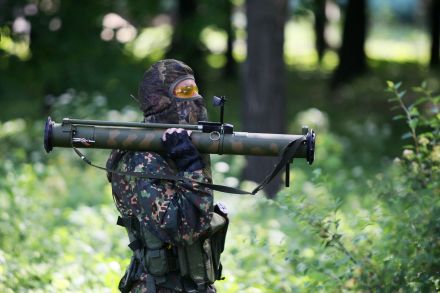
I feel an intense antipathy for Vladimir Putin. No one on the international scene has aroused in me such dislike since Stalin died. Though not a mass killer on the Stalin scale, he has the same indifference to human life. There is a Stalinist streak of gangsterism too: his ‘loyalists’ wear masks as well as carry guns. Putin also resembles Hitler in his use of belligerent minorities to spread his power. Am I becoming paranoid about Putin? I hope not. But I am painfully aware that he would not matter if there was a strong man in Washington. As it is, President Obama is a feeble and cowardly man who makes even Jimmy Carter seem bold by comparison. He is running down America’s strategic capabilities while giving anaemic moral lectures.

No, Putin didn’t plot to invade Ukraine. But now he might have to

So what, exactly, does Vladimir Putin want? ‘To start World War Three,’ according to the embattled Ukrainian prime minister Arseny Yatseniuk. ‘To rule as president for life with powers on par with the tsars,’ according to Alexei Navalny, leader of Russia’s tiny opposition. To ‘force a major change of boundaries on Europe… and break the post-Cold War consensus,’ according to Radek Sikorski, Poland’s foreign minister. Actually, Putin himself has always been rather clear about his ambitions. ‘Russia has been a great power for centuries, and remains so,’ Putin told the State Duma in his first speech as prime minister, back in August 1999.

Alex Salmond receives a lesson from the school of foreign policy hard knocks

Look: Alex Salmond's indulgent appraisal of Vladimir Putin's record was foolish and naive and all too revealing but let's not lose the heid. Scotland, even an independent Scotland, is not going to be run by  McKGB and Mr Salmond's fondness for wealthy businessmen is not really comparable to the kleptocracy that's run Russia this century. Still, it is a news story and a legitimate one. Tinfoil Nationalists were very upset yesterday. Salmond was being "smeared" by, er, being quoted. GQ, clearly part of the pan-Unionist BritNat propaganda media machine, had "leaked" excerpts of their interview with the First Minister to undermine, eclipse or otherwise divert attention from a speech Mr Salmond was giving in Belgium. Because, obviously.

Alex Salmond’s strange – but revealing – admiration for Vladimir Putin

What to make of Alex Salmond's qualified admiration for Vladimir Putin? The First Minister, interviewed for the forthcoming issue of GQ, declared he admires "certain aspects" of the Russian President's record. Asked for his views on Putin, Salmond told Alastair Campbell that: "Well, obviously, I don't approve of a range of Russian actions, but I think Putin's more effective than the press he gets I would have thought, and you can see why he carries support in Russia. "[...] He's restored a substantial part of Russian pride and that must be a good thing. There are aspects of Russian constitutionality and the inter-mesh with business and politics that are obviously difficult to admire. Russians are fantastic people, incidentally, they are lovely people." Well, some of them anyway.

Ancient and Modern: a war for ‘human rights’

What a splendidly liberal leader Mr Putin has turned out to be, desiring nothing other for his fellow Russians than their human right to decide their own fate. How the Romans would have applauded! In 215 bc, while Rome was desperately trying to keep Hannibal at bay in Italy, Philip the fifth, king of the powerful northern Greek state of Macedon (Alexander the Great’s territory), decided to ally himself to Carthage. He had in mind putting himself about on the big stage, among the Greek leagues to the south, and north into the Balkans (where Rome was beginning to have interests); and after some success, in 205 bc his gaze turned east, across the Aegean towards Asia Minor.

Would the word ‘NATO’ make Vladimir Putin think twice?

Russia, Ukraine, the European Union and the United States will meet in Geneva later today in order to find a solution to the confrontation in eastern Ukraine. There is not much hope of success. The Obama administration has been lowering expectations, so too the Foreign Office. Kiev’s heavy-handedness in eastern Ukraine has embarrassed the western allies; not least because the military deployment yesterday exposed Ukraine’s inherent weakness: government forces were either incapable or reluctant to enforce Kiev’s writ in the east of the country. There were further violent clashes overnight. Kiev says that 3 ‘Russian separatists’ were killed and 13 wounded when trying to seize a military installation on the Sea of Azov.

Vladimir Putin knows what he stands for. Do we?

Possibly because his oratory is no match for his much-displayed pectoral muscles, the speeches of Vladimir Putin are seldom reported at length in the West. But as a means of understanding the manoeuvres in eastern Ukraine this week, there is no better starting point than the speech he made to the Duma when the Russian parliament annexed Crimea. Lest anyone thinks his words have been enriched by an over-imaginative reporter, the translation is provided by the Kremlin itself.

Ukraine increases mistrust and misinformation between Russia and the West

The tense situation in Ukraine has escalated overnight. A deadline has passed for pro-Russian agitators to vacate government buildings in eastern Ukraine or face military action. There is no indication that the agitators have retreated. Meanwhile, reports from Kiev suggest that the government is trying to raise volunteer militias – perhaps in an attempt to avoid deploying the country’s armed forces, which would antagonise Russia. Last night a special session of the UN Security Council, called by Russia, was the scene of disagreement between Russia and the western powers. Ukraine and the western powers say that Russia is behind this unrest; as Vladimir Putin tries his hand at provatskiya (as described by Anne Applebaum in the Spectator recently).