Putin

Violence, fear, confusion: this is what comes into a leadership vacuum

The old cliché that ‘nothing happens in August’ has again been brutally disproved. From the centenary of the outbreak of the first world war to the Russian invasion of Georgia six years ago, August is a month often packed with violence — but rarely more so than this year. In Syria, Christians are being crucified for refusing to convert to Islam. In northern Iraq, there are reports of mothers throwing their children from mountains rather than leaving them to the jihadis who are parading the severed heads of their victims. Russian convoys are rolling towards the Ukrainian border as Vladimir Putin tests the resolve of the West. Barack Obama has watched this unfold from his holiday spot in Martha’s Vineyard; David Cameron from the Portuguese coast.

There are no lessons from the first world war

I've just been in France, where the shadow of the First World War always seems to be darker and longer than that cast over Britain; it is partly that, aesthetically, their war memorials are far more haunting than ours, but also that in sheer numbers our allies lost more men than we did, up to 1.4 million French soldiers died in the conflict. It still seems to haunt the country, and anyone travelling through empty countryside into a small town with its thick list of casualties engraved under the legend 'mort pour la patrie' can see why Frenchmen would ask 'why die for Danzig?' 20 years later; and can't quite manage even a faint smile to the weak jokes about France's supposed military failures.

These latest sanctions against Putin might just work

‘Sanctions,’ said Kofi Annan, ‘are a necessary middle ground between war and words.’ Neither the EU nor the US will deploy troops or missiles to defend Ukraine against Russian-backed separatists, while Vladimir Putin basks in hostile Western words and turns them to domestic advantage. That leaves sanctions as the only means of seeking to influence him. But do they work? Evidence is not persuasive: in 200 cases studied by academics in Washington, from the League of Nations action against Italy’s aggression in Abyssinia in the mid-1930s to Russia’s assault on Georgia in 2008, sanctions were judged successful in one third of cases; in many of those, success was ‘partial’.

The threat from Russia’s spies has only increased since the fall of Communism

‘No, we must go our own way,’ said Lenin.  The whole world knows him as Vladimir, while he was in fact Nikolai. ‘Nikolai Lenin’ was the party alias of Vladimir Ilyich Ulianov, a terrorist leader and psychopath whose ideas changed the history of the greater part of the 20th century. This era ended on 26 December 1991 with the collapse of the 74-year-old Soviet Union, founded by Lenin, who seven years after the Bolshevik revolution died of syphilis, only to be succeeded by Stalin. ‘Stalin’ was also an alias. The Soviet dictator’s real name was Ioseb Vissarionovich Jugashvili, born into the family of a Georgian cobbler. His education, which he never finished, was limited to a theological seminary.

Call Me Dave still has much to learn from The Master

David Cameron and Tony Blair faced identical tasks earlier this week. Both wished to force a reluctant group of back-sliders to adopt a more robust and pragmatic position. Cameron wanted Europe to toughen up against Putin. Blair wanted Labour to toughen up against Cameron. Blair’s opportunity was the 20th anniversary of his enthronement as Labour’s leader. Oddly enough the chief beneficiary of that leadership – the Labour party itself – mysteriously forgot to give its messianic champion a chance to reflect on his methods. Instead, he offered his blueprint for further Labour victories to the think-tank, Progress. Blair likes to write in the early morning, in long-hand, seated at a window.

The MH17 disaster

Home David Cameron, the Prime Minister, told Parliament that President Vladimir Putin of Russia should end his country’s support for separatists in Ukraine, some of whom it had provided with a training facility in south-west Russia. Licences to export arms to Russia were found still to be in place. Theresa May, the Home Secretary, announced a public inquiry into the death of the Russian dissident Alexander Litvinenko, a former KGB officer who died in 2006 in a London hospital after he was poisoned with polonium. Nick Clegg, the Deputy Prime Minister, was criticised by some MPs from rival parties for appearing on television sampling tequila instead of somehow doing something about the crisis. Prince George of Cambridge celebrated his first birthday.

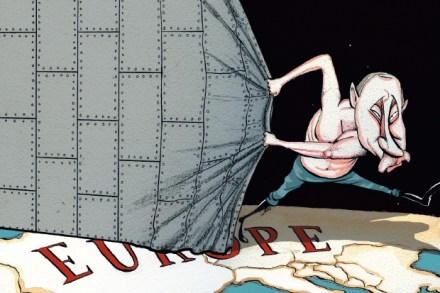
Sanctions won’t tame Vladimir Putin’s Russia. Talking might | 24 July 2014

This article first appeared in the print edition of The Spectator magazine, dated 26 July 2014 The civilised world felt as if its heart had been touched by an icicle. Photographs of murdered children. Biogs of people like us; we could have been on that plane. We will be on similar ones, now reminded of our vulnerability to frivolous barbarians in possession of terrifying weapons. Grief and fear lead rapidly to anger: to the demand that something must be done to punish the evildoers and rescue us from insecurity. That might seem a comforting thought. It is also false comfort, for there is a basic problem. What can we do? When in doubt, think hard, in a long historical perspective. Paradoxically, that apparently arid discipline may bring real comfort.

Sanctions won’t tame Vladimir Putin’s Russia. Talking might

The civilised world felt as if its heart had been touched by an icicle. Photographs of murdered children. Biogs of people like us; we could have been on that plane. We will be on similar ones, now reminded of our vulnerability to frivolous barbarians in possession of terrifying weapons. Grief and fear lead rapidly to anger: to the demand that something must be done to punish the evildoers and rescue us from insecurity. That might seem a comforting thought. It is also false comfort, for there is a basic problem. What can we do? When in doubt, think hard, in a long historical perspective. Paradoxically, that apparently arid discipline may bring real comfort. The disintegration of empires always makes the earth tremble as it is battered by tumbling geopolitical masonry.

Vladimir Putin’s empire of lies

According to Russian state television, flight MH17 was shot down by Ukrainian government forces who believed they were targeting Vladimir Putin’s jet returning from a summit in Brazil. An unnamed Spanish air traffic controller allegedly overheard two Ukrainian fighter pilots talking about the secret operation at Kiev’s Boryspil Airport. Ukrainian jets were supposedly seen tailing the doomed flight just before it exploded. Or, no — the plane was actually downed by a surface-to-air rocket fired from Kiev-controlled territory. Russian spy satellites recorded the whole incident, apparently.

What are the chances of Europe agreeing substantial sanctions against Russia tomorrow?

‘Somewhere between zero and minus five.’ That is the verdict of former Foreign Secretary and current Chairman of the Intelligence and Security Committee, Sir Malcolm Rifkind, to the question in the headline. The general consensus is that the European Union will not – indeed, cannot – agree substantial sanctions against Russia. European countries are, variously, too dependent on Russian trade and resources, or too weak in themselves, to punish Putin. The disagreements at yesterday’s summit were plain to see. Europe, the narrative goes, can only agree on more provisions against ‘cronies’ who use international markets to conduct their nefarious business and then spend their spoils in the great playgrounds of the West (see Taki for details).

Until the West confronts Putin, planes will keep falling out of the sky

Two Ukrainian SU-25 ground-attack jets have been shot down in Donetsk Oblast, about five miles away from the MH17 crash site. This double strike reinforces a chilling message: the separatist war in Ukraine continues to escalate. Still, I’m not surprised. There’s a key reason why MH17 has failed to temper this conflict: alongside Russia, the rebels’ strength of purpose exceeds that of the West. Since the MH17 massacre, international attention has flooded back to Ukraine. Nevertheless, the West’s response has been tepid at best. The EU and US have hedged on new sanctions and continue to rule out military support to Ukraine. Common grief has led to anger, but the anger has led to no escalation in policy.

Europe split over sanctions against Putin’s Russia

The European Council has spoken! We must all come back on Thursday after it has considered its approach to fresh sanctions against Russia. The communiqué from today’s meeting of the Council is full of fine ambition: albeit ambition that was agreed on 18 July. We are promised an extended list of: ‘…entities and persons, including from the Russian Federation…who actively provide material and financial support to or are benefiting from the Russian decision makers from the annexation of Crimea or the destabilisation of Eastern Ukraine, and to adopt additional measures to restrict trade with and investment in Crimea and Sebastopol, at the latest by the end of July.

Archive interview: Alexander Litvinenko on ice picks, radioactive thallium and Putin’s assassins

In the 25 November 2006 edition of The Spectator, Neil Barnett recalled his encounters with the poisoned spy Alexander Litvinenko. Two days before the magazine went to press, Litvinenko died from radiation poisoning. As Theresa May reopens the investigation into his death, we are republishing Barnett's interview once more: The hotel off a main square in a central European capital was a seedy, low-budget place. When I asked the receptionist for Alexander Litvinenko in room 38, she looked at me blankly, then after some rooting around said, ‘We only have a Mr Jones in room 38.

Can the European Union agree a sanctions regime for Russia?

David Cameron talked tough on sanctions yesterday, suggesting that he had the German and French support. I believe he means what he says and is serious about following through with sanctions. I could even be convinced that France and Germany have hardened their positions to the point where they are genuinely willing to consider ‘stage three’ sanctions (which would hit specific firms and possibly sectors of the Russian economy). However, I remain far less convinced that the EU as a bloc can find a clear and united position – as Open Europe noted with its Dove/Hawk scale the divergences between countries are huge and the motivations for their positions is incredibly varied.

David Cameron: This is a defining moment for Russia

David Cameron has made a statement to the House of Commons about the destruction of MH17 over eastern Ukraine. He was quick to say that even those who shot down flight MH17 would not have intended to commit such an atrocity. But, nevertheless, he excoriated Russia. 'A conflict that could have been curtailed by Moscow has instead been fomented by Moscow,' he said. He went on say that there is evidence that Russian weapons have found their way into the hands of pro-Russian separatists in Ukraine.

George Osborne’s grey-haired gamble

George Osborne has been in retail mode this morning, selling his pension reforms and explaining how pensioners can unlock their life’s savings. The Chancellor has said that the Treasury will work with the Citizen’s Advice Bureau, Age UK and other organisations to provide pensioners with the best possible impartial guidance to transform their retirement. Interested parties can consult the Treasury for more details. listen to ‘Osborne: Russia sanctions would be an 'economic hit' for the UK’ on Audioboo Osborne went on to add that this was what the pension reforms are ‘all about’.