Putin

‘We’re only months away from the first political assassination by drone’

51 min listen

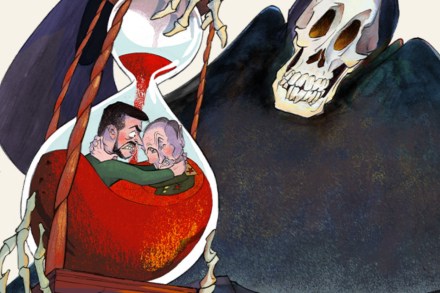
For this week’s Edition, William Moore is joined by the Spectator's commissioning editor Lara Brown, the columnist for the Wall Street Journal’s Free Expression newsletter Louise Perry and the Telegraph journalist and presenter of Ukraine: The Latest Francis Dearnley. This week: Russia’s full-scale invasion of Ukraine has now gone on longer than the first world war and it shares much of the horrors of that war, from attrition warfare to substantial losses on both sides. So, with over half a million Russians estimated to be killed, could Putin and Zelensky be brought to an exhausted peace?

War in Ukraine: 'we're only months away from the first political assassination by drone'

Putin and Erdogan are playing with fire in the Balkans and the Caucasus

There are 34 disputed territories in and around Europe. In some cases, two or more nations claim the same patch of land. In others, separatist governments demand their own sovereignty. Many of these disputes have a quaint, eccentric interest: Italy and France struggling over the summit of Mont Blanc; or Britain, Ireland, Denmark and Iceland arguing over the barren islet of Rockall. But a few of them – such as Cyprus, Kosovo, Nagorno-Karabakh and Transnistria – provide more urgent political challenges. As Hannah Lucinda Smith argues, these places are Petri dishes – experiments in populism, nationalism and covert conflict that are being repeated across the continent. Her book Hinterlands explores several of these blind spots in most people’s mental map of Europe.

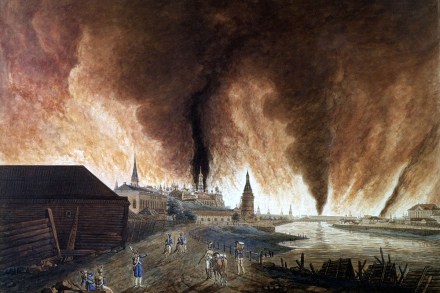
The history of Moscow was one of extreme violence from the start

‘Moscow is hard to love,’ Simon Morrison writes at the beginning of this engaging book, ‘but I love it.’ He deliberately sets out unconstrained by academic pieties, despite holding the post of Professor of Music and Slavic Languages and Literatures at Princeton University. He says he wrote A Kingdom and a Village ‘out of nostalgia for pre-oligarch decrepitude, when the world looked at Moscow with pity’. The Orthodox Church and the security services have been conjoined from the 16th century to the present The book is tripartite. The first part begins in 1147, when a prince named Yuri built a fort on a hill above a river. (When the authorities unveiled a monument to Yuri in 1954, Morrison reveals, a Muscovite yelled: ‘Doesn’t look like him.

Laughing at Putin is a powerful form of protest

Penal Colony No. 2. A girl in a green coat. Red splashes of fireworks against the night sky. She arrives back in Moscow: photographers, a clamour of questions, what is it like to be free? Meetings, cops, her little six-year-old son with a sparkler, a video being recorded, her mother nearby, anxious. Like the flickering, scratchy lens of a film projector, Maria Alyokhina’s Political Girl illuminates the story of her life from the moment she and the other members of Pussy Riot were let out of prison in 2013 until, in 2022, she finally fled Russia disguised as a delivery driver. Nine years of fighting the slowly tightening noose of Putin’s regime with an endless, almost crazed persistence.

In Putin’s Russia, feminism is an ugly word

The excellent Moscow-born journalist Julia Ioffe’s first book recounts a well-known slice of Russian history from a fresh perspective – that of the mighty Russian woman who, it’s said, can ‘stop a galloping horse and run into a burning hut’. And how superhumanly brave and resilient they have had to be. Women were granted sweeping rights following the Revolution, then watched them dwindle for the rest of the century, in law but mainly in practice. What remained was the Soviet obligation to work regardless of gender, which created a country of professional women in every sphere: engineers, cosmonauts, judges, professors and 70 per cent of doctors by the 1970s.

Will peace in Ukraine elude Trump?

28 min listen

With a Gaza ceasefire deal, President Trump's attention has turned to ending the war in Ukraine. A meeting with Putin was suggested, before coming to nothing. Owen Matthews joins Freddy Gray to talk about the fundamental differences between Trump and Putin, the limits on Ukraine's President Zelensky when it comes to negotiation and why the global west keeps misunderstanding Russia time and time again. Produced by Patrick Gibbons and Megan McElroy.

Putin’s trap, the decline of shame & holiday rental hell

50 min listen

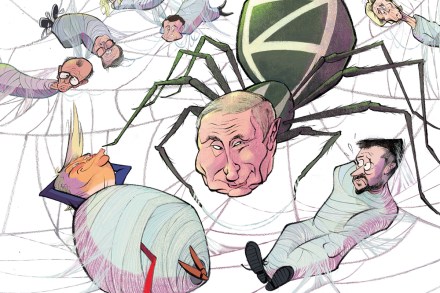
First: Putin has set a trap for Europe and Ukraine ‘Though you wouldn’t know from the smiles in the White House this week… a trap has been set by Vladimir Putin to split the United States from its European allies,’ warns Owen Matthews. The Russian President wants to make a deal with Donald Trump, but he ‘wants to make it on his own terms’. ‘Putin would like nothing more than for Europe to encourage Ukraine to fight on… and lose even more of their land’. But, as Owen writes, those who count themselves among the country’s friends must ask ‘whether it’s time to choose an unjust peace over a just but never-ending war’. Have European leaders walked into Putin’s trap? Owen joins the podcast alongside Gideon Rachman of the Financial Times.

Zelensky’s diplomatic masterclass

13 min listen

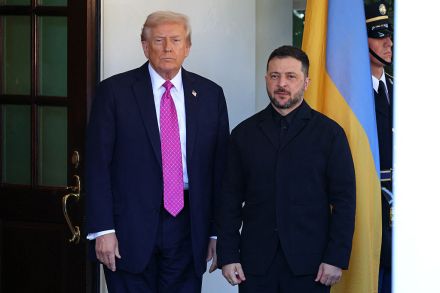
What a difference six months makes. The last time Zelensky and Trump met in Washington we were mourning the end of America’s commitment to security in Europe and a new era of isolationism. But yesterday was a totally different story – and Zelensky deserves much of the credit for his change in tactics. Trump complimented Zelensky’s suit as he arrived at the White House, the two exchanged warm words of thanks, and while they didn’t manage to settle on anything substantial when it comes to a peace deal, there was some vague consensus on security guarantees. The stage seems set for a Trump/Putin/Zelensky trilateral. The mood seems positive but is it too soon to celebrate? Lucy Dunn speaks to James Heale and Svitlana Morenets. Produced by Oscar Edmondson.

Did Putin get the upper hand in Alaska?

Donald Trump hasn't left his meeting with Vladimir Putin in Alaska with a deal to end the war in Ukraine. He told reporters that 'great progress' was made but 'we didn't get there'. To discuss who really got the upper hand, Freddy Gray is joined by Spectator associate editor and Russia correspondent Owen Matthews.

Does European solidarity over Ukraine matter?

14 min listen

Ukraine's President Zelensky has spent today with Keir Starmer at Number 10. This is in anticipation of tomorrow's Alaska summit between Presidents Trump and Putin – where European leaders will be notably absent. Zelensky's visit to the UK is designed to project an image of solidarity with Starmer, and European leaders in general – but does it really matter? And is Putin really closer to accepting a ceasefire? Tim Shipman and James Heale join Lucy Dunn to discuss Plus – Tim talks about his article in the magazine this week, for which he spoke to George Finch, the 19 year old Reform councillor who is leader of Warwickshire County Council.

Why are Trump and Putin meeting in Alaska?

Donald Trump and Vladimir Putin are due to meet in Alaska this week. On the table: a discussion on how to end the war in Ukraine. Trump has been pushing hard to end the war. What's the significance of meeting in Alaska, what are the prospects of the war ending, and what are both sides hoping to achieve? Freddy Gray is joined by The Spectator's associate editor Owen Matthews, who writes on the subject in this week's magazine.

Trump – the conventional foreign policy President?

28 min listen

Trump has said he's "very, very unhappy" with Russia, and threatened severe tariffs against them if there's no deal on Ukraine within 50 days. He's also sending more weapons to Ukraine in coordination with NATO. What's behind his change of heart on foreign policy, and how's his MAGA base responding? Freddy Gray is joined by deputy US editor Kate Andrews, and Sergey Radchenko, professor at the Johns Hopkins School of Advanced International Studies. You can watch this episode here.

Putin’s stranglehold on the Russian press

Since Vladimir Putin came to power in 2000, the Russian press has been slowly, methodically strangled, which has forced existential choices on newspaper and TV journalists. Twenty-one have been killed – beaten, poisoned or gunned down. Others, such as Andrei Soldatov and Irina Borogan, highly regarded investigative reporters, have been forced into exile. Yet others, like the ‘dear friends’ of this book’s title, have chosen a different path – to cleave ever closer to the regime. The authors tell the fascinating story of those choices and allow us a glimpse of why they were taken.

Who started the Cold War?

Over a few short months after the defeat of Nazism in May 1945, the ‘valiant Russians’ who had fought alongside Britain and America had ‘transformed from gallant allies into barbarians at the gates of western civilisation’. So begins Vladislav Zubok’s thorough and timely study of the history of the Cold War – or, as he nearly entitled the book, the first Cold War. For the themes that underpinned and drove that decades-long global conflict – fear, honour and interest, in Thucydides’s formulation – are now very contemporary questions. ‘The world has become perilous again,’ writes Zubok, a Soviet-born historian who has spent three decades in the West: Diplomacy ceases to work; treaties are broken. International institutions, courts and norms cannot prevent conflicts.

Putin orders new offensive

‘You want a ceasefire? I want your death,’ said Russia’s chief propagandist Vladimir Soloviev during prime time television, the camera zooming in on his face. His message was aimed at both Ukrainians and Europeans urging the Kremlin to stop the war. Soloviev, alongside a chorus of other Kremlin loyalists and military experts, has lately been gloating about how Vladimir Putin weathered western pressure and secured Donald Trump on his side. There will be no peace, they say, until Ukraine capitulates to Russian demands. Putin, as if to prove the point, announced yesterday that he had ordered the military to begin creating a ‘security buffer zone’ along the Ukrainian border – which is not quite the peace process Trump has been calling for.

The Russian spies hiding in plain sight

In June 2022, Vladimir Putin tipped up at a party at the headquarters of Russia’s foreign intelligence service, the SVR. This was to mark, of all things, the centenary of the country’s programme of deep-cover spies, who live for years abroad under elaborate false identities while passing secrets back to their masters at home. The weirdness of that espionage hoopla, just four months after the invasion of Ukraine, leaves one wondering what other bizarre birthday events Putin might have in his diary. The 85th anniversary of the assassination of Leon Trotsky, perhaps? Ah, you can imagine the banter. The cracker hats. The roll-out noisemakers.

There was Easter but no truce on Ukraine’s frontline

Kramatorsk, Donetsk region In a wooden Greek-Catholic church on the frontline of a warzone, encircled by red tulips and military vehicles, the priest’s sermon is woven through with the war – just like the soldiers’ Easter baskets, packed not only with paska bread, pysanky and sausages, but also with drones, waiting to be blessed. ‘This drone will be at work tonight – enforcing the ceasefire,’ a soldier whispers to me, smiling. The priest looks over a hundred soldiers in front of him, the church so packed that some must listen from the outside, and says that Ukraine will defeat evil, just as Jesus did. ‘The enemy is killing Him in our men and women, they are torturing Him in captivity, our mothers wash their faces with His tears,’ he says.

Will Trump join the strongman club?

The world’s most exclusive club, of presidents-for-life, is growing. It already includes Putin of Russia, Xi of China, Lukashenko of Belarus, Sisi of Egypt and Kim of North Korea. Then there are the other permanent rulers, MBS of Saudi Arabia and the rest of the Gulf monarchies, not forgetting Khamenei of Iran, and half a dozen African leaders. Now Turkey’s president, Recep Tayyip Erdogan, is trying to join the club. He has engineered trumped-up charges of terrorism and corruption against the man who might beat him in forthcoming elections, Istanbul’s mayor. More importantly, Donald J. Trump openly admires such autocrats and clearly wants to be one himself. This is the age of the strongman – and the world is far more dangerous because of it.

Has Ukraine called Putin’s bluff?

12 min listen

Last night there was a huge breakthrough in Ukraine peace talks, with Zelensky accepting a US proposal for a ceasefire and placing ‘the ball in Putin’s court’, according to Marco Rubio. While getting Zelensky to accept is a huge diplomatic win, the proposal hinges on Putin agree to the terms of the ceasefire – which will last for 30 days but can be extended by mutual agreement. ‘I’ll talk to Vladimir Putin. It takes two to tango,’ said Donald Trump. Can Putin afford to reject the deal? And could this be the basis for a lasting peace? Meanwhile, Keir Starmer has been getting a lot of credit for his role in the Ukraine peace process and the perception that he has stepped up to meet the crisis.

Trump has shifted the world in Putin’s favour

The verbal pummelling of Volodymyr Zelensky in the White House last week was an ugly moment of bitter truth. We saw the West tearing itself apart thanks to Donald Trump’s vanity and J.D. Vance’s disdain for the Ukrainian leader. If there is anything positive to be taken from the uncomfortable spectacle, it is that Europe now understands it has to take its defence much more seriously. And it is a mercy that negotiations between Zelensky and Trump have not been derailed for good. The Ukrainian President spent the week doing what his US counterpart accused him of failing to do: thanking the US for military and other aid it has received since Russia’s full-scale invasion three years ago. Zelensky appears keen to return to the table to discuss a minerals deal.