Prison

The madness of Hancock’s quarantine prison threat

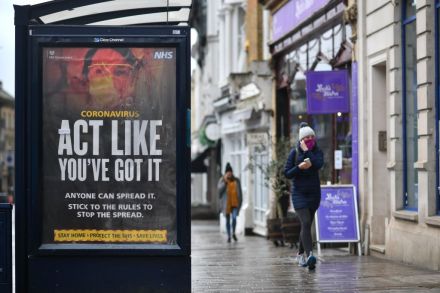
Nobody has done much travelling this winter apart from Instagram influencers travelling to Dubai to pose with baby tigers. But the United Arab Emirates is now on the government’s red list. Should the influencers wish to return home they face a dilemma: spend £1,750 to be locked up for ten days in a Slough Premier Inn, or (and I fear this may come more naturally to some influencers) lie. Lying about where you have come from, though, is to be made exceedingly risky, with a maximum ten year prison sentence about to be introduced.

The grim reality of being locked up during lockdown

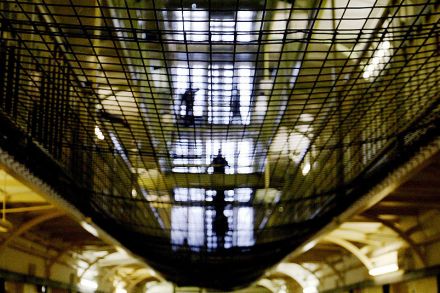
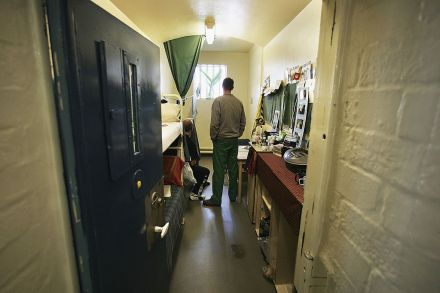
What's it like being locked up during lockdown? The latest statistics on prison safety paint a grim picture of life behind bars, which has been made worse by the pandemic. Even the good news must be caveated. Assaults on staff have reduced quite dramatically, which in any circumstances must be a good thing given a backdrop of record-breaking rates of violence until the virus struck. However, they have reduced mainly as a consequence of an unprecedented lockdown introduced to prevent the spread of Covid-19. This has dramatically reduced the time inmates spend outside their cells; as a consequence, it has rather limited the available opportunities for prisoners to knock seven bells out of prison officers and each other.

We need to stamp out extremism in our prisons

Jonathan Hall QC, the government’s independent reviewer of terrorism legislation, has launched an inquiry into how our prison service is managing the threat posed by terrorism. The backdrop to his review is the rapidly accumulating evidence that, across our penal system, violent extremism has increased its grip resulting in outrageous attacks on either side of the prison walls. In an interview with the Times, Hall said he found it ‘astonishing’ that convicted terrorists, far from being at risk from other vengeful inmates, achieve iconic status. This is not astonishing for those of us who have been writing and arguing for some years about the need for a transformed response to jail extremism that goes beyond benign containment.

We must stop treating juvenile offenders as lost causes

At the end of October, just before I started as HM Chief Inspector of Prisons, the inspectorate and Ofsted visited Rainsbrook Secure Training Centre near Rugby. Rainsbrook was built by the Blair government to house the increasing numbers of children imprisoned as a result of policing targets and tough-on-crime policies and it was one of four centres contracted out to private providers. The great hope was that these better-funded centres would provide a more humane alternative to Young Offender Institutions. Rainsbrook holds children aged mostly 15 to 18, but on our inspection we discovered that for their first two weeks, new arrivals were being locked in their cells for 23½ hours a day.

Are we any closer to stopping the next Usman Khan?

This weekend is the first anniversary of the London Bridge attack. Usman Khan murdered two young people at an event he was invited to, run by the ‘Learning Together’ scheme, which is part of the University of Cambridge. The conference was designed to celebrate the achievements of people like Khan who had joined the course while serving in high-security HMP Whitemoor. Saskia Jones and Jack Merritt were stabbed to death by the dedicated Islamist, supposedly on community supervision nearly a year after being released from prison for terrorism crimes. Twelve months later, are we any closer to understanding that fatal convergence of perpetrator and victims?

Consigned to a living tomb: Aziz BineBine endures 18 years in a subterranean prison

Imagine being on indefinite lockdown, imprisoned in a dark, underground, 6’ x 12’ cell, freezing in winter, boiling in summer and infested with cockroaches and scorpions. The bed is a narrow concrete ledge, where you can only sleep on your side. The toilet has no U-bend, and your cell, No. 13, at the end of a run of cells, receives all the waste and floodwater from the others. There are no windows. Aziz BineBine spent his young adult life there, 18 years from 1973 to 1991. His crime was to have participated unwittingly as a young cadet officer in an abortive 1971 coup against Hassan II of Morocco. He escaped, bewildered, from a bloodbath at the palace without having fired a shot. He turned himself in, was tried and imprisoned.

Christmas tales from the prison pulpit

It was an unusual Christmas morning chapel service. There was a bishop, for a start, and a baptism and then, somewhere between the peace and the eucharist, two of the congregation started trying to thump each other. Boxing day, it seemed, had come early. 'It unnerved the bishop slightly,' the priest in charge admits, 'but as these things go it was a very mild flurry of fisticuffs. Punches were thrown but none landed.' The Bishop of Kensington, paying a Christmas Day visit to HMP Pentonville, may not be used to this sort of laying on of hands during the liturgy but for the Rev Jonathan Aitken, now six months into his new career as a prison chaplain, it was business as normal.

Locking child killers up for life won’t solve our prison crisis

What should we do with adults who murder children? 'Nothing good' is a perfectly understandable response. Child killers occupy a unique position on the destitute outer fringes of humanity. Bogeymen made real, they are in fact often pathetic, hideously damaged individuals driven to satisfy appetites we can only guess at. The Conservatives have announced that adults over 21 who murder children under 16 will never be released from custody. It has made for a good Sun newspaper op-ed; justice secretary Robert Buckland is pushing against an open door with the electorate. It's not just Tory voters who never want these aberrant individuals to see the light of day again. Ask any parent and wait for the sound of sharpened pitchforks.

How violent are our jails?

Parliamentary days Could one of parliament’s longest sessions be followed by one of its shortest? — The shortest was between 14 September and 25 October 1948, when Clement Attlee’s government prorogued parliament in order to forestall efforts by the House of Lords to frustrate the Parliament Bill. The ruse was successful and the bill, which limited the ability of the House of Lords to delay legislation, became law the following year. While it lasted six weeks, there were only ten sitting days in that parliament. — This week we may have six days, including the highly unusual Saturday sitting. So, unless parliament is prorogued for a general election before next Friday, this session will have sat as long as that of 1948.

High life | 23 May 2019

Goody goody gumdrops! The Donald has pardoned Lord Black and I couldn’t be happier. Conrad got a bum deal and spent three and a half years behind bars for charges I always believed to be phoney, most of which were overturned. Never mind. One can’t get back the years wasted in a cell for as good a mind as Conrad’s, but one does emerge from the pokey stronger. The Big Bagel Times reported the Black pardon in a manner that can only be described as constipated. Black is a conservative, which is a red flag to envious lefties. But there’s something else. I have spoken to medical experts about the envy shown by lefty hacks, and I have been told that its origin is not only ideological, but also physical.

Women on top | 16 May 2019

On returning from a brief trip to Istanbul, where inside the mosques women are still very much kept to one side, only allowed to look on from an angle, unable to contemplate the full mystery of the space created within those extraordinary domes, I was intrigued on Sunday to happen upon Heart and Soul (produced by Lindsay Leonard) and to hear a Muslim woman leading the prayers to Allah. She sounded so natural, so intent, her voice modulated and firm, uplifting and authoritative. But how, I wondered, is this possible? Where is this female imam allowed to practise?

Prison is failing. Here’s how to fix it

As much as the country is divided by Brexit, there’s arguably an even more stark division. It’s the one between those directly and repeatedly affected by crime, and those who aren’t. Prison officers – more so than police, prosecutors, barristers, or probation officers – face the worst of state failure when it comes to crime. They go to work and spend their shifts outnumbered by prisoners, and only marginally less constrained in their movements than their charges. They see colleagues – and prisoners – routinely and violently assaulted. Recent cases involve a prison officer having their throat slit. It’s the sort of event that, occurring in any other workplace, would be massive news.

Wild life | 10 January 2019

Kampala I am terrified of being with former death-row prisoner Susan Kigula. This is because she qualified for her driving licence only quite recently, after 16 years in Luzira maximum security prison, and she drives like a maniac on Uganda’s roads. From behind the wheel Susan tells me she was sentenced to death for murdering her boyfriend. Her conviction was based partly on the witness testimony of a four-year-old child and she denies committing the crime. Her cell for five inmates in Luzira’s Condemned section, notorious from Idi Amin’s days, was very cramped with no beds, a bucket for a loo, no window — only an air vent — and a light bulb burning dimly from lock-up at 3 p.m. until 9 each morning.

Last suppers

You don’t need headphones to appreciate, and catch on to, the unique selling point of radio: its immediacy, its directness, that sense that someone is talking to you, and you alone. In fact, if anything, headphones take away from radio’s ability to reach out to the isolated and the lonely, to create that connection between you, the listener, and that someone else, the person behind the mic. With headphones the voice gets inside your head, but it’s not like having a conversation. That USP also explains why listening in the car works so well, creating a companionship while driving alone along a road empty of human contact, surrounded by fast-moving machines. You need that voice to reassure and remind, keep you focused and aware.

Words and sentences

‘I’m not here to rehabilitate,’ says Pamela, who teaches creative writing to prisoners in Northern Ireland. She doesn’t think of her work as being about bars, bare walls and what happens when they leave jail. It’s all about meeting the prisoner as a person. She soon realised ‘how different prison writing is’. It’s much more direct, heartfelt. Jamie wrote a poem after just half an hour in Pamela’s class. He gave it the title ‘My journey in the care system’. More than a quarter of all prisoners were brought up in care, a figure that rises to almost half for those aged under 25. To Jamie it was a relief, ‘getting that finally out in the open’.

Barometer | 23 August 2018

Cultured tastes Dawn Butler accused Jamie Oliver of ‘cultural appropriation’ for coming up with his own recipe for jerk rice. Some other culturally appropriated dishes she might find hard to swallow: Chop suey is said to have been invented in 1896 — during a visit to New York by China’s US ambassador Li Hung Chang — to appeal to American and Chinese tastes. Balti was invented in Birmingham in the 1970s by restaurants to appeal to a clientele beyond the local Pakistani population. Fish and chips were first recorded in the East End in the 1860s, derived from the Jewish method of frying fish.

Jail breaks

You need a strong stomach to be Her Majesty’s Chief Inspector of Prisons, as a letter from Peter Clarke — the current holder of the title — proved this week. HMP Birmingham was in an ‘appalling’ state during his unannounced visit at the start of August. ‘We saw evidence of bodily fluids left unattended, including blood and vomit… next to numerous rat droppings.’ His findings marked a dramatic new low for the prison estate. But they won’t surprise anyone who has recently worked in or visited a bog-standard English jail. When I was appointed speechwriter to Michael Gove at the Ministry of Justice two years ago, I was given a whistle-stop tour of a few of them to get a better idea of my brief.

My BMI calculator has me inching towards despair

I’ve become obsessed with my BMI. For those of you who don’t know, it stands for body mass index and is supposed to be a more reliable way of assessing whether you’re a healthy size than weighing yourself. It’s calculated by dividing your weight by the square of your height and is expressed as kg/m². If your BMI is under 18.5 kg/m² you’re underweight, if it’s over 25 kg/m² you’re overweight, and if it’s above 30 kg/m² you’re obese. The sweet spot is anywhere between 18.5 kg/m² and 25 kg/m². As regular readers will know, I’m on a diet. At the beginning of the year I was nearly 13st and I’m trying to get down to 11st 7lb. So far, so good, with only 4lb left to go.

Let’s abolish parole

The furore over the parole granted to John Worboys, the rapist taxi driver, misses the point entirely — that the system of parole is disgraceful in theory and irredeemably unwork-able in practice. The only thing that it is good for is the employment of large numbers of officials engaged in pointless or fatuous tasks who might other-wise be unemployed. The system is predicated on the ability of experts to predict the future conduct of convicted prisoners. Will they or will they not repeat their crimes if let out early? It is true that, using a few simple statistical measures, such as numbers of past convictions and age, you can predict this with an accuracy somewhat better than chance. But all further efforts to refine prediction actually reduce, not increase, accuracy.

Family is the key for breaking the reoffending cycle

Lord Farmer’s review on prison reform, launched this week at the Centre for Social Justice think tank, is ground-breaking for a number of reasons. For starters, it gets family. In an incontestably broad consultation, comprising hundreds and hundreds of interviews with prisoners across Britain, the resounding message that came back was about family. ‘If I don’t see my family I will lose them, if I lose them what have I got left?’, one prisoner told Lord Farmer. The statistics bear this out: the odds of reoffending are 39 per cent lower for prisoners who receive family visits than for those who don't. To be left bereft by the family sucks away the motivation so critical to rehabilitation.