Pope

Forget the Grand Mess, here’s the fun stuff

There’s something a little-dispiriting about waking up one morning to find that our elected politicians are even more psychopathic, deranged and-disloyal than one had always suspected. I don’t just mean Gove and his cackling, somewhat ambitious missus. Charming though Michael undoubtedly is, and agreeably owlish in-public, I have imagined him in-darker moments standing in a blood-splattered hallway with a kitchen knife in his hand muttering over and over: ‘I did it for you, Mummy, I did it for you.’ Somehow I always thought that was in there, with Michael.

The devil in footnote 351

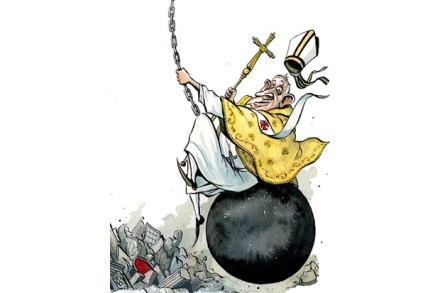
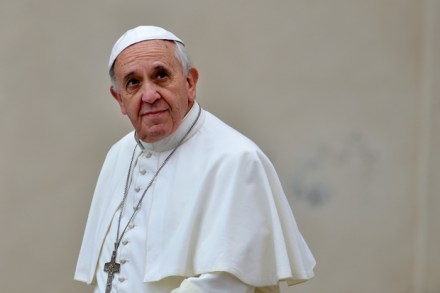
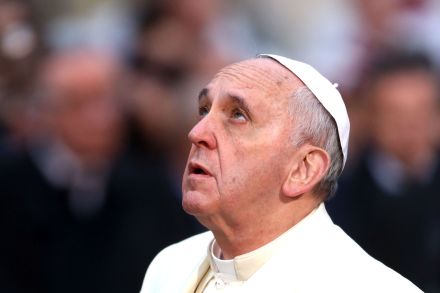
Last week we reached the beginning of the end of the pontificate of Jorge Bergoglio — the ‘great reformer’ of the Catholic church who, it appears, has been unable to deliver the reforms that he himself favours. This despite being Pope. On Friday, he published a 200-page ‘exhortation’ entitled Amoris Laetitia, ‘The Joy of Love’ (or ‘The Joy of Sex’, as English-speaking Catholics of a certain vintage immediately christened it). This was Francis’s long-awaited response to two Vatican synods on the family, in 2014 and last year, which descended into Anglican-style bickering between liberals and conservatives. At the heart of the disputes lay the question of whether divorced-and-remarried Catholics could receive Holy Communion.

The Rolling Stones’s Saatchi show is clearly a money-spinner – what’s wrong with that?

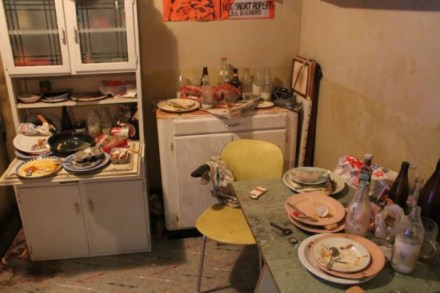
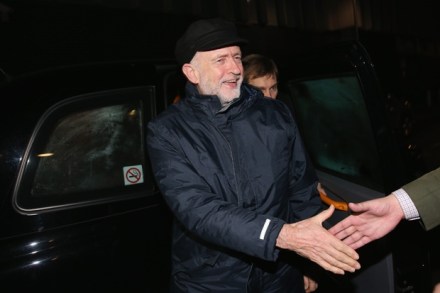
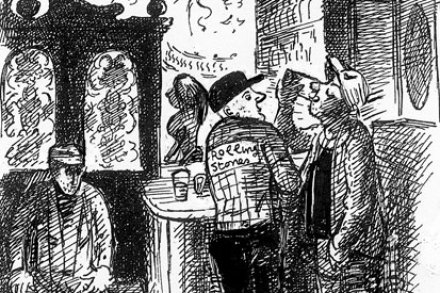
The most restless, resilient, rapacious rock & roll group in the world is on the move again. Less than two weeks after finishing a routinely Herculean tour of Latin America with an epochal show in Cuba, the Rolling Stones were back in their London hometown, disrupting traffic on the King's Road as Mick Jagger, Keith Richards, Charlie Watts and Ronnie Wood glad-handed a media scrum at a red carpet event to mark the opening of their latest project, Exhibitionism at the Saatchi Gallery. Towards the start of this 'immersive' odyssey, you find yourself in a room that looks like the set of a Harold Pinter play. Grease-plastered dishes are piled up in a blocked sink; overflowing ashtrays spill over the mantelpiece; a lingering smell of stale fish and chips permeates the air.

The Spectator’s Notes | 18 February 2016

In his authoritative biography of Pope John Paul II, George Weigel writes lucidly about the unlucid subject of phenomenology. It is a way of thinking which rejects the dry categories of empiricists and the abstractions of idealists, and concentrates instead on ‘the basic experiences of life as they come to us’. Weigel takes the example of ‘girl meets boy’: ‘An empiricist will analyse the brain chemistry of a young woman seeing, hearing and touching a handsome young man … an idealist may worry that the young woman’s commitment to the second categorical imperative [of Kant] (never use another person as a means) may be wavering in the face of other desires.

Portrait of the week | 18 February 2016

Home David Cameron, the Prime Minister, spent time in Brussels before a meeting of the European Council to see what it would allow him to bring home for voters in a referendum on Britain’s membership of the European Union. The board of HSBC voted to keep its headquarters in Britain. Sir John Vickers, who headed the Independent Commission on Banking, said that Bank of England proposals for bank capital reserves were ‘less strong than what the ICB recommended’. The annual rate of inflation, measured by the Consumer Prices Index, rose to 0.3 per cent in January, compared with 0.2 per cent in December. Unemployment fell by 60,000 to 1.69 million. A dental nurse from Bradford who gave her friend a facelift was struck off the dental register.

The Spectator’s Notes | 14 January 2016

No amount of reports in the press that Jeremy Corbyn’s shadow cabinet-making is farcical and his party is divided should distract us from the fact that he is winning. I don’t mean that he will become prime minister, or even (though this seems quite possible) that he will survive as leader until the general election. It is just that he is gradually bringing more and more of Labour under his control, and grinding down his opponents. Besides, his public positions are coherent — in the sense of being internally consistent — and he is quite accomplished at adhering to an undeviatingly hardline, left-wing ideology while sounding mild and decent.

Moving statues

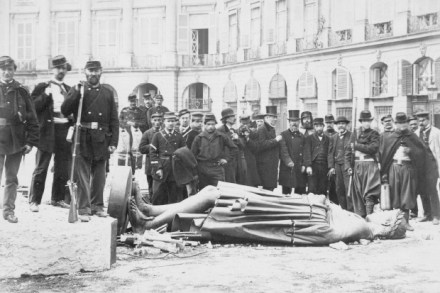
One of the stranger disputes of the past few weeks has concerned a Victorian figure that has occupied a niche in the centre of Oxford for more than a century without, for the most part, attracting any attention at all. Now, of course, the Rhodes Must Fall campaign is demanding that the sculpture — its subject having been posthumously found guilty of racism and imperialism — should be taken down from the façade of Oriel College. The controversy is a reminder of the fact, sometimes forgotten by the British, that public statues are intensely political. This was clear — until quite recently, at least — when one drove into the Syrian city of Hama. There, dominating a roundabout, was a large bronze representation of the late President Hafez al-Assad.

Podcast: civil war in the Catholic church

Are Pope Francis’ reforms and pronouncements risking a civil war within the Catholic church? On the latest View from 22 podcast, Damian Thompson and Fraser Nelson discuss this week’s Spectator cover feature on the Pope vs. the church. How concerned should Catholics be about the Pope’s wild statements? Is the church pining for the days of Pope Benedict? Is the Catholic church on track to lose its unity? And how split is the Synod over Pope Francis? Isabel Hardman and Fraser Nelson also discuss whether MPs will ever vote to bomb Syria. Does David Cameron regret losing the Commons vote in 2013 and does he remain determined to put it right?

A tale of cloaks and daggers

You don’t need to know the opera Tosca to understand and enjoy this book about Puccini’s most notorious villain, Vitellio Scarpia, portrayed on stage as a ‘sadistic agent of reaction’, a cut-throat murderer who enjoys drinking his victims’ blood from their skulls and, as one of my opera-loving Kensington pals puts it, ‘not a nice bloke at all!’ In fact you may not even recognise him in these pages. Here Scarpia appears as an all-round human being, kind-hearted, handsome, likeable, occasionally lonely, even destitute, who also just happens to be a brilliant swordsman and man of action. Brought up in Sicily, his first act of daring is to rescue a girl who has been captured by Barbary pirates, even if it means stabbing her lover in the stomach.

The Pope’s moment

On Tuesday, Pope Francis set foot in the United States for the first time in his life. His plane touched down at Andrews Air Force Base, Maryland, where American presidents depart and arrive on Air Force One. But, according to a Spanish journalist on the papal plane, this was not how Francis had wanted to arrive. He would have preferred to cross over from Tijuana, the grubby Mexican city menaced by drug gangs from which countless migrants slip across the border into California. In other words, if the report is true, the Pope wished to turn his arrival into a political gesture, aligning himself with America’s 11.

Portrait of the week | 10 September 2015

Home David Cameron, the Prime Minister, told Parliament that he had authorised the killing, on 21 August, by means of an RAF drone, of a British citizen near Raqqa in Syria, Cardiff-born Reyaad Khan, 21, an adherent of the Islamic State. Ruhul Amin, from Aberdeen, also an Islamic State activist, whose killing had not been approved in advance, died in the same attack, along with another Islamic State supporter who was with them. Mr Cameron called the strike a lawful ‘act of self-defence’. Khan was said by government sources to have been plotting an attack during the VJ Day commemorations in London on 15 August, and although that had been thwarted, he was thought still to have a ‘desire to murder’ people in Britain.

Spectator’s Notes | 3 September 2015

Was there ever a more unilluminating political idea — for voters rather than practitioners — than triangulation? For those readers so pure and high-minded that they have not followed politics for 20 years, I should explain that triangulation came from Bill Clinton, was imported by Tony Blair, and is now practised by David Cameron. Clinton’s adviser, Dick Morris, put it thus: ‘The President needed to take a position that not only blended the best of each party’s views but also transcended them to constitute a third force in the debate.’ The Tories’ adoption of the Living Wage is the latest example.

Correction of the day: is the Pope Catholic?

The results are in. After scrolling through today's papers, 'Correction of the day' goes to the Times for an apology which brings new meaning to the age-old question 'is the Pope Catholic?' Buried on the paper's letters page is a gem of an apology concerning an article they ran about Karol Wojtyla, the first non-Italian Pope since the Dutch Pope Adrian VI, who served from 1522 to 1523. Silly season just got sillier.

Portrait of the week | 18 June 2015

Home Talha Asmal, aged 17, from Dewsbury, West Yorkshire, died in a suicide bomb attack on forces near an oil refinery near Baiji in Iraq, having assumed the name Abu Yusuf al-Britani. A man from High Wycombe, Buckinghamshire, Thomas Evans, 25, who had changed his name to Abdul Hakim, was killed in Kenya while fighting for al-Shabab. Three sisters from Bradford were thought to have travelled to Syria with their nine children after going on a pilgrimage to Saudi Arabia. Britain had had to move intelligence agents, the Sunday Times reported, because Russia and China had deciphered documents made public by Edward Snowden, the CIA employee who has taken refuge in Russia. Payments expected by customers of the RBS group of banks failed to enter accounts overnight.

The pope is right – smacking your kids is sometimes OK

One good thing has come out of the fuss over the pope’s comments about it being ok to smack your children (so long as their dignity is maintained); it has flushed out the former Irish president, Mary McAleese, as tiresomely conventional in much the same way as her predecessor, Mary Robinson - the very incarnation of PC. Shame, because I’d been a fan until I read her letter to the Irish Times on Saturday criticising the pope for his remarks, on the basis that they’re at odds with the UN Convention on the Rights of the Child which, apparently, has zero tolerance when it comes to corporal punishment. Actually, make that two benefits to flow from the row.

Portrait of the week | 22 January 2015

Home More than 1,100 imams and Islamic leaders received a letter from Eric Pickles, the Communities Secretary, and Lord Ahmad of Wimbledon, the communities minister, saying: ‘We must show our young people, who may be targeted, that extremists have nothing to offer them.’ Imran Khawaja, from Southall, west London, who had posed for a picture in Syria with a severed head before trying to re-enter Britain, pleaded guilty to four terrorism offences and will be sentenced next month. Sir John Chilcot confirmed that the report of his inquiry into the Iraq war, which took its last evidence in 2011, would not be published until after the election. A workers’ dispute left 1,300 houses in Northern Ireland without water; some people boiled snow.

Charles Moore’s notes: A matched pair of popes, and a patronising judge

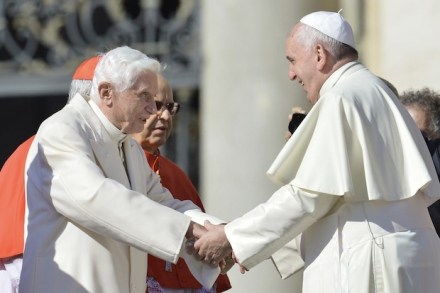
Pope Francis is favourably compared to Pope Benedict in the media. I hope it is not being slavishly papist to admire both of them. For Francis, the chalice is half-full. For Benedict, it was half-empty. But one attitude is not superior to the other. The Church needs both, like Christmas after Advent, Easter after Lent. Things are, in the Christian view, very bad, yet all shall be well. Put the two men together, and you have most of what you need. In paragraph 135 of his judgment in the Andrew Mitchell ‘Plebgate’ case, Mr Justice Mitting says that P.C.

After the Pope’s Synod-on-family fiasco, let’s judge Catholicism on Catholic terms

[audioplayer src="http://traffic.libsyn.com/spectator/TheViewFrom22_2_Oct_2014_v4.mp3" title="Luke Coppen and Cristina Odone join Freddy Gray to discuss divorced Catholics." startat=1053] Listen [/audioplayer] The Church’s extraordinary Synod on the family hasn’t gone down terribly well with secular pundits. It’s been billed as a failure on the BBC, which declared that gay Catholic groups are 'disappointed' with the inability of the Synod to make progress towards acknowledging gay relationships. Other groups are similarly disappointed by the Synod’s refusal to admit divorced and remarried people to communion.

And one more for the road – excerpts from Roddy Doyle’s latest

9-12-12 — See the spacer died. —Wha’ spacer? —The Sky at Night fella. —Bobby Moore. —Patrick Moore. —That’s him, yeah. Did he die? —Yeah. —That’s a bit sad. He was good, wasn’t he? —Brilliant. Very English as well. —How d’yeh mean? —Well, like — he’d look into his telescope an’ his eyebrows would go mad cos he was so excited abou’ all the fuckin’ stars an’ the planets an’ tha’. An’ the words — —They fuckin’ poured out of him. —Exactly. It was brilliant. But if he’d been Irish, he’d just’ve said, So wha’? They’re only fuckin’ stars.

Tom Holland’s diary: Alex Salmond is the Scottish referendum’s answer to Shane Warne

[audioplayer src="http://traffic.libsyn.com/spectator/TheViewFrom22_11_Sept_2014_v4.mp3" title="Fraser Nelson, Tom Holland and Leah McLaren discuss how we can still save the Union" startat=50] Listen [/audioplayer]I feel a bit about the Scottish referendum as I did about the 2005 Ashes series. In both cases, those of us in the know were gripped with a nervous tension right from the very beginning. Shane Warne, Alex Salmond: the same smirk, the girth, the same potentially lethal form. That whole summer of 2005 I was on the rack, following every convulsive twist and turn, hoping against hope that England would manage to cling on to a precarious lead until stumps were drawn on the final day of the series. Tracking the Scottish referendum has been a similarly nerve-jangling experience.