Poetry

The magic of carefully crafted words

From our UK edition

Early one morning, Alan Garner goes to let the hens out. The hens live in a hutch in the garden of Toad Hall in Blackden, Cheshire, a medieval dwelling which Garner has made his home since 1957, not many miles from where all his forebears – artisans and smiths – lived and worked for generations. Something glints in the light, catches his eye. ‘It is thin, translucent, honey-black and sharp; sharper than a surgeon’s steel.’ He knows just what it is. A flint, a tool, a precision instrument. ‘I am the first to know in the eight to ten thousand years since the last hand that held it.’ Alan Garner knows time; time knows Alan Garner. Powsels and Thrums is a collection of essays – and poems and a little bit of remarkable fiction – published in Garner’s 90th year.

Life’s little graces: Small Rain, by Garth Greenwell, reviewed

From our UK edition

Garth Greenwell has made a name for himself as a chronicler of touch. In his previous novels, What Belongs to You (2016) and Cleanness (2020), the intimacy of a lover’s hand or the frisson of something much darker – the spit, the slap of a BDSM session – could expand to fill whole paragraphs: stories in themselves of layered sensation and reminiscence. Early in the opening sequence of Small Rain, the unnamed narrator spends close to two pages musing on the ‘shock’ of when a nurse ‘softly stroked or rubbed my ankle’. But now the touch is different. This is not a novel of sexual escapades, but pain – like ‘someone had plunged a hand into my gut and grabbed hold and yanked’.

Ian Thomson, Andrew Watts, Sam Leith, Helen Barrett and Catriona Olding

From our UK edition

32 min listen

On this week’s Spectator Out Loud: Ian Thomson reflects on his childhood home following the death of his sister (1:20); Andrew Watts argues that the public see MPs as accountable for everything though they’re responsible for little (7:40); Sam Leith reveals the surprising problem of poetical copyright (13:47); Helen Barrett reviews Will Noble’s book Croydonopolis and explores the reputation of a place with unfulfilled potential (19:48); and, Catriona Olding ponders moving on from loss to love (26:09).  Produced and presented by Patrick Gibbons.

The expensive business of quoting poetry

From our UK edition

Writers, I hope we can all agree, should be paid for their work. That’s the principle behind the law of copyright, and it has held for more than a century. We owe it to (among others) Charles Dickens and Frances Hodgson Burnett. But what about when their work is quoted by other writers?  You’re allowed to quote only a certain proportion of a work before you need to pay the rights holder This week I published a new book in which I spend a lot of time discussing the work of other writers. The Haunted Wood: A History of Childhood Reading is a canter through children’s literature from Aesop and Anonymous to J.K. Rowling and Julia Donaldson.

How ‘The Rime of the Ancient Mariner’ plays tricks with the mind

From our UK edition

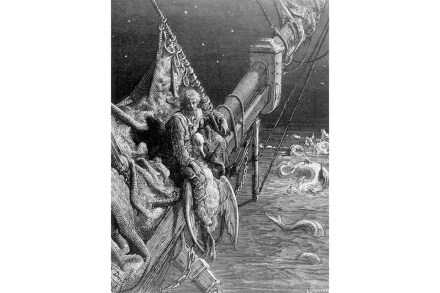
I’ve just returned from five days in the Lake District, attending the biennial ‘Friends of Coleridge’ conference in Grasmere. All the other attendees were seasoned Coleridge scholars, but I was a newbie. The reason for my going was the fact that I’m engaged in a project that has at times felt something of a lonesome road and indeed an albatross: to write a book about Coleridge’s ‘The Rime of the Ancient Mariner’. The poem comes to us with a vast undertow of explicit and implicit cultural and historical baggage, from its self-conscious antiquarian roots in late medieval ballads to its engagement with more currently pressing concerns of environmentalism and how we navigate the story of colonial expansion.

Roger McGough: Collected Poems 1959-2024

From our UK edition

35 min listen

My guest in this week's Book Club podcast is Roger McGough, whose new The Collected Poems: 1959-2024 anthologises a poetic career 65 years long and counting. Roger tells me about revisiting his old work and making it new, why he's 'not being serious' about the future of Poetry Please, and how he narrowly missed being on the Pyramid Stage at Glastonbury.

Michael Nott: Thom Gunn’s Cool Queer Life

From our UK edition

29 min listen

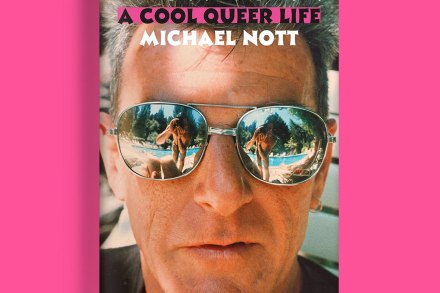
My guest on this week's Book Club podcast is Michael Nott, author of the new biography Thom Gunn: A Cool Queer Life. He tells me about the poet's early trauma, his transatlantic identity, his unconventional family and his compartmentalised life, part teaching and writing, part sex, drugs and rock and roll.

Dedicated to debauchery: the life of Thom Gunn

From our UK edition

In 1876, writing to his friend Gertrude Tennant, Gustave Flaubert set down a principle that artists and writers should live by: Soyez réglé dans votre vie et ordinaire comme un bourgeois, afin d’être violent et original dans vos œuvres. (Be regular in your life and ordinary as a bourgeois, in order to be violent and original in your work.) The life of the English poet Thom Gunn had its disciplined aspect (he managed to hold down a job at least), but, overall, it was so dedicated to debauchery and excess that it’sa wonder it lasted as long as it did. The story, told in detail by Michael Nott, makes even the least censorious reader sometimes wonder why this seemed like a good idea. Gunn was born in Kent in 1929 to an upper-middle-class intellectual family.

Islands of inspiration: a poet’s life on Shetland

From our UK edition

Shetland comprises an archipelago of some 300 islands and skerries situated roughly half way between London and the Arctic Circle. Stereotyped by many outsiders as bleak and somehow ‘on the edge’, according to the poet Jen Hadfield’s stylish memoir – about her 17 years of living there – it can be more illuminating to see these places as somehow central to everything. Visiting Foula, Hadfield overcomes her vertigo, finding the island ‘peaceful and dreadful’ all at once Storm Pegs is as much an account of the author finding new personal bearings as a series of magic lantern slides about insular life. The title alludes to a traditional piece of perforated wood used by mariners to keep track of their whereabouts: you stuck the peg in a hole and navigated accordingly.

A middle-aged man in crisis: How to Make a Bomb, by Rupert Thomson, reviewed

From our UK edition

Philip Notman is going through what looks like a midlife crisis. Travelling home from an academic conference, he feels sick and disoriented to the point where he is barely able to function. Back in London, he can’t quite explain to his wife Anya, or indeed to himself, what’s ailing him. Is it just me, he wonders, or is everything unbearably toxic? Instead of working on his next book during a sabbatical, he sets off on a journey in search of a remedy. Rupert Thomson’s new novel has no full stops. In their place are paragraph breaks, with sentences abandoned on the page, increasing the sense of dislocation: Everything sick, he thought Everything in pain Starting from the title, the atmosphere grows increasingly ominous.

Exploring the glorious literary heritage of Bengal

From our UK edition

The first time I went to India, nearly 30 years ago, I was sent as a young novelist by the British Council. Unusually, my first encounter with the country was Kolkata, a city I loved instantly. At the first event, after I had finished reading, an audience member gently asked if I liked Indian novels. I thought I was prepared, and mentioned R.K. Narayan, Salman Rushdie, Anita Desai and Vikram Seth. The questioner smiled. ‘Those are all writers in English,’ he said. ‘What about writers in Indian languages?’ I was stumped. Perhaps many people of generous reading habits have the same block without knowing it.

Emily Dickinson was not such a recluse after all

From our UK edition

This is fanciful, I know, but I can’t help wondering about the great poetry that will surely be written in the early 2060s. Think about it: in the early 1960s, Sylvia Plath had her great creative outpouring, waking at 4 a.m. each day to work on the ‘Ariel’ poems that would make her name. Exactly 100 years earlier, Emily Dickinson was in full spate, writing 295 poems in 1863 alone. (Her total oeuvre amounts to nearly 1,800 poems, most of them unpublished during her lifetime.) The concentrated intensity with which these two women produced their best work has the quality of a natural phenomenon: a butterfly migration, or a swarm of plankton ablaze with bioluminescence. To read The Letters of Emily Dickinson is to experience this phenomenon in real-time.

Four female writers at the court of Elizabeth I

From our UK edition

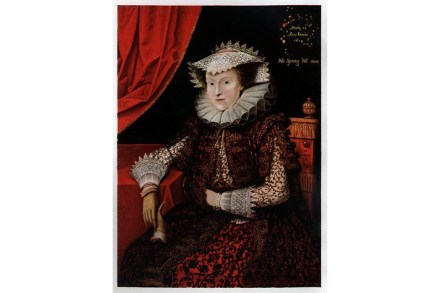
Almost a century ago, in A Room of One’s Own, Virginia Woolf claimed that if William Shakespeare had had an equally talented sister the obstacles to her sharing his vocation would have been insurmountable. Woolf’s argument that a woman needs ‘money and a room of her own’ in order to write proved persuasive. ‘Shakespeare’s sister’ has become a pop-cultural trope. So perhaps it’s unsurprising that the distinguished American scholar of the Renaissance Ramie Targoff should borrow the phrase for a study of four woman writers. Her title offers a shortcut to understanding how significant this immensely accomplished quartet is for readers and writers today. Not that Targoff’s elegantly readable, immaculately researched book needs any establishing gimmick.

The healing power of Grasmere

From our UK edition

William Wordsworth’s life is the foundational version of the nature cure. After a disrupted, troubled childhood, sent to live with unsympathetic relations after his mother’s death, a chaotically disaffected time at Cambridge and a muddled youth, fathering a child on a woman he loved but scarcely knew in France, Wordsworth refused all his family’s urgings to a nice career in the church or the law. Instead, he stumbled towards the kind of poetry he wanted to write and looked, with his sister Dorothy, for a sense of home in Dorset and Somerset. Finally, he returned to the Lake District, and in December 1799 came to Dove Cottage and Grasmere, where nature felt like the parent he longed for and, surrounded by his coterie of women supporters, the years of agony could be over.

It feels somehow improper to witness an author groping for the right words

From our UK edition

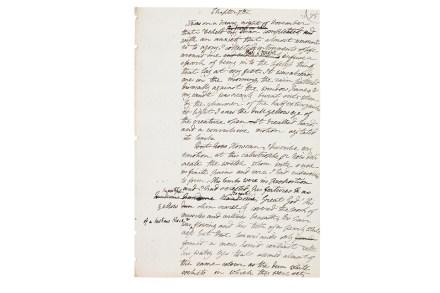
The early stages of a literary work are often of immense interest. It is perhaps a rather tawdry kind of interest, like paparazzi shots of a Hollywood starlet taking the bins out before she’s put her make-up on. Of course it’s extraordinary to think that some of the most famous characters, events and lines in literature weren’t as we now know them but had to be struggled towards. Sometimes these efforts have the anachronistic but unavoidable sense of somebody getting it wrong. Textual bibliographers have carefully classified the different steps a work takes from manuscript to first edition and subsequent versions. Perhaps we could go further in search of a writer’s progress.

Flaubert, snow, poverty, rhythm … the random musings of Anne Carson

From our UK edition

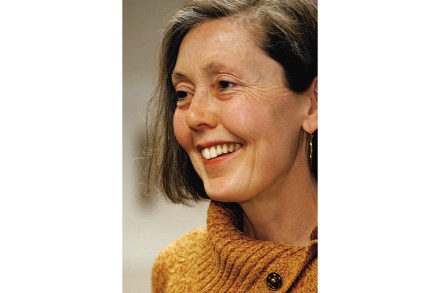
Anne Carson, the celebrated Canadian-American poet, essayist and classical translator, is notoriously reticent about her work. She agreed to just these three sentences appearing on the cover of her first book in eight years: Wrong Norma is a collection of writings about different things, like Joseph Conrad, Guantanamo, Flaubert, snow, poverty, Roget’s Thesaurus, my dad, Saturday night. The pieces are not linked. That’s why I’ve called them wrong. Not only does this suggest the range of subjects explored but also Carson’s idiosyncratic, playful humour. Of course there are links between the pieces, and of course they are anything but wrong. Wrong-footed by the blurb, it’s thrillingly difficult to find one’s balance on opening the book.

Blake Butler: ‘I don’t want this story to end as “Molly killed herself”’

A recent controversy rocked the literary world when coverage of author Blake Butler’s memoir, Molly, about his late wife, notable poet Molly Brodak, hit tabloids and spun for the worst. The coverage sparked debate over the ethics of writing about relationships, as online attackers made accusations that the widower weaponized Brodak’s private life and exploited her death for fame or revenge.   Claims gained ground that it was a “shameless cash grab,” “literary revenge porn,” or that it shouldn’t have been published due to privacy concerns, since the memoir reveals Butler’s discovery of his late wife’s affairs after her passing.

blake butler

The real problem with ChatGPT is that it can never make a joke

From our UK edition

I have been reviewing books for nearly four decades – starting in this very magazine – and over the years I have encountered some real stinkers. But this is the first time I can recall being reluctant to pick up the book because of actual physical nausea. Intellectual nausea I’ve had plenty of times. Give me a 900-page book of magical realism and that’s what I’ll get. But this time it metastasised into real queasiness. I’ll explain why. (Well, that is my job.) The odd thing is, Benny the Blue Whale starts amusingly enough.

How Wilfred Owen became a poet

Here is the opening of a sonnet written by Wilfred Owen in the spring of 1911: “Three colors have I known the Deep to wear;/ ’Tis well today that Purple grandeurs gloom.” Owen was eighteen and had just been on a pilgrimage to Teignmouth in England, where his hero John Keats had once stayed. The kindest thing to say about this poem is that it is heavy with the influence of Keats. Six years later, in a seaside hotel requisitioned by the army and waiting to be sent back to the Western Front, he begins a poem like this: “Sit on the bed. I’m blind, and three parts shell.” This looks so simple. The monosyllables carry the meter without fuss; “shell” here means both munitions and protection.

Owen

An obituarist’s search for the soul

From our UK edition

‘“Deep breath”, says the doctor. I take one and hold it.’ Thus begins the fourth chapter of Ann Wroe’s Lifescapes. It is apt because, although the book is part memoir, part essay on the art of biography, it is really about the breath of life itself. Wroe’s writing is intense and visionary, at times almost ecstatic. Reader, dive in. Wroe has written weekly obituaries for the Economist for 20 years, seeking out seemingly ephemeral moments that unlock people’s lives. ‘Time and again,’ she says, ‘some incident in childhood is the key to a career.’ The composer Karlheinz Stockhausen was delighted by the sound his toy hammer made on pipes and buckets at his family’s farm.