Poetry

On receiving books in the mail

I receive a lot of books in the mail. Perhaps you do, too. Some of these I order. Most come from publishers or authors hoping for a review. A few are gifts. I prefer to buy books at used bookstores. You never know what they might have on hand, and there’s nothing better than discovering a gem of a book by a writer you’ve never heard of. Plus, the price is always right. Independent bookstores are great, too. I’m no snob. I bought a book just the other day at the gamified Barnes and Noble in town — the atrociously overrated Call Us What We Carry by Amanda Gorman, who read at Joe Biden’s inauguration (more on that at some point, perhaps). But I prefer independent bookstores because, like at used bookstores, there’s an element of surprise in the store’s stock.

mail

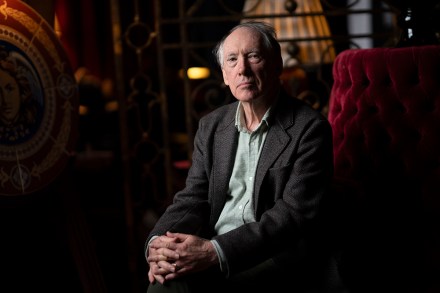
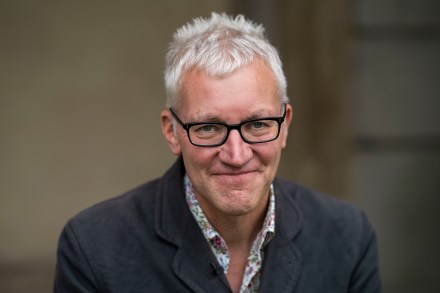
Ilya Kaminsky’s poetry in a time of war

There is currently a poem going viral on Twitter. “We Lived Happily During the War” is by the Ukrainian-American poet Ilya Kaminsky, and it is the first poem of his prize-winning collection Deaf Republic (2019). It is easy to see why it feels particularly relevant: Kaminsky was born in the former Soviet city of Odessa, which is now under attack from Russia. The poem opens: “We Lived Happily During the War” And when they bombed other people’s houses, we protested but not enough, we opposed them but not enough. It is a heart-breaking meditation on the way normal life continues despite crises. The speaker describes how “I took a chair outside and watched the sun.” But he ends with a plea: “we (forgive us) / lived happily during the war.

llya Kaminsky

A gay fandango

Usually, it’s poets who chance their arm with a novel. Rare is the established novelist who switches to verse. This could be because, while poetry is technically daunting with its rhyme and meter, the novel is apparently the easiest of all forms, without even the conventions and directions of the most basic screenplay. In the nineteenth century, Thomas Love Peacock was the most successful poet to turn to fiction, but in our own times poet-novelists rank among the most talented: Sylvia Plath, Ben Lerner, Vikram Seth, Craig Raine, Grace Nichols. Now, after half a century of writing superb novels, the English author Paul Bailey, well into his eighties, is publishing his second book of poems.

Bailey

Writing poetry in East Germany

Readers of The Spectator World probably think they are quite au fait with the culture wars. J.K. Rowling, Joe Rogan, even Dr. Seuss — writers and celebrities who have been canceled quickly roll off the tongue. But what if “cancellation” had more dramatic implications than just a Twitter account bursting with notifications? In 1975, the unpublished poet Annegret Gollin encountered a rather different kind of culture war: she was arrested at a music festival and told that she could either spend two years in a prison cell or become an informant for the Stasi. Gollin chose to become an informant, but was a brilliantly ineffective one — she told over a hundred of her friends that she was supposed to be spying on them — and she ended up in prison seven years later.

The forgotten poetry of John Martin Finlay

Dense Poems and Socratic Light: The Poetry of John Martin Finlay, edited by David Middleton, Wiseblood Books, 2020 To say that the poet John Martin Finlay has been forgotten is not quite right. He was never “remembered” — read by a significant number of people — in the first place. But his best work is as good as the best work of many of the poets of his time, and Wiseblood Books is hoping to set things right with a two-volume collection of his poetry and prose. Born in southern Alabama on a peanut and dairy farm in 1941, Finlay went to university in Alabama and Louisiana, where he graduated with a Ph.D. from Louisiana State University in 1980 and converted to Catholicism that same year.

The Browning version

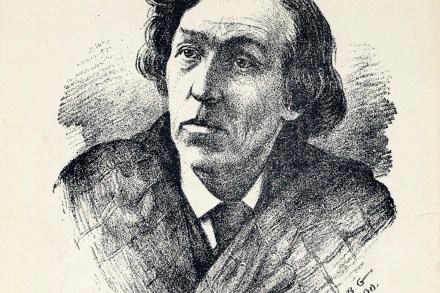
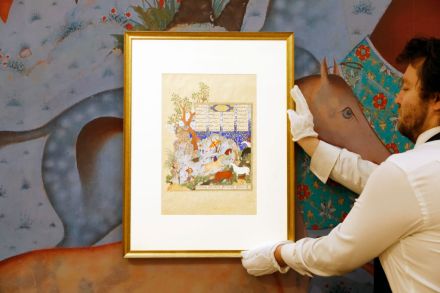
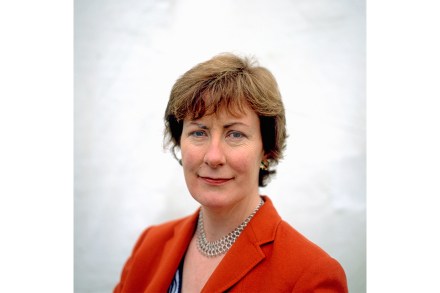
‘Ah, did you once see Shelley plain?’ asks the speaker in Robert Browning’s poem ‘Memorabilia’. Yet few of Browning’s contemporaries are as hard to see plain as his own wife: the poet who was known to her family as ‘Ba’, signed herself ‘EBB’ and published a number of popular works under her married name, Elizabeth Barrett Browning. During her lifetime she was one of the most admired poets of the age: a framed portrait of her hung in the bedroom of Emily Dickinson, and when Wordsworth died in 1850 there was serious talk of her becoming the first female poet laureate. Since her death in 1861, however, her reputation has sunk like a bad soufflé.

browning

The remarkable Martha Treichler

This article is in The Spectator’s March 2020 US edition. Subscribe here.Batavia, New York Shrouded in legend, Black Mountain College was an experimental school outside Asheville, North Carolina. For almost a quarter century (1933-57) it incubated, nurtured and disgorged the holy fools, ragged prophets and pretentious frauds of the American avant-garde and the (in some cases reactionary) counterculture: John Cage, Paul Goodman, Merce Cunningham, Willem de Kooning and Buckminster Fuller, to name a few. Yet for my money, the most remarkable couple to pass through Black Mountain were Bill and Martha (Rittenhouse) Treichler, two farm kids, the former an Iowan, the latter a daughter of Maryland, who met and fell in love at Black Mountain during the 1948-49 school year.

treichler

The audacity of verse

This article is in The Spectator’s January 2020 US edition. Subscribe here. Shelley famously and optimistically proclaimed that poets were the unacknowledged legislators of the world. Adorno famously and pessimistically declared that poetry was impossible after Auschwitz. In The Music of Time, his new study of poetry in the 20th century, John Burnside makes a rather more modest claim: that to write a poem at all is an act of hope. By any standards, Burnside’s own career seems cause for hope in poetry’s capacity to transform at least one individual life.

Johnson

Poems for Memorial Day

James Jeffrey served in the British Army for nine years, from his commissioning as a second lieutenant shortly after 9/11 to leaving as a captain in 2010. He served in Iraq in 2004 as a tank commander with the Queen’s Royal Lancers, providing armored support to the 1st Battalion The Princess of Wales’s Royal Regiment, followed by another tour in 2006. He deployed to Afghanistan in 2009 with the headquarters of the Welsh Guards Battle Group on Operation Herrick 10, during which the regiment’s commanding officer, Lieutenant Colonel Rupert Thorneloe, was killed by a Taliban IED, the first commanding officer killed in action since the 1980s Falklands War. Jeffrey now works as a writer.