Poetry

Letters: Who’s responsible for Putin’s rise if not Russians?

From our UK edition

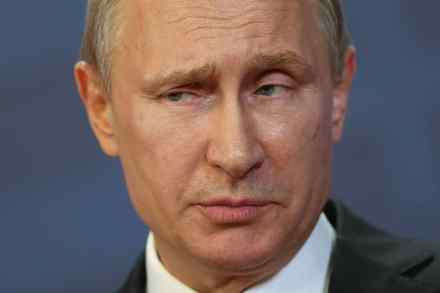
Russian misrule Sir: Your editorial (‘Sanction Schroder’, 21 May) laments that western sanctions may be harming ordinary Russians, given that they too ‘are victims of Vladimir Putin’s corruption and misrule’. Yet who if not the Russian people themselves are more culpable for the rise of Putin? The unpalatable fact that both he and his assault on Ukraine still enjoy such considerable popular domestic support cannot be put down merely to his iron grip on the levers of coercion and propaganda. For most of the last century the Russian people have allowed themselves to be misruled and oppressed by a succession of malevolent tyrants and despots. There comes a point when the people of a country have to take responsibility for their leaders.

Is T.S. Eliot’s great aura fading?

From our UK edition

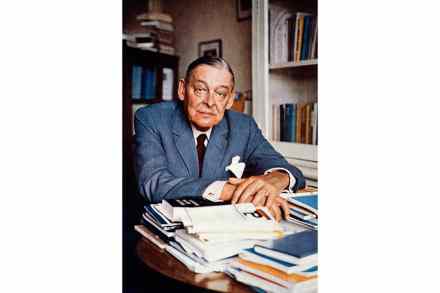
For much of his life T.S. Eliot was surrounded by an aura of greatness: people accepted it, and behaved accordingly. That kind of consensus is not helpful for a writer or his works, as Eliot himself clearly saw, observing that nobody had ever written anything significant after winning the Nobel Prize for Literature – true at the time and mostly true since. His work is now in the position of Hamlet when he wrote a famous essay on the play: that the universal agreement of its greatness had hidden an understanding of its failures, its strangeness and what it couldn’t do. We take the greatness of Eliot’s poetry pretty much for granted; but in the centenary of The Waste Land, some cracks are beginning to appear in a once unassailable reputation.

A quiet delight

What would you do if you looked out of your window expecting to see the neighbor’s cat, and instead were presented with a groundhog in its place, “waddle-thieving” your tomatoes and “taking such/ pleasure in the watery bites”? Ada Limón’s speaker, in the opening poem of her new collection, The Hurting Kind, is not angry at this “all muscle and bristle” tomato-thief. The groundhog is an embodiment of all she cannot have: an animal, natural freedom that inspires her to ask, “Why am I not allowed/ delight?” ...A stranger writes to request my thoughts on suffering. Barbed wire pulled out of the mouth, as if demanding that I kneel to the trap of coiled spikes used in warfare and fencing.

limón

The energetic and tragic Keats

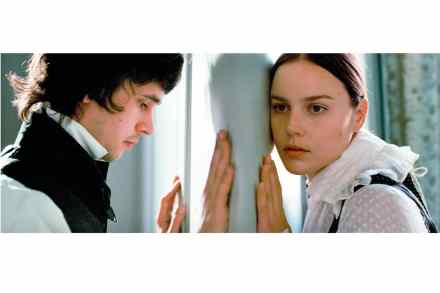
When John Keats wrote “On First Looking into Chapman’s Homer,” he had just returned from a long evening at the home of a childhood friend, Charles Cowden Clarke. Charles Clarke was the son of the headmaster of Clarke’s Academy, where Keats had gone to school. A week earlier, Clarke had introduced Keats to one of his heroes, Leigh Hunt, editor of the independent Examiner (Hunt was imprisoned for two years for printing that the Prince Regent was “a fat Adonis at forty”), friend of William Hazlitt and Charles Lamb, and literary kingmaker. Hunt despised what he viewed as the overly ornate poetry of Alexander Pope, preferring instead Chaucer’s earthy Old English and the directness of Shakespeare and Milton.

Quietly devastating: Benediction reviewed

From our UK edition

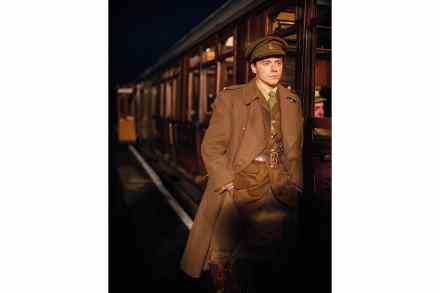
Terence Davies’s Benediction is a biopic of the first world war poet Siegfried Sassoon told with great feeling and tenderness. The result is quietly powerful, quietly devastating and, happily, is not afflicted by the usual clichés that afflict this genre. Sassoon never, for example, crumples what he’s just written and throws it across the room. For this we must be grateful, and are. The film juggles two timelines, with the young Siegfried played by Jack Lowden – once a rising star, it is probably now fair to say he has fully risen; he is wonderful here – and the old Siegfried played by Peter Capaldi.

The nightmare of making films about poets

From our UK edition

Television and film are popular mediums. Poetry has never been popular. This is Sam Weller’s father in Pickwick Papers, when he discovers his son writing a valentine, alarmed it might be poetry: Poetry’s unnat’tral; no man ever talked poetry ’cept a beadle on boxin’ day, or Warren’s blackin’, or Rowland’s oil, or some o’ them low fellows; never let yourself down to talk poetry, my boy. In 1994, I made a short film about Kipling. The director, Tony Cash, a man with a first-class Oxford degree in Russian, objected to a two-second reference to Aristotle’s ‘pity and terror’ in my script. ‘If you mention Aristotle, they [the TV audience] will think you’re an arsehole or an idiot.

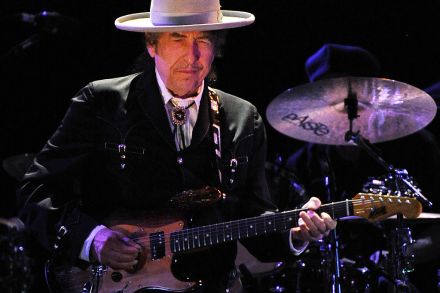
Bob Dylan’s and T.S. Eliot’s search for truth

The fact that the master songwriter Bob Dylan is a fan of a literary allusion should come as no surprise. This is the man who, in his autobiography Chronicles Vol. 1, declared that reading the French symbolist poet Arthur Rimbaud made “bells [go] off.” (Incidentally, it was Suze Rotolo, his first love whom he so cruelly lambasted in “Ballad of Plain D,” who introduced him to the poet. One feels that Dylan should have paid her a little more retrospective credit than the all-but-bitter love songs on The Freewheelin’ Bob Dylan.

Robert B. Shaw sees things as they are

What Remains to Be Said: New and Selected Poems by Robert B. Shaw, Pinyon, 2022, 312 pages Robert B. Shaw is one of those quietly accomplished poets who publishes a slim volume of exacting and beautiful poems every eight years or so. One thinks of his teacher at Harvard, Robert Fitzgerald, as a model in this regard, or the late Amy Clampitt, or Shaw’s more prolific contemporary Frederick Turner. Shaw’s observational verse progresses by accumulation of detail or plot and aims to unify meaning and music. His most recent volume, What Remains to Be Said: New and Selected Poems, collects poems from all of his seven previous books and includes 28 new poems.

Ocean Vuong’s immature poetry

Time is a Mother — Ocean Vuong’s second poetry collection — should have been a scene-stealer, a much-awaited literary event of the type normally reserved for a J.K. Rowling. The collection has been talked about in the breathy, excited terms not normally associated with poetry — the least glitzy of the literary genres — and in a way not heard of since the blockbuster release of Ted Hughes’s Birthday Letters (1998). Vuong, rightly, won the T.S. Eliot prize in 2017 with Night Sky With Exit Wounds. The collection had flashes of brilliance and was a mark of a young poet making his way in the world. It also won the Forward Prize for best first collection, and, in 2019, Vuong was awarded a MacArthur “genius” grant.

A pure original: the inventive genius of John Donne

From our UK edition

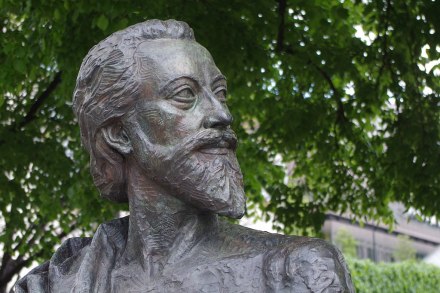
Perhaps it was all because of his name. John Donne: for a poet this must have felt a little like destiny, and even in the most unlikely of moments he couldn’t resist making puns. He sat down to write a letter to the enraged father of the teenage girl he had just married in secret. A lesser man might have chosen to play this fairly straight, but not JD. ‘It is irremediably done,’ he wrote to his new father- in-law, and of course he spells it ‘donne’. His young bride’s family name was More; the jokes pretty much wrote themselves. The couple had 12 children and were, he later said, ‘undone’ by their marriage. It is difficult to read Donne and not to like him, at least some of the time.

Don’t cancel John Donne’s poetry

All the way across the Atlantic, the British literary world has been seized by John Donne fever. Katherine Rundell’s biography of the metaphysical priest-poet has led to excitable chattering about his life and work. The book, Super-Infinite: The Transformations of John Donne, will be released in the US in September — a significant enough delay as to make the Declaration of Independence look like a mistake. Aside from radically different publication dates (again: would you rather have lower taxes and freedom from George III, or a brilliant Donne biography?), the specter of the far-off American continent has long since loomed large in Donne studies.

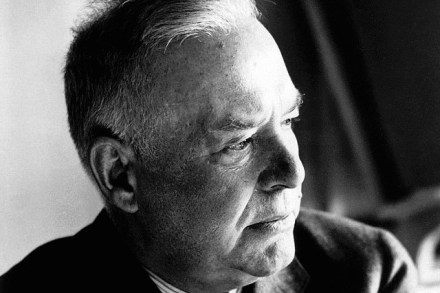
Wallace Stevens and the magic of stuff

Writers have all sorts of hobbies. Tolstoy liked to play chess. Dostoevsky, as everyone knows, loved to gamble. Nabokov collected butterflies; Hemingway, wives. Eugene O’Neill’s favorite pastime was drinking. Flannery O’Connor, of course, loved birds. Emily Dickinson loved to bake. T.S. Eliot was an avid sailor. As a young man he regularly sailed along the shore of Cape Ann. One summer, Eliot and some friends sailed from Marblehead, Massachusetts to Mt. Desert Rock in a 19-foot knockabout in the fog and rough seas. It was a journey of well over 150 nautical miles and could have easily ended in disaster. The sea, of course, appears again and again in Eliot’s poetry.

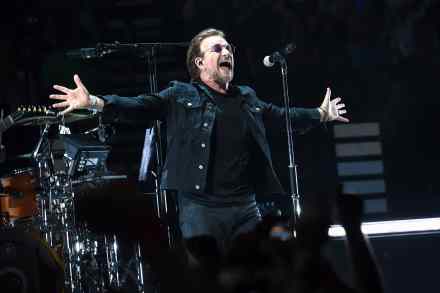
Bono’s ‘poem’ was an insult to the craft of verse

From our UK edition

Poet', said Robert Frost, 'is a praise-word'. So it is. That explains in part the unabashed delight with which Colm Tóibín, speaking in our current Book Club podcast, talks about publishing his fine first poetry collection Vinegar Hill – decades of international acclaim as a novelist notwithstanding. Poetry is a high-status artform, perhaps the highest. Yet unlike most other artforms, very many people seem to think of it as something that anyone can do. You wouldn’t expect to be able to write a symphony, or build a suspension bridge, or win Wimbledon, without many years of apprenticeship and intimate attention to the work of those who have excelled in those things.

On receiving books in the mail

I receive a lot of books in the mail. Perhaps you do, too. Some of these I order. Most come from publishers or authors hoping for a review. A few are gifts. I prefer to buy books at used bookstores. You never know what they might have on hand, and there’s nothing better than discovering a gem of a book by a writer you’ve never heard of. Plus, the price is always right. Independent bookstores are great, too. I’m no snob. I bought a book just the other day at the gamified Barnes and Noble in town — the atrociously overrated Call Us What We Carry by Amanda Gorman, who read at Joe Biden’s inauguration (more on that at some point, perhaps). But I prefer independent bookstores because, like at used bookstores, there’s an element of surprise in the store’s stock.

mail

This be the curse: Philip Larkin’s big problem

From our UK edition

In matters of sex, Philip Larkin was late getting away. On his 23rd birthday, he wrote defeatedly to Kingsley Amis: ‘I really do not think it likely I shall ever get into the same bed as anyone again because it is so much trouble, almost as much trouble as standing for parliament.’ His 2014 biographer, James Booth, adds that Larkin was ‘still effectively a virgin… [and] Amis was puzzled that his friend failed to follow through his pursuit of sexual satisfaction’. There is no join-the-dots explanation for what Larkin called the ‘sex-fear and auto-erotic fantasies’ that beset him all his life. But in the centenary of his birth, it’s time to bring in the anatomical peculiarity incarnating his trouble with sexual fulfilment: his penis.

The making of a poet: Mother’s Boy, by Patrick Gale, reviewed

From our UK edition

Charles Causley was a poet’s poet. Both Ted Hughes and Philip Larkin considered him the finest candidate for the laureateship, which Hughes later won. Now Patrick Gale has made him a novelist’s poet in this richly engaging fictionalised account of his early life. Mother’s Boy is bookended by two world wars: the first, in which Charles is born, and his father Charlie suffers the injuries that would lead to his premature death; the second, in which Charles, who had written schoolboy verse, ‘although poetry was not really his thing’, discovers his poetic voice while serving as a coder in the navy.

Ilya Kaminsky’s poetry in a time of war

There is currently a poem going viral on Twitter. “We Lived Happily During the War” is by the Ukrainian-American poet Ilya Kaminsky, and it is the first poem of his prize-winning collection Deaf Republic (2019). It is easy to see why it feels particularly relevant: Kaminsky was born in the former Soviet city of Odessa, which is now under attack from Russia. The poem opens: “We Lived Happily During the War” And when they bombed other people’s houses, we protested but not enough, we opposed them but not enough. It is a heart-breaking meditation on the way normal life continues despite crises. The speaker describes how “I took a chair outside and watched the sun.” But he ends with a plea: “we (forgive us) / lived happily during the war.

llya Kaminsky

The delicate business of writing poetry

From our UK edition

Living, as Clive James put it, under a life sentence, and having refused chemotherapy, I find I respond to the time issue in contradictory ways. On the one hand, I read avidly, almost as if I’ll be tested at some later date. I am morbidly well-informed on current affairs, the status of the old white male and the situation in Ukraine. I crawl through Lucretius and Horace in search of wisdom. On the other hand, I avoid my favourite filmic masterworks (Chinatown, On the Waterfront, The Remains of the Day, Saturday Night and Sunday Morning) in favour of Secret Army, The Edgar Wallace Mystery Theatre and any 1950s thriller that features frequent chases to some Tudoresque Surrey cottage. In other words, everything that is unreal, out of reach, leaving no trace and comfortably mediocre.

A gay fandango

Usually, it’s poets who chance their arm with a novel. Rare is the established novelist who switches to verse. This could be because, while poetry is technically daunting with its rhyme and meter, the novel is apparently the easiest of all forms, without even the conventions and directions of the most basic screenplay. In the nineteenth century, Thomas Love Peacock was the most successful poet to turn to fiction, but in our own times poet-novelists rank among the most talented: Sylvia Plath, Ben Lerner, Vikram Seth, Craig Raine, Grace Nichols. Now, after half a century of writing superb novels, the English author Paul Bailey, well into his eighties, is publishing his second book of poems.

Bailey

Writing poetry in East Germany

Readers of The Spectator World probably think they are quite au fait with the culture wars. J.K. Rowling, Joe Rogan, even Dr. Seuss — writers and celebrities who have been canceled quickly roll off the tongue. But what if “cancellation” had more dramatic implications than just a Twitter account bursting with notifications? In 1975, the unpublished poet Annegret Gollin encountered a rather different kind of culture war: she was arrested at a music festival and told that she could either spend two years in a prison cell or become an informant for the Stasi. Gollin chose to become an informant, but was a brilliantly ineffective one — she told over a hundred of her friends that she was supposed to be spying on them — and she ended up in prison seven years later.