Poetry

A potent seam of violence: The Wren, the Wren, by Anne Enright, reviewed

From our UK edition

The Irish novelist Anne Enright is now in her sixties. Her deceptively modest new novel, The Wren, The Wren, opens with a long section narrated by Nell, a woman in her early twenties living in contemporary Dublin. Nell scrapes by, ‘writing content non-stop’: travel pieces about places she’s never been to, stories for a wealthy ‘actress/eco-influencer’. Adrift and vulnerable, she falls into an on-off relationship with a man called Felim, who is emotionally cruel and photographs her naked without her permission. With this extended portrait of a much younger woman, Enright quietly establishes her excellence.

In search of Jeanne Duval: The Baudelaire Fractal, by Lisa Robertson, reviewed

From our UK edition

The shared etymology of the words ‘text’, ‘textile’ and ‘texture’ – from the Latin verb textere, ‘to weave’ – has long been a fertile subject, its thread running through the work of theorists such as Roland Barthes, Julia Kristeva, Hélène Cixous, Gilles Deleuze (from whom one of the epigraphs for this book is taken) and others. But this now critical commonplace provides a helpful entry point to the Canadian poet Lisa Robertson’s sometimes evasive first novel The Baudelaire Fractal, a work obsessed with textiles, tailoring, intertextuality and the woven physicality of language. The word ‘novel’ seems only really appropriate in its adjectival sense.

The illiterate poet who produced the world’s greatest epic

From our UK edition

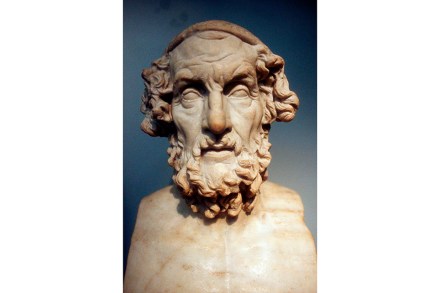
Odysseus is tossed on the sea when he notices a rock and clings to it. ‘As when an octopus is drawn out of its lair and bits of pebble get stuck in its suckers,’ says Homer, ‘so his skin was stripped from his brave hands by the rock.’ There is such elegant tricksiness in that simile. Homer still sits at the apex of western literature thanks to the beauty and influence of his verse. Robin Lane Fox has been teaching the epics for 50 years and studying them for many more. His lifelong fascination with the texts has bred a sort of feverish passion in him that makes him declare Homeric poetry to be ‘beyond us’ today (he is probably right) and without equal anywhere in the world, except perhaps in the books of Tolstoy (who is surely still inferior).

The making of a poet: Wilfred Owen’s ‘autobiography’ in letters

From our UK edition

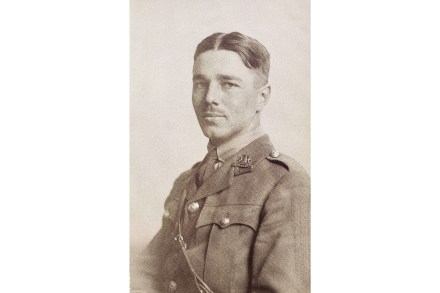
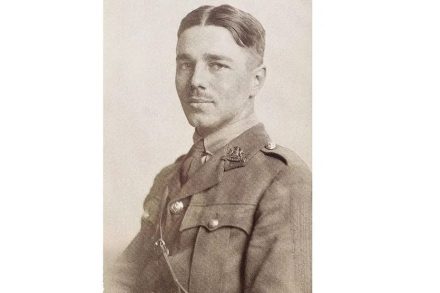
Here is the opening of a sonnet written by Wilfred Owen in the spring of 1911: ‘Three colours have I known the Deep to wear;/ ’Tis well today that Purple grandeurs gloom.’ Owen was 18 and had just been on a pilgrimage to Teignmouth in Devon, where his hero John Keats had once stayed. The kindest thing to say about this poem is that it is heavy with the influence of Keats. Six years later, in a seaside hotel requisitioned by the army and waiting to be sent back to the Western Front, he begins a poem like this: ‘Sit on the bed. I’m blind, and three parts shell.’ This looks so simple. The monosyllables carry the meter without fuss; ‘shell’ here means both munitions and protection.
The great late Yeats

The 1923 Nobel Prize in Literature was awarded to William Butler Yeats “for his always inspired poetry, which in a highly artistic form gives expression to the spirit of a whole nation.” Informed of the prize late on the night of November 14 by the editor of the Irish Times, the fifty-eight-year-old Yeats and his wife George sat up taking telephone calls and telegrams for a couple of hours. Then, according to Yeats’s sister Lily, the couple went down to the kitchen and cooked some sausages before going to bed. The next day, the Yeatses went out and began spending some of the check Yeats would receive in December.

yeats

Poet laureate can’t define a ‘ban’

Amanda Gorman, the young female poet who read at Joe Biden's inauguration lamented on Tuesday night that her poem had been banned by a Florida school library. “Just found out my inaugural poem 'The Hill We Climb' has been banned from an elementary school in Miami-Dade County because it causes "confusion and indoctrination,” America's first National Youth Poet Laureate tweeted.  The poem, however, was never banned. Instead, according to the Miami-Dade school district, “The Hill We Climb” was moved from the elementary section of the library to the middle-school section.  “It was determined at the school that ‘The Hill We Climb’ is better suited for middle-school students and, it was shelved in the middle-school section of the media center.

amanda gorman

Ernest Hilbert weathers the storms of life and fatherhood

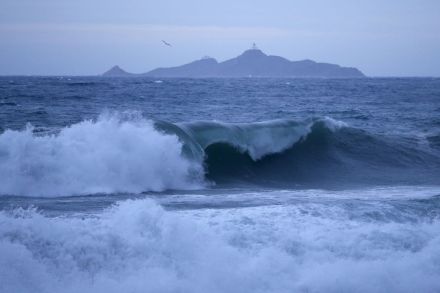
Storm Swimmer, Ernest Hilbert’s fifth collection of poems and winner of the 2022 Vassar Miller Prize in Poetry, is obsessed with bodies of water, especially the ocean. Even before the book begins, Hilbert declares this preoccupation through three sea-based epigraphs, running a wide gamut from Apollonius of Rhodes to Rachel Carson and Iris Murdoch. Over the forty-four formally various and adept poems that comprise this ninety-page, seven-section text, Hilbert engages repeatedly with different aspects of the oceanic to dazzling effect. Often he effects our encounter with the sea through the experiences of the swimmer, who almost always is a struggling figure. Sometimes — as in the case of the title poem — he must contend with the weather: “Without the sun the sea is tangled steel.

Hilbert

Why you should write poetry

From our UK edition

In a recent Low Life column, Jeremy Clarke referred to Edward Thomas and his writing of 16 poems in just 20 days. Similarly, practically all of the poems that made Wilfred Owen famous were composed in a few months (and when he was still in his twenties). It has been the same for many of our greatest poets. This prompts a few reactions: one is undoubtedly a sense of inferiority. But another is the thrill of possibility. It doesn’t matter if you’ve produced nothing of any literary merit in your life to date: a sudden burst of inspiration over a few weeks could be all you need. This is something almost unique to creative pursuits – you won’t be making any breakthroughs in nuclear fission outside of your nine to five – and it is particularly true of poetry.

The Spectator’s 2022 Books of the Year

William Boyd Writing effective comedy is very difficult. True comic genius, the ability to create a unique tone of voice — deadpan, perfectly timed, self-deprecating, abjuring all whimsy (the British disease) and grandstanding — is extremely rare. One thinks of S.J. Perelman, Peter de Vries, the Grossmiths and P.G. Wodehouse amongst very few others. One name that can be added to this tiny and exclusive club is Theo Fennell who has published, this year, his memoir I Fear For This Boy: Some Chapters of Accidents (Bloomsbury, $35). It relates incidents in Fennell’s life where everything that could go wronnd Catholic Churches as he veered between them.

books

The lonely passions of Emily Hale and Mary Trevelyan

From our UK edition

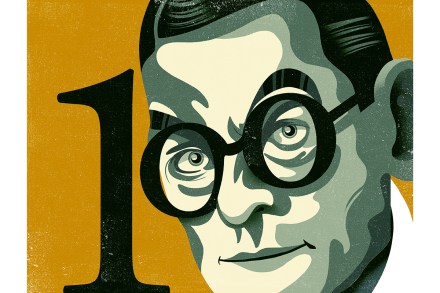
This year marks the centenary of the publication of The Waste Land, the poem that made T.S. Eliot famous. His story is familiar and yet still surprising. What is well known: Ezra Pound whipped The Waste Land into shape, it was published in The Dial and then The Criterion, and it was quickly recognised as a poem of great importance. Eliot emerged as the poet of his age and his views on the ‘impersonality’ of poetry would dominate the next several decades of poetry and criticism. What is less well known is how Eliot’s work was shaped and influenced by a few key women. This dynamic is what Lyndall Gordon’s The Hyacinth Girl and Mary Trevelyan and Erica Wagner’s Mary & Mr Eliot set out to explore. Gordon has written about Eliot before.

T.S. Eliot’s The Waste Land at 100

In the United States a century ago, a single poet dominated the literary sphere. He was not only the recipient of the first ever Pulitzer Prize for Poetry — which he would win twice more during the course of an internationally distinguished career — but would be nominated for the Nobel Prize for Literature on four separate occasions. He was beloved by presidents, described by one admirer as “more artful than Hardy and more coy than Frost” and found himself one of the bestselling writers in America. His reputation seemed assured forever.

waste land

In the footsteps of the Romantic poets

From our UK edition

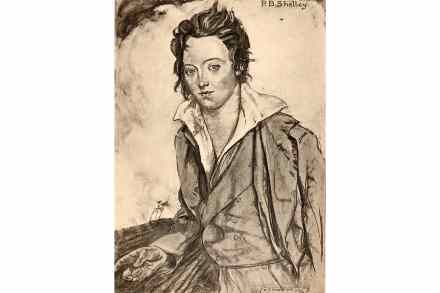
Shelley, walking as a boy through his ‘starlight wood’, looking for ghosts and filled with ‘hopes of high talk with the departed dead’, found nothing in reply. Nothing reverberated. The ghosts were silent. But he felt something else non-human: the springtime breezes bringing a sense of the marvellousness of life itself. And so in that instant (or so he says) his mind changed. No more seeking after gothic horrors or pining for the worst; no more listening to the dead. Instead, ‘the spirit of beauty’ descended on him, illuminated him, shaping his life, becoming his goddess, the only force he could imagine that ‘could free/ This world from its dark slavery’.

The unfortunate misogyny of Philip Larkin

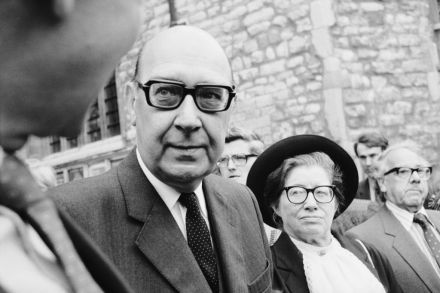
Philip Larkin — whose centenary was this week — was a misogynist. A “casual, habitual racist and an easy misogynist,” according to the literary critic Lisa Jardine. Alan Bennet, Britain’s favorite playwright and supposedly a friend of Larkin’s, even described the poet as looking “like a rapist.” Not content with one insult, he even compared him to the necrophiliac serial killer John Christie. Tough review, that one. The sheer number of reviews, essays, and articles which decry Larkin’s character and attitudes — “a porn-addled, two-timing, racist misogynist” reads the headline for one — seem to suggest this is a settled judgment. And, indeed, the evidence is all but damning.

philip larkin

Larkin at 100: a tribute (1985)

From our UK edition

This piece is taken from The Spectator’s fully digitised archive. There are many ways of judging poets. One sure test of their personal appeal is how many lines of their poetry you can remember. Not only can I remember a lot of Larkin, I find that it has sunk very deep, and become part of my private language. This is true both of his funny stuff – My wife and I have asked a crowd of craps To come and waste their time and ours… and also the jokey sadness of What else can I answer When the lights come on at four At the end of another year? Give me your arm, old toad,  Help me down Cemetery Road.

A poet finds home in a patch of nettles

From our UK edition

Towards the end of a long relationship – ‘resolved to have a conversation about the Future, which meant Separating’ – Nancy Campbell’s partner suffered a stroke. Campbell’s life then became a hell of hospital visits, supporting and fearing for the brilliant Anna, an intellectual who worked with virus analysts in Moscow, reduced by brain insult and aphasia to a kind of infancy. Thunderstone is the story of Campbell’s response to this crisis. Her diary extracts jump from Anna’s stroke in 2019 and her slow healing, to Campbell’s own new life, which begins when Anna is strong enough to be encouraged to move on, from June to September 2021. Campbell is a poet and travel writer, with many friends and contacts.

The sad, extraordinary life of Basil Bunting

From our UK edition

Funny old life, eh? Small world, etc. In one of those curious, Alan Bennett-y, believe-it-or-not-but-I-once-delivered-meat-to-the mother-in-law-of-T.S.-Eliot-type coincidences, it turns out that Mark Knopfler once worked as a copy boy on the Newcastle Evening Chronicle when Basil Bunting was working there as a sub-editor. Knopfler being Knopfler, he eventually wrote a sad sweet song about it, ‘Basil’, in which he describes England’s most important modernist poet sitting stranded in the newspaper offices, surrounded by up-and-coming Bri-Nylon-clad jack-the-lads, wearing his ancient blue sweater, puffing on his untipped Players, clearly ‘too old for the job’ and ‘bored out of his mind’.

Americans should be proud of their Poet Laureates

It isn’t often I’ll say this — and, in fact, I hope this is the only time — but as a Brit, I’m jealous of you Americans. It isn’t the fact that you have a notionally more functional government than us, or even that you have unrestrained access to things like Pop Tarts and peanut butter cups. No, the answer lies, as it always does, in poetry. Over on this side of the Atlantic, we’ve had a Poet Laureate since 1668 — when John Dryden was given a position in the royal household by Charles II. We could claim to have had one even earlier, given that the versifier, playwright, and scribbler Ben Jonson was given a pension by James I in England way back in 1616.

Hearing Percy Bysshe Shelley read aloud was a revelation

From our UK edition

Last week I heard the actor Julian Sands give a virtuoso performance of work by Percy Bysshe Shelley to mark the bicentenary of the radical poet’s death this month. A couple of days later, I listened to a bit more Shelley, this time on the radio, and this time in the voice of Benjamin Zephaniah. Hearing his verses read aloud is so much more intimate than reading them silently. You may be sitting in a crowd, but as Shelley’s words fall into your ears, it’s possible to feel that you’re having a private audience with him. Reading the same poems in an empty room can be comparatively distancing. Zephaniah said something similar when he described his first encounter with the poetry at school.

Lost in translation

Picture the scene: a twenty-something college student, desperately trying to impress a girl he’s met for a date. He's early, but that isn’t a problem as it gives him a chance to sit nonchalantly with his ever-so-artfully-battered paperback. It’s Rimbaud’s Collected Poems: intellectual, sensual, rebellious — everything he wants to be perceived as. He props the book up so that the poet’s name is visible and waits for his delicate intellectualism to be applauded. The only thing missing from this tableau is the name of the poems’ translator, assuming that the student isn’t pretentious enough to be carrying around the original French. A smaller name on the fragile paperback, the translator is generally unmentioned, forgotten, and obscured.

translation

‘That little venal borough’: a poet’s jaundiced view of Aldeburgh

From our UK edition

‘To talk about Crabbe is to talk about England,’ E.M. Forster declared in a radio broadcast in May 1941, but few people today talk about this Suffolk-born poet or indeed read him. This makes Frances Gibb’s slender but thorough account of George Crabbe’s life and work all the more welcome. In his time he was considered a leading, though controversial, figure, who wrote with stark realism about the spiritually and morally impoverished lives of East Anglian villagers and townspeople, in particular the inhabitants of the ‘little venal borough’ of Aldeburgh, where he was born in 1754 and spent an unhappy youth.