Paul Keegan

The triumph of surrealism

From our UK edition

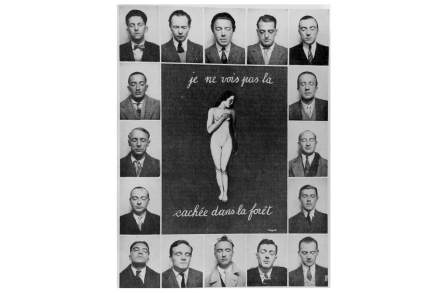
When Max Ernst was asked by an American artist to define surrealism at a New York gathering of exiles in the early 1940s, he pointed across the room at André Breton and said: ‘That is surrealism.’ Even today it can seem as if no other answer is available, so tenacious was his grip. A former student of neurology and psychiatry, with no qualifications other than an instinct for the coming thing (‘an astute detector of the unwonted in all its forms’, as he later described his fellow conspirator Louis Aragon), Breton encountered the early writings of Freud as a medical orderly on a trauma ward, during the first world war, and immediately recognised the significance of his work.
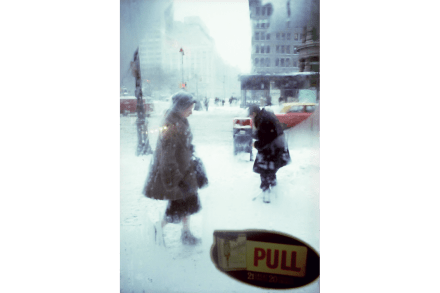
The quiet brilliance of street photographer Saul Leiter

From our UK edition

This is the second exhibition of mid-century New York street photography at the MK Gallery in Milton Keynes. The first, in 2022, surveyed the work of Vivian Maier, who at her death left behind a vast quantity of prints and negatives: evidence of a hidden life unsuspected even by those in whose household she lived and worked for four decades. There are continuities between Maier and the subject of the current show, Saul Leiter. They were contemporaries, loners who lived into their eighties (Leiter died four years after Maier, in 2013), prolific but uninterested in recognition, their reputations largely posthumous. Leiter was born in 1923 in Pittsburgh, like Andy Warhol and, like Warhol, he got out.

The pleasures of reading aloud

From our UK edition

pkkkfffffffrrrffff-ffff! pkkkfffffffrrrffff-fff! Hobble leg, hobble leg, Hobble leg owhmmm! Into the bottle of fluff, rubbed the stuff under! pkkkfffffffrrrffff-ffff! pkkkfffffffrrrffff-fff! This is the voice of Tennyson reading ‘The Charge of the Light Brigade’, as recorded by Thomas Edison in 1890 and phonetically or farcically transcribed in a novel by Nicholson Baker over a century later. Drowned in static, ‘valley of death’ sounds like ‘bottle of fluff’, ‘rode the six hundred’ becomes ‘rubbed the stuff under’ and ‘Hobble leg owhmmm’ is — of course — ‘Half a league onward’.

Snow on snow

From our UK edition

Here is William Diaper in 1722, translating Oppian’s Halieuticks (a Greek epic poem on the loves of the fishes): As when soft Snows, brought down by Western Gales, Silent descend and spread on all the Vales . . . Nature bears all one Face, looks coldly bright, And mourns her lost Variety in White. Unlike themselves the Objects glare around, And with false Rays the dazzled Sight confound. Lost variety is the nub: before it is anything else, snow is Nature’s alienation-effect, making all things look the same and ‘unlike themselves’ — even while we watch, or else behind our backs, noiselessly.

Seeing red | 18 August 2016

From our UK edition

Early on in his excellent and protean biography of a colour, Spike Bucklow quotes Goethe, writing in 1809: Every rope in the English Navy has a red thread running through it, which cannot be extracted without unravelling the whole, so that even the smallest length of rope can be recognised as belonging to the crown. Bucklow’s book follows a red thread through human history, whose twin strands are material extraction — the animal, vegetable and mineral lives of red — and the extraction of meanings from redness itself. All colour is cultural. We have our private definitions — the unshareable conviction as to what is and is not red — but it is societies that ‘make’ colours and their associations.

Roaming in the gloaming

From our UK edition

One of the epigraphs to Peter Davidson’s nocturne on Europe’s arts of twilight is from Hegel: ‘The owl of Minerva begins to fly only at dusk’, an image of philosophy as posthumous, able to explain things only after we have experienced them. Or an image of dusk as threshold, the blue hour when light transforms itself, and other worlds become possible. The Last of the Light is a cultural companion to such notions. A cabinet of curiosities — paintings, poems, music — framed by the idea of Europe as an archipelago of regret, many of whose most vital artefacts have dealt in echo and obscure longing, translated into a feeling for light. This is a trail going back to Virgil, poet of shadows, or else starting from Christian ideas of a crepuscular fallen world.