Philanthropy

In praise of American charity

From our US edition

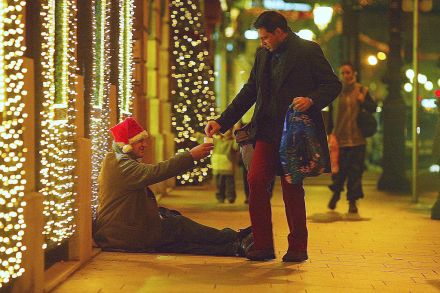
Here’s a bittersweet headline to warm your heart this holiday season: “Woman set up GoFundMe that raised over $1 million for her children before she died.” And another: “GoFundMe benefiting pregnant wife of Matthew Gaudreau has raised over $500K.” And one more for good measure: “GoFundMe raises over $26K for Massachusetts State Police trooper’s family.” I see stories like these weekly — and what’s remarkable about them is not so much that people are willing to help neighbors enduring tragedy, but how so many people are willing to go above and beyond what is being asked. The first fundraiser, for instance, was set up by a single mother from Utah dying of cancer to raise $5,000 for her own funeral expenses and a little money for the kids she left behind.
charity

The pitfalls of privilege and philanthropy: Entitlement, by Rumaan Alam, reviewed

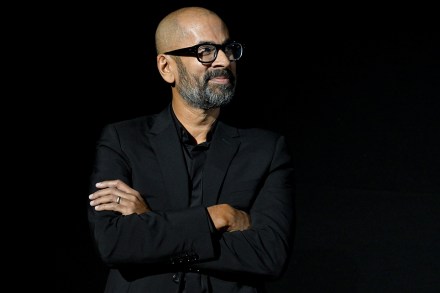
Money can’t buy you love, the Beatles sang. But that doesn’t matter so much if you’re not interested in love, like Brooke Orr, the 33-year-old heroine of Rumaan Alam’s fourth novel, Entitlement. In contrast to Alam’s wildly successful, lockdown-resonant Leave the World Behind, the latest book is set in 2014, during the era of ‘Obama’s Placid America’, a world depicted as a virtually frictionless pre-Trump utopia in which ‘black, gorgeous, serious, passionate’ young women such as Brooke can thrive. When she leaves her teaching job and joins the charitable Asher and Carol Jaffee Foundation – started after the benign octogenarian billionaire Asher Jaffee lost his daughter – she realises that money is where her heart lies.

ProPublica to return SBF cash — will other outlets follow suit?

From our US edition

Sam Bankman-Fried may have been arrested, but he's not the only one with questions to answer following the FTX implosion. ProPublica, the nonprofit investigative news outlet, has finally claimed in an internal email that it will return the $1.6 million it received from Bankman-Fried's family foundation, according to Axios. In a memo, ProPublica president and co-CEO Robin Sparkman and editor-in-chief and co-CEO Stephen Engelberg said the company will be returning the money from Bankman-Fried’s family foundation, called Building a Stronger Future, because "it does not seem appropriate to keep these funds." Go figure.

sam bankman-fried propublica

How Big Philanthropy became Big Grift

From our US edition

In 1889, Andrew Carnegie, one of the most ruthless industrialists in American history, wrote an essay entitled “The Gospel of Wealth,” which became the moral playbook for the oligarchs of his time on what to do with their fortunes. Carnegie was determined to overcome his reputation as a “robber baron” by becoming one of the greatest philanthropists who ever lived. The “man of wealth,” Carnegie wrote, should “consider all surplus revenues which come to him simply as trust funds, which he is called upon to administer... in the manner which, in his judgment, is best calculated to produce the most beneficial results for the community.

philanthropy

Vaughan Williams’s genius is now beyond dispute

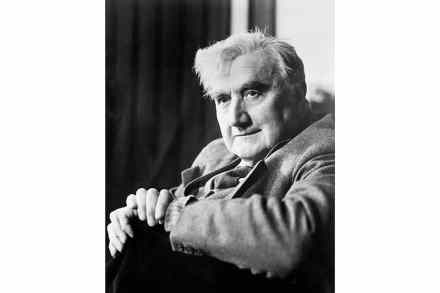
Classical music plays hell with people’s posthumous reputations, as any admirer of the works of Ralph Vaughan Williams will tell you. In 1972, on the centenary of his birth, ample respects were shown. Not only were there special concerts of his music but the Post Office, which is now more focused on commemorating gay pride, issued a stamp. Since the composer’s death in 1958 he and his works had gone into an eclipse, not least because of the atonalists who controlled the Third Programme and many of our concert halls. These were people who believed the British music-loving public should be fed on a diet of what Kathleen Ferrier called ‘three farts and a raspberry, orchestrated’. The eclipse resumed after 1972.

The real Dick Whittington and the folklore legend

In that dark world the air pulsed with the melancholy clangour of bells. If, as legend has it, the chimes of St Mary-le-Bow told Dick Whittington to turn again, then what were they saying to all the other medieval Londoners, dwelling in houses so crowded on fouled streets that the sun could not break through? In the shadow of implacable plague, even London’s super rich were piercingly aware of life’s fragility. Their homes were scented with lily, lavender and the smoke of applewood. They had to be. The city was a close maze of abattoirs and tanneries and streams sluggish with excrement. Yet here, too, were brightly ornamented religious houses and gardens rich with symbolism and medicinal herbs.

Vital, damning docudrama about the Sacklers: Disney+’s Dopesick reviewed

One of my first jobs in journalism was as the arts correspondent of the Daily Telegraph. I’d hop on my motorbike in my greasy leathers (which I used to wear around the office, much to my then editor Max Hastings’s consternation) and zoom off to all manner of exhibition and gallery openings, many of them somehow related to the name Sackler. The Sackler family at the time were the world’s greatest arts philanthropists, with galleries and museums and rooms named after them from New York, London and Paris to the Far East. Like almost everyone, I had no idea of the source of their apparently limitless wealth. But I knew for sure that the Sacklers were a good thing, for art is beautiful and philanthropy admirable, right? That, though, was another time and another world.

Can Melinda still keep Bill Gates in check?

From our US edition

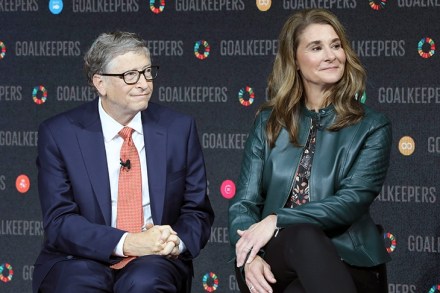
The end of the 27-year marriage of Bill and Melinda Gates looks tidier, so far, than Amazon founder Jeff Bezos’s parting from his ex-wife MacKenzie Scott, but will no doubt turn into another fee fountain for Seattle’s legal fraternity. Melinda French was a manager at Microsoft, the software giant created and driven by Bill, when the two met in 1987 — and is widely credited with turning him from a hardcore techie and ruthless competitor into a mellower, more admirable human being. The $50 billion charity they created together has become the flagbearer for ‘venture philanthropy’, which is the application of large-scale private funds to address global problems, particularly in healthcare, that governments and market forces fail to solve.

melinda

A power for good: the Sharp family were a model of vision and humanitarianism

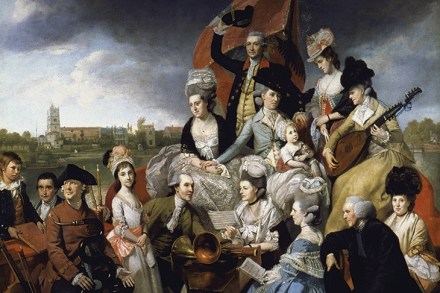
Who would imagine that Johann Zoffany’s celebrated 1780 depiction of the extensive Sharp family happily making music on their pleasure barge could be parsed so deftly into a portrait of an age? Or that Hester Grant, embarking upon her research, could have foreseen how topical Granville Sharp’s determined champaign against slavery would seem at the present moment? Or that his surgeon brother William’s new-fangled passion for ‘variolation’ or vaccination (against smallpox in those days) should strike such a chord today?

Science and philanthropy meet in the Royal Society of Arts

What does Jony Ive, the designer of Apple’s iPhone, have in common with Peter Perez Burdett, the first Englishman to produce aquatints, and Ann Williams, a postmistress who bred silkworms at her home in 18th-century Gravesend? The answer is that they all received awards from the institution known today as the Royal Society of Arts. Ive bagged a £500 travel bursary for creating a futuristic telephone nicknamed the Orator; Burdett earned £100 for a detailed map of Derbyshire; and Williams collected a 20-guinea prize for her observations about the lepidoptera she mistakenly called ‘dear little innocent reptiles’. As Anton Howes demonstrates in this lucid and scrupulously researched history, such bounty is the raison d’être of the RSA.

David Koch’s ‘dark money’ was misunderstood

From our US edition

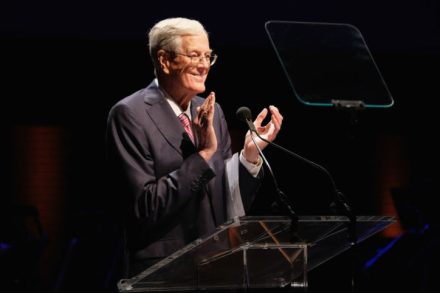
Here’s a shocker: people are more complicated than the caricatures disseminated by their enemies suggest. Witness the stupefyingly rich David Koch, who together with his brother Charles, presided over a business empire worth some $115 billion. David, who died on Friday at 79 after a long battle with prostate cancer, was at one with his brother in embracing a staunch libertarian philosophy of government and also in his belief in the power of philanthropic investment. When you control a personal fortune of $50 billion, you are in a position to distribute philos to many anthropoi. This the Koch brothers did, on a breathtaking scale. A lot of their money, and a lot of money they leveraged from other conservative donors, was siphoned to political candidates of whom they approved.

david koch