Paris

Paris: a gold-medal minibreak

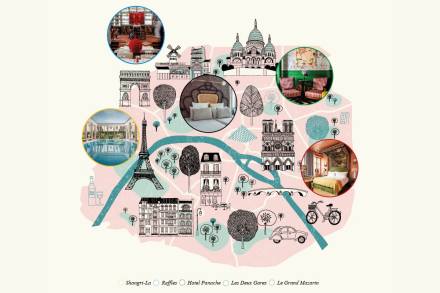
As the Olympic Games descend on the French capital this July, the contest that really matters for this sports-shy travel writer is where to stay. From historic heavyweights to new contenders, these Parisian properties stand head and shoulders above the rest. Best for wellness: Shangri-La Paris The cool marble interiors of Shangri-La’s Parisian outpost feel a world away from the tumult of the Champs-Élysées (in fact, it’s only a fifteen-minute walk). If the Grecian frescoes, silk wallpaper and sweeping, gilded staircase all seem distinctly regal that’s because the nineteenth-century building was originally the pied-à-terre of Prince Roland Bonaparte, Napoleon’s great-nephew.

Paris

How Miss La La captured Degas’s imagination

From our UK edition

‘Can you come Saturday morning to my studio, 19 bis rue Fontaine?’ Degas wrote to Edmond de Goncourt in 1879. ‘From 10.30 to half-past noon, I will have my négresse and her partner who will come expressly to be at your disposal.’ Not content with dangling from a rope by her teeth, she suspended a 300-kilo cannon barrel from her jaw It’s not what it sounds like. The ‘négresse’ in question was Anna Albertine Olga Brown, stage name Miss La La, an aerialist at the Cirque Fernando who had been sitting – or more accurately hanging – in Degas’s studio for a painting for that year’s fourth Impressionist exhibition. As his friend was working on a circus novel, he thought he might be interested in meeting her.

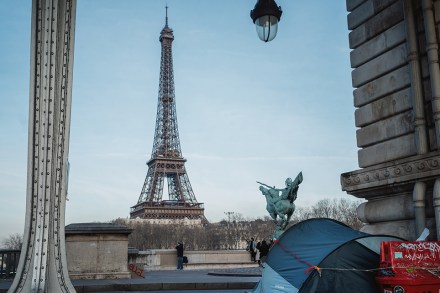
Paris, city of blight

From our UK edition

You know that feeling when you haven’t seen someone for several years and when you do, you really notice the changes? Generally it is a melancholy moment: you spot the extra wrinkles, the added pounds. Occasionally it can be positive: gym-toned physique, amusing new green-and-orange hair. Lots of us had these moments as we emerged, blinking and bewildered, from the bunker of Covid. I’ve just had this same experience, but with a city. Paris. The French capital is a place that I know well. I must have visited a dozen times over the decades. I’ve seen the Louvre Pyramid go up, I’ve seen Notre-Dame go down in flames (on TV, in a horrified airport in Vegas). But I have not been to Paris since before the pandemic, so I was keen to check out how the old girl was doing.

Notre-Dame rising

Five years have passed since a major fire swept through the Cathédrale Notre-Dame de Paris on April 19, 2019, bringing down the church’s roof but sparing the rest of the building. In response, French president Emmanuel Macron immediately promised that the structure, which is owned by the state, would be rebuilt quickly, and more beautiful than before. He further promised that the cathedral would be ready to receive worshipers and visitors in time for the 2024 Paris Summer Olympics. Since his announcement, however, things have not gone entirely to plan. Notre-Dame will not be finished in time for the Olympics; as of this writing, completion has been pushed off to December 2024.

notre-dame

A free spirit: Clairmont, by Lesley McDowell, reviewed

From our UK edition

Commentary on the young Romantics can be curiously puritanical. Not on saintly John Keats, who died too young to cause any trouble. But Byron and Shelley? Beastly to women, negligent as parents, destructive as friends, oblivious to their own privilege. Feminist observers tend to resemble the English visitors to Geneva in 1816 who borrowed telescopes to spy on the renegade inhabitants of the Villa Diodati across the lake, hoping to be scandalised. A central character in the summer that saw the birth of Frankenstein was the only non-writer of the villa’s gathering, Byron’s young lover and Mary Shelley’s step-sister, Claire Clairmont.

Is Thomas Heatherwick the best person to preach about modern architecture?

From our UK edition

It needs a big personality to answer a big question: why is so much new building so very bad; why are our cities so ugly? Thomas Heatherwick is that big personality. He is the Jamie Oliver of architecture and design: personable, blokeish, smart, tele-genic, extremely successful, nearly demented with ambition, and, one suspects, inclined to petulance if crossed. He is a visionary with several blind spots. To extend the Oliver comparison, there are times when Heatherwick serves up a delicious dish with his thumbs stuck in the bowl. His flair comes with flaws. As a designer, his Boris Bus for London was charming, but functional problems led to its withdrawal from service. His ‘B of the Bang’ sculpture in Manchester has been dismantled.

Rooms with little left to view: the queer spaces of E.M. Forster and others

From our UK edition

In this intriguing and idiosyncratic book, which aims to present ‘a new history of queer culture and identity over the past 125 years’, Diarmuid Hester recalls how he went to look at E.M. Forster’s former sitting room in King’s College, Cambridge. This once ‘intimate space’, filled with possessions accumulated over a long life, in which Forster wrote and entertained many notable guests from 1946 to his death in 1970, had been repurposed as the college’s ‘grad suite’, filled with battered furniture from Ikea, a football table and a television set. The only remnant of Forster’s residency was a large mantelpiece designed by the writer’s father.

The illiterate poet who produced the world’s greatest epic

From our UK edition

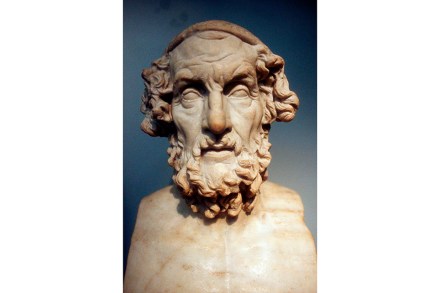
Odysseus is tossed on the sea when he notices a rock and clings to it. ‘As when an octopus is drawn out of its lair and bits of pebble get stuck in its suckers,’ says Homer, ‘so his skin was stripped from his brave hands by the rock.’ There is such elegant tricksiness in that simile. Homer still sits at the apex of western literature thanks to the beauty and influence of his verse. Robin Lane Fox has been teaching the epics for 50 years and studying them for many more. His lifelong fascination with the texts has bred a sort of feverish passion in him that makes him declare Homeric poetry to be ‘beyond us’ today (he is probably right) and without equal anywhere in the world, except perhaps in the books of Tolstoy (who is surely still inferior).

The Franco-Prussian war changed the map of Europe – so why are we so ignorant about it?

From our UK edition

Is there a single major European conflict of the past 200 years that gets so little attention in this country as the Franco-Prussian War of 1870-71? In 1961 Michael Howard brought out his history of the war, but Howard and the odd battlefield tourist apart, Rachel Chrastil’s bibliography – strong on contemporary memoirs, strong in fact on everything from the miraculous appearances of the Virgin Mary and the cult of St Radegund to the transmission of smallpox – is curiously thin when it comes to British interest.

Love in the shadow of the Nazi threat

From our UK edition

The 1930s saw Walter Benjamin write The Work of Art in the Age of Mechanical Reproduction, Marlene Dietrich rise to fame in The Blue Angel and Pablo Picasso paint ‘Guernica’. If history books mention these events, it’s usually as footnotes to the main European narrative of the pre-war decade. To shift the rise of Nazism, the Spanish Civil War, the Great Terror and other landmarks to the background, one could turn to the cultural history, or the micro-history. In his new book, the German art historian Florian Illies combines both genres to reconstruct the 1930s. Snippets from period documents, including private letters and diaries of notable figures of European and American culture, are distilled into short (between a couple of lines and a few paragraphs) episodes.

Macron tries to be the Xi whisperer

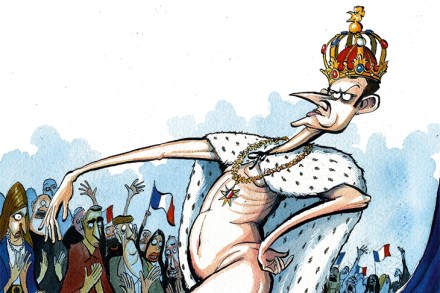
God bless Emmanuel Macron for his perseverance and self-confidence. The French president seeks to lead Europe and turn the continent into a strong, independent player in its own right. And he is eager to take on the hard, thankless diplomatic work that few of his peers are willing to do. Whether it was his ploy in 2019 to connect then-US president Donald Trump and then-Iranian president Hassan Rouhani on the phone or his months-long, intensive personal dialogue with Russian President Vladimir Putin before the war in Ukraine, Macron invests a lot of time and capital into these gambits. Unfortunately for him, many of them fail to accomplish anything of substance. Macron wasn’t able to convince Rouhani to speak with Trump (although Trump reportedly agreed to the call).

napoleon macron tantrum diplomacy

The rise and fall of bohemia

From our UK edition

In the Kunsthalle Praha, a smart new gallery in Prague, a Scottish professor from UCLA called Russell Ferguson is trying to explain to me the meaning of bohemia. Like a lot of fashionable buzzwords, it’s surprisingly difficult to pin down. Is a bohemian an artistic rebel? Or merely a pretentious layabout? Ferguson is an expert on the subject, and even he can’t quite sum it up. However, unlike most academics (and most journalists, for that matter) Professor Ferguson isn’t content to just sit around and chat. As well as writing a book about bohemia, he’s mounted an exhibition about bohemians here at the Kunsthalle – and after he’s shown me round, I have a far better sense of what bohemianism is all about.

Paris: the place to be as a royal in exile

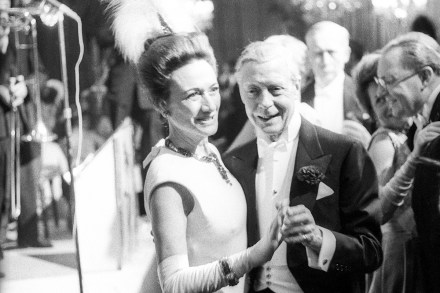
When rulers are thrown out of their countries, they cannot expect all that much. Think of Napoleon, first cooling his heels in Elba, then ending his days in the damp-infested confines of Saint Helena. Which is why the former Edward VIII, later the Duke of Windsor, was comparatively fortunate that the Parisian spot in which he found himself living after his abdication in December 1936 was Le Meurice in Paris: then, as now, a hotel that offers not only glitteringly luxurious accommodation to its well-heeled denizens, but a tangible sense of history — its lavishly appointed suites and restaurants exude an atmosphere that’s simultaneously relaxing and conspiratorial. Turn an unexpected corner, and you half-expect to see the ghost of Wallis Simpson, barking orders at some hapless minion.

Paris

The murder of Lola and the failure of Macronism

From our UK edition

Last Friday, a beautiful 12-year-old Paris girl named Lola failed to come home from middle school. Later that evening, her raped, strangled and mutilated body was found near her home in a suitcase. The police quickly arrested a female suspect, ‘Dahbia B’, aged 24, whom they initially described as mentally ill. It then emerged that she was Algerian and was in an ‘irregular situation’ in France. And then that other Algerian migrants had also been arrested. As far as can be determined, on the day of the killing, ‘Dahbia B’ apparently waited for Lola to return home from school, seized her and took her to her sister’s apartment.

The Osnabrück witch trials echo down the centuries

From our UK edition

Absent mothers resonate in the latest offerings from two heavyweights of French literature. Getting Lost is the diary kept by the prize-winning novelist Annie Ernaux while she was having an affair with a married man in 1989. Ernaux has already written a novel about this relationship. Now we have a more immediate and intimate account. Meanwhile, the octogenarian feminist and literary theorist Hélène Cixous continues her own brand of écriture féminine in Well-Kept Ruins. For the uninitiated, Cixous’s stream of consciousness is like reading Molly Bloom with a PhD from the Sorbonne, a raft of awards and a keen eye for cognitive dissonance.

The unpleasant truth about Joseph Roth

From our UK edition

Endless Flight is the first biography in English of the novelist Joseph Roth. This is very surprising, since Roth’s short, violent life traverses some of the most compelling episodes in 20th-century European history. He was a supremely elegant, intelligent and clear-sighted writer, despite living out of suitcases, in hotel rooms, always on the run. If most of his novels are flawed in one way or another, they are all interesting in others. He also wrote what must be one of the dozen greatest European novels, The Radetzky March, translated at least three times into English since 1933. (We are now lucky to have Michael Hofmann’s superb, comprehensive translations, which perfectly convey Roth’s native skill in language.

I’m a one-woman man

From our UK edition

Gstaad There’s a fin de saison feeling around here, but the restaurants are still full and the sons of the desert are still moping around. Building is going on non-stop and the cows are down from the mountains, making the village a friendlier and more civilised place. Something of a twilight mood has crept in, especially when I compare the cows with the people. Reclaiming vanished days is a sucker’s game, but it’s irresistible. I was up at my friend Mick Flick’s chalet the other afternoon, talking with Gstaad regulars about how much fun the place used to be. I tried the reverse of an old Woody Allen joke, announcing that taxis nowadays are so expensive I couldn’t keep my eyes on the lovely legs of the lady riding next to me.

The diary of a tortured man: Deceit, by Yuri Felsen, reviewed

From our UK edition

Yuri Felsen, born in St Petersburg, was an exile in Riga, Berlin and Paris and died at Auschwitz in 1943. Had his archive not been destroyed, we might find him on the same shelf as Vladimir Nabokov, Vladislav Khodasevich and Ivan Bunin – the glittering Russian literati of 1930s Paris – and Georgy Adamovich, who said that Felsen’s prose ‘left behind a light for which there is no name’. With this new translation of the 1930 novel Deceit, that light has been brought back from dim obscurity. In this first of three novels Felsen published, we follow the unnamed narrator’s tortured obsession with the ‘unequivocally irresistible’ Lyolya Heard, who drifts in and out of his life in Paris, leaving him in an intoxicating loop of ecstasy and despair.

Paris’s glittering new museums

From our UK edition

How do you manage a dictatorship? By producing ‘a succession of miracles’, according to Louis-Napoléon, that ‘dazzle and astonish’. In 1852 he inaugurated his Second Empire regime with a strategy of soft power predicated on the assumption that the loyalty of politically volatile Paris was to be won not by violent repression but by visible magnificence and grand designs. This wasn’t an original idea: it followed the policies of le Roi Soleil and Bonaparte, not to mention the Roman emperors. It worked again for Louis-Napoléon because, as well as such jaw-dropping follies as Charles Garnier’s extravagant opera house, it extended to Haussmann’s lavish investment in socially useful boulevards, sewers, housing and parks.

Paris match

“If you wish to meet intellectual frauds in quantity,” V.S. Naipaul once said, “go to Paris.” After two years of pandemic-induced shutdowns and travel bans — some of them instituted, it seemed at times, with the sole purpose of harrying visitors from Britain — it was oddly satisfying, rather than irritating, to be assailed once again by the sciolistic outpourings of aspiring novelists. On mild spring evenings, the Left Bank echoed with the chatter of students and veterans of the creative writing mills of North America. Paris, finally, was emerging from the thickets of depression and terror occasioned by disease, ennui and patrols of gendarmes hunting for delinquents out for a walk.

Paris