Rupert Christiansen

Rupert Christiansen is the chief dance critic of The Spectator

The Trocks’ shtick is getting tired

From our UK edition

Les Ballets Trockadero de Monte Carlo were popular regulars at Washington’s Kennedy Center until Trump’s demented blast against decadent queerness. In truth the company is simply blameless pantomime, innocent fun for all the family. Based in the USA and clocking up 50 years tirelessly on the road, it consists of male dancers in drag gently parodying an art form deeply encoded in elaborate conventions that are ripe for mockery. The Trocks, as they are affectionately known, also draw on a now-forgotten phenomenon: the hand-to-mouth touring companies of the postwar years that themselves traded off the model of Diaghilev’s great enterprise.

How good is Wayne McGregor?

From our UK edition

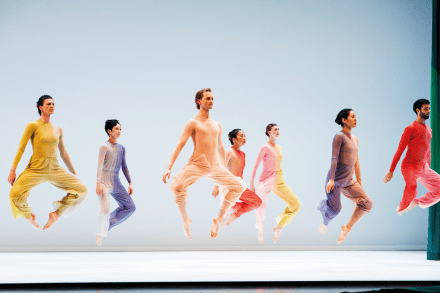
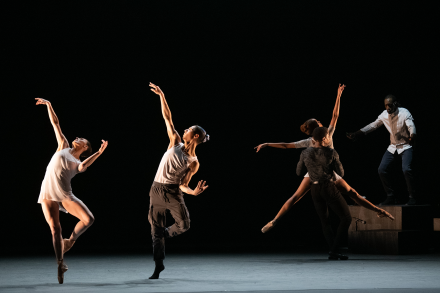
‘Professor Sir Wayne McGregor CBE’ runs the headline to a biographical essay in the programme for the Royal Ballet’s triple bill of his recent work. Knighted and honoured at the heart of the dance establishment, McGregor has a solid reputation as the trusty insider who is also a radical outsider. What a dangerous place for an artist to be. Yet he is without question someone of considerable stature. With intelligence and persistence, he breaks through barriers and dares to do things differently. Adept at establishing creative partnerships, he moves tirelessly across all forms of dance, from manipulating the avatars for the Abba light show to inspiring the young at his east London dance school and directing the dance biennale in Venice.

Excruciating tedium from Pina Bausch

From our UK edition

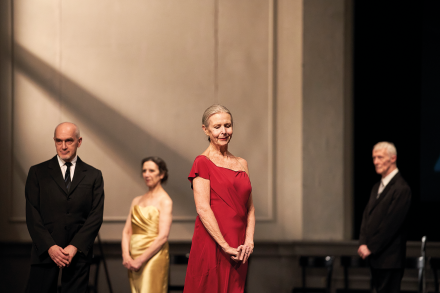
You’re never too old to dance we are told nowadays. This encouraging injunction has been taken up by everyone from the likes of Mikhail Baryshnikov and Alessandra Ferri, who have found wondrously creative ways to compensate for their declining virtuosity and stamina, to septuagenarians who insist on bopping to Abba at their grandchildren’s wedding parties. I confess that in the interests of research I took to ballet classes when I was well into middle age: it was not a pretty or edifying sight. There is a lot to be said for oldies sticking to the military two-step. The Australian choreographer Meryl Tankard has a different view of the matter. Kontakthof is the work of the sainted Pina Bausch, dating from 1978.

A mesmerising new work from English National Ballet

From our UK edition

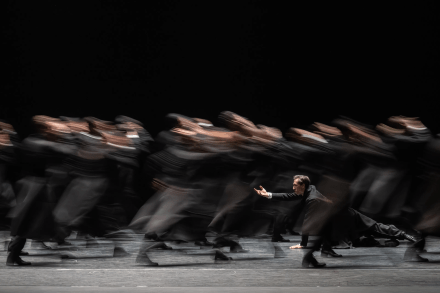
Crystal Pite is one of a handful of truly original choreographers today, extending the boundaries of her art form without going all doolally about trendy gender issues, AI or neuroscience. She is rooted in something more universal – the tension between conflict and connection, between what draws us together and what keeps us apart. ‘We want to individuate,’ she says. ‘Yet we want to belong.’ Out of this grows Body & Soul, in which individuals fight their way out of great swarms and cocoons, only to be sucked back into an inexorable flow that snakes and stiffens, multiplies and divides.

Today’s ballerinas are too perfect

From our UK edition

‘Ballet is woman,’ Balanchine once gnomically pronounced. A remark not to be taken too literally, but essentially true. Like every afflicted balletomane, I can map out my lifelong passion for the art in terms of my adoration from afar of a succession of ballerinas – any awe I feel for their male counterparts is something quite different. First for me came Margot Fonteyn, of course – though I saw her only through the autumn of her career, when her body was stiffening and she relied on some divine inner grace to make an effect. (Meredith Daneman’s magnificent biography illuminates this weirdly complex woman, with her steely self-control, enormous generosity and poisonous political views.

A highlight in an otherwise dull season: Pierrot Lunaire reviewed

From our UK edition

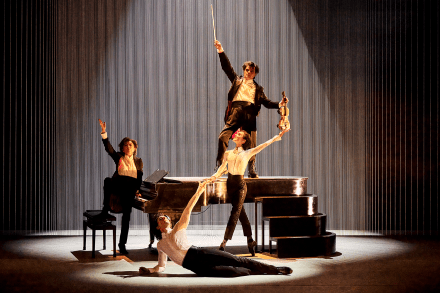
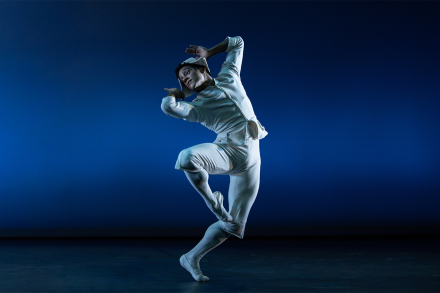
Even if Schoenberg’s song cycle Pierrot Lunaire is never going to feature on anyone’s Desert Island Discs, it stands as a work of rich and complex resonance shot through with all the neurotically introverted obsessions behind expressionism. Through Albert Giraud’s 21 opaque lyrics, scored atonally for a soprano who declaims rather than sings them, accompanied by seven instruments, it presents some sort of parable of the tormented artist adrift in a hostile world. Perhaps one can’t be charmed by the result, yet its power is undeniable: it grips even when it baffles and repels.

The joy of Paul Taylor

From our UK edition

When the American choreographer Paul Taylor died at the age of 88 in 2018, he should have been consecrated a patron saint of modern dance. He had respectfully lifted the pall of earnestness and mythic archetypes that his mentor Martha Graham had stiflingly cast over it, and let the sunshine in. Graham may have been a pioneering genius and an earth mother, but she wasn’t much of a laugh, and after performing in her company as a young man for seven years, he needed a break.

What has happened to the Paris Opéra Ballet?

From our UK edition

Freighted by a 350-year history, the Paris Opéra Ballet is a behemoth of an institution – lavishly subsidised by the state, hampered by barnacled traditions (including compulsory retirement on a full pension at the age of 42) and about twice the size of our own dear Royal Ballet. They do things differently there. Programming favours choreographers such as Pierre Lacotte, Maurice Béjart and Jiri Kylian – relatively unfamiliar in London – and the classics are dressed up in fancily revisionist productions by the company’s overly venerated former director Rudolf Nureyev (transliterated as Nouréev in French).

What’s the greatest artwork of the century so far?

From our UK edition

15 min listen

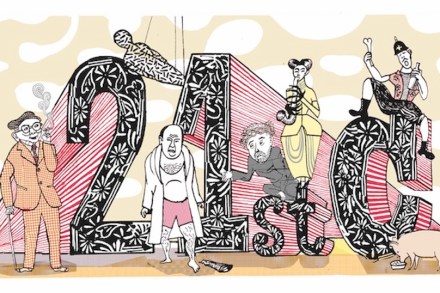
For this week's Spectator Out Loud, we include a compilation of submissions by our writers for their greatest artwork of the 21st century so far. Following our arts editor Igor Toronyi-Lalic, you can hear from: Graeme Thomson, Lloyd Evans, Slavoj Zizek, Damian Thompson, Richard Bratby, Liz Anderson, Deborah Ross, Calvin Po, Tanjil Rashid, James Walton, Rupert Christiansen and Christopher Howse. Produced and presented by Patrick Gibbons.

Why are today’s choreographers so musically illiterate?

From our UK edition

Most choreographers today have lost interest in using music as anything more than a background wash of colour and mood. More’s the pity. For an earlier generation the idea that the dance grew through the music – into and out of it – was of the essence: or, as Balanchine famously said: ‘See the music, hear the dance.’ In a fascinating piece for the Guardian recently, the composer Nico Muhly explains how rich the interaction between a choreographer’s phrasing of movement and the bar lines or metrical structures specified in the score can be: ‘If the music feels as if it’s in comfortable cycles of four bars, is the dance reinforcing that, resisting it, or complicating it?’ he writes.

The best thing Cathy Marston has ever done

From our UK edition

The Royal Ballet has scheduled what – on paper at least – looks like one of the most dismally dull and cautious seasons I can recall. The company is hobbled by a £21.7 million government loan (that had tided the place over during Covid), which the Royal Opera House is being forced to ‘service’. One bright spot of interest comes with the commissioning of a new work from Cathy Marston and an import from New York City Ballet’s Justin Peck, slotted into a triple bill alongside Balanchine’s nocturne, Serenade. There’s not much to say about Peck’s Everywhere We Go. Big, bold, bright and much too long, it is devoid of shape or implication but bursting with jazzy Broadway energy, pumped up by a crude score by Sufjan Stevens.

‘Ballet is antiquated, and it works’: Royal Ballet principal Matthew Ball interviewed

From our UK edition

The history of the male ballet dancer is a chequered one. In the early 19th century, he was the star of the show, albeit more as an acrobat and tumbler than fairy-tale prince. The vogue for sylph-like damsels floating in white tulle put paid to that, reducing him to the auxiliary role of porter and attendant. Then came the comet of Nijinsky, introducing a note of mysterious Slavic androgyny that left the male dancer suspiciously homosexual and prone to the ‘pink tights’ cliché. Nureyev and Baryshnikov cemented the exotic Russian connection, until the late 1990s when the allure of the musical Billy Elliot and Matthew Bourne’s version of Swan Lake opened ballet up to a generation of British boys who would otherwise have preferred kicking a football around.

What a joy La Fille mal gardée is

From our UK edition

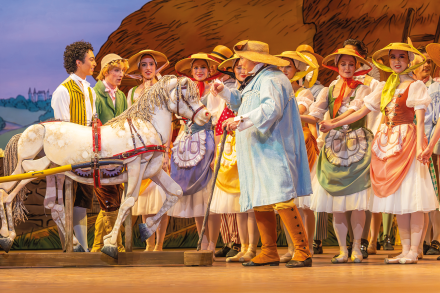
The winter nights may be drawing in and everyone is down with stinking colds as the civilised world inexorably disintegrates, but in La Fille mal gardée, it’s sunlit springtime and young love is busting out all over. Frederick Ashton’s bucolic masterpiece, revived by the Royal Ballet, manages to be both child-like in its innocence and wickedly sophisticated in what it demands of the dancers – it looks so artless, so easy, and it just isn’t. Of Ashton’s supreme genius in the devising of it all there can be no doubt, but John Lanchbery and Osbert Lancaster deserve credit too – Lanchbery’s pasticcio score is a chocolate box filled with toe-tapping tunes, and Lancaster’s affectionately witty designs have a perfectly judged lightness of touch.

Let’s face it, Sleeping Beauty is a bit of a bore

From our UK edition

Let’s face it, The Sleeping Beauty runs the high risk of being a bit of a bore. A wonderfully inventive score by Tchaikovsky fires it up of course, but precious little drama emerges after nasty Carabosse gatecrashes the royal christening, and there’s too much imperial parading and courtly kowtowing throughout. Connoisseurs may relish what survives of Petipa’s choreography as a lexicon of academic classicism, but it has to be magnificently danced if it is to be animated. And it almost never is. English National Ballet has revived Kenneth MacMillan’s production, originally staged by American Ballet Theater in 1987. On the first night of the current run, the lighting was prosaic and the puff-of-smoke and dry-ice effects were laughably feeble.

I could watch Balanchine’s Theme and Variations on repeat

From our UK edition

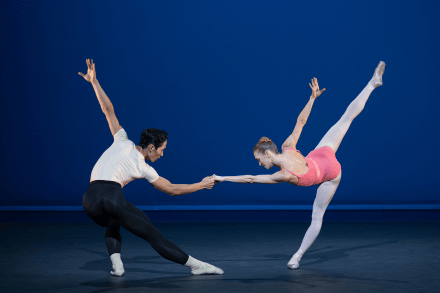
R:Evolution is a pun, presumably intended to suggest that tradition is not static and the obvious truth that change always grows out of what has come before. A useful idea, of course, even if it’s one that the four short works selected under this title by English National Ballet doesn’t smoothly illustrate. The management is, however, due a pat on the back for trying; budget cuts and the power of the grey men in marketing means that such programming is becoming increasingly rare, victim of the regressive fashion for full-length narratives and fairy tales. ENB starts by juxtaposing two works conceived in 1947. Balanchine’s Theme and Variations is one of his periodic nostalgic homages to his roots in Tsarist St Petersburg.

Michael Keegan-Dolan’s How to be a Dancer is worthy of Flann O’Brien

From our UK edition

Michael Keegan-Dolan’s show doesn’t even pretend to live up to the arresting proposition in its title – anyone hoping to glean a few useful tips on becoming a dancer would come away bitterly disappointed. What the Irish choreographer offers instead is a witty and touching exercise in autobiography in which he is ably abetted and illustrated by his resourceful wife, Rachel Poirier.  Born into a large and unlettered working-class family in north Dublin, Keegan-Dolan grew up jiving to Talking Heads and emulating Gene Kelly. Pigeon toes hobbled his four gruelling years in ballet training and as a performer he didn’t make it beyond the chorus line in West End musicals. He switched to choreography, mainly for opera, but soon jumped off that unrewarding treadmill.

Both thin and overblown: Royal Ballet’s A Single Man reviewed

From our UK edition

A common flaw in narrative ballet today is the attempt to tell stories that are too complex and ramified for the vocabulary of dance to convey. With Jonathan Watkins’s adaptation of Christopher Isherwood’s slim novella A Single Man, the flaw is the opposite. George, a middle-aged prof, is traumatised and in mourning for his recently killed lover Jim. The consolations of ordinary life fail, but he feels the twinge of desire returning for one of his students. After they spend an erotically charged night together, he can move on. There’s just not enough in this fable to sustain 100 minutes of dance drama. To fill this scenario out, Watkins introduces the ghost of Jim and a spectral corps de ballet, who haunt and mirror George’s grief and anxieties.

Picasso’s ravishing work for the ballet

From our UK edition

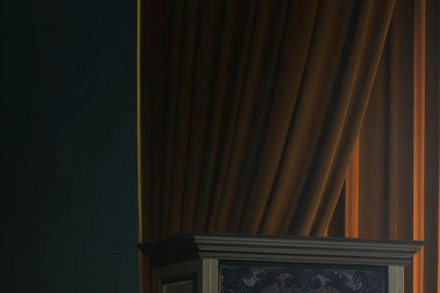
Visitors to the Victoria and Albert Museum’s new storehouse in Stratford’s Olympic Park are being enthralled by an atmospherically lit chamber devoted to the display of one vast and magnificent work of art: Picasso’s 10 metre-high, 11 metre-wide drop-curtain for Le Train Bleu, a popular hit of Diaghilev’s Ballets Russes, first seen in 1924. The canvas, for many years rolled up in storage, isn’t strictly the work of Picasso himself: Diaghilev’s scene painter Prince Alexander Schervashidze had meticulously expanded it overnight from a small gouache on plywood known as ‘Two Women Running on the Beach’ (1922), but Picasso was so delighted when he saw the result that he decided to endorse it with his signature on the bottom-left-hand corner.

The decline of Edinburgh International Festival

From our UK edition

Edinburgh International Festival was established to champion the civilising power of European high culture in a spirit of postwar healing. But its lustre and mission have now been largely eclipsed by the viral spread of its anarchic bastard offspring, the Fringe. In competition with the latter’s potty-mouthed stand-ups and numberless student hopefuls, the dignified old Festival proper struggles to make much mark on the hordes who descend on the city in August, inflating prices and infuriating the residents. Perhaps the kids will love it, but if this is the future of ballet, then count me out Nicola Benedetti, a splendid woman and a wonderful violinist, is now in her third year directing this beleaguered institution.

One of the best productions of Giselle I have ever seen

From our UK edition

Giselle is my favourite among the 19th-century classics. Blessed with a charming score by the melodically fertile Adolphe Adam and a serviceable but resonant plot, the drama – loosely based on a story by Heine – holds water without being swollen by superfluous divertissements. Its principal characters – the village maiden Giselle and her nobleman-in-disguise seducer Albrecht – are complemented by strongly drawn subsidiary figures: Giselle’s jealous swain Hilarion, her anxiously protective mother and the merciless Queen of the Wilis who presides over Giselle’s afterlife. There’s plenty for the corps to do, as well as a jolly pas de deux in which younger dancers get a chance to shine as merry peasants. And it’s all done and dusted in two acts and less than two hours.