Kapil Komireddi

Kapil Komireddi is the author of Malevolent Republic: A Short History of the New India

Michael Simmons, Kapil Komireddi, Margaret Mitchell, David Abulafia and Melissa Kite

From our UK edition

27 min listen

On this week’s Spectator Out Loud: Michael Simmons argues that Trump is winning the tariff war with China; Kapil Komireddi reviews Robert Ivermee’s Glorious Failure: The Forgotten History of French Imperialism in India; Margaret Mitchell watches a Channel 4 documentary on Bonnie Blue and provides a warning to parents; David Abulafia provides his notes on wax seals; and, Melissa Kite says that her B&B is the opposite of organic. Produced and presented by Patrick Gibbons.
Romantic fantasies of the French in India

From our UK edition

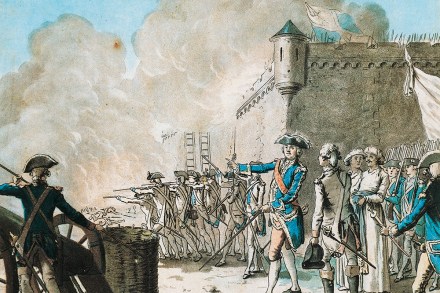
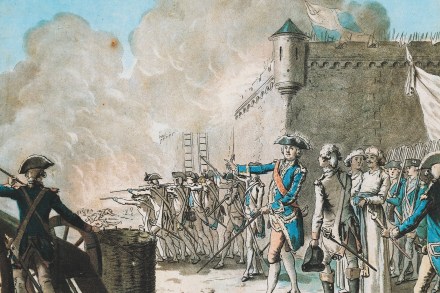
‘The English cannot assimilate any nation,’ declared the narrator of a French travelogue set in India and published in the aftermath of the uprising of 1857. ‘They can only dominate with brutality, squeezing every last drop of blood from the veins of the oppressed.’ Reduced to ‘slaves’ who ‘tremble before the Englishman’s whip’, the Indians in this tale yearn for the ‘heroic Dupleix and his deputy de Bussy’. Had Louis XV’s jealous court not betrayed those two men, ‘India would have been French, not British’. The book was a work of fiction. It had to be. In reality, scarcely anybody in India, barring a reactionary nawab here and an obscurantist sultan there, longed for French rule. The French were history’s losers.

Britain should not be nervous of India

From our UK edition

For a disconcertingly large constituency in Britain, Indian history ends in 1947.The two centuries leading up to that bloody year – when British rule formally ended, India gained independence and Pakistan was conjured into existence – were replete with books, articles, pamphlets, lectures and debates on India. What unites this body of work, apart from colonial condescension, is an effort to comprehend India. That impulse faded once India attained freedom. After independence, India surged forward; Britain’s idea of India, however, remained captive to the past Britain’s sins in India – racism, carnage, plunder – are a matter for British consciences.

Paris match

“If you wish to meet intellectual frauds in quantity,” V.S. Naipaul once said, “go to Paris.” After two years of pandemic-induced shutdowns and travel bans — some of them instituted, it seemed at times, with the sole purpose of harrying visitors from Britain — it was oddly satisfying, rather than irritating, to be assailed once again by the sciolistic outpourings of aspiring novelists. On mild spring evenings, the Left Bank echoed with the chatter of students and veterans of the creative writing mills of North America. Paris, finally, was emerging from the thickets of depression and terror occasioned by disease, ennui and patrols of gendarmes hunting for delinquents out for a walk.

Paris

Le Pen’s last stand

From our UK edition

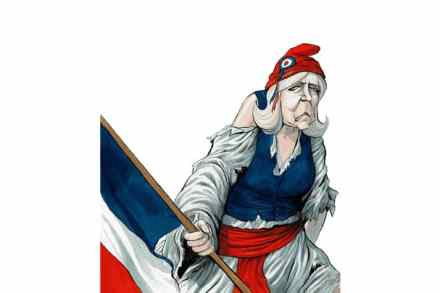
Marine Le Pen, if recent polling is to be believed, is rapidly cutting Emanuel Macron’s lead in the upcoming French presidential elections. If she succeeds in gaining sufficient votes this weekend to enter the second round, we should brace for a serious upheaval in French politics at a time of unnerving uncertainty about the global order. The French press, having forgotten Le Pen for a year, is now energetically reminding voters of her unsuitability for high office. In the public imagination, Le Pen ranges from a modern-day avatar of Joan of Arc to a rancid bigot masquerading as a moderate. Say her name, and people react with fervour: they may despise her, they may revere her, but nobody is indifferent to her.

Can the India-US relationship last?

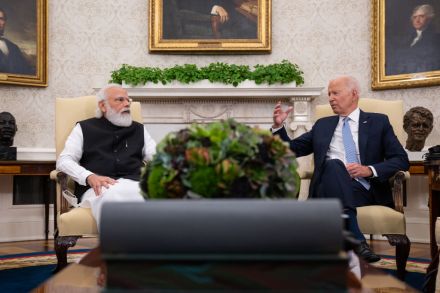
India and the United States have rediscovered each other after the cordial hostility of the Cold War. Those years of isolation have made India’s political and financial elites susceptible to flattery. America’s courtship of India, lubricated by the economics of globalization and the post-9/11 zeal to spread democracy, is now being consummated in the American search for a democratic counterweight to China. But India is a chaotic democracy in a volatile neighborhood. Can it hitch itself to America without forfeiting its autonomy? Foreign strategic experts exhort India, which is non-interventionist to its marrow, to act like a global power.

india

Will Armen Sarkissian save Armenia?

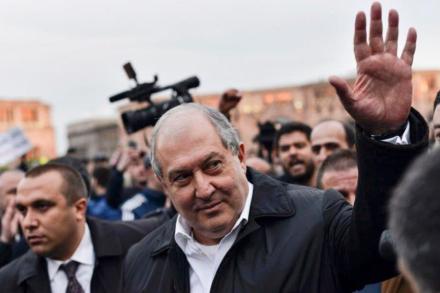
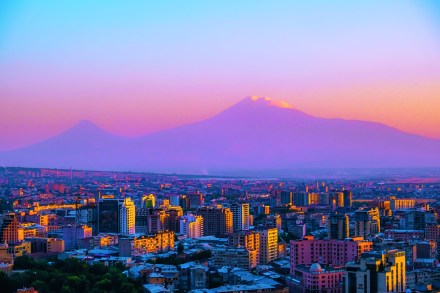
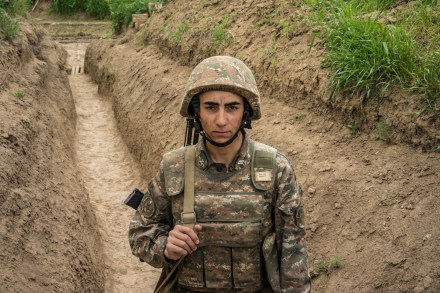
Yerevan, Armenia Armen Sarkissian, the president of Armenia, is incandescent with rage. “Five thousand brave and selfless Armenian soldiers were killed in this war,” he tells me at his office, referring to last year’s conflict with Azerbaijan and Turkey. “There must be accountability for their deaths.” Sarkissian strikes me as the only Armenian politician whose anger comes with a constructive program of national revival. The man once described by Zbigniew Brzezinski as the “Vaclav Havel of the Caucasus” radiates no grievances against foreign powers.

Say yes to Yerevan

The Iranians, here for the booze and the vaccine, are impossible to miss. But Armenians reminisce that, only a few years ago, you couldn’t throw a stone in Yerevan, their zestful, rhubarb-hued capital, without injuring a Californian or a New Yorker. Americans, they say, used to be ubiquitous in Armenia. This is a claim animated more by nostalgia than fact. The truth is, even prior to the pandemic and last autumn’s horrific war with Azerbaijan and Turkey, Americans accounted for only a fraction of the tourists who flocked to Armenia: in 2019, only 63,000 among the nearly two million foreign tourists, and a majority of those members of the Armenian diaspora. I mention this to say that Americans really are missing out.

yerevan

Exclusive interview: Armenian PM on Azerbaijani conflict

From our UK edition

On Sunday, Azerbaijan began shelling Armenian positions in Nagorno-Karabakh — a disputed piece of territory in the Caucasus peopled primarily by the Armenians but owned, at least on paper, by Azerbaijan. In the 1920s, Soviet administrators, disregarding demography, had placed Nagorno-Karabakh inside Azerbaijan. In the run-up the USSR’s demise, the local Armenians voted overwhelmingly to secede from Azerbaijan in a referendum and proclaimed independence. Nobody recognised the result. And when the USSR collapsed, the place ended up inside the internationally recognised borders of Azerbaijan. A terrible war ensued.

Will India and China go to war?

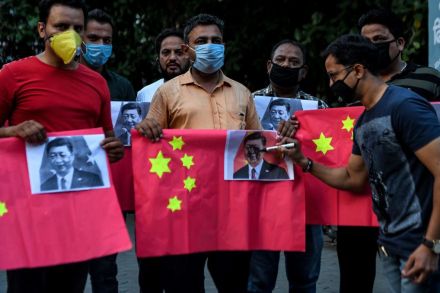
India and China are separated by the longest un-demarcated border in the world. They fought a war in 1962, which India squarely lost, and engaged in a fierce clash in 1967, in which India decisively prevailed. Since then, a tense peace has been maintained in the high and strategic Himalayan passes. The Line of Actual Control (LAC) that divides the two Asian rivals was sustained by a strict adherence to elaborate protocols agreed at the topmost levels by both sides. There have been numerous skirmishes and fistfights between Indian and Chinese soldiers over the years, but with the exception of an ambush by the Chinese in 1975 in which four Indian soldiers were killed, lives were never lost.

india

Birth of a nation

This article is in The Spectator’s March 2020 US edition. Subscribe here. The 20th century was a crowded century. Event piled upon world-historical event to produce a mass of history so heavy with the prospect of annihilation and so alive with the possibilities of individual emancipation that one of humanity’s most extraordinary accomplishments, the constitution of a liberal democratic republic on the Indian subcontinent, went largely unnoticed in the West. The significance of India’s birth was, however, not lost on a colonial world clamoring for freedom, or African Americans striving to unlock the full promise of America. India’s founding on August 15, 1947, W.E.B. DuBois rhapsodized, would be ‘remembered as the greatest historical date of the 19th and 20th centuries’.

india

Palermo without borders

This article is in The Spectator’s February 2020 US edition. Subscribe here. On a wet November evening, Leoluca Orlando, the mayor of Palermo, sat in the front pew of a church on the city’s main thoroughfare. He, like the citizens proliferating behind him, was waiting for the concert to begin. The setting and the seating order had a provincial air, like something out of an Upamanyu Chatterjee novel. But Orlando, the man who squeezed the Sicilian mafia, has a cosmopolitan vision. Orlando has converted Palermo, a major gateway for the masses pouring out of Africa and the Middle East, into perhaps Europe’s least administratively hostile city to prospective settlers.

palermo

India should not ask Britain to apologise for the Amritsar massacre

From our UK edition

On the afternoon of 19 April 1919, troops commanded by brigadier-general Reginald Dyer opened fire on thousands of unarmed Indian protesters massed at an enclosed garden in Amritsar in Punjab known as Jallianwala Bagh. When the shooting stopped – and it stopped only because Dyer ran out of ammunition – some 500 people, mostly Sikhs, lay dead. Dyer lost his job but kept his life, liberty, and reputation. Bigots in Britain, energetically vilifying those who denounced him, raised thousands of pounds to lubricate his transition from the subcontinent to the English countryside. Edwin Montagu, secretary of state for India, was traduced in the press and in the corridors of the Commons as a disloyal ‘Jew’ for demanding tougher sanctions against Dyer.

India should not ask Britain to apologise for the Amritsar massacre

From our UK edition

On the afternoon of 13 April 1919, troops commanded by brigadier-general Reginald Dyer opened fire on thousands of unarmed Indian protesters massed at an enclosed garden in Amritsar in Punjab known as Jallianwala Bagh. When the shooting stopped – and it stopped only because Dyer ran out of ammunition – some 500 people, mostly Sikhs, lay dead. Dyer lost his job but kept his life, liberty, and reputation. Bigots in Britain, energetically vilifying those who denounced him, raised thousands of pounds to lubricate his transition from the subcontinent to the English countryside. Edwin Montagu, secretary of state for India, was traduced in the press and in the corridors of the Commons as a disloyal ‘Jew’ for demanding tougher sanctions against Dyer.

A nation of beggars and plutocrats

From our UK edition

Picture India in 1991. You need to make several trips to Delhi and wait three years to import a computer. Coca-Cola is contraband; there is a 22-month waiting list for a car, and an interminable queue for admission to the exclusive club of telephone owners: there are only five million active connections in a country of 900 million people. Post-colonial India elevated suspicion of private business into a public virtue. But with the collapse of the Soviet Union, which maintained a vital $6 billion trade relationship with India, the rhetoric of economic self-reliance and political non-alignment became insupportable. All that stood between India and bankruptcy when the government was compelled to throw open the economy in the summer of 1991 was $2 billion.

India on the brink

From our UK edition

Most religions bind their adherents into a community of believers. Hinduism segregates them into castes. And people excluded from the hierarchical caste system — the ‘untouchables’ — are permanently doomed to a life of scripturally sanctioned calvary. This hideousness doesn’t, however, hinder Shashi Tharoor from breathlessly exalting Hinduism as ‘a religion for the 21st century’.

The shattering honesty of VS Naipaul

VS Naipaul, who died on Saturday at the age of 85, was sustained most of all by self-belief. The society in which he launched himself as a writer was not created to support a man like him. It was designed to degrade him. His career was without precedent. When he arrived in England as a teenager armed with a scholarship to Oxford, he was a man apart, the descendant of Indians shipped out by the British Empire to toil as indentured labour in the sugarcane plantations of the Caribbean. Against his ambition, self-worth and dignity were arrayed the stifling prejudices of a conservative and hierarchical nation long accustomed to stamping on people of his appearance. The racism Naipaul was subjected to was of a vicious and crippling variety.

Still giving peace a chance

From our UK edition

Tibetans were once fabled warriors. Their empire, at the summit of its power in the eighth century, extended to northern India, western China and central Asia. The Arabs, making inroads into central Asia, were in awe of them. And China, according to an inscription commissioned to memorialise Tibet’s conquest of the Tang Chinese capital of Changan in 763, ‘shivered with fear’ at their mention. But the Tibet annexed by Mao Zedong in the 20th century bore no trace of its imperial past. When the People’s Liberation Army struck in 1950, Tibet, having metamorphosed over a millennium into a reclusive hagiarchy, possessed neither the vocabulary to parley with the communists nor the strength to resist them. Its response to this worldly threat was to retreat into ritual.