Paris

The haunting beauty of empty cities

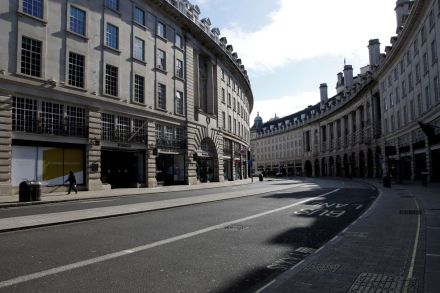
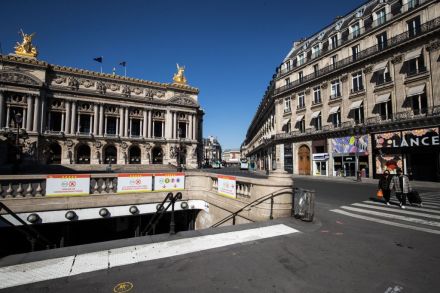
COVID-19 has a horrid ability to turn fiction into fact. Deserted modern cities are usually the realm of post-apocalyptic sci-fi movies. Now, many of us live in them. The world's greatest streets are dramatically empty; suspended suddenly in a dream-like quiet. It's eerie and also very beautiful. We usually often don't notice how remarkable our cities are the commotion. We are distracted by the crowds, the commotion and the congestion. Now it is hard for urbanites to notice anything else. The Spectator has looked around the world, and asked various writers in various places to describe where they live in lockdown.

empty cities london

Has Notre-Dame ever been a symbol of unity for the French?

From our UK edition

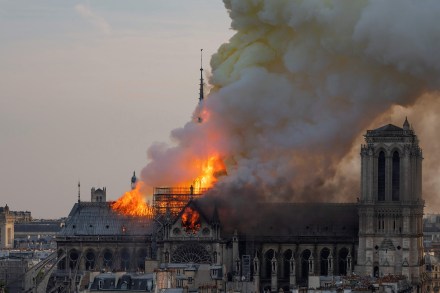
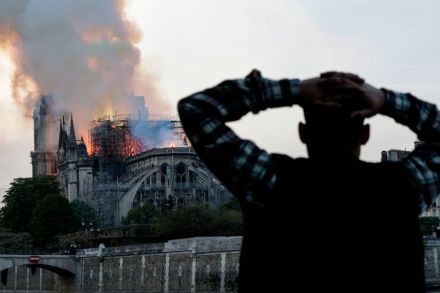
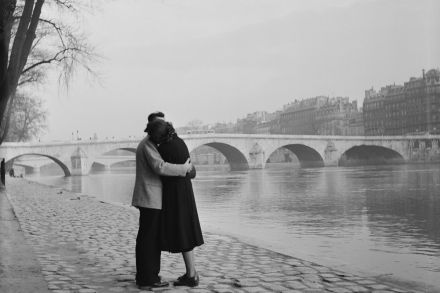
From the kitchen of her apartment on the Quai de la Tournelle in Paris, the journalist and broadcaster Agnès Poirier could see the bright yellow plumes of smoke rising into the sky. Notre-Dame de Paris was on fire, and suddenly, in that tourist-crowded, hyper-expensive ‘cradle of France’, nothing was certain — ‘democracy, peace and fraternity’ — any more. The following morning, children living on or near the Île de la Cité took to school little plastic bags filled with blackened bits of roof picked up from balconies and pavements (as well as probably quite a lot of lead dust) which ‘dated back to the Crusades’.

Fear, guilt and the virus

Fear and the frisson of fear are two very different emotions. The one is horrible and the other delightful or at least often sought after.Who, after all, does not enjoy a good fright in a cinema or while reading a thriller? When I arrived in Paris just before the lockdown was announced and one was no longer allowed out of the house without a laissez-passer (signed by oneself), all the places of public resort such as bars, restaurants and cinemas, had already been closed: but the atmosphere was still one of frisson of fear rather than of fear itself.

virus

My life as a French prisoner of coronavirus ‘war’

From our UK edition

Seventeen per cent of Parisians have fled the city since President Macron ordered France to be confined, as part of his ‘war’ strategy to defeat coronavirus. The lockdown, which began on Tuesday, is for two weeks but on Friday the government indicated that it will likely be extended into April as France struggles to contain a pandemic that has now claimed 674 lives. Police are rigorously enforcing the regulations forbidding people to leave home except to buy provisions or briefly stretch their legs. Thousands have been fined for breaking the rules of confinement and there are reports that in future people will be jailed for up to six months if they're repeat offenders.

Epicenes and epicures

The last time I saw Paris, it was the early spring of 2017. A pallor hung over the city, the grands boulevards had lost their charm and downcast Parisians hurried about the streets with uncharacteristic alacrity. The day I arrived, a letter bomb exploded at the IMF’s headquarters on the Avenue d’Iéna, blocks away from where I was sitting on the terrace of a café on the Avenue Kléber. That the bomb turned out to be from Greek anarchists and not the usual Islamist suspects was little comfort; it had already ruined my café express. Two days later, a French-born Muslim took a female soldier hostage at Orly airport. A standoff ensued, with him holding a pistol to her head while her comrades aimed at his. ‘Put down your weapons!

paris

Paris is increasingly lawless – but the middle-classes don’t seem to care

From our UK edition

Ah, Paris, the city of love, the city of light, the city of larceny. Theft, burglary, pickpocketing, assault and homophobic acts are on the up, and even the city's Procureur, the public prosecutor Rémy Heitz, has admitted the stats 'aren't good'. No, they're not. Theft, for example, increased by 15 per cent in 2019, up from 124,875 recorded incidents to 144,552. Pickpockets are also enjoying a boom period with an increase of 35 per cent in 12 months, and there were 7 per cent more burglaries last year than in 2018. True, car theft and gun crime have dropped but physical assaults have risen by 13 per cent, sexual harassment on the transport network has shot up by 30 per cent, and also mounting are crimes characterised as homophobic.

Michael Moorcock: I feel I’ve been cheated by the British state

From our UK edition

Back to Texas to prepare for guests arriving for Thanksgiving and Christmas. Once again we left our Paris home not knowing whether we would return as citizens or aliens. As for so many others, the number of uncertainties introduced into our lives by Donald Trump and Brexit are legion. Reaching my 80th birthday I also feel a bit cheated. I religiously paid into social security for some 45 years, now to be told that, because I lived abroad for more than 12 years, I am no longer eligible to claim a UK pension or healthcare. Much as I continue to support the NHS, I doubt a private insurance company could do this. My US insurance refuses to pay for ‘foreign’ healthcare and, being over 75, I can’t get private insurance in Europe.

Leonardo da Virtual

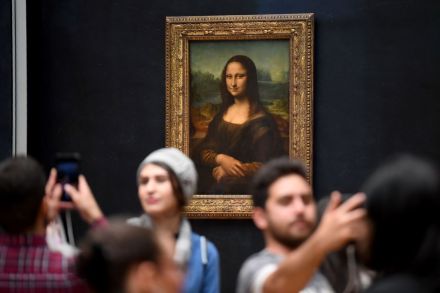
This article is in The Spectator’s December 2019 US edition. Subscribe here. The first time ever I saw her face, she was smiling. I knew her face before I saw it, but I cannot remember when I first knew it, because I had always seen it. But when I first saw her in the flesh, I couldn’t really see her at all. She was behind thick glass and a waist-high wall, and a crowd of people 20-deep were pushing toward her, shouting and pointing and taking photographs. She was still smiling, but as I forced my way out of the crowd, I felt as though the smile no longer expressed the mysterious inner mood of a high-born Florentine sitting in a loggia, but the bemused contempt of a woman sitting in the stocks for the entertainment of the mob.

mona lisa leonardo

The carnage inside Charlie Hebdo: an eyewitness’s account of the attack

From our UK edition

It is almost five years since two trained jihadists went into the offices of Charlie Hebdo in Paris and killed 12 people. Philippe Lançon survived the editorial meeting that was taking place as the gunmen burst in. Published to huge acclaim in France last year, Disturbance is his account of events. It is long, perhaps too long, with numerous discursions. But who would edit such painful, painstaking testimony? On the morning of the attack, Lançon had been weighing up whether to go to Charlie or to Libération, where he also worked. He chose to go to Charlie, whose difficult, brilliant, brave team had kept producing the magazine, despite a decade of growing attention from Europe’s modern-day blasphemy police.

The poetry of sewers

From our UK edition

‘Welcome,’ says our guide Stuart Bellehewe, with an imperious sweep of his arm, ‘to the cathedral of shit.’ Before us rises Abbey Mills Pumping Station in all its grade II*-listed glory. It arose on east London’s marshes in 1868, giving Victorians a fecally fixated premonition of postmodernism’s fetish for mashing up architectural styles. Observe, urges Stuart, the Russian Orthodox-style cupola surmounting the cathedral, clearly quoting church design. Savour, he urges, the gothic Venetian design of the arched windows and of the corkscrew twist incorporated into the rainwater downpipes. The steeply pitched mansard roofs evoke Flemish designs; brass and copper florets on the doorways are derived from Celtic art. Until 1940, there was more.

In pictures: May Day protests in Paris turn violent

From our UK edition

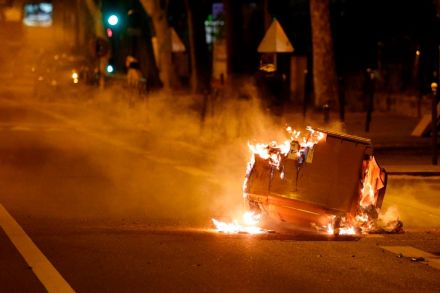
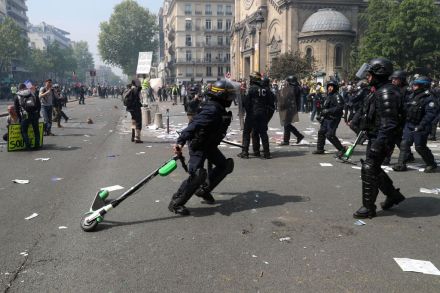
Hundreds of people have been arrested after violent May Day clashes in the centre of Paris. Tens of thousands of demonstrators took to the streets of the French capital to mark the event. Stone-throwing protestors clashed with police, as officers – more than 7,000 of whom were deployed – responded with tear gas. Gilets jaunes, who have held anti-government protests weekly since November, teamed up with May Day marchers.

Method in the madness

From our UK edition

Have you heard of the Oulipo? The long-running Parisian workshop for experimental writing? Even if you haven’t, you might have heard of some of its members: Georges Perec, Italo Calvino, Marcel Duchamp. The group’s stock-in-trade (so-called ‘constrained writing’) is best illustrated by their most notorious production: Perec’s 1969 novel La Disparition which manages to avoid using the letter ‘e’ (and which was miraculously translated into English as A Void). Founded in 1960, the Oulipo spent its first decade in self-imposed semi-secrecy. While its academic sibling, Structuralism, came to dominate literature departments both at home and abroad, the Oulipo watched discreetly in disdain: why are the structuralists so dry, so up themselves?

Notre Dame’s loss is too much to bear | 15 April 2019

From our UK edition

Civilisation only ever hangs by a thread. Today one of those threads seems to have frayed, perhaps snapped. It is impossible to watch the footage coming out of Paris, all that can be done is to groan and turn away. It is not possible to watch the spire of Notre Dame collapse. It is not possible to watch the great cathedral consumed by fire. Evelyn Waugh once said that in the event of a fire in his house, if he was able only to save his children or his library, he would save his library because books were irreplaceable. Only at a moment such as this is it possible to concede the slightest truth in that remark. Almost anything could be borne rather than the loss of this building. There will be recriminations, of course.

Picture gallery: Notre-Dame cathedral devastated by fire

From our UK edition

Firefighters are continuing to tackle a blaze that has devastated Notre Dame in Paris. The medieval cathedral's spire and roof have both collapsed as a result of the blaze. President Emmanuel Macron, who has arrived at the scene of the fire in the centre of Paris, said: 'Like all of my countrymen, I am sad tonight to see this part of us burn.' Thousands of people have gathered outside Notre Dame, with some onlookers singing hymns and openly weeping as rescue workers continue to try and put out the flames in the 850-year old building.

Pearls and swine

From our UK edition

The best booers, in my experience, are the Germans. There’s real purpose and thickness to their vocals. Italians hiss. The English grumble. The French? A bit of this, a bit of that. I approve of booing — or feedback, as I like to think of it. It’s galvanising and exhilarating, even when infuriating. Are you with them or not? One caveat: save it till after the performance, please. The French do not hold to such niceties. One piggy old Parisian thought it appropriate to shout at the stage during Sunday’s performance of Opéra Bastille’s new Troyens. And not once. But three times. On that third cry, he got on to his trotters to hurl his abuse. Was it feeding time?

Apocalypse Dau

From our UK edition

Dau is not so much a film as a document of a mass human experiment. The result is dark, brilliant and profoundly disturbing. For three years up to 400 people, only one a professional actor, lived for months at a time on a city-sized set specially built for the shoot near Kharkov, Ukraine. Modelled on the real Kharkov Institute of Experimental Physics between 1938 and 1968, every detail on the set was scrupulously in period, from the light fittings to the lavatory paper. The participants — who included a real-life Nobel Prize winner and famous orchestra conductor as well as real former KGB and prison officers — were required to live in role 24 hours a day, eating Soviet food, wearing Soviet underwear and undergoing Soviet-style total surveillance.

Whoever declares victory in France this weekend, Macron’s reputation has been diminished

From our UK edition

Emmanuel Macron, though it may be a little premature to be sure, appears to be maintaining the semblance of a grasp on his capital today. He seems to have done it much in the manner of Inspector Renault in the film Casablanca, with a roundup of the usual suspects. The sun had barely risen on Paris before the Interior Ministry had announced hundreds of arrests. But few of these seem to have been made on the street. We have seen no camera-phone pictures of mass arrests. Rather, they were made in a pre-dawn sweep. The police will have known exactly who they were looking for. The operation appears to have been successful, even if the notion of preventive detention might make some worry.

Yellow fever

From our UK edition

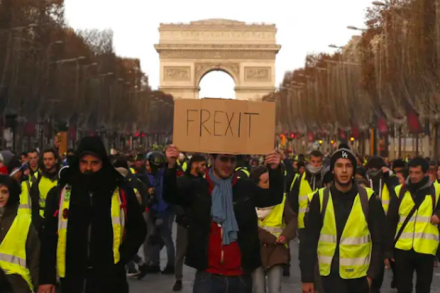
I met a friend for lunch in Paris last Sunday. He and his wife had come up from the countryside for a weekend’s shopping. As we sat down, their nerves were still frayed from the previous day. It was, they told me, the most terrifying few hours of their lives. Trapped between the rioters and the police, they retreated to their hotel, where staff instructed them to stay in their room. The mob soon arrived and against a background noise of helicopters, police sirens, breaking glass and detonations, they tried unsuccessfully to force their way inside the hotel while singing an ode to the Révolution. It has been said that the gilets jaunes movement is to Emmanuel Macron what the miners’ strike was to Margaret Thatcher in the mid-1980s. Not in the slightest.

Let them buy Teslas! How Macron provoked an uprising

From our UK edition

Emmanuel Macron is supposed to be the cleverest man in France but he has painted himself so completely into a corner that there’s no way out. Whether the gilets jaunes insurrection achieves its objectives or not, it has become his nemesis. As the yellow wave roils France, Macron is a diminished figure after a crunching fall to earth. Bastion of anti-populism, he has united 70 per cent of France against him. He did self-identify as Jupiter. Now, perhaps, he is looking like a sickly lame duck, albeit one for whom the word hauteur might have been invented. Instead of the confident leader, lecturing and preening on the global stage, he is barricaded in his palace, a sort of latter-day Marie Antoinette. French people can’t afford diesel? Let them buy Teslas.

Poster boy

From our UK edition

You don’t need to be much of a psychologist to understand the trajectory of Henri de Toulouse-Lautrec. Born to aristocratic first cousins, in a family never shy of consanguinity, he was blighted by congenital deformities and weaknesses. When his brittle legs broke in his teenage years, they stopped growing altogether, leaving the adult Lautrec tiny as well as weird-looking, with his heavy lips and thick-lidded eyes. Fortunately, Montmartre was waiting for him, offering a boozy and bosomy refuge from his peculiar family and woeful self-regard. In the dance halls of the capital, Lautrec found his people, and in his art they found themselves. His paintings tell the story best, all those fleshy whores lying in bed or lining up for medical examinations.