Paris

To call this offering a book is an abuse of language

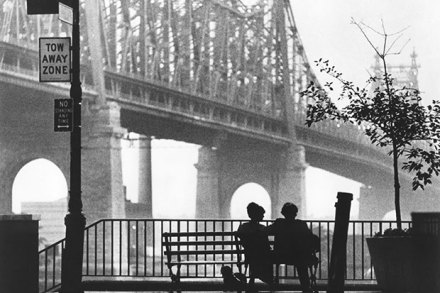
I picked up this book with real enthusiasm. Who cannot be entranced by those 20 years after the second world war when New York supplanted Paris as the cultural capital of the world? One thinks of the Beats, of Dylan and Greenwich Village, of Sontag and Trilling. Well think again, for none of the above feature in this book at all. Indeed the first thing to be said is that to call this offering from Thames & Hudson a book is a real abuse of language. It has covers and inside those covers one finds text and image but the three essays that cover visual art, architecture and design and

Andrew Roberts’s diary: Just who’s the despot here – Napoleon or Paxman?

To the British embassy in Paris for a colloquium on ‘Napoleon and Wellington in War and Peace’ organised by our ambassador, Sir Peter Ricketts, to mark the bicentenary of the purchase of the embassy from Pauline Borghese, Napoleon’s sister. (According to the historian of the house, Tim Knox, Pauline would warm her feet on the naked backs of her ladies-in-waiting, and be carried to her bath by a huge Egyptian slave.) William Hague opened our proceedings, boldly pointing out the other anniversarial elephant in the room: it was Trafalgar Day. The French fielded several of their senior Napoleon historians, including Jean Tulard, Thierry Lentz of the splendid Fondation Napoléon, Jacques-Olivier

My first Arc de Triomph was a triumph

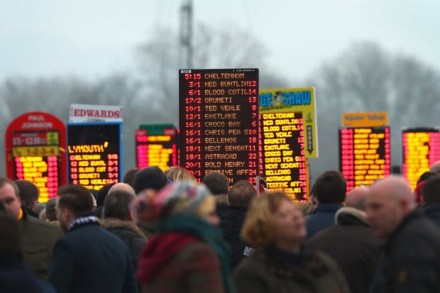
Aboard our coach from Rouen to Paris for the Prix de l’Arc de Triomphe our lady guide put it succinctly: ‘The only polite Parisians are the ones who are asleep.’ Try out your rusty French anywhere else and the locals award you bonus marks for effort: Parisians sneer and affect the sort of aural incomprehension Lester Piggott displayed when stable lads sought a fiver for leading up his winner. It was a joy nonetheless to be at my first Arc: while I was a full-time political commentator the coincidence with the party conference season made attendance impossible. It was all the more fun sharing duties with ex-jockey John Reid, who

Opera North’s Coronation of Poppea: a premium-rate sex-line of an opera

Virtue, hide thyself! The Coronation of Poppea opens with a warning and closes with a love duet for a concubine and a psychopath, their union celebrated in sinuous melismas over a blameless passacaglia. First performed in 1643, Monteverdi’s final opera is all about talking dirty and talking tough. Seductions, threats, boasts and betrayals are snapped, spat, stuttered and smooched over harmonies that pinch and squeeze like a premium-rate sex-line. Does it work in English? Yes and no. There are casualties in Tim Albery’s slick, vicious Opera North production, some historical, some poetic, some musical. In Laurence Cummings’s hybrid edition, drawn from the Venice and Naples scores, transpositions and cuts proliferate.

The Spectator at war: Aerial warfare | 14 October 2014

From The Spectator, 17 October 1914: Last Sunday another aeroplane attack was made upon Paris. It appears that no fewer than five aeroplanes were concerned in the raid, and that twenty bombs were dropped, killing four persons and injuring twenty-two. One of the bombs fell upon the roof of the church of Notre Dame, and was at first supposed not to have exploded. Later reperts, however, showed that it burst and set a beam on fire, though fortunately no serious damage resulted. On the following day a further attack was made by a single aeroplane, which dropped six bombs, without, however, doing any appreciable mischief. It is extremely difficult to understand

Anthony Horowitz’s diary: Keeping James Bond’s secrets for the Smersh of publishing

It was quite fun being named as the new writer of 007 — although actually I’d make a lousy spy. As my family knows, I’m hopeless at keeping secrets and I’ve found it almost impossible hanging on to this one for the past few months. Even now I’m forbidden to reveal the title, the story, the date it takes place or any of the characters… and I’ll probably get into trouble even for writing this. Believe me, Orion Books and their legal department are more sinister than Smersh. In fact I did quite well and only dropped one clue to someone who follows me on Twitter. He asked me what

Picasso’s dealer

When she was four, Anne Sinclair had her portrait painted by Marie Laurencin. It is a charming picture, a little dark-brown-haired girl with a white bow, very blue eyes and a white and pink striped blouse, and it was commissioned by Sinclair’s grandfather, Paul Rosenberg, one of the handful of most influential Parisian art dealers of the 1920s and 1930s. More interested in politics than family history, Sinclair — for 13 years the host of the prestigious French weekly television news show 7 sur 7 — waited until she turned 60 to explore the trunks of papers in her mother’s attic. What she found was a remarkable archive of letters,

The camera always lies

Everyone knows about architecture being frozen music. The source of that conceit may be debated, but its validity is timeless and certain. For all its weightiness, architecture plays with ethereal proportion, harmony, resonance and delight: the stuff of music. But architecture is more fundamentally about the management of light and space. Or, at least, that’s how architects see it. So photography makes better sense of architecture than any other medium does: there is something congruent between the fixed optical geometry of a camera and the way we perceive buildings. And because images are more readily accessible than travel to remote sites, everyone’s experience of world architecture is, at least initially,

The man who brought Cubism to New York

The American Jewish artist Max Weber (1881–1961) was born in Belostok in Russia (now Bialystok in Poland), and although he visited this country twice (he came to London in 1906 and 1908), it was the experience of continental Europe — and particularly Paris — that was crucial for his development. The title of this exhibition is thus rather misleading: Weber never lived in England, and his ‘presence’ here is based upon a collection of his work made by his friend Alvin Langdon Coburn. Coburn (1882–1966), a boldly experimental photographer attached to the Vorticist group, was another American, but one who opted to settle in England in 1912. Weber and Coburn

The Spectator at war: Push on to Paris?

The Spectator, 5 September 1914: SEDAN Day has passed, but there has been no second Sedan, as the Germans so fondly hoped. Indeed, as far as one can yet learn, the day passed without any memorable action, for it would be absurd to count as memorable the pleasant little capture of ten German guns by the British cavalry near Compiegne. Granted reliance on Fabian tactics for the present—and we fully recognize that these are the right tactics to adopt in existing circumstances— we are well satisfied with the situation. The Germans, no doubt, are pressing on while we write, for their outposts were reported on Thursday to be only some

The Russian literary celebrity who begged Tolstoy to spare Prince Andrei

Nadezhda Alexandrovna Lokhvitskaya was a literary celebrity in pre-revolutionary St Petersburg. She chose the pen-name ‘Teffi’ because it was androgynous, and because it was the kind of name a ‘lucky’ fool would have; in Russia, fools were held to tell truths, albeit obliquely. ‘Teffi’ wrote for newspapers, most notably the Russian Word. By 1911 she was writing more fiction than journalism; her short story collections achieved instant popularity. In 1919 the Russian Word was closed down. Teffi was evacuated, ending up, like so many ‘lesrusses’, in Paris. She never returned to Russia, except in her stories. Teffi’s fame evaporated almost immediately after her death in 1952. Pushkin Press has issued

The West has drifted away from Israel — and itself

Is Israel drifting away from the West? That was Hugo Rifkind’s claim in his column in the magazine last week. Hugo wrote: ‘Israel drifting away. Never mind whose fault it is; that’s a whole other point. But it’s happening. It’s off. No longer does it exist in the popular imagination as our sort of place. Once, I suppose, foes and friends alike regarded it as a North Atlantic nation, but elsewhere. Then a western European one, then, briefly, a southern European one. When was it, do you think, that Israel stopped being regarded as fundamentally a bit like Spain? Early 1990s? Then they shot Yitzhak Rabin, and Oslo didn’t happen, and

The breasts that launched Les Fleurs du Mal

This novel is based on the life of Charles Baudelaire and the relationship he enjoyed — or endured — with his Haiti-born mistress, his Black Venus, Jeanne Duval. We first see him in 1842, a young poet of 20, making his dandyish way through the slums of Paris to meet his friends at a cabaret theatre for an evening of wine and hashish. Here he will encounter for the first time his future muse. She is voluptuous, in a long red dress, singing risqué songs. In no time he is unlacing her boots and preparing to squander the legacy which he is shortly expecting. However, there are, as the author

Robert Harris’s diary: My accidental war with Tony Blair

To Paris, for the launch of the French edition of my novel about the Dreyfus affair. As we land, I isolate three anxieties out of my general sense of unease. First is the natural nervousness of any Englishman contemplating telling the French anything about their own country. Second is the French law which allows the descendants of actual historical figures — of whom there are dozens in my novel — to sue for defamation: the heirs of the Marquis de Sade even objected to an unflattering portrayal of the inventor of sadism. Third, I am required to make a speech in French, and while my grasp of that language is not as

The Paris of Napoleon III was one big brothel – which is why the future Edward VII loved it

Stephen Clarke lives in Paris and writes book with titles such as 1,000 Years of Annoying the French. Dirty Bertie is a book in the same line — a comic history which manages to combine his brand of jaunty, bawdy humour (not mine, I confess) with being genuinely informative about French history. Clarke claims that there is a gap in the biography of King Edward VII. Biographers have not said nearly enough about Bertie’s jaunts to Paris. He is absolutely right about this. To Bertie’s British biographers Paris is a collection of clichés about grandes horizontales and a few well-worn anecdotes. There’s a story about the courtesan La Barucci, for

We’re very lucky Philip II was so indulgent with Titian

In Venice, around 1552, Titian began work on a series of six paintings for King Philip II of Spain, each of which reinterpreted a scene from Ovid’s Metamorphoses. The resulting work proved to be the apogee of his career and became what may be the most influential group of paintings in post-Renaissance European art. Studied, absorbed and channelled by successive generations of artists, from Velázquez and Rubens through to Gainsborough and latterly Freud, the impact of these works and their stylistic legacy was profound. Three of these paintings, ‘Diana and Actaeon’, ‘Diana and Callisto’ and ‘The Death of Actaeon’ are now on display in Edinburgh in the new exhibition at

Recent crime fiction | 24 April 2014

Louise Welsh rarely repeats herself, a quality to celebrate in a crime novelist. Her latest novel, A Lovely Way to Burn (John Murray, £12.99, Spectator Bookshop, £10.99) is a dystopian thriller set in an all-too-plausible version of contemporary London. Three members of the establishment have shot dead innocent bystanders. The weather is broiling. A plague-like virus known as ‘the sweats’ spreads, bringing panic in its train. Stevie Flint, a cynical TV presenter on a shopping channel, is one of the few survivors. She contracts the disease shortly after stumbling on her boyfriend’s body. The boyfriend, a surgeon who apparently died of natural causes, had concealed a laptop in her loft

From Göring to Hemingway, via Coco Chanel – the dark glamour of the Paris Ritz at war

In Midnight in Paris, Woody Allen did a good job of showing how foolish it is to be obsessed by previous generations who’ve passed through Paris. Going back through the years, each group of geniuses turns out to be just as drunk and silly as the next, albeit with longer cigarette holders. Tilar Mazzeo, who has written biographies of Coco Chanel and the woman behind Veuve Clicquot, has done a similar service with this history of the Ritz. Focusing on the hotel is partly a device to write about the German occupation, but it’s mainly a way of gathering all the old Paris icons under one roof. Marcel Proust, Ernest

The BBC’s march to war

Perhaps we are growing war-weary – weary, that is, of the gathering storm of World War One documentaries on the BBC. There have been so many, not just Max Hastings (for) and Niall Ferguson (against), but Jeremy Paxman keeping the home fires burning and the reheated I Was There interviews with veterans of the conflict whom age withered, unlike those who left their corpses to stink in the mud of Flanders. For all that, 37 Days, the corporation’s recent reconstruction of the events leading up to Germany’s invasion of Belgium, was utterly compelling, once again confirming the place of docudrama in the history schedule. Not only was it beautifully realised (Downton

Gay Paree: food, feuds and phalluses – I mean, fallacies

In his preface to The Joy of Gay Sex (revised and expanded third edition), Edmund White praises the ‘kinkier’ aspects of homo-erotic life. Practical advice is given on frottage, spanking, sixty-nining, cruising, blowjobs, fisting, rimming and three-ways. Of course, Proust-inspired poetic exaltations to homosexual love have long characterised White’s fiction, from A Boy’s Own Story to Hotel de Dream. Yet White is no mere popinjay in thrall to high-flown campery; his mind is drawn to some very dark places. Between 1983 and 1999, as an ardent Francophile, White elected to live in Paris. His chatty, salacious account of those years, Inside a Pearl, dilates knowledgeably on the gorgeousness of the