Paris

Out of time and place

The misleadingly titled Life of an Unknown Man is in fact the story of two men, and the dualities that their characters embody — fame and anonymity, unhappiness and happiness, West and East. The misleadingly titled Life of an Unknown Man is in fact the story of two men, and the dualities that their characters embody — fame and anonymity, unhappiness and happiness, West and East. Like Andrei Makine himself, the protagonist, Shutov, is a middle-aged Russian emigré author living in Paris. His powers, both sexual and literary, are slipping away from him, and his sense of failure is minutely and rather brilliantly dissected in a parade of petty humiliations,

The people and the place

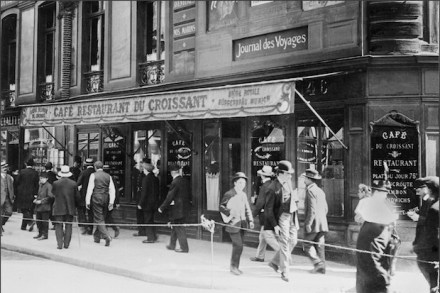
Where to begin? Graham Robb, like all dedicated Francophiles, begins early, when his enlightened parents made him a present of a trip to Paris and sent him off with a map and a voucher for a free gift at the Galeries Lafayette. For a week, and then two weeks, and then six months, he did what all visitors do: he walked the length of the city, he bought books, he sat in cafés and listened to the conversations of strangers. This apprenticeship made him the historian and biographer he is today, and this book is a form of homage to Paris and to those who choose to see it as

The end of the affair | 28 March 2009

Given the anti-Americanism displayed on every possible occasion by the French since the days of De Gaulle, and the crudely expressed contempt with which Americans have responded, particularly over the past decade, it is easy to forget that the two nations once enjoyed a relationship even more ‘special’ than the supposedly exclusive one between Britain and the United States. That relationship, which began with Benjamin Franklin’s seduction of French society and Lafayette’s participation in the American revolution, blossomed into a love affair in the two decades following the Great War. Many Americans who had fought in it stayed behind. The comparatively low cost of living permitted penniless writers and artists,

Mysteries of Paris

Fred Vargas — nom-de-plume of the French archaeologist and historian Frédérique Audoin-Rouzeau — took to writing crime novels in 1991. Among the many unusual aspects of her books is the English take on the French titles. L’Homme à l’envers appears as Seeking Whom He May Devour, Pars vite et reviens tard as Have Mercy on Us All while Sous les vents de Neptune becomes Wash This Blood Clean From My Hand. These English versions possess a sort of genius which I find irresistible. The novels have also been translated out of the order in which they were written. Just issued is Vargas’s first, The Chalk Circle Man, which will be