Oscars

‘I never had anything against Nancy’: coffee and cookies with Tonya Harding

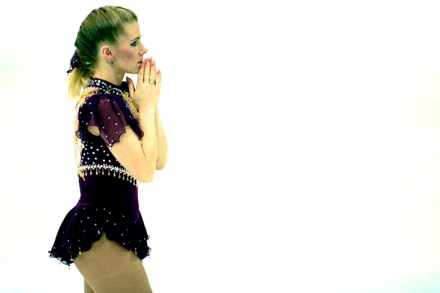
The film I, Tonya, has been well-received and is even up for an Oscar or two. I’m pleased about that because I’ve met Tonya Harding and her story has always fascinated me, not least because to watch her skate in the run up to the 1994 Olympics (particularly in Oakland, California in 1991 at the Ladies Free Skate competition) is to witness sport, art and sheer guts come together in an unfathomable holy trinity. It all went terribly wrong, of course, and she became the most reviled ice skater in the world. https://www.youtube.com/watch?
The most politically correct Oscars ever?

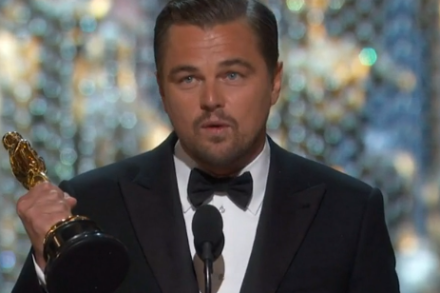
Last year, the Oscars came in for quite a bit of criticism within the American film community. The problem wasn’t that the nominees were too worthy, or the speeches too long. Nor was it that some of the best films of 2015 – Star Wars: The Force Awakens, The Martian, Steve Jobs – were snubbed. Nor did anyone complain that the picture that received the most nominations – The Revenant – was a three-hour snorefest starring the finger-wagging environmentalist Leo DiCaprio. No, the reason for all the grumbling was that the 88th Academy Awards weren’t politically correct enough.

Relative values

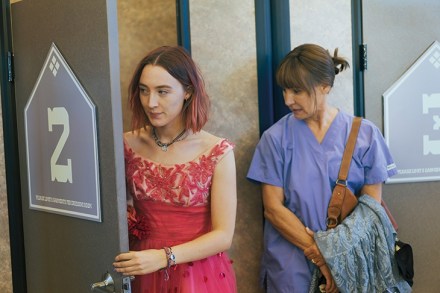
Lady Bird is a semi-autobiographical film written and directed by Greta Gerwig with a plot synopsis that need not detain us as it is basically only this: girl has a mum. (Or: girl has a mum, and sometimes they row and sometimes they don’t.) But thus far it has won near universal critical praise, two Golden Globes and five Oscar nominations, thereby proving there is mileage in girls and their mums, and box office in girls and their mums, and that girls and their mums can be more than mere afterthoughts. In this respect, Lady Bird may, in fact, be quite the rare bird. It’s set in Sacramento, California, in 2002, and follows a year in the life of 17-year-old Christine McPherson, who calls herself ‘Lady Bird’ because she is, you know, At That Age.

His dark materials | 16 March 2017

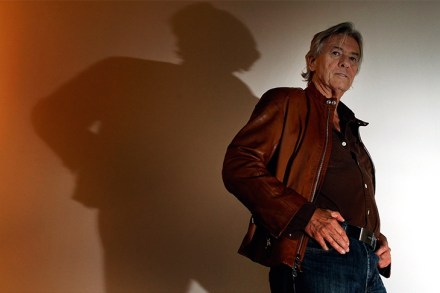
The enticingly subversive films of Paul Verhoeven were very tempting to me as a schoolboy. When I hit 14, the Dutch director released RoboCop and the excitement among me and my friends at catching two hours of unmitigated ultra-violence reached fever pitch. He did not disappoint. That was in 1988 and it was interesting later on to read several newspaper articles accusing Verhoeven of having made a fascistic screed in favour of zero-tolerance law enforcement. This was not something any of us had considered up to that point, but satire, yes, even back then we had an inkling of what that was and RoboCop seemed to fit the bill nicely. Verhoeven’s latest movie Elle (reviewed by Deborah Ross last week) shows the old powers haven’t waned.

It’s never good news when I trend on Twitter. The Oscars was no exception

When Kingsley Amis won the Booker prize for The Old Devils in 1986, he said that he had previously thought of the Booker as a rather trivial, showbizzy sort of caper, but now considered it a very serious, reliable indication of literary merit. It was a joke, evidently. Indeed, when he said it during his acceptance speech he grinned from ear to ear, just to make it crystal clear that he was being ironic. But it didn’t do any good. In a BBC round-up of the events of the year, the presenter said that Amis had won the distinguished literary prize in spite of having previously disparaged it. This was portrayed as a brilliant bit of sleuthing on the presenter’s part, as if his own dogged research had exposed Amis’s ghastly hypocrisy.

Donald Trump and the end of the age of celebrity

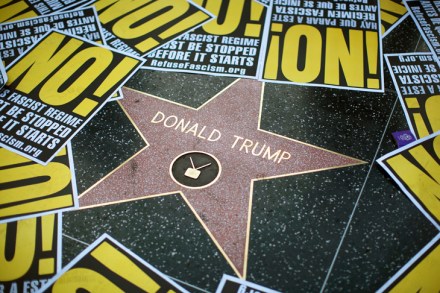
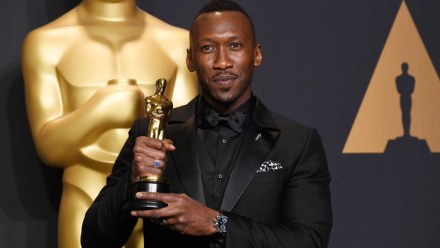
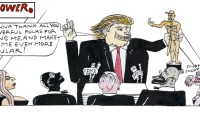
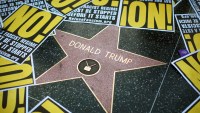
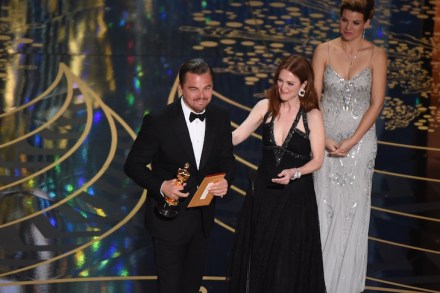
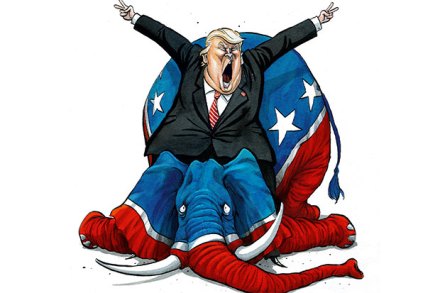
The ongoing war between Donald Trump and the Hollywood A-list has entered a new and unpredictable phase. Celebrity criticism of Trump — keenly anticipated as the chewy takeaway from last week’s Academy Awards ceremony — was instead overshadowed by a celebrity cock-up. Thanks to a mix-up of the sacred envelopes, presenters Warren Beatty and Faye Dunaway temporarily awarded Best Picture to La La Land, rather than the real winner, Moonlight. The result was an unforgettable tableau of confusion at the ceremony’s crowning moment. Trump had earlier let it be known that he wasn’t watching.

Barometer | 2 March 2017

And the losers are… La La Land was mistakenly announced as winner of the Oscar for best picture before the error was corrected in favour of the film Moonlight. Some other announcements which went terribly wrong: — In 2015 Miss Universe host Steve Harvey announced Miss Colombia as the winner. Two minutes after she had been crowned Harvey came back on stage to apologise that he had misread the card and in fact Miss Philippines had won. — In January 2016 Heart FM newsreader Fiona Winchester mistakenly announced that David Cameron, then prime minister, had died, before correcting herself and saying that David Bowie had died. — In December 2015 the FT announced that the European Central Bank had held interest rates. They had in fact been cut to 0.3 per cent.

The Spectator’s Notes | 2 March 2017

Chief Constable Simon Bailey, who heads Operation Hydrant, the police investigation of ‘non-recent’ child abuse cases, now says that paedophiles who view images of child abuse should not be prosecuted, because police cannot cope with the numbers involved. Mr Bailey is wedded to the doctrine that someone who says he is an abuse victim must automatically be believed. The result, said Sir Richard Henriques in his scathing report on Operation Midland, is that the criminal justice system totters: ‘Chief Constable Bailey’s argument ignores the consequences of false terminology.’ Another consequence is that the child abuse statistics, unchecked, explode.

Portrait of the week | 2 March 2017

Home Sir John Major, the former prime minister, made a speech at Chatham House in which he called the referendum vote for Brexit ‘an historic mistake’. The Lords got its teeth into the European Union (notification of withdrawal) bill. A merger between the London Stock Exchange and Deutsche Börse foundered after the LSE refused a demand by the European Commission for it to sell its Italian bond-trading platform, MTS. Royal Bank of Scotland, in which taxpayers hold a 73 per cent stake, announced losses of £7 billion. Theresa May gave up crisps for Lent. Asked if he would still be Labour leader in 2020, Jeremy Corbyn said: ‘I’ve given you a very, very clear answer — yes.

Star power

The ongoing war between Donald Trump and the Hollywood A-list has entered a new and unpredictable phase. Celebrity criticism of Trump — keenly anticipated as the chewy takeaway from last week’s Academy Awards ceremony — was instead overshadowed by a celebrity cock-up. Thanks to a mix-up of the sacred envelopes, presenters Warren Beatty and Faye Dunaway temporarily awarded Best Picture to La La Land, rather than the real winner, Moonlight. The result was an unforgettable tableau of confusion at the ceremony’s crowning moment. Trump had earlier let it be known that he wasn’t watching.

Why we need to cancel the Oscars to save the Oscars

Oscar has a problem, and I say that as a fan. If I could, I’d take one of those famous statuettes by its tiny golden hand, and show it a happy life in the bars, restaurants and movie theatres of its native Hollywood. But, clearly, others don’t feel the same way. The number of people who tuned into the Academy Awards last year was the lowest it has been for eight years. Even the traditional box office boost for victorious movies isn’t necessarily worth as much as it used to be. Viewing figures and box office receipts are, however, only the visible tip of what is a deeper problem: the Oscars aren’t keeping pace with cinema itself.

I want Elle to win an Oscar – but I also wish it hadn’t been made

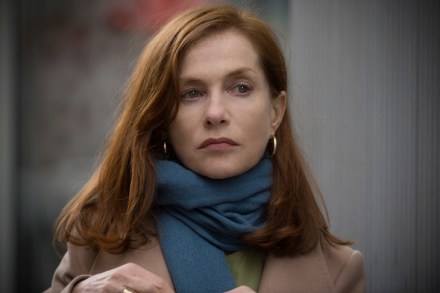
Is it possible simultaneously to want a film to win an Oscar and to wish it hadn’t been made? That’s how confused I felt after seeing Elle with Isabelle Huppert – a woman for whom the adjective hard-boiled (in a French way) doesn’t even come close to her unvarying self-possession. Elle, directed by Paul Verhoeven, is about rape, violent rape, and the aftermath of rape, but this is as odd a depiction of victimhood as you can get. Huppert – Michèle Leblanc in the movie – is plainly brutalised by a sudden attack in her home by a masked intruder, in a wetsuit, who hits her repeatedly to subjugate her – every woman’s worst nightmare.

Affleck carries the film – with the help of that jaw: Manchester By The Sea reviewed

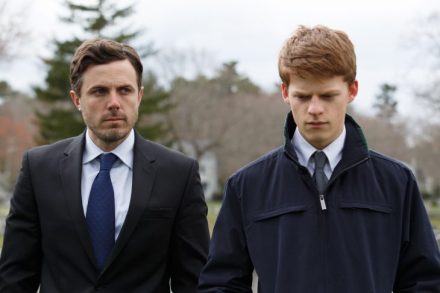
Everyone in Hollywood knows that if you want some good jaw-clenching you go to an Affleck brother. To older brother Ben for the big budget moves, for a chin dimple that looks good in a bow-tie or Batsuit. And to younger brother Casey for something a little more low key. Casey may have the jaw that is less defiantly handsome, a chin that is a little smaller, weaker and more upturned, but that jaw's acting skills in Manchester By The Sea are off the charts. As Lee, a man withdrawn and weighed down by grief amid the beautiful but bitter frost of a coastal Massachusetts town, Affleck’s Oscar glory seems assured, particularly following his Golden Globe win.

Sins of the fathers | 23 March 2016

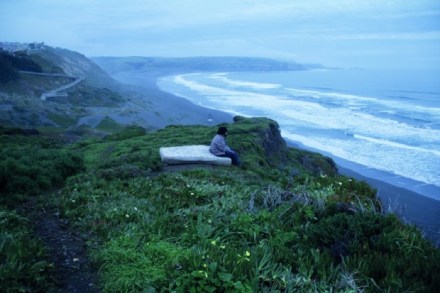
A feature film about priests who abuse children is being released on 25 March. Which happens to be Good Friday. Geddit? The sacrifice of the innocents. A conspiracy of religious hierarchs. Hand-washing by the secular authorities. I’m sure I can think of some more analogies if you give me time, but that’s enough to be going on with. Enough, certainly, for the distributors to boast that the movie is ‘controversially slated to be released on Easter [sic] Good Friday’. As publicity stunts go, this isn’t subtle. But the film is. The Club, directed by the Chilean Pablo Larraín, sets out to perplex us from the first frame until the last.

This year’s Oscars was the biggest gathering of smug, self-important asses in living memory

The American comic Toby Muresianu put it best: last night’s Oscars felt like ‘three hours of being told to eat your vegetables’. If there has ever been a more grating gathering of smug, self-important asses keen to educate the TV-watching blob about Serious Stuff, then I’m struggling to remember it. Hollywood has clearly forgotten what its job is: to make us squeal and swoon, not raise our awareness about rape and paedophilia and the heat death of the planet and all the other misanthropic bilge the beautiful people spouted last night. Black people must have been counting their blessings.

Oscar vs Augustus

There was something admirable about the spirit of careful mockery behind the doggy bags on offer to the finalists in this year’s Oscars and Daftas. The chance to hire a car or visit a New Zealand winery (pay your own airfare) cannot be very high on even the most grasping star’s list of ultimate desiderata. That said, the organisers are missing a trick here — the element of chance. The Roman emperors can come to their aid. Apophoreta, literally ‘takeaways’, were standard features of Roman dinner parties (the satirical poet Martial wrote a book of 221 couplets about them, celebrating everything from bras to nail-scissors and food for dealing with stretchmarks). But the emperors’ dinner parties were something different.

High life | 28 January 2016

The Dolly Sisters were off to Davos last week for the World Economic Forum: Nat Rothschild and Sebastian Taylor in their finest playing up to Harry Selfridge, in reality Christine Lagarde, the IMF chief. This total waste of a week advertises itself as a discussion of the global issues of the day. In reality, it’s utter twaddle, unless one is networking like the Dolly Sisters, or showing off like Justin Trudeau, the Canadian premier whose mother is Margaret, once upon a time a Studio 54 regular and a friend of yours truly. Old Greek ship-owning families, prominent ones such as the Livanoses, Goulandrises and Chandrises, eschew such shenanigans, leaving them to that downmarket version of Zorba the Greek, Alexis Tsipras.

Is this a golden age of protest?

Are we living in a golden age of protest? A bunch of aggrieved citizens only has to raise a murmur of protest, whether it’s about racism, sexism, homophobia, transphobia or Islamophobia, and the institution they’re targeting instantly capitulates. A case in point is the Academy of Motion Picture Arts and Sciences. No sooner had a group of prominent African-American actors and directors complained about the lack of black Oscar nominees this year — ‘whitewash!’ — than the president of the Academy announced she would be taking ‘dramatic steps’ to address the problem. The Academy will enlarge its membership to include hundreds of entertainment industry figures from diverse backgrounds.

The View from 22 Podcast: Donald Trump, Cameron’s centre-right secret and the racist Oscars

Donald Trump seems to offer only gloom, insults and arrogance - but America seems to love him for it, says Freddy Gray in this week's issue. Now there are only a few days left before the presidential election process starts, and ‘The Donald’ continues to storm the polls. He probably won’t be president, but it now looks as if he probably will be the Republican nominee — the heir to Lincoln, Teddy Roosevelt and Eisenhower. It’s a mind-boggling phenomenon. Isabel Hardman joins Freddy Gray and Janet Daley from the Telegraph to discuss the rise of Trump, and whether any of the other candidates have a chance of receiving the nomination.