Oscars

‘Collective’ shines a light on Romania’s deadly corruption problem

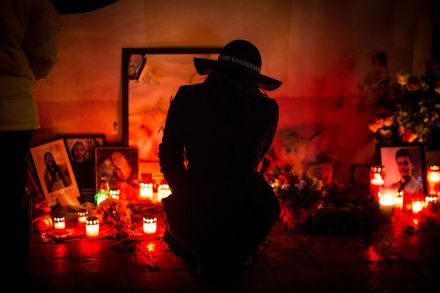
A gripping Romanian documentary has made history as the country's first film ever to be nominated for an Oscar in the international category. But 'Collective', which is also shortlisted for best documentary feature at tonight's ceremony, isn't a source of national pride. In fact, far from it: the movie shines a spotlight on the country’s rotten healthcare system. It follows a team of investigative journalists as they uncover deep-seated corruption in the aftermath of a deadly nightclub fire in Bucharest in 2015, that killed 65 people. While 27 died on the night of the fire, many more died in the months afterwards.
10 cult films that missed out at the Oscars

It’s no great secret that the Oscar for Best Picture has been awarded to some puzzling choices over the years. Way back in 1944, the musical comedy Going My Way won the award, rather than Billy Wilder’s classic Film Noir Double Indemnity. Then flash forward to 1952 when Cecil B. DeMille’s tiresome circus picture The Greatest Show on Earth trounced High Noon, whilst in later years Dr Strangelove lost to My Fair Lady, Rocky outdid Taxi Driver and (notoriously) Driving Miss Daisy ran over My Left Foot. In recognition of this, here's a purely personal look at ten times when the Academy Award for Best Picture went to a dubious choice, and which movie arguably should have won.

Riveting and heartbreaking: Sound of Metal reviewed

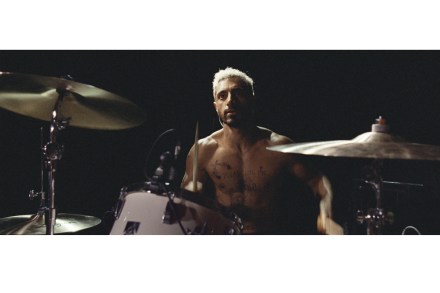
The multi-Oscar-nominated Sound of Metal stars Riz Ahmed as a heavy-metal drummer whose life is in freefall after losing his hearing. Ahmed learned to play drums for the part. And he learned American Sign Language. And he learned to perform with white noise in his ears. However, he did not have to learn how to be riveting because, if you’ve followed his career, you’ll know he’s been that since day one, and he is magnificently, powerfully, heartbreakingly riveting here. If he doesn’t win the Oscar I’ll be furious. That counts for nothing, I know. But it had to be said. It is directed by Darius Marder, who co-wrote the screenplay with his brother, Abraham Marder. At the outset Ruben (Ahmed) plays in a band with his girlfriend, Lou (Olivia Cooke).

Why are the Oscars such a lousy guide to great cinema?

Chloé Zhao’s Nomadland, predicted to win big at this year’s Oscars, is not a terrible film. It’s a slight, sentimental Grapes of Wrath-ish journey through the Discourse, with essential Discourse stop-offs at an Amazon warehouse and the rust belt. It belongs in the New Yorker, not on screen. As with almost every film to win big since No Country for Old Men 13 years ago, you just think: the ‘highest honours in filmmaking’? For that? Amid all the change that’s being trumpeted at this year’s Oscars — more women directors, more ethnic minorities — the one thing missing is any discussion about why the awards are such a lousy guide to great cinema.

The TV we feared they’d never dare make any more: The Singapore Grip reviewed

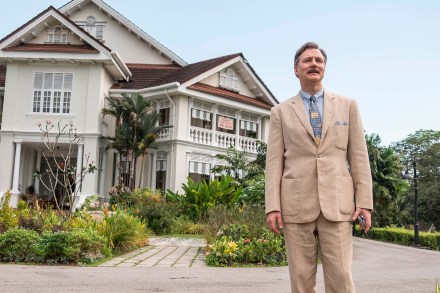
‘Art is dead,’ declared Mark Steyn recently. He was referring to the new rules — copied from the Baftas — whereby to qualify for the Oscars your movie must have the correct quota of gay/ethnic minority/transgender/etc people. This, he argued, will lead to the kind of leaden, politicised, phoney art we associate with communist regimes in the Soviet era and which, not so long ago, we used to find eminently mockable. If British and American producers want to lose money on TV shows and movies that no one wants to watch, then good luck to them. All that matters is that there’ll be enough brave dissenters out there to say: ‘Sod the awards.

The perfect film for family viewing: Belleville Rendez-Vous revisited

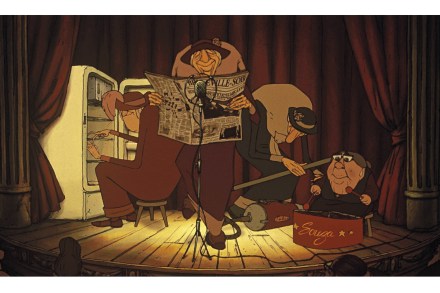
The selection of a film for family viewing is a precise and delicate art, particularly with us all now confined to quarters in intergenerational lockdown. Should the film-picker misjudge the terrain on ‘scenes of a sexual nature’, the entire family will be condemned to sit, agonised, through the dreaded onset of rhythmic heavy breathing and beyond, until finally someone cracks and mumbles ‘this is a bit racy’ while reaching for the fast-forward button. On the other hand, some of the full-throttle kids’ films seem designed to test adult sanity to its limit.

The true cost of celebrity inauthenticity

From our US edition

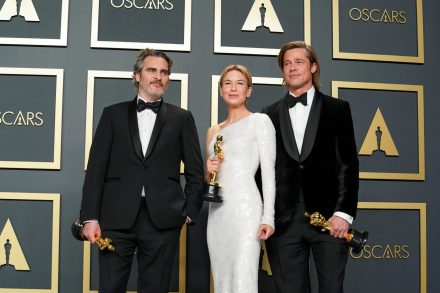
First, Britney Spears was caught trying to pass off a 'Food Network' meal as her own cooking, then James Corden was caught on camera not driving the car on 'Carpool Karaoke', and now I find out ghostwriters are behind the acceptance speeches we just saw this awards season? Say it ain't so! After watching Brad Pitt’s acceptance speech at the Academy Awards last week, I commented to my wife how funny he was all awards season long and she showed me a Vulture article that suggests that Pitt doesn't write his speeches himself. The piece claims his 'representatives contacted at least one outside speechwriting agency to consult about engaging their services'.

phoenix, zellweger, pitt celebrity celebrities

Joaquin Phoenix’s Oscars speech was beyond a joke

The 2020 Oscars will go down in history for two things: Bong Joon-ho’s brilliant film Parasite becoming the first foreign-language film ever to win Best Picture. And Joaquin Phoenix talking about artificially inseminating cows. Yes, in a crowded field of un-self-aware, right-on speeches and stunts during this year’s awards season – Natalie Portman’s Dior cape bearing the names of snubbed female directors certainly deserves an honourable mention – Phoenix came out on top. In his emotional acceptance speech for Best Actor, won for his skeletal, bravura performance in Joker, Phoenix was almost quaking as he talked about the need for a political unity of purpose among the Hollywood set. ‘[W]e feel or are made to feel that we champion different causes.

Satire, thriller, comedy all in one: ‘Parasite’ reviewed

Bong Joon-ho’s Parasite won the Bafta for best foreign film and is up for six Oscars and it is an involving drama. And satire. And thriller. And comedy. And allegory. And it is fabulous and enthralling on all those counts. It works on every level which is, perhaps, fitting for a film about levels and whether you are at the top or bottom in life. Essentially, it’s the story of a low-status family who gaslight a high-status family so it’s Crazy Rich Asians but Crazy Poor Asians too. Plus, it features the grimmest child’s birthday party ever. It is also a horror flick, I forgot to say.

The diversity agenda is killing cinema

The film world is atoning for its crimes against diversity. On screen, strong women are supplanting Disney princesses. Superheroes, once uniformly white and male, are turning multicultural. Gay intrigue is edging out heterosexual romance. Away from the camera, bankable stars force studios to employ minority personnel by adding 'inclusion riders' to their contracts. Film-makers must repent ancient mis-speaks, beg forgiveness and denounce peers accused of transgressions. Abuse allegations against Woody Allen may be unproven, but actors who have taken his shilling disown him and donate their tarnished earnings to #TimesUp. Unsurprisingly, the current awards season reflects these rectifications. Of the eight nominations for best picture Oscar, six boast diversity credentials.

The edge of reason

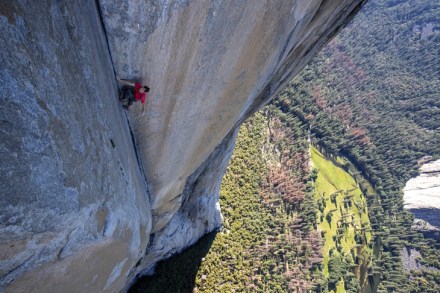
My husband, usually a cool customer, watched Free Solo from behind his fingers, sometimes jumping up from the sofa and backing away from the TV. Audiences at Imax showings have behaved the same way, rising to their feet, clenching their sweaty fists as they watch  Alex Honnold, a 33-year-old rock climber from Sacramento, make his way up El Capitan, 2,700 vertical feet of granite in Yosemite National Park. Free Solo is a documentary, the story of Honnold’s record-breaking climb, and the reason for the excitement is that he does it ‘free solo’, without ropes or aid of any kind. It’s just Alex, his shorts, his shoes, a bag of chalk, and the cliff.

All the lonely people

Can You Ever Forgive Me? is a true story based on the 2008 memoir of Lee Israel, the writer who turned her hand to forging literary letters and who became, as she puts it, ‘a better Dorothy Parker than Dorothy Parker’. So it’s that story, but it also isn’t. That story is here but the real story, I would say, is about loneliness and alcoholism and two outsiders who, in a Midnight Cowboy sort of way, form a friendship at a desperate time. And it is rivetingly moving on this count, as are the performances from Melissa McCarthy (Oscar-nominated) and Richard E. Grant, also Oscar-nominated. (Great, although it does now look as if his work on Spice World will never be recognised. A pity, but there you are.

Roma is being celebrated for all the wrong reasons, writes Slavoj Žižek

My first viewing of Roma left me with a bitter taste: yes, the majority of critics are right in celebrating it as an instant classic, but I couldn’t get rid of the idea that this predominant perception is sustained by a terrifying, almost obscene, misreading, and that the movie is celebrated for all the wrong reasons. Roma is read as a tribute to Cleo, a maid from the Colonia Roma neighbourhood of Mexico City working in the middle-class household of Sofia, her husband Antonio, their four young children, Sofia's mother Teresa, and another maid, Adela. It take place in 1970, the time of large student protests and social unrest.

Man bites man

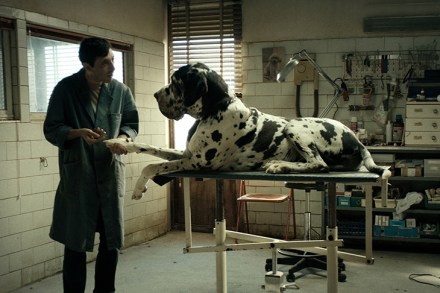
Matteo Garrone’s Dogman, which is Italy’s entry for the foreign language Oscar next year, is bleak, unflinching, oppressive, masculine (very), violent (shockingly) and basically everything you’d expect me to hate. Except I didn’t. It is out of the ordinary. It has a magical central performance. It is tense, as you wait for the little man to face down the big man, if he does. Plus there are lots of lovely dogs, which always helps, and none are harmed. Aside, that is, from the yapping chihuahua thrown into a freezer to shut it up. So there is that, too.

The subtly savage world of filmmaker Ruben Ostlund

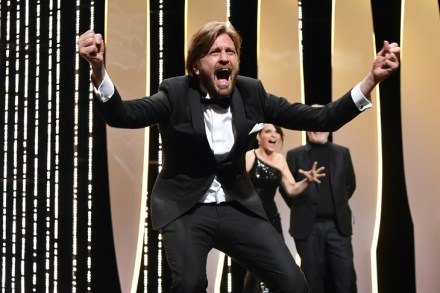
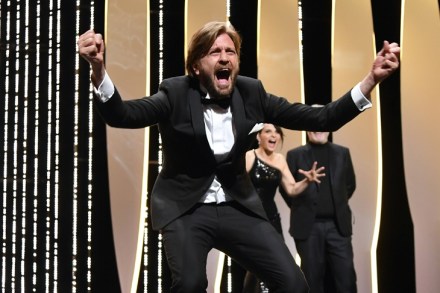
There is a culty YouTube video shot three years ago on the laptop camera of Ruben Ostlund. It shows the film director listening live as the nominations for the Academy Awards are announced from Los Angeles. The tension mounts as they approach the foreign film category. Alas, Force Majeure from Sweden isn’t nominated. Ostlund disappears off screen to sob and mewl. This year, there was a sequel to the video, but with a happier ending: the director’s latest film The Square was nominated for an Oscar. These mini-movies, like the rest of Ostlund’s oeuvre, are funny but subtly savage. He is a provocateur who trades in discomfort. You watch with your toes knotted. In Play (2011) a group of black teenagers inflict psychological torment on two white kids and (to complicate things) an Asian.

Wild at heart | 15 March 2018

There is a culty YouTube video shot three years ago on the laptop camera of Ruben Ostlund. It shows the film director listening live as the nominations for the Academy Awards are announced from Los Angeles. The tension mounts as they approach the foreign film category. Alas, Force Majeure from Sweden isn’t nominated. Ostlund disappears off screen to sob and mewl. This year, there was a sequel to the video, but with a happier ending: the director’s latest film The Square was nominated for an Oscar. These mini-movies, like the rest of Ostlund’s oeuvre, are funny but subtly savage. He is a provocateur who trades in discomfort. You watch with your toes knotted.

Bring back our bitchy celebs!

You would have to be quite odd not to approve of the sudden surge of solidarity amongst Hollywood stars of the female persuasion. (Though I did wonder, when Frances McDormand called so movingly during her Oscar-winner speech ‘Meryl, if you do it everyone else will!’ whether she meant ‘Suck up to Weinstein for years’ or ‘Give Polanski a standing ovation’ - because Streep certainly led the liberal sheep in those fields.) But still - Ancient Mariner on the oceans of objectionability that I am - I do miss the days when ‘actress’ was shorthand not for ‘whore’ but for ‘bitch.’ These days, female actors want to be seen to be building each other up rather than tearing each other down.

The 2018 Oscars were indulgent, overlong, and weirdly amateurish — again

It was always going to be difficult for this year’s Oscars to balance politics and entertainment, the sweeping declaration with the plunging cleavage. The host, Jimmy Kimmel, got through his opening routine well enough, and without showing his cleavage either, but the strain was already showing. The décor and the script were like a moral split-screen. We were told to celebrate ninety years of the Oscars, while disapproving of nine decades of exploitation and sleaze, some of it practised by people sitting in the audience at the Dolby Theater. What we got was easy jokes about Harvey Weinstein and Donald Trump, and pompous announcements that it was time to send the casting couch back to the props’ store. Considering the political mood, this was weak stuff.

Oscars 2018: and the winners are…

Tomorrow night, TV viewers will take to their couches for a night of Hollywood glamour, razzmatazz and gross hypocrisy. A bunch of vain halfwits who make millions waving guns around or taking off their clothes will preach to us about gun control and sexual morality. Yes, it’s the 493rd annual Oscar Awards. I have the envelope in my hand, ladies and gentlemen, and there’s enough coke in it to see us through the after-party after the after-party. And the Oscar goes to… Best Picture: ‘Harvey’s Fall’. Harvey is a piggish producer who hangs out with the Clintons and assaults women in hotel rooms. Suddenly, he vanishes. Ben Affleck plays his son, an alcoholic gambler, who tours the rehab facilities of Arizona looking for clues.

Hollywood stars have lost their shine

Reading the lip-smacking reports of the latest troubled celebrity relationships  (Jennifer Aniston and Justin Theroux definitely high and dry, Cheryl Cole and Liam Payne allegedly on the rocks) I couldn’t help musing that stars - and more specifically, the place they occupy in our mass psychological landscape - have very much changed since the first mass-market celebrities emerged. The film stars of the fledgling Hollywood truly were worshipped as higher beings; a tribe of Pathan Indians opened fire on a cinema when they were denied entry to a Greta Garbo film while women committed suicide when Valentino died. Their marriages were regarded as heavenly unions; their romantic sunderings as tragedies.