Oil

Going out on a fossil fuel bender

From our US edition

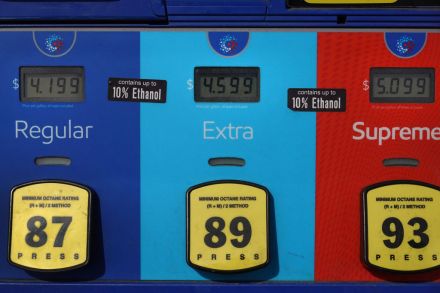
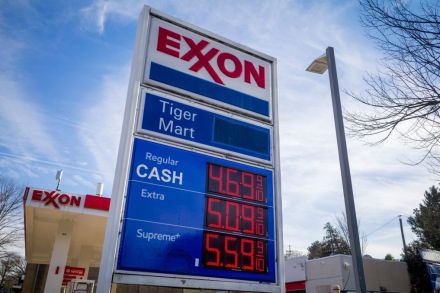
Covid rates are abating just in time for surging gas prices to eclipse the pandemic as our crisis du jour, and people from both sides of the political aisle are crying out in unison: something must be done! The current energy crisis debate consists of a few camps: one group professes that they can’t abide fossil fuels being used at all, while another can’t imagine living without them. The third group makes up the middle of the Venn diagram, and though a paradoxical state of mind, it contains the most members. Choosing a winner from among the prevailing arguments is no simple task.
oil

How much is Europe (still) paying Putin for oil?

When sanctions were imposed on Russia there was a big exception: Europe was still buying and paying for oil – leading to a bizarre situation. The West was doing everything it could to help Ukraine while still sending Putin hundreds of millions of dollars a day. But how much was that revenue worth to the Kremlin? As sanctions began to hit Russia, the price of Brent crude (the oil benchmark) soared to $130 a barrel, the highest since the 2008 financial crisis: an increase of over 90 per cent. It’s fallen since then but today it's still sitting between $107 and $115 dollars a barrel – well above where it had been weeks ago. But are these price rises making money for the Kremlin?

Boris is right to ask for Saudi oil

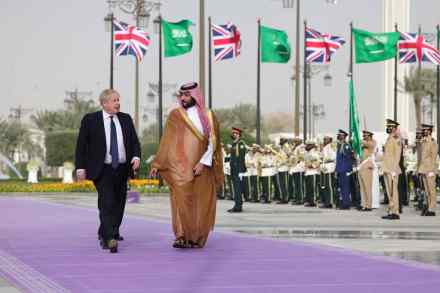
War and virtue don’t mix well, especially when it comes to the dirty business of energy supplies. As soon as the Ukraine situation turned nasty the UK government quietly did a turn on winding down North Sea gas, and may possibly do the same on fracking. And, having sworn off Russian hydrocarbons, Boris is now looking for urgent supplies. In doing so he is talking to some pretty doubtful regimes. Yesterday he visited Saudi Arabia and Abu Dhabi; he has also put out feelers to Qatar. Opposition parties have made hay. In Scotland, opposition to North Sea gas and ‘extreme fossil fuel ideology’ has come from both Nicola Sturgeon and her delightfully titled ‘minister for zero carbon buildings, active travel and tenants’ rights’, Patrick Harvie.

Biden is right: the crypto world needs to be controlled

President Biden’s executive order ‘Ensuring Responsible Development of Digital Assets’ won praise on all sides, an unfamiliar experience for one routinely dismissed these days as lacking the vigour or grip needed for presidential leadership. The order does little more than call for cross-government research into all things crypto. But in doing so it pleased bitcoin fanciers, NFT collectors and their ilk by acknowledging that their $3 trillion market is here to stay – while also giving comfort to sceptics who’d prefer to see crypto dealings brought under regulatory control like any other financial activity, rather than abandoned to the libertarian anarchy favoured by ardent cryptonauts.

The West has to bite its lip for Saudi oil

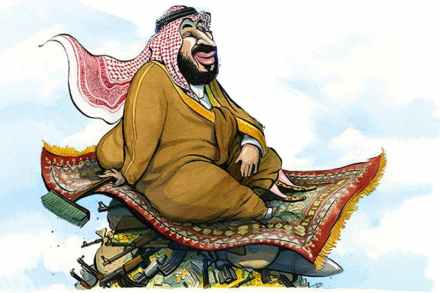
It would be ridiculous to claim that Boris Johnson’s visit to Saudi Arabia is not morally problematic. He is going to a country which held a mass execution for 81 people this weekend – a record number – and to visit a man who US intelligence blames for the brutal murder of the journalist Jamal Khashoggi. Yet, if the West wishes to reduce Vladimir Putin’s leverage – and stabilise the oil market – then it needs Saudi Arabia to pump more; no country has more spare capacity than Saudi Arabia, which could produce another 1.5 to 2 million barrels a day if it wanted to.

Biden must decide the environment’s price tag

From our US edition

Boris Johnson is considering doing something that should be a duty for every leader. In the wake of sanctions poised to disrupt the 8 percent of domestic oil and 18 percent of diesel the UK imports from Russia, Johnson is reportedly toying with the idea of putting his country first and on the road to self-sufficiency by lifting the UK’s moratorium on fracking. The British government banned hydraulic fracturing, or “fracking,” in 2019. Fracking is a method of extracting oil and natural gas by drilling deep underground and fracturing shale rock with a fluid mixture (99 percent water and sand) that allows fossil fuels to flow out, be captured, processed and used to myriad ends (including gasoline).

Don’t buy Biden’s ‘Putin price hike’

From our US edition

The Putin price hike. That’s the line the Biden administration is using to absolve itself of blame for higher gas prices. “Russia is one of the three largest oil producers in the world,” White House spokeswoman Jen Psaki said in a social media video meant to deflect criticism from President Joe Biden. “And the fact that they started this conflict, invaded a foreign country, and they are such a big producer of oil in the world is the reason why the global oil markets are disturbed and why gas prices are going up.” The administration banned Russian oil imports this week, with the House of Representatives approving a similar ban on Thursday.

Can Boris get the Saudis to pump more oil?

The oil price is up by more than 40 per cent since the start of the year. It is being driven up by the Russian invasion of Ukraine, the lack of investment in oil and turning the world economy on and off again: US production is still not back to pre-pandemic levels. In the immediate term, as I say in the Times today, pretty much the only way to bring the price down is to get Saudi Arabia – which has 1.5 to 2 million barrels a day of spare capacity – to pump more. The West’s relationship with Saudi Arabia has always been morally problematic.

Peru’s beauty has been a real curse

As the planet gets more and more ravaged, the mind can begin to glaze over at the cumulative general statistics — so much rainforest lost, so many glaciers melted, so much less oil left. Joseph Zárate’s masterly new book reminds us that when it comes to fighting on the front line of the environmental wars, it’s all in the detail, and that nothing is quite as simple as might at first appear. Some years ago I went to a remote area on the border between Peru and Bolivia where a meteorite had landed on a small village and caused mass poisoning. The hospitals had filled up both with the locals and with the police who had been sent to investigate. Given that meteorites are not known to contain toxic materials, this seemed curious to say the least.

‘Let them eat Teslas’

From our US edition

As gas prices soar, America’s elites have a message for the disgruntled masses: buy an electric vehicle, stupid. Transportation secretary Pete Buttigieg appeared at a press event with Vice President Kamala Harris on Monday where the dynamic duo lectured Americans on the importance of going green. Buttigieg proudly boasted from the podium, “Last month, we announced a $5 billion investment to build out a nationwide electric vehicle-charging network so that people from rural, to suburban, to urban communities can all benefit from the gas savings of driving an EV.” While some critics found the sermon tone-deaf, others applauded the secretary’s sentiment.

gas teslas

Is fracking the answer to the energy crisis?

I’ll approach the hot topic of a ban on Russian oil by way of personal anecdote: I’ve never been a soldier or a spook but I have twice found myself ensconced in secure Nato conference rooms. The first occasion was a group visit to the military alliance’s Brussels headquarters 42 years ago, when an unsmiling American defence expert introduced us to the concept of ‘Mutually Assured Destruction’ – whose acronym was the key to the tense but relatively stable Cold War stand-off. In simple terms, it would have been utter madness for either side to fire the first nuclear missile. The odds on that happening by Kremlin order or error today are by no means as long as they were in 1980.

Why would the Saudis bail out Biden?

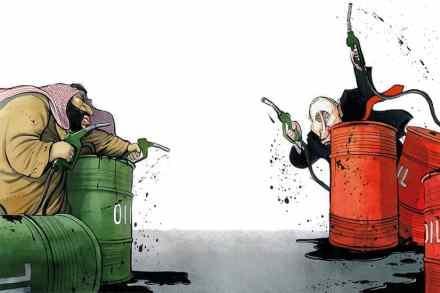
Is Saudi Arabia shunning Washington? Mohammed bin Salman has reportedly been refusing to phone Joe Biden, who wants the kingdom to turn on its oil taps as the West desperately seeks alternatives to the Russian energy market.  Riyadh – the world’s largest oil exporter – has so far failed to accommodate Washington’s pleas. Ahead of the Russian invasion in mid-February, the US asked the Opec+ cartel – of which Saudi Arabia is the most important member – to produce more oil to slow the already rising prices. Opec+ stood firm, and said they would increase production by 400,000 barrels a day in April, a rise agreed before the threat of a Russian invasion of Ukraine.

economy

Sanctions on Russia will shake the world economy for years

From our US edition

The war in Ukraine will dominate the news for the foreseeable future. But while the bombings will eventually cease, the economic consequences for the world have just begun. That’s because in an era of increasing interconnectedness, economic impacts don’t stop at borders. Most attention has been focused on the immediate impacts of sanctions on Russia, and they are significant. In the past, sanctions have proven largely ineffective at punishing foreign enemies. President Barack Obama, for example, failed to use them effectively in 2014 during the last Ukrainian-Russian dispute. But this time, the actions taken against Russia were largely unprecedented, with even traditionally neutral countries like Switzerland and Sweden calling for restrictions that are “as big as they can be.

For all its absurdity, it delivers the goods: BBC2’s Louis Theroux’s Forbidden America reviewed

In the latest episode of Louis Theroux’s Forbidden America, Louis asked a rapper called Broke Baby if ‘it’s important to keep it real’. ‘You have to play your role,’ replied Broke by way of apparent agreement. Given how stoned he was, this neat paradox — that you keep it real by pretending to — mightn’t have been wholly intended. Either way, however, it was hard not to apply it to Louis himself. More than 20 years into his TV career, does anybody know for sure whether his familiar schtick is genuine or faked? Certainly not, I’d suggest, Louis — whose elaborate stage-English courtesy, wide-eyed bemusement and spectacular naivety are now so practised as to have become completely ingrained.

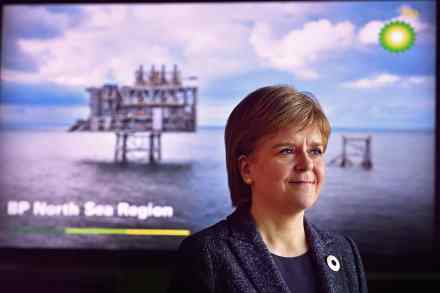
Does Nicola Sturgeon care more about oil revenue or climate change?

'Now, as I've hopefully made clear throughout all of my remarks, the North Sea will continue to produce oil for decades to come. It still contains up to 20 billion barrels of recoverable reserves. Our primary aim – and I want to underline and emphasis this – our primary aim is to maximise economic recovery of those reserves.' The words are from a speech made in June 2017, a few months after the Paris Agreement that aimed to limit climate change came into effect. A speech by a pro-oil Conservative, or perhaps the head of an industry group working on behalf of the oil sector? No. They are, in fact, the words of First Minister Nicola Sturgeon speaking at the Oil and Gas UK Conference that year.

Are we trapped in an inflationary spiral?

Are we heading for a 1970s-style inflationary spiral? Not according to Catherine Mann, former chief economist at Citigroup, who argues that we are now less exposed to fluctuations in oil prices than we were then. She also makes the case that businesses are more reluctant to put up prices and that the link between inflation and wages is weaker than it was in the years of high inflation when wages often rose three or four times a year and prices in the shops were jacked up more frequently than now. Her opinion matters because she is the latest recruit to the Bank of England’s Monetary Policy Committee, which is charged with setting interest rates to try to keep inflation within set limits.

Trump sealed the deal last night

From our US edition

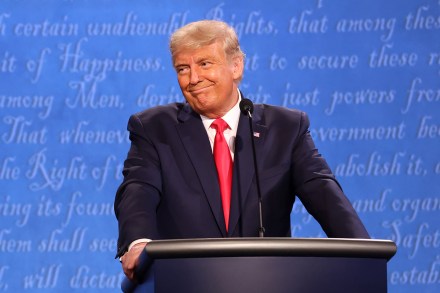
First, let me pay brief homage to Kristen Welker, moderator of Thursday night’s debate between Donald Trump and Joe Biden. A White House correspondent for NBC, she is pretty clearly not an enthusiast for President Trump. But unlike the wretched Chris Wallace, she did not make the debate a two-versus-one shouting match against the President. And unlike Steve Scully, who was scheduled to moderate the canceled second debate, she did not covertly consult with one of the President’s enemies and then lie about it when exposed.

trump

Could President Trump lose the oil war?

From our US edition

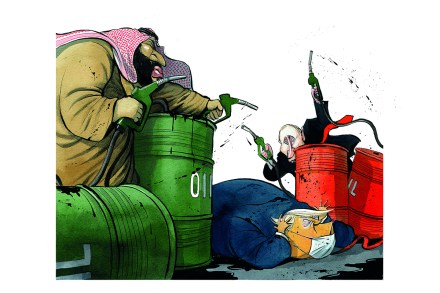
In a cover story for The Spectator that appeared just after Saudi Arabia launched an oil war against Russia in March, I wrote: 'One wonders how Donald Trump — who hates personal disloyalty more than anything — will react when he wakes up to the fact that the Saudi leader he has stuck with through thick and thin is now out to destroy the domestic industry Trump is most proud of.' Well, now we know. By the first week of April, Trump was so concerned about the impact of dramatically lower prices on the domestic fracking industry that he called the Saudi leaders and gave them a stark ultimatum. Unless they pressured OPEC members to cut oil production, he would be powerless to stop lawmakers from passing legislation to withdraw US troops from the kingdom.

oil

Rishi Sunak must stick to his guns

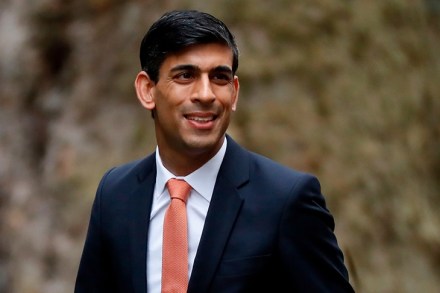
Was the Chancellor wrong to guarantee only 80 per cent, rather than 100, of ‘coronavirus business interruption loans’ to keep small- to medium-sized companies afloat? Rishi Sunak’s announcement this week of fully guaranteed micro-loans for the smallest companies seeking to borrow up to £50,000 was reported as a partial climbdown in the face of pressure from the CBI and many of his own MPs to do away with the on-risk slice of the larger scheme, which provides loans of up to £5 million through 40 accredited banks — but which many would-be borrowers have claimed is a bureaucratic nightmare. Readers certainly confirm that picture.

What is the US Navy doing in the Persian Gulf?

From our US edition

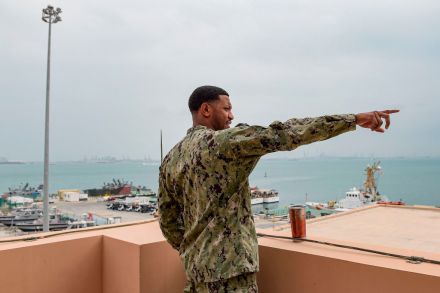
American alliances and security commitments tend to live on long after the world has changed. Many of our far flung military bases are legacies of a Cold War that ended decades ago. With the collapse of the Soviet Union, the Nato alliance became all but obsolete, so it eagerly embraced conflicts in the Balkans, Libya, Syria and other locations far from the Central European theater it was originally designed to protect. However, none of these holdover security commitments seem as absurd as US military operations in the Persian Gulf during a COVID-19 oil market.As recently as last month, the United States was keeping two aircraft carrier battle groups deployed near the Persian Gulf.

navy persian gulf