Norway

England and Norway should unite

Tonight, Erling Haaland and Harry Kane should be playing together, not against each other. Partially because Haaland is a Yorkshireman, born in Leeds, and this Nordic stuff is just an affectation, but also because England and Norway should not be different countries. With our combined control over the North Sea, we’d have fish and oil beyond our wildest dreams Back in 1066, as one is reminded by the big French cloth now sojourning at the British Museum, history took a wrong turning. Harald Hardrada should have bested Harold Godwinson at Stamford Bridge. Had he then stuffed Billie the Conqueror down in Hastings, a millennium of Anglo-Norwegian unity could and should have beckoned.

Why is the New York Times celebrating the slave-trading Vikings?

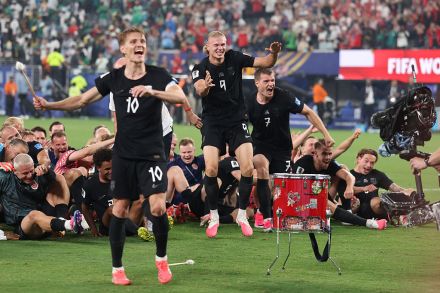
Norway plays the Ivory Coast tomorrow afternoon in the first knockout phase of the soccer World Cup, and one suspects the New York Times will be backing the Norsemen. The Gray Lady has gone gaga for Norway’s "Viking Row," a synchronized routine where fans mime the rowing of a Viking longboat to the bang of a drum. It’s caught on among the Norwegian players as well as politicians back in Norway, who performed the row in parliament last week. For the last two weeks the NYT has been publishing breathless pieces about the zany Norwegians and their Viking antics. “The 'Viking Row' is in full flow” was one headline on June 18; five days later they described how it "has taken the World Cup by storm." And their editorial office from the sound of things.

vikings

Witty, lyrical and abstract: the art of Kurt Schwitters

Aged ten, Jennifer Potter moved to Ambleside in the Lake District and was soon aware that one of the giants of modern art, Kurt Schwitters (1887-1948), had lived there some years earlier. He was a German artist associated with Dadaism, the anarchic movement that ushered in Surrealism, who developed his own brand of anti-rational art called ‘Merz’. He assembled urban detritus into two or three dimensions (collages and objects). His work was witty, lyrical and abstract, but also organic. He called art ‘structure’ or ‘creative evidence’, as natural as a plant or a crystal, but reliant, too, on the action of the artist’s imagination. He was a large man, somewhat shambolic in appearance.

Meeting Karl Ove Knausgård

From our US edition

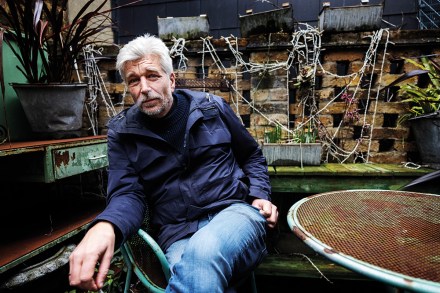
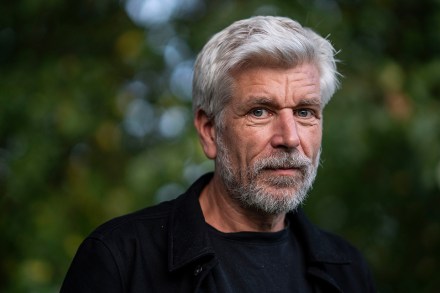
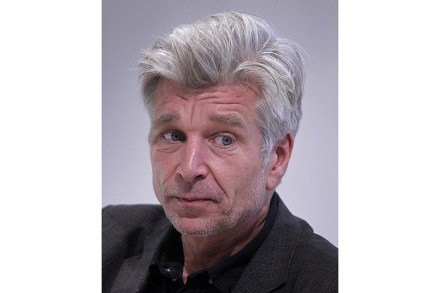
On a winter’s morning, outside the Three Lives bookstore in New York’s West Village, Karl Ove Knausgård has just finished signing copies of his latest novel, The School of Night. His features are familiar from the dustjackets – the gray-blue eyes, the grizzled beard – but he is surprisingly tall and his signature silver mane is now cropped short around the ears. Gone, too, are the cigarettes, traded for a vape. The School of Night is the fourth novel in Knausgård’s “Morning Star” series. It takes its name from a secret society of Elizabethan poets and scientists, which included the explorer Sir Walter Raleigh and the play-wright Christopher Marlowe.

karl ove knausgård

Dark family secrets: Repetition, by Vigdis Hjorth, reviewed

‘Back then, of course, I didn’t know my parents were locked into an impossibility even greater than mine. That I was living in a crime scene.’ So writes the narrator 48 years after the strange events that unfold in this bitter, brief, shattering novel. But what was the crime? Is the narrator the victim? Is her controlling mother’s hysteria over perfectly normal adolescent exploits explained by the fact that the father had abused his daughter? Is the narrator in truth Vigdis Hjorth? And is this book then the Norwegian novelist’s harrowing memoir? Is autofiction really fact in a cunning mask? Is all fiction waiting to be decoded into reality? Like the police, Hjorth doesn’t do answers.

You will feel nothing: The Worst Person in the World reviewed

The Worst Person in the World is a Norwegian film that has made a big splash. To date, its star (Renate Reinsve) has won Best Actress at Cannes and it has been nominated for two Oscars (Best Original Screenplay and Best International Feature Film). It has also attracted rave reviews. I can now only conclude: I must be the Hardest to Please Person in the World as I can’t fathom what all the fuss is about. It’s not atrocious. It’s not Batman. But it’s nothing special. And until I read that it is a ‘romantic comedy’ I hadn’t realised it was a comedy at all. Perhaps I am also afflicted with the Worst Sense of Humour in the World?

Is Norway about to take a step closer to joining the EU?

This weekend in Oslo politicians and activists from Norway’s conservative party, Høyre, will meet to confirm their new leader, Ine Eriksen Søreide. This is not just a vote to further the prospects of the next generation of centre-right leaders but – due to a rare alignment of domestic and geopolitical conditions – the potential starting point for a renewed push towards Norway joining the European Union (EU). Formerly Norway's minister of foreign affairs, Søreide is a committed Europhile. She has been unambiguous on EU membership, saying Høyre is ‘clearly a yes party’.  It is perhaps just a peculiar coincidence that has left several North Sea powers outside the EU.

Greenland and the new space race

From our US edition

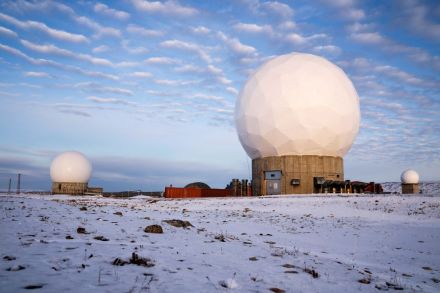
Donald Trump’s desire for Greenland is not just about access to oil, minerals and control of the new strategic and commercial corridors opening in the region. It’s also about data. Specifically, the most important data in the world. For decades, Pituffik Space Base – formerly Thule – in Greenland has been central to US space defense and Arctic strategy. It’s the US military’s only base above the Arctic Circle and their most northerly deep-water port and airstrip. It’s home to the 12th Space Warning Squadron. Its massive AN/FPS-132 radar has 240 degrees of coverage surveying the Arctic Ocean and Russia’s northern coast, especially the Kola peninsula where it has concentrated its strategic nuclear weapons.

greenland

The serious business of games: Seven, by Joanna Kavenna, reviewed

Joanna Kavenna is very serious about games. Her novels have a certain playful quality, even her debut Inglorious, where the humour and allusions are Mittel-european. More markedly ludic are her Lewis Carroll-esque fantasy about quantum physics, A Field Guide to Getting Lost and the Philip K. Dickish tech-dystopia of Zed. In Seven, however, it’s not just the style but the subject. As if to make clear that games are neither childish nor mere distractions, there is a pointed reference to Johan Huizinga’s study Homo Ludens¸ published on the eve of the second world war. The narrator here is working for a formidable philosopher in Oslo, whose current project is entitled ‘Thinking outside the Box about Thinking outside the Box’. (‘I’m serious,’ the narrator archly notes.

Owen Matthews, James Heale, Francis Pike, Christian House and Mark Mason

32 min listen

On this week’s Spectator Out Loud: Owen Matthews argues that Turkish President Erdogan’s position is starting to look shaky (1:19); James Heale examines the new party of the posh: the Lib Dems (7:51); Francis Pike highlights the danger Chinese hypersonic missiles pose to the US navy (13:54); Christian House highlights Norway’s occupation during the Second World War, as he reviews Robert Ferguson’s book Norway’s War (22:01); and, Mark Mason provides his notes on coins (28:18).  Produced and presented by Patrick Gibbons.

Norway’s eccentric royals make Britain’s look mundane

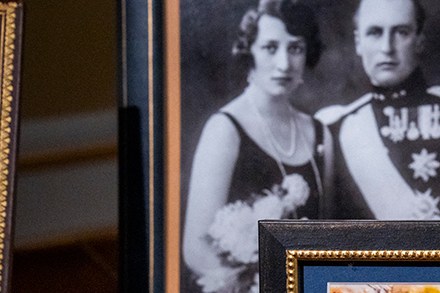
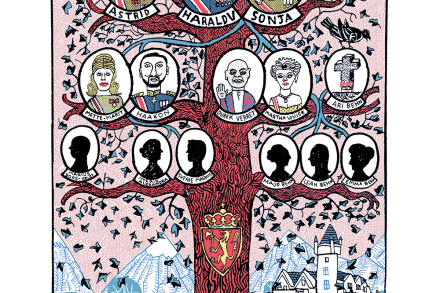
It’s not hard to see why the 93-year-old, wheelchair-bound Princess Astrid of Norway might feel that now is the moment to remind Norwegians ‘I can still be useful for something’, as she did in a rare interview last month. The Princess, who is the sister of 88-year-old King Harald, was awarded an honorary pension by the government two decades ago; last year, her official diary shrank to 20 engagements. But 2024 was not kind to Norway’s ruling house. More than once, the royal family was reduced to a single working member: Harald’s heir, Crown Prince Haakon. Norway’s monarchy, once notable for its remarkable popularity, is now beset by crises, including ill health, criminal proceedings and Meghan-and-Harry-style spoke-in-the-wheels stuff.

A winter’s tale: Brightly Shining, by Ingvild Rishoi, reviewed

With Christmas only just gone, I hope it’s not too late to recommend Ingvild Rishoi’s bittersweet seasonal novella – a bestseller in Norway which now comes into English in Caroline Waight’s crisp and fluent prose. Here’s a child’s-eye story about adult griefs and troubles which uses dramatic irony to consistent effect; a skinny little narrative halfway to being a fable which nevertheless keeps its roots in reality, with mobile phones, Frosties, casual swearing, the workings of child protection services and the logistics and microeconomics of the Christmas tree business. The narrator, ten-year-old Ronja, and her teenage sister Melissa are growing up in Oslo with their alcoholic single dad. Things are pretty bleak.

A dark satanic cult: The Third Realm, by Karl Ove Knausgaard, reviewed

I finished reading the third volume of Karl Ove Knausgaard’s latest series – no longer a trilogy, perhaps a sextet – in three days. The Third Realm is as unsettling, disturbing and riveting as the previous instalments, and I was even disappointed that it came in at a mere 500 pages – considerably shorter than the others. But all three books are less dense than those in his celebrated My Struggle series. There is a lot of dialogue, and Knausgaard’s skill in capturing conversation makes his characters spring vividly from the page. Ordinary failings, such as insecurity, jealousy, duplicity, lust and irritation, are subtly conveyed through a surly comment, a fleeting mutinous thought, a blurted accusation, a smooth lie.

The cast mistake screaming for comedy: Cockfosters, at Turbine Theatre, reviewed

The Turbine Theatre is a newish venue beneath the railway arches of Grosvenor Bridge in Battersea. The comfy auditorium is furnished with 94 cinema seats and the only snag is the scent of mildew clinging to the plasterwork. Overhead, the rumbling commuter trains create the perfect soundscape for Cockfosters, a zany rom-com set on the Tube. Two travellers meet by accident on a Piccadilly line service departing from Heathrow Terminal 3. James is a nerdy public-school reject who spots a fellow traveller, Victoria, struggling to shift three monster suitcases onto the train. Obeying Tube etiquette, he makes no attempt to help her and they sit in adjoining seats without acknowledging each other. Beside them are two passengers engrossed in royal biographies.

We must never lose the treasured Orkneys

When, last summer, a group of Orcadians declared they’d like to leave the UK and join Norway, it became clear just how little most of us in the south understand Orkney. Friends who know I go there often ask me where it is (somewhere near the Hebrides?), how many Orkney islands there are, and whether they are mountainous or flat. As Peter Marshall explains at the start of this astonishing tour de force, the 70-odd Orkney islands lie just 25 miles north of Scotland, separated from the mainland by the Pentland Firth – the point, he says, at which ‘the North Sea meets the Atlantic, a place of hidden, treacherous whirlpools, and one of the world’s most powerful tidal currents’.

Why did Jon Fosse win the Nobel Prize for literature? It’s baffling.

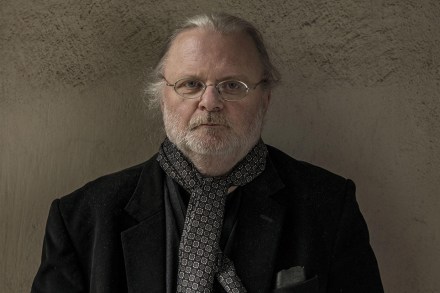
The Nobel Prize for Literature this year was awarded to the Norwegian novelist and playwright Jon Fosse (pictured). He has long been admired by anyone in the literary world keen to advertise their seriousness. The Canadian critic Randy Boyagoda, writing of Fosse’s Septology in the New York Times, said that he’d ‘come into awe and reverence myself for idiosyncratic forms of immense metaphysical fortitude’. The technique is to bury statements of mystic vision or horror in piles of mostly tiny and uninteresting events Fosse is published in Britain by Fitzcarraldo Editions, that elegant firm bringing all sorts of high-minded writers to our attention in matchy-matchy formats.

Rising star: The Wolves of Eternity, by Karl Ove Knausgaard, reviewed

The Wolves of Eternity is the second volume in Karl Ove Knausgaard’s trilogy which began with The Morning Star, but is that book’s prequel. The Morning Star examined events in the lives of various narrators at the time of the appearance of a bright new celestial body, bringing uncharacteristic heat and luminosity to Norway. It read like a shiver-inducing drama penned by a combination of Phil Redmond, Irvine Welsh and Stephen King. Part of its genius lay in fleshing out the characters by expressing the ugly thoughts we all keep repressed: irritation with over-familiar strangers; frustration with lovers; the thunderbolt of lust; and boundaries and the ways they are breached. The Wolves of Eternity is written in the same immersive style, though the characters are different.

Oslo Freedom Forum: where dissidents blow off steam

From our US edition

It was on my third glass of James Bond’s favorite Champagne, Bollinger, that I suddenly remembered why I was here in Norway. “I’m going undercover in Russia next week,” a woman told me. I can’t remember her name — and even if I did I wouldn’t tell you. I wished her luck; she looked confused. “I’ve done worse,” she said. This wasn’t her first rodeo that could potentially end in imprisonment or death.  I was at the Oslo Freedom Forum, an annual event put on by the Human Rights Foundation. It’s marketed as a global gathering of human rights and pro-democracy activists.

oslo freedom forum

The fast and furious world of reindeer racing

Don’t ever ask a Sámi person how many reindeer he owns. It’s about as polite as asking someone in Britain how much cash he’s got in the bank. But enquire after the health of his reindeer, or which are the ‘stand-out’ specimens in his herd of between 300 and 1,000, and you will be fine. In fact, get ready for a detailed response from someone whose Arctic community often still lives symbiotically with its animals.  Racing reindeer has been popular among Sámi people for hundreds of years, but began receiving wider attention in 2005, when the Midnight Sun Marathon organisers and the Sámi Valáštallan Lihttu sporting body arranged the first championships to be run in Tromsø in Norway.

Not enough snow on the slopes? Try Tromsø

Europe’s ‘winter heatwave’ has left large parts of the Alps and Pyrenees bereft of snow over the past fortnight, causing grassy pistes and cancelled ski holidays. So where to go for a guaranteed winter wonderland? Well, Tromsø in Norway is 350km north of the Arctic Circle, so reliably snowy. In an average winter, it sees 160 days with at least 25cm of snow on the ground – and at the moment locals are having to dig out their cars. This small yet sophisticated city on the periphery of continental Europe is well worth a trip, especially if you’re after some wintry pursuits a little less high octane than downhill skiing.