Norway

The power of song

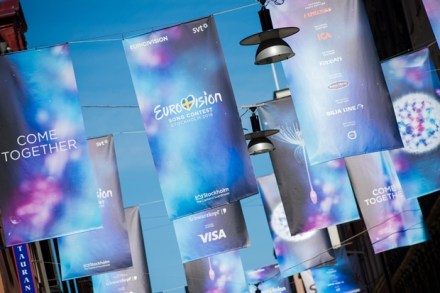
You might not think that the Eurovision Song Contest (screened live from Stockholm tonight) could have any connection with how we might choose to vote in the coming referendum. Surely it’s just a string of naff pop songs stuck together with fake glitter and a lot of false jollity? The songs are uniformly terrible, the show so overproduced it’s impossible not to mock its grandiosity, the idea that it conjures up the meaning of Europe laughably misplaced. But in a programme for the World Service that caught my attention because it sounded so counterintuitive, Nicola Clase, head of mission at the Swedish embassy in London, tried to persuade us otherwise.

Long life | 23 March 2016

Apart from the right to life, liberty and the pursuit of happiness, I’ve never known what my human rights are supposed to be. Presumably they include the right to go about my daily business without being attacked, insulted or otherwise abused. But there are many grey areas. Are sudden loud noises or disgusting smells violations of my human rights? And what about the deafening mirthless laughter that I have to endure in British pubs? Perhaps my human rights are changing with age. Am I, at 76, entitled to expect an offer of a seat on a crowded Tube train? Is it my right that somebody should help me with my suitcase when I am carrying it upstairs? I don’t know. Nor do I care. But some people care very much about the deprivation of rights that they believe to be theirs.

Are Anders Breivik’s human rights really being contravened, or is it simply attention seeking?

Anders Behring Breivik – the Norwegian extremist who killed 77 people in 2011 – has for the last few days been involved in a human rights trial in his prison in the south of Norway. Many would argue that, for a person in jail, he has a fairly cushy life – particularly given his crime. He is allowed to play video games, read newspapers and have access to a computer, and also has access to three cells, as well as an outside area. He has also been allowed to take university courses at the country’s main university, the University of Oslo, and took part in the prison’s Christmas gingerbread-baking competition. He is not, however, allowed to communicate with other prisoners, and his letters are all monitored and censored. So what more does he want?

Greedy greenies

‘We have a problem. Yes. At the wind farm.’ Any conspiracy thriller with lines like that has definitely got my vote. Possibly most of you are unaware of this, because it’s not something I talk about often, but I happen to be not too fond of the things I call bat-chomping, bird-slicing eco-crucifixes — nor of the charlatans, crooks, liars and parasites who make their living out of them. Indeed, whenever I try to think of an industry that’s worse than wind farms I keep coming unstuck. At least landmines serve a useful purpose for force protection; at least Albanian prostitutes make a few men very happy.

Wonderful waffle

It is hard to explain the contents of Karl Ove Knausgaard’s vast series My Struggle because not much happens. Or rather: a lot of things almost happen. In these strange and unquantifiable books, which feel like a spiritual autobiography but read like trashy fiction, Knausgaard recounts his ambiguous relationships with his brother and parents and wives; he describes terrible-sounding meals which he cooks (he eats a lot of pasta with dubious sauces) and the rambling, incomplete conversations he has with acquaintances. He discusses books he has read and books he would like to write. He goes out, meets girls, gets drunk, feels sorry for himself, and then goes back to his desk.

Brexit won’t mean more expensive flights for Brits. Here’s why.

We’ve been warned that Brexit could spell the end of cheap travel. But is it really true that Britain voting out of Europe would hit holidaymakers in the pocket? Easyjet’s boss Dame Carolyn McCall said before that Brexit ‘wouldn’t be good for Britain’. And in a company prospectus, the airline warned this year that if Britain votes out in the EU referendum in June, then it could have a ‘material adverse effect’ on the budget airline. But does this hold up to scrutiny? Easyjet says that: ‘The outcome of this decision (in the referendum) could have a material adverse effect on easyJet’s financial condition and results of operations.’ Obviously for passengers, bad financial conditions for a company mean rising ticket prices.

‘In’ trouble

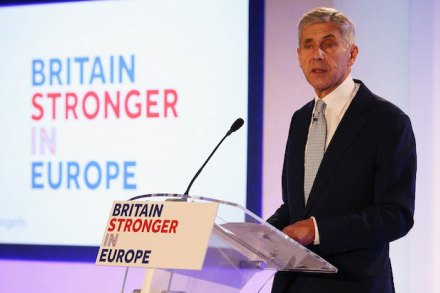
David Cameron wants to get the European Union referendum over with quickly — and understandably so. Things are still going well for him, and his political opposition is in disarray. The ‘in’ campaign will draw heavily upon his personal authority and the public is not (yet) fed up with him. Ideally, he wants to start campaigning next month — and many of his allies are at it already. Opinion polls show a large number of undecided voters. So this may very well be a campaign where a great many are open to persuasion and hoping for a high-quality debate. They will have been disappointed so far. The ‘in’ campaign has been up and running for months, and recently secured large donations from Goldman Sachs and other American megabanks.

Magnetic north

‘Edvard Munch, I cannot abide,’ wrote Nikolai Astrup in a letter to his friend Arne Giverholt. ‘Everything that he does is supposed to be so brilliant that it doesn’t have to be more than merely sketched.’ Near contemporaries, Munch and Astrup were both innovative and admired painters but while Munch is today one of the few household-name artists, thanks to one misunderstood and overrated painting, Astrup has been neglected by everyone outside Norway. Happily, this is a travesty soon to be rectified by Dulwich Picture Gallery, which next month stages the first major exhibition of Astrup’s work to be held in Britain. Unlike many other Norwegian painters, Munch included, Astrup did not abandon his native land to make a career further south.

Why does EU ‘in’ campaign insist on insulting voters’ intelligence?

David Cameron wants to get the European Union referendum over with quickly — and understandably so. Things are still going well for him, and his political opposition is in disarray. The ‘in’ campaign will draw heavily upon his personal authority and the public is not (yet) fed up with him. Ideally, he wants to start campaigning next month — and many of his allies are at it already. Opinion polls show a large number of undecided voters. So this may very well be a campaign where a great many are open to persuasion and hoping for a high-quality debate. They will have been disappointed so far. The ‘in’ campaign has been up and running for months, and recently secured large donations from Goldman Sachs and other American megabanks.

What Brexit looks like

‘So what’s your alternative?’ demand Euro-enthusiasts. ‘D’you want Britain to be like Norway? Or like Switzerland? Making cuckoo clocks? Is that what you want? Is it? Eh?’ The alternative to remaining in a structurally unsafe building is, of course, walking out; but I accept that this won’t quite do as an answer. Although staying in the EU is a greater risk than leaving — the migration and euro crises are deepening, and Britain is being dragged into them — change-aversion is deep in our genome, and we vote accordingly. Europhiles know that most referendums go the way of the status quo, which is why their campaign is based around conjuring inchoate fears of change. What is the alternative?

David Cameron’s ‘milk and honey’ intervention on the EU could be a mistake

David Cameron’s decision to wade into the EU debate by dismissing the Norway option and warning that there is no ‘milk and honey’ alternative to EU membership is one of the most significant political moments of this parliament. It is Cameron entering the referendum fray, and long before the renegotiation has been concluded. On one level, Cameron is correct. There are Eurosceptics who have advocated the Norway option. In his keynote speech on Europe last year, Owen Paterson — who is on the parliamentary planning committee of Vote Leave — declared: ‘This brings us to the only realistic option, which is to stay within the EEA agreement. The EEA is tailor made for this purpose and can be adopted by joining EFTA first.

Mr Cameron goes to Reykjavik

David Cameron is off to Iceland today to give a speech on Britain’s European Union membership and it’s a clear signal that he will eventually campaign for Britain to remain in. Until now, the Prime Minister has avoided talking about why Britain should 'Remain' or 'Leave' the EU — instead focusing on the importance of the renegotiations. His argument will be based on Iceland and Norway, who are members of the European Economic Area — which allows them to trade inside the single market. According comments from No.10 sources, Cameron will warn this means they have less control over decision making in Brussels and this kind of looser relationship would not be right for Britain.

What’s it like to talk at length to a serial killer?

‘I’ve never met a human being who doesn’t appreciate being listened to, being taken seriously,’ said Asbjorn Rachlew, the Norwegian homicide detective who one afternoon in the summer of 2011 found himself listening to Anders Breivik, who had just killed 77 people in a shoot-out on an island near Oslo. His job, Rachlew explained, was to get Breivik to talk, but not ‘by faking it, through manipulation etc.’. You have to show real concern, he said, to get the information you need, because you have to remember that suspects, too, like Breivik, are also traumatised. ‘Banging the table and screaming etc. doesn’t help communication...

Europe’s ever-looser union

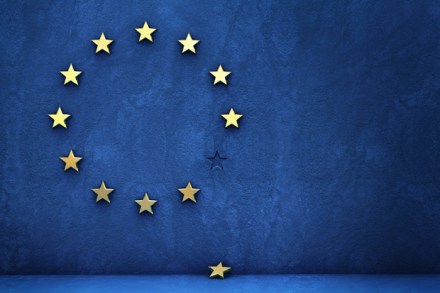
Europhiles have warned us for years of the dangers of Britain leaving the EU. But all the while a different spectre has crept up on their other flank: which is that even if the UK votes to stay in the EU in 2017, we might be one of the only countries left. It’s a radical thought, but if they’d like to consider it, the Europhiles should look at what is happening across the continent. Pro-EU countries are proving harder and harder to find. The eastern European countries may still be financial net receivers, but they are now having to weigh up their honey pot against the demands that come with it. A project which was meant to bring free movement of labour for themselves is now forcing them to take in thousands of migrants they do not want from across Africa and the Middle East.

Yvette Cooper needs to do more than just talk about Nordic models

Britain's Left has been indulging in worship of Scandinavian social democracy ever since the tide started ebbing on the New Labour project, most recently on prostitution reform and the SNP's vision for an independent Scotland. Thinking wistfully of Borgen beats the hard work of actually reinventing socialism, but I haven't heard so much excited talk about the 'Nordic Model' since I was at school and Helena Christensen was practically everywhere. Happy memories indeed. Last month Yvette Cooper announced that one of the pillars of her leadership bid would be childcare: campaign[ing] for universal childcare – as other countries, including Scandinavia, have.

Norway hasn’t given in to Islamophobia – but it has reacted

Under the headline ‘Norway didn’t give into Islamophobia, nor should France’, Owen Jones writes on the Guardian’s Comment is free website that Norway’s response to the Anders Breivik massacre in 2011 ‘was not retribution, revenge, clampdowns’, and that ‘the backlash [Breivik] surely craved never came’. Norway, he writes, 'stood strong'. But did it really? I’m half Norwegian. I adore the country, and I would – and do – fight its corner any day of the week (even against our Swede-loving editor). Norway certainly hasn’t given in to Islamophobia, but it has reacted. No matter what Owen Jones says, there have been some changes in the Norwegian public’s general attitudes.

Cognac and the Viking connection in la France profonde

The chestnut trees were still resplendent in yellow leaf along the banks of a misty autumn river on its glide through woodlands, pasture, comfortable towns — and vineyards. This was the Charente. Eighty years ago, before the lorry became dominant, it would not have been so peaceful. In those days, barges laden with barrels of Cognac made their way along this river to the coast to be shipped all over the world. Wine has been grown in Cognac for centuries and exported since the Middle Ages. But it was always inferior to the products of Bordeaux, to the south-west. Even so, its acidity and low alcohol content made it ideal for distillation once the Dutch discovered the technique. They called the result brandwejn: burnt wine, hence brandy.

We must never again let this 19th century Norwegian master slip into oblivion

You won’t have heard of Peder Balke. Yet this long-neglected painter from 19th-century Norway is now the subject of a solo show at the National Gallery. And it’s an absolute revelation. Walking around, I marvelled at the intensity of a man obsessed with revealing the frozen grandeur and elemental drama dominating his country’s northernmost shores. Like Turner, he was driven by a restless urge to travel, discovering landscapes that enlarged and transformed his vision of the world. In 1832 he took an arduous sea journey to the far north of Norway, ceaselessly sketching the rugged coast and mountains along the way. His excitement grew as he passed the primal North Cape, and the onset of a hurricane only increased Balke’s avid involvement.

Radek Sikorski’s diary: Show Putin what you think of him – eat a Polish apple

I made a welcome escape from sweltering Warsaw to the cloudy cool of Bodø, halfway up the coast of Norway, north of Iceland. Bodø’s harbour stays ice-free all year round only thanks to the Gulf Stream. The fjords bubble with whirlpools and offer some of the best cold-water scuba diving in the world. When the mist clears, the air in this visibly prosperous place has an Alpine, colour-enhancing quality. It’s my first time beyond the Arctic circle and the dusk through the night makes it hard to sleep. ‘Now imagine,’ says the wife over the phone from Washington, ‘what it was like to try to go to sleep in a Soviet-era hotel in Vorkuta, in late June, without curtains.

The making of a novelist

Karl Ove Knausgaard was eight months old when his family moved to the island of Tromøya; he left it aged 13, because of his father’s higher-grade teaching appointment on the mainland. As they drove over the bridge linking the island with the southern Norwegian port of Arendal, ‘it struck me with a huge sense of relief that I would never be returning, that… the houses and the places that disappeared behind me were also disappearing out of my life, for good.’ Only in a literal sense did they disappear. And the six-volume autobiographical novel sequence, My Struggle, on which Knausgaard embarked after the success of his first two books, demanded his coming to terms with his formative early milieu.