Nhs

The sinister new meaning of ‘support’

When I asked my husband why paramedical professions were given to remaking the language in strange ways, he replied in a threatening tone ‘Whadya mean?’ I think he was in denial. But it is undeniably true that where two or three trained counsellors or disability campaigners are gathered together, the first victim will be the English language. Who was it, after all, that came up with the phrase ‘issues around’? The latest craze is to urge the need for supporting people to do something, or even into something. So, on the NHS careers website, part of the job of a social worker may be to work  with offenders, ‘supervising them in the community and supporting them to find work’.

This strategy won Eurovision. It could also save your life

Oskar Morgenstern grew up in Vienna, John von Neumann in Budapest. Clearly the same Austro-Hungarian intellectual spirit which gave rise to Zur Theorie der Gesellschaftsspiele and their seminal joint work Theory of Games and Economic Behaviour is still alive in that part of the world, because the Austrians chose a bearded transvestite to represent them in the Eurovision song contest. Oskar and John would have been very proud. If you want a really childish explanation of game theory, it is that when everyone else goes around shouting ‘rock’, a few smart people should start to shout ‘paper’. And perhaps a few really smart and really brave people, figuring out this ‘paper’ strategy in advance, might even be emboldened to shout ‘scissors’.

An NHS tax is just another name for a tax rise

Finding a way to raise taxes that is popular is, for some on the centre-left, the Holy Grail. As the well connected Andrew Grice reports in The Independent today, a growing number of people on the Labour side are attracted to the idea of an NHS tax. Their logic is that the public value the NHS so wouldn’t mind paying more for it. They point out that when Gordon Brown raised National Insurance to fund extra spending on the health service there was none of the backlash you would normally expect to a tax rise. But the reality is that the introduction of a new NHS tax won’t be matched by tax cuts elsewhere. It will simply lead to people paying more tax overall. Demand on the NHS might well be about to rise.

David Cameron’s sacred cows exposed by Freakonomics

There's an interesting bit in the first chapter of Think Like a Freak, (Allen Lane, £12.99), from the Freakonomics duo, Steven D Levitt and Stephen J Dubner in which the two Steves get to meet David Cameron and a few dozen of the team just before he takes office. They are there to do what freethinkers do, viz, cut through the guff and muddled thinking that surrounds the big issues. Well, I can tell you for free that Mr Cameron is unlikely to sue for his name check. They observe breathlessly that "everything about him radiated competence and confidence. He looked to be exactly the sort of man whom deans at Eton and Oxford envision when they are first handed the boy.

PMQs sketch: Cameron deploys his resources skilfully

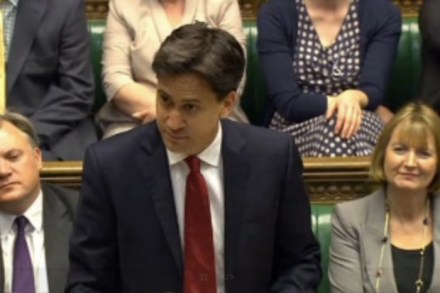
Miliband’s approval rating among Tory MPs has never been higher. They roared with joy as he got to his feet today. A foolish grin spread across his face, and his lips revealed a mouth full of showroom-white teeth. Then he began to giggle, which was unnerving. Either he had a deadly weapon up his sleeve. Or he was about to resign. ‘I welcome today’s fall in unemployment,’ he said. The Tory cheers could be heard across the river in Labour’s Lambeth heartland. Miliband has spent the last year on disaster-watch. But the promised calamities have inflicted no damage.  The slump? A memory. Inflation? Becalmed. The NHS? Don’t mention it. The bedroom tax? A dead issue.

E-cigarettes are making tobacco obsolete. So why ban them?

If somebody invented a pill that could cure a disease that kills five million people a year worldwide, 100,000 of them in this country, the medical powers that be would surely encourage it, pay for it, perhaps even make it compulsory. They certainly would not stand in its way. A relentless stream of data from around the world is showing that e-cigarettes are robbing tobacco companies of today’s customers — and cancer wards of their future patients. In Britain alone two million now use these devices regularly. In study after study, scientists are finding e-cigarettes to be effective at helping people quit, to show no signs of luring non-smokers into tobacco use and to be much safer than their noxious competitors.

The UK is a Christian country, whether the Left like it or not

As the crucifixion of Damian McBride over Easter in 2009 proves, the four-day news void can be gruesome for Downing Street, yet it seems congratulations are in order this year. No.10 managed to throw the chattering classes such a juicy bone of distraction that they all spent Easter trying to convince themselves that the UK is not a Christian country. The row was stoked by an assorted group of lefties with impeccable Labour, Liberal and Green credentials writing to the Telegraph, questioning why a PM may possibly wish to talk about religion. The irony that it was Easter, top and tailed by two bank holidays where their entire ‘non-Christian country’ shuts down for 96 hours in celebration of the resurrection of Christ was lost on these modern day Doubting Thomases.

As a doctor, I’d rather have HIV than diabetes

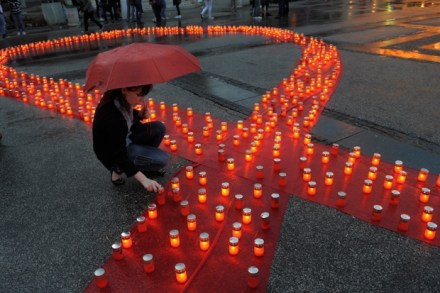
'There is now a deadly virus, which anyone can catch from sex with an infected person. If we’re not careful, the people who’ve died so far, will be just the tip of the iceberg… If you ignore Aids, it could be the death of you.’ It has been hailed as one of the most memorable health campaigns ever created. The message couldn’t have been clearer and people were petrified. For anyone over the age of 30, the ‘Iceberg’ and ‘Tombstone’ adverts — as they came to be known — with John Hurt’s menacing voice-over, still bring back a sense of crushing dread.

Dear Mary: My teenager insists on an NHS operation. What can I do?

Q. Our son, aged l6, has a medical condition which, although not life-threatening, requires surgery by a specialist to pre-empt it becoming lifestyle-threatening. The NHS waiting list is long. He has had private health insurance since birth and never yet used it but he refuses to jump the queue as he disapproves of ‘elitism and privilege’. We’ve explained that by taking up his right to go privately he would help another young man with the same condition move more quickly up the NHS list but to no avail. While we admire his ethical aspirations, my wife is having sleepless nights. — N.G., London SW1 A. First find a surgeon who performs the operation both privately and on the NHS.

Our leaders have betrayed the noble worker. Oh really?

In his essay on the ‘Peculiarities of the English’, E.P. Thompson gave his theoretical definition of class: When we speak of a class we are thinking of a very loosely defined body of people who share the same congeries of interests, social experiences, traditions and value-system, who have a disposition to behave as a class, to define themselves in their actions and in their consciousness in relation to other groups of people in class ways. But class itself is not a thing, it is a happening. Selina Todd has a snappier and more prosaic definition of the working class (‘The People’) as ‘a class of workers who depended on earning a living and were in that way distinguished from the rich who lived on the labour of others’.

We get the message: smoking is bad for you. Now leave fag packets alone

What form do you reckon the government’s consultation on cigarette packaging is going to take? Given that health minister Jane Ellison has said that the government’s intention is clear and the consultation short, I rather think it’s going to be like the gay marriage consultation – which ignored half a million objections to the thing in principle, and just focused on asking how to implement a decision already made. So this business of seeking out the views of ‘stakeholders’ is, I rather think, entirely cosmetic. I don’t know whether you could call me a stakeholder because I’m not exactly a smoker – I’ve never got the hang of inhaling – but I do like a nice cigarette packet.

Why not fine those who waste the NHS’s resources?

What do I want from the budget, I was asked. So I had a think. One plea was for no more pasty taxes, which I argued distracted from the more serious changes that would actually affect most people. So Osborne decided to cut the Bingo Tax, and we ended up with #bingogate. Someone obviously hadn't been paying attention at the back. But among what I like to think of as the more serious requests to the Chancellor, I suggested the implementation of a charge of, say, £10, each time a person missed an NHS appointment. The Chancellor didn't listen to me then, either. (Well, to be fair, why should he?) But I see that a think tank has released a study, co-authored by former Labour health minister Lord Warner, which recommends charging a £10 monthly fee for use of the NHS.

New NHS boss warns that health service is facing its biggest challenge

Simon Stevens is giving us the first glimpse of what he wants to do as the new chief executive of the NHS today. In a speech in Newcastle, he will warn that the service is facing its biggest challenge, and that a radical transformation of care is needed. Stevens will say: 'I know that for the NHS the stakes have never been higher. Service pressures are intensifying and longstanding problems are not going to disappear overnight.' So what are the radical changes that Stevens wants to set about working on? In this week's Spectator, former Labour adviser John McTernan profiles the new NHS boss, and explains what this radical reformer wants to do with the health service. He writes:- Stevens set out his vision for the NHS in an essay for a pamphlet published by the think-tank Reform.

Why Simon Stevens – more radical than most Tories – may save the NHS

In a valedictory interview, Sir David Nicholson was quite frank about the state of the health service that he has run for the last eight years. ‘In its current form,’ he declared, ‘the NHS is unsustainable.’ It is hard to imagine Simon Stevens, who takes over as NHS England chief executive this week, having to say that when he leaves. His friends know him as an experienced reformer, a policy expert and a radical. His CV causes some suspicion in Tory circles — he is a former adviser to Tony Blair (I’m also guilty in that respect) and was a co-author of the last Labour government’s health reforms — but that is precisely why he will be so valuable to David Cameron now.

Burning foetuses to heat hospitals: a perfect metaphor for modern Britain

By way of a metaphor for the way the NHS and, come to that, the law regards foetuses, you can’t really better the reality, viz, that foetal remains from abortions and miscarriages are being incinerated in NHS hospitals and possibly used to heat that hospital. If a foetus lives less than 13 weeks, it could, in Addenbrooke’s Hospital, for instance, be used as fuel as part of the hospital’s waste-to-energy schemes. And 13 weeks is just over three months’ gestation – the point at which wanted foetuses register as recognisably human on the scans that prospective parents take home and show their friends. Meanwhile, the unwanted foetuses, or the ones that die early, get dumped with the used disposable gloves, in the incinerator.

What I want in the Budget: penalties for those who miss NHS appointments

Every year the Budget comes and goes, amid a flurry of live blogging and urgent blog posts at The Spectator. And almost every year, the papers are full of the minutiae which make for entertaining headlines. So this year, I say: Please, no more pasty taxes.  They just lead to days and days of stupid headlines, which might be fun (for the first hour), but simply end up detracting from the more serious announcements; or rather, the ones that will actually affect most taxpayers. Anyway, moving on. For selfish reasons, I am entirely in favour of raising the basic income tax threshold. I know that the Tories and the Lib Dems have been squabbling over who it is that we have to thank for this proposal, but either way, thank you, and please continue.

In praise of those who have improved healthcare in Staffordshire

Last week, the House of Commons considered the vital matter of the Francis Report – one year on. It is quite difficult at this stage in the tragedy of Stafford hospital to recall how it all came about and the difficulties that those of us who experienced it had to endure, the patients and the victims in particular. There was complete and total resistance, a granite-like refusal, to having a proper look at what was going on. A tooth and nail battle had to be fought to get the Inquiry in the first place, under the Inquiries Act 2005. I was absolutely astonished that successive Secretaries of State completely refused, point-blank, to have such an inquiry in the case of Mid Staffordshire.

Spending on health harms your wealth

Much of the Budget debate next week will be devoted to the future growth rate of GDP and of total public spending; but there probably won’t be much attention paid to the impact of particular elements of public spending on growth. Yes, people (particularly well-paid consultants) talk about the merits of individual projects like HS2; but it seems to be an article of faith among politicians of all parties that some government functions result in more growth than others. In particular, many politicians unthinkingly assume that spending on infrastructure, education and healthcare necessarily improves the economic efficiency of both the public and private sectors. But is the conventional wisdom accurate?

The Early Access to Innovative Medicines scheme will make us healthier for longer

Imagine this: you take a routine trip to the doctors. Except it doesn’t turn out to be routine at all. Instead, the doctor tells you that you only have months to live. Worse still, there is no certified cure. There is a potential drug that could save your life, but it’s stuck in a regulatory tangle, waiting for approval which takes years. It might come on the market in a decade. But by then, of course, it will be too late for you. Ludicrous, surely? Yet that has been the dilemma facing too many over recent years, unable to get access to the drugs that could save their lives. Decades more of enjoyment, time with the grandchildren, a whole chunk of life wiped out when a cure could be sitting there unused.

Wales is a nightmare vision of Ed Miliband’s Britain

If politics was science, you would call Wales the ‘control’ group, for public service reform. Here is a country where Labour are the only game in town and a socialist philosophy which places a monopolistic state provider at the centre of health care and education reigns supreme – yes, even more supreme than the pupils and patients this system is designed to serve. In fact, in devolved Wales, Labour are running the public services as Ed Milliband would like to see them; a Labourite utopia of State supremacy, with none of the so-called evils of alternative providers getting in the way of the tight grip of the State. So how is this socialist utopia going, then? If a recent Question Time from Newport is anything to go by, not so good.