Nature

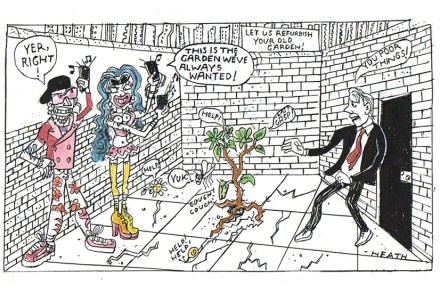
The strange death of the English garden

Gardening is dead. It had been ailing for a long time and it sometimes looked as though it might pull through. But I knew it had finally kicked the bucket when the last of the three patches of grass I used to be able to see behind my house was replaced with a plastic lawn. Then there was a ghastly death rattle: plastic ivy was draped over an electric gate which serves to let the owner’s car into the paved area formerly known as the front garden. And that came after the arrival of dozens of plastic balls in the neighbourhood. They are supposed to be imitations of Buxus sempervirens trimmed into a ball shape but their relentless perfection and over-vibrant colour means they don’t deceive anyone. They must be wonderfully low-maintenance.

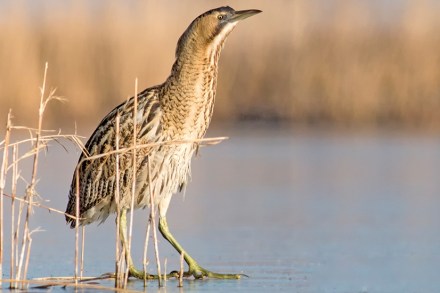
Why it’s boom time for bitterns

Bitterns are booming, both literally and metaphorically. These handsome brown birds from the heron family make a noise quite unlike anything else in Britain and we are lucky to be able to hear it. If there is such a thing as a birding bucket list then hearing a bittern’s ‘boom’ — the loudest bird call in the country — should be on it. Before the bittern starts booming he performs a warm-up ritual called grunting. He strengthens his throat muscles, which expand to turn his gullet into an echo chamber. His powerful muscles make up a fifth of his body weight and can propel the sound of his boom for more than three miles.

The strange magic of the mountain hare

The numbers of the dear old mountain hare in England are becoming perilously depleted. A researcher, Carlos Bedson, has suggested there may be only 2,500 left in the Peak District. Warmer weather seems to be finishing them off. It is time to appreciate them and their cousins, the brown hare, more and to look after them. I was in my thirties when I’d head up on to Saddleworth Moor with my father-in-law to watch the white-furred mountain hares. We didn’t say much, we just took in the old magic of those beautiful creatures. I’m not the only one to love hares. That great English poet and hymnodist William Cowper suffered from severe depression and many breakdowns. It was adopting three leverets as pets that began to turn the mental tide.

Virgil understood the great power of nature

‘Georgics’ are an ancient form of poetry about agriculture and the land. The term derives from Greek gê ‘land’ + ergon ‘work’ (cf. farmer George) and emphasises the necessity of working hard to counteract deprivation, build a nation and forge a civilised world. Virgil’s Georgics (29 bc) in four books are a supreme example of the genre and not without relevance to the modern ‘green’ agenda. Its opening outlines the subject matter: field crops and tilling the soil, viticulture, and the care and skill required to tend cows, sheep and bees.

In defence of dandelions

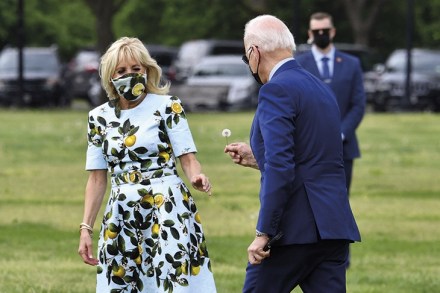
Dandelions are one of the cheeriest wild flowers. They are loved by children for their ‘clock’ seed heads, are entirely edible for humans and are a source of food for many insects and birds. And yet many gardeners go to great lengths to get rid of them. This year’s daffodils may have faded, but dandelions — their similarly coloured wild replacements — are in full swing, and it’s a vintage year for them. Road verges, meadows and lawns are covered in thousands of gold polka dots, with each plant bearing half a dozen blooms. They make a boring green sward far more interesting, and are — to my mind at least — as beautiful as the daffodils that are often planted in the same spots.

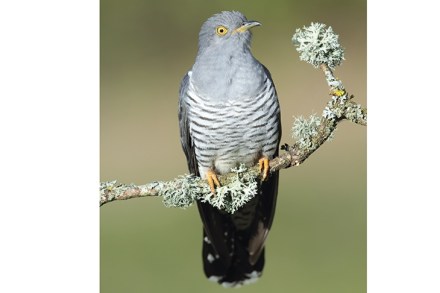
The cruelty and cunning of the cuckoo

St Tiburtius’ Day, on 14 April, is traditionally when you will hear the first cuckoo. Since at least the Middle Ages, cuckoos have been seen as heralds of spring. They are also often associated with romance, and yet they are some of the cruellest birds found in Britain. The adults arrive in this country at the end of March or the beginning of April and depart in late July or August. They return to central Africa and fly, either via Italy, resting near the River Po and continuing over the Sahara, or stopping in Spain before entering Africa from the far western end. They live mainly in and around the Congo rainforest and in similar habitats as far south as Angola. They come to Britain merely to mate.

Is the adder slithering towards extinction?

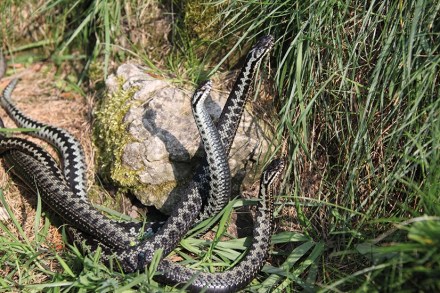
In early April, when the chiffchaff sings its drab little song in the leafless hawthorns, something is stirring in the dead bracken. Having spent the winter months underground, one of our most fascinating creatures slithers into the weak spring sunshine: the adder. The emerging adders haven’t eaten for six months, but food is not on their minds; it is the mating season. Rival males indulge in spectacular ritual combat, rearing up side by side and twisting and wrestling at great speed. After mating the snakes disperse and spend the summer in solitary pursuit of mice, voles, lizards, frogs and fledglings. Adders never use more energy than is necessary and spend a lot of their time basking.

Mother Nature is giving us her middle finger

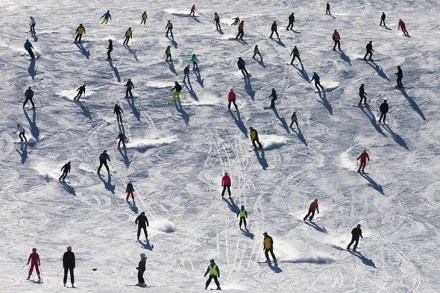
Gstaad I have never experienced such a long, continuous blizzard, and I’ve been coming here for 63 years. The ski lifts are closed, as are the hotels, and it’s been coming down for a week non-stop. My Portuguese handyman Fernando now lives on his snow plough, clearing the private road that leads to the house, as useless a task as trying to bail out the Titanic. By now I should be in London, enjoying my new rented house in Glebe Place. Instead I’m housebound and snowed in, a modern Prisoner of Zenda without the Ruritanian uniforms. My only worries are the possibility of an avalanche, and my son’s insistence that he ski every day. Nowadays, that boy simply ignores anything I say and drives away muttering about old people being scared.

It’s all about the blooms: eye-catching blossom to spot this spring

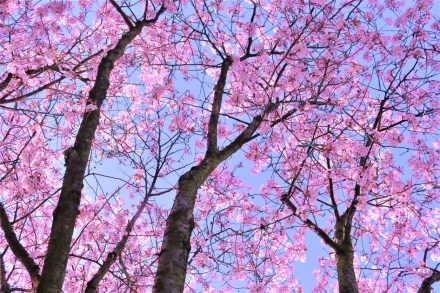
There is no finer sight in spring than a blossom tree. Planting one is, to my mind, a public service, as it will cheer generations of people plodding down your street, both with the blooms that appear on its branches, and with the confetti of petals thrown along the pavement. In the next few weeks, the streets are going to become incredibly well-dressed with blossom, and here are five to look out for in particular:  Mimosa, Acacia dealbata  This is already out in London, and my goodness, you can't miss it. It is the most vivid lemon yellow collection of little pompoms you can imagine, bursting out of beautiful ferny foliage.

Why egrets keep making headlines

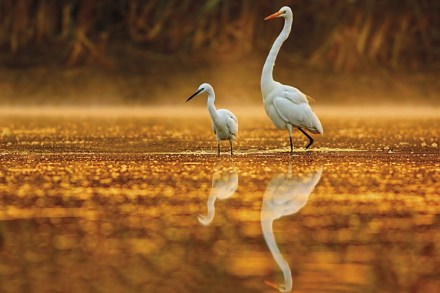
There’s an unwritten rule in newspaper journalism that any story about egrets must have one of two headlines. Either ‘no egrets’ if numbers are dropping or ‘egrets, we’ve had a few’ if they are booming. At the moment, fortunately, it’s the latter. The little egret (egretta garzetta) can be seen as something of a trailblazer. The first only nested successfully in England as recently as 1997, on Brownsea Island in Dorset, and there are now up to 1,000 pairs in the country, according to the RSPB. They compete for food with herons and cormorants on the Thames and even have been known to venture into cities and towns.

What Pliny the Elder and David Attenborough have in common

When it comes to natural history, Sir David Attenborough rules the airwaves. Pliny the Elder (d. ad 79) who, as general of the Roman fleet, ruled rather less compliant waves, composed a 37-volume Natural History 2,000 years ago, expressing exactly the same concerns about the relationship between man and nature. For Pliny, the earth was divine, and the word ‘god’ meant not some being with shape and form, but Natura, ‘Nature’. Man’s natura, however, was imperfecta, and as a consequence, though Romans were the supreme masters of the world, they and god/Nature were often in conflict. This was disastrous, Pliny argued, because Nature was providential, as even man’s abuse of it proved. Take man’s search for gold, silver, iron and gems.

Why the Chelsea Flower Show shake-up is good news

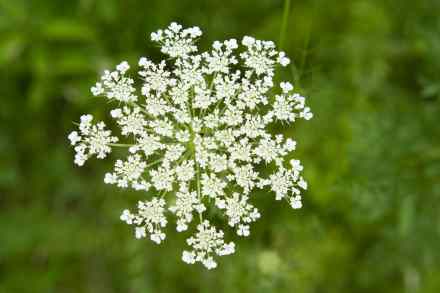
Is it really such a bad thing that the Chelsea Flower Show has been postponed to the autumn because of Covid?  Yes, we'll be missing out on the blousy, frothiness of early summer gardens that we see every year - not so many umbellifers, alliums or delphiniums - and yes, the Floral Pavilion will be strange without the heady scent of roses from the David Austin and Peter Beales stands. But the show will benefit enormously from a shake-up that forces designers to stop using the plants listed above until it seems there is nothing else you could possibly grow in your garden.

The ethics of eating octopus

Should the undoubted intelligence of octopuses change the way we treat them? This question has been asked a lot of late because of the documentary My Octopus Teacher. The film is about a year-long relationship between a man and an octopus, and it takes place in a kelp bed off South Africa. It celebrates the sensitivity, awareness and intelligence of the octopus. That’s a difficult concept. Octopuses — octopi is wrong because it’s not Latin and octopodes is insufferably pedantic — are molluscs. That’s the same phylum as slugs and snails and cockles and mussels. In other words, intelligence is not restricted to our own phylum of chordates or back-boned animals.

The ancients knew the value of the natural world

The ancients knew nothing about global warming, but they still reflected on the relationship between man and nature. In the absence of modern technology and with few sources of power (men, animals, wind and water), the ancients were limited in the use they could make of natural resources. Fire brought about the most radical change to nature’s offerings (cooking, pottery, smelting), with weaving, wood- and stone-working a close second. This could provide the farmer with all he needed, as Cato the Elder tells us: tunics, togas, blankets, shoes, iron tools, scythes, spades, mattocks, axes, carts, sledges, storage jars, pots, tiles, oil-mills, nails, buckets, oil-vessels, water-carriers, wine-urns, bronze vessels, etc.

The best wine since incarceration

The woodpecker jinked across the lawn like an especially cunning partridge. Its goal was a skilfully constructed bird table with wire surrounds, to provide safe feeding for finches, tits, woodpeckers and other small birds, while denying access to corvids, grey squirrels and raptors. A sparrow hawk regularly sweeps across the garden. The ‘sparrow’ element is misleading. This is an avian pocket-battleship, with not a molecule wasted in the pursuit of lethality. Sparrows? I have seen it feasting on a pigeon. It is a pity that real-life nature offers so little scope for sentimentality. Magpies are handsome creatures, but if you want songbirds, you will need a Larsen trap to control numbers. Cats seem at least as worthy of sentiment as dogs or children.

Is it too late to save Britain’s ash trees?

Once we wrote poems when we lost our trees. Now we just watch them rot. In 1820 John Clare was moved to mark the end of a single tree he had loved: ‘It hoples Withers droops & dies.’ In 2020, so many English trees are dying that it would take a library of Clares to record the casualties. This year, locked-down in Derbyshire, I have been watching skeletons amid the green, hoping that they will return to life. Almost all have. The last of the great field ashes are only just coming into leaf, scarred by late frosts and drought. A row of oaks I ride by most days has dead leaves that crunch in my fingers when I reach up from my horse. The frost got these too — but beneath the brown there are fresh shoots.

There’s no point in bishops – Covid has shown us so

It is a relief to parents that young children are allowed out a bit now as the length of the lockdown has wreaked havoc with tempers. Birthdays have been particularly difficult. Zoom parties, with every guest in their little on-screen box like stamps in an album, are a poor substitute for a roomful of overexcited kids eating jelly. My granddaughter was eight last week and at last could meet her best friend, who lives next door, in the new paddling pool. They have managed uncomplainingly via walkie-talkies through a window so this was a joyful reunion. But what about the other would-be dressed-up party guests, not to mention gift-bearers?

How John Constable got masterpiece after masterpiece out of a tiny corner of rural Suffolk

Before his marriage John Constable returned regularly in early summer to his native village of East Bergholt. When he wrote from there to his wife-to-be, Maria Bicknell, he almost always exclaimed that Suffolk was ‘in great beauty’. His enthusiasm was never more eloquent than on 22 June 1812, when he declared: ‘Nothing can exceed the beautiful appearance of the country at this time, its freshness, its amenity — the very breeze that passes the window is delightful, it has the voice of Nature.’ I often think about Constable (1776–1837) as I pace across the water meadows on my daily constitutional — partly because this too is an East Anglian landscape not unlike the one he was writing about: flat, leafy, watery, abounding in willows.

The intense pleasures of lockdown

I used to live in Mogadishu for months at a time, cooped up in compounds behind fortified walls. Venturing on to the streets meant a flak jacket, escort vehicle bristling with guns, chain-smoking as we zoomed through smashed districts, militias, ambushes and roadside bombs. Despite the incarceration, Somalia gave me some of my happiest memories. At home on the ranch in Kenya we often make a point of staying away from town for as long as possible. Our record is three months of no shops, offices, crowds or traffic — just cattle, pasture, birdsong and the rarest of visitors dropping by for a beer. And as a child in north Devon during the winter of 1978, I recall the local constable escorting me across fields in a blizzard to my mother’s arms.

Why whales sing: it’s a question of culture

A few years ago I was sitting in Carl Safina’s yard on Long Island, drinking tea, occasionally patting a dog who was lying at my feet. Safina was talking about the magnanimity of wolves. A wolf in Yellowstone National Park, known as Twenty-One, never lost a fight, and unlike most wolves, never killed a vanquished opponent. Park rangers called him the perfect wolf. ‘When a human releases a vanquished opponent rather than killing them, in the eyes of onlookers the vanquished still loses status but the victor seems all the more impressive,’ Safina said. ‘Onlookers might feel it would be desirable to follow such a person, so strong yet inclined towards forbearance.’ Safina is not some woo-woo merchant, or a new-world mist-dweller. He does proper science.