Music

Charles Ives was a composer before his time

From our US edition

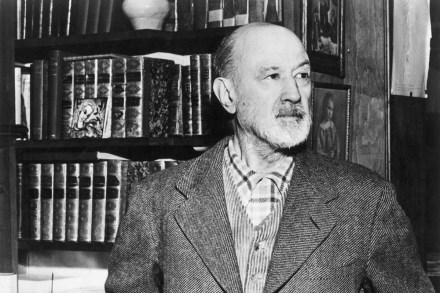
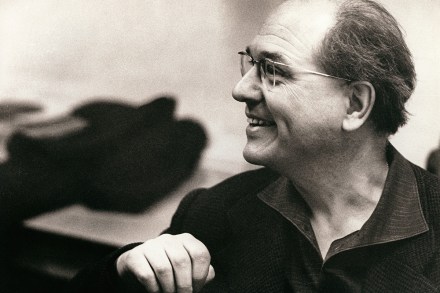
In February 1951, Leonard Bernstein led the New York Philharmonic through the première of a symphony by an American composer unknown at Carnegie Hall. The composer in question was Charles Ives, by then too frail to attend in person. He listened from home when the concert was broadcast a few weeks later. An experimenter by instinct, Ives’s work had already proved an inspiration to a younger generation of radical American composers including John Cage, Lou Harrison and Morton Feldman. But that Ives listened from afar to the première, at long last, of his Second Symphony – completed in 1902 – was symbolic of the distance he maintained from America’s classical mainstream.

Ives
Dylan

My Bob Dylan pilgrimage

From our US edition

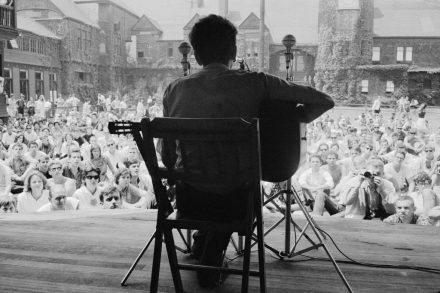
On March 25, Bob Dylan delivered his first performance of the year in Tulsa, Oklahoma, as his “Rough and Rowdy Ways” tour enters its fourth year running. At 83 years old, there was no guarantee Dylan would keep performing live. At the start of the year, there were no new dates listed on his website. Then, in early January, one performance popped up. The show was to be held at the Tulsa Theater – an important location for the performer, as the city is home to the Bob Dylan Center, located in the downtown art district. Tulsa also has a reputation as a musical destination through which almost every legendary folk, rock, country and blues artist has toured. Dylan is no exception.

The mystical masterpiece from Stalag VIII-A

Olivier Messiaen was a French composer steeped in the solitude and ecstasy of Catholic mysticism: everything he wrote was dedicated to the greater glory of God. He was in thrall to the liturgical works of Stravinsky, but also to the percussive cling-clang of Javanese gamelan music and other eastern sonorities. His thirst for ‘un-French’ music sometimes put him at loggerheads with the Paris old guard who found him as fandangled and foreign as a pagoda. His ability to create new possibilities in sound was of course what made him modern. Messiaen was scarcely 20 when he wrote his hauntingly strange Préludes for piano in 1929 and the no less mysterious orchestral suite Les offrandes oubliées (Forgotten Offerings).

The world reveres British music

I have just returned from the lovely Italian city of Rimini, where 300 local singers had gathered for a weekend of choral music under my direction, culminating in a concert in the grand Teatro. As they sang amid the chandeliers, gilded cherubs and plush velvet, I reflected that in all the recent discussion about tariffs, no one has yet highlighted the importance of music as a British export. As a representative of our choral tradition, I was treated with something like the reverence that would be accorded to a Brazilian footballer or a Russian chess player. My host, the regional choral supremo, knew all about our British choirs. His CD collection was filled with British choral recordings and he had just hosted the Tallis Scholars for a packed-out concert.

Recollections of a 1980s indie kid

It is the evening of Monday 23 September 1985. A band called the June Brides are playing a free gig in the bar of Manchester Polytechnic’s Students Union, the Mandela Building (of course) on Oxford Road. I find myself among the audience of freshers’ week first-year undergraduates. I am 18, a small-town boy who’s been living in a big city for just 48 hours.  The place is half empty, the audience awkward. But I am quite taken with the band and the following day go to Piccadilly Records to buy their just-released mini album, There Are Eight Million Stories. The US novelist Dave Eggers would later recall being a teenage Anglophile indie fan in the suburbs of Chicago and cycling 20 miles to get this record that autumn. I could just get the 85 bus from Chorlton.

How I fell for 78s

I recently made a programme about the British jazz pioneer Arthur Briggs. Yes, I know. Arthur who? The much-missed Jeremy Clarke told me: ‘If only he’d been called Arthur “Big-Boy” Briggs or “Honeydripper” Briggs, maybe things would have turned out differently.’ As it was, his name always suggested a painter-decorator from Edwardian Brixton rather than one of the hottest cornetists on the prewar jazz scene. Briggs was a Caribbean child of empire who, as a teenager, fell in with makers of the new music in New York, then after the first world war helped bring jazz across to Europe.

What music did our monarchs like?

Royal warrant The King revealed that among his favourite pieces of music were the 1980s hits ‘Upside Down’ by Diana Ross and ‘The Loco-motion’ by Kylie Minogue. What music did other monarchs like? – Elizabeth II was reported to have been partial to ‘Cheek to Cheek’ by Fred Astaire, ‘The White Cliffs of Dover’ by Vera Lynn and ‘Sing’ by Gary Barlow and Andrew Lloyd Webber, written to celebrate her Diamond Jubilee. – George V attended a command performance by Louis Armstrong in 1932, hinting at a fondness for jazz. – Edward VII knighted Sir Edward Elgar. Avocado blight Alan Titchmarsh implored people to eat cornflakes for breakfast rather than avocado on toast, on account of the ecological damage wrought.

Why can’t pop stars just stick to their hits?

Any old fossil like me keen on harrumphing that popular music isn’t what it used to be will have taken a certain snarky pleasure on reading that, last year, no British act figured in the world’s top ten singles or albums for the first time since 2003. To be fair, 2003 wasn’t the best year for chart music ever; Dido had the top-selling album – going 6x platinum – with Justin Timberlake, Christina Aguilera, Daniel Bedingfield and Norah Jones completing the top five. The bestselling single of 2003 was the Black Eyed Peas’ ‘Where is the Love?’, followed by ‘Spirit in the Sky’ by Gareth Gates and the Kumars, R. Kelly’s ‘Ignition’ (Remix)’, ‘Mad World’ by Gary Jules and ‘Leave Right Now’ by Will Young.

Like Bob Dylan in the movies

From our US edition

The Bob Dylan biopic A Complete Unknown has opened worldwide to largely positive reviews. Negative ones have focused on the silly quibble that fiction is not fact: the story told in the movie of Dylan’s rise to fame, from his January 1961 arrival in New York City as an unknown, folk-obsessed teenager from the Minnesota Iron Range, to his electrified electrifying performance at the Newport Folk Festival in July 1965, does not strictly hew to actual biography. Recently the New York Times made the unfathomable decision to take A.J. Weberman, best known for going through the Dylans’ garbage when they lived in Greenwich Village in the early 1970s (and getting thumped by Dylan for stalking), to see A Complete Unknown.

Dylan
Dubai

The underground music scene reshaping Dubai’s cultural landscape

From our US edition

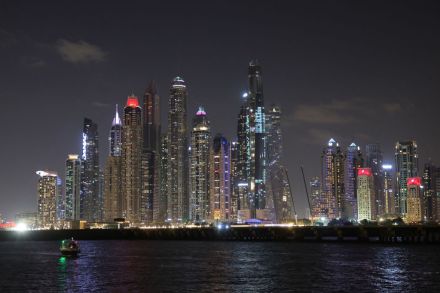
Nestled between the sci-fi skyscrapers of downtown and luxury marina beaches, Dubai has a side few tourists or outsiders get to see. Forget the glamour and explore the industrial warehouses of al Quoz and the unassuming streets of al Barsha, coated in a layer of desert dust. You would be justified in assuming the al Barsha Holiday Inn, awkwardly situated adjacent to the eighteen-lane Sheikh Zayed Road, must be a low point. But if you find yourself in its gaudy lobby on the odd Saturday night, you might be surprised to see punk ravers and goth girls draped in chains suddenly streaming toward the elevators at the back. Follow them down to the lower levels and you’ll find the Q Underground, one of the venues at the vanguard of Dubai’s boundary-pushing alternative music scene.

How I crossed the line from devout Muslim to stand-up comedian

In a small, dark room in the depths of Banshee Labyrinth, a gothic-looking venue just off Cowgate in Edinburgh, 11 people cheer and clap as I thank them profusely for spending the past hour with me. My backdrop is a red and white no-smoking sign and two coffin-shaped blackboards with drinks offers scrawled on them in chalk, and the portcullis-style door offers little soundproofing from inquisitive festivalgoers peering in and wondering aloud whether to take one of the 40 seats – but the setting is perfect for my first ever Edinburgh Fringe show.

So long, Marianne Faithfull

Anyone of a certain age is aware of the urban legend that links Marianne Faithfull, a Mars bar and Mick Jagger. But Marianne’s death yesterday at the grand age of 78 (given her lifestyle, how did she get that old?) really does remove one of the last living links with the golden age of rock and roll in its wildest youth. For Marianne embodied every cliche associated with rock excess: the lover of three of the original five members of the Rolling Stones (Mick, Keith Richards and Brian Jones), she also took on David Bowie, but had the good sense or taste to reject the amorous advances of Bob Dylan and Jimi Hendrix.  After the affair with Mick ended, Marianne had a lost weekend in the 1970s lasting for five years while she was deep in the throes of heroin addiction.

A pleasant respite from the tumult in Cambridge

From our US edition

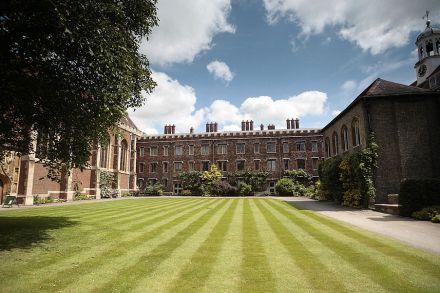
Cambridge, England Inscribed on the lid of a two-manual harpsichord in Holy Trinity Church at Hildersham in Cambridgeshire is the Latin tag Musica Donum Dei — music is a gift of God. It was a sentiment I could hardly quarrel with as I listened in the little twelfth-century church to a variety of baroque sonatas for violin, recorder, cello and harpsichord. They were expertly performed by the Azur Ensemble, which is comprised of recent graduates of the Royal College of Music. A particular standout was the French harpsichordist Apolline Khou, who has performed widely in Europe and in a solo concert for King Charles III.

Cambridge
Cher

Cher should stick to what she knows best

From our US edition

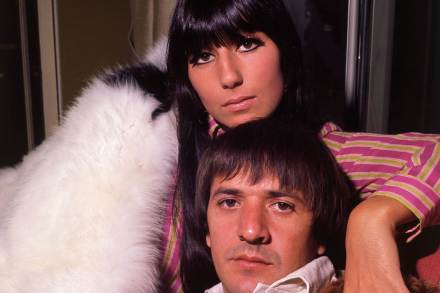
The worst celebrity memoirists write first-person Wikipedia pages. Like Michelangelo carving a beautiful posterior out of Italian Carrara marble, the best celebrity memoirists edit their lives into tawdry yet moving epics. When they work, celebrity memoirs are the Warhols of American literature. When they fail, they’re the literary equivalent of a CVS receipt: boring and destined for the trash. Cher: The Memoir, Part One falls somewhere in between. It takes a miracle to reach Cher’s narrative peak. For more than a hundred pages, she details her childhood criss-crossing America as her mom marries and divorces man after man. I lost track of how many jerks Cher’s mother married, but according to Google, she married six different men (Cher’s heroin-addict biological father twice).

The life-affirming misery of the Cure

Watching the Cure’s live-streamed performance of their first album in 16 years, it was hard not to notice the toll time has taken on Robert Smith. At 65, his black spiky hair has long turned into a bedhead of fag-ash grey – a reminder to those of us who have grown up with him that none of us are as young as we used to be. As the slow waltz of the first track of Songs of a Lost World kicked in, and Smith wailed ‘Where did it go?’, it was starting to look like a very gloomy evening indeed – even by the standards of a band hardly known for its cheeriness. I’ll admit that as I started to watch the Troxy gig live from my sofa, even I, as a long-time Cure fan, worried how dark it was going to get.

What makes a good title?

Liszt’s compositions tend to have descriptive titles – ‘Wild Chase’; ‘Dreams of Love’ – whereas Chopin avoided titles. Thomas Wentworth Higginson wished titles on Emily Dickinson’s poems, opposed by his fellow editor Mabel Loomis Todd. They didn’t stick. Maybe this is why Dickinson is acclaimed but unread. ‘I heard a Fly buzz’ is easier to remember than 465. We can express this truth by quoting Dickens on the Bible in Little Dorrit: ‘such hiccupping reference as 2 Ep. Thess. C. iii, v. 6 & 7.’ Or by remembering how often we forget our several PINs. For poets, titles can be a resource, a useful press release before the actual poem Titles are important. Titles are useful.

I’m not the only football-obsessed composer

I was in Sweden a few weeks ago, where my music was presented in Stockholm in the most recent International Composer Festival. One of the orchestral works performed was my football-themed ‘Eleven’ (11 players, melodies of 11 notes, chords of 11 pitches and various football chants woven into the fabric of the score). I’m not the first composer obsessed with the beautiful game. Bohuslav Martinu’s ‘Half-time’, written in 1924, was inspired by the supporters of his team, Sparta Prague. And more recently there have been bold examples by English composers Mark-Anthony Turnage (who worked chants for his beloved Arsenal into his orchestral piece ‘Momentum’) and Benedict Mason, in whose opera Playing Away even the ball sings an aria.

This month in culture: January 2025

From our US edition

Wallace and Gromit: Vengeance Most Fowl January 3, Netflix The panic that gripped the McMorris household in November 2023 was rivaled by that of the great toilet paper shortage of 2020. Greater even, for this crisis could not be solved with a credit card and the willingness to fight hand-to-hand against fellow Costco members. Aardman Animations, the last bearable producer of children’s entertainment, was running out of clay. The sole remaining British factory that produced the stuff behind Wallace and Gromit and Shaun the Sheep had shuttered. Only a pitchfork would suffice. The advent of CGI has fried parental eyeballs with neon ever since Toy Story and only Aardman has resisted the trend, delivering us stop-motion Stan and Ollie routines.

culture

Were Boney M the weirdest pop act of all time?

For a spell in the late 1970s there were two pop groups which dominated the UK singles charts – both, coincidentally, vocal quartets from continental northern Europe. But while one, Abba, have since become a billion-pound industry with an apparently permanent hologram-shaped presence on the London concert scene, their then rivals for pop supremacy, Boney M, have almost completely disappeared from public consciousness. And this is a shame because Boney M remain uniquely noteworthy in one field in particular: weirdness.  There are other contenders: Little Richard, the Sweet, Village People, the KLF.

‘Judgment is the price of being creative’

Rick Rubin is a legendary American record producer who co-founded Def Jam records, which helped popularise hip hop. He has worked with everyone from Johnny Cash (whose career he is credited with reviving) to Paul McCartney and Kanye West. He sat down with The Spectator’s Rory Sutherland to discuss creativity, Bach, Sherlock Holmes, JFK assassination theories and more. RORY SUTHERLAND: It’s a huge pleasure to see you again. Just for the benefit of older Spectator readers, it’s probably worth defining what a music producer does because it’s ambiguous. People might imagine someone sitting there, adjusting the levels on one of those enormous mixing decks. In fact you never touch any of that stuff. You don’t really play an instrument. And you don’t read music. (No shame in that.