Music

The individualistic talents of the Pet Shop Boys

From our US edition

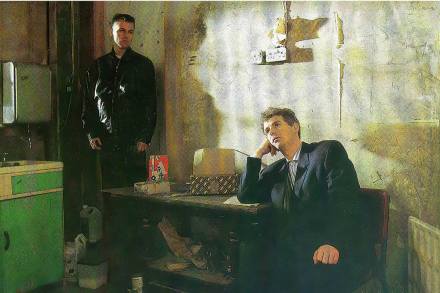
In April, the Pet Shop Boys, pop music’s most influential and beloved synth-pop duo, returned with a new album, Nonetheless. The British pair could hardly be described as wildly prolific, having released a comparatively meager fifteen albums since their debut Please in 1986. (Their one-word titles usually contain some oblique joke or other; the act’s singer Neil Tennant once remarked that the idea for the first LP was that it amused him that a record buyer would ask for the “Pet Shop Boys, please.”) Yet one reason for this relatively sparse output is that they take a painstaking amount of time to ensure not only that each of their albums is polished to perfection, but that it is existentially different from their previous release.

Pet Shop Boys
culture

This month in culture: June 2024

From our US edition

The Fall Guy In theaters now Ryan Gosling’s career is rather bizarre if you think about it, from drippy romcom protagonist in The Notebook to brooding car noir hero in Drive to laughable failure in The Nice Guys to musical star in La La Land and Barbie. Now he takes a stab at renewing his hardass ways in The Fall Guy, an adaptation of Lee Majors’s 1980s series which pairs him with Emily Blunt and is, in a way, an homage to the careers of “stars who do their own stunts” even if Gosling does not do so himself. There’s even a stunt show planned for Universal Studios’ Hollywood theme park based on the movie, prior to its release.

Peter Duchin makes us happy 

From our US edition

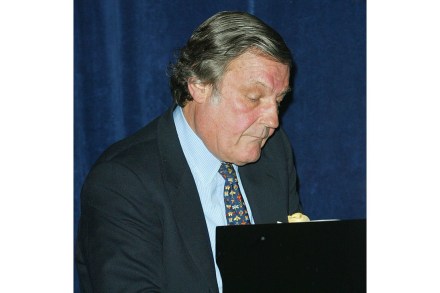
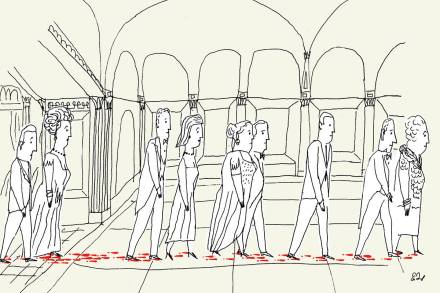
If I could be like anybody, I would wish to be like Peter Duchin. The pianist and bandleader — who, each year during his prime, oversaw from his perch at the piano dozens of debutante balls and scores of society events — has always seemed to me to embody style, dignity and grace.  Arguably Duchin came by some of these qualities as a consequence of his heritage — his father was the equally famous bandleader Eddy Duchin — but it has always been obvious that he must have worked hard at them, too. He had certainly had his share of reversals: his mother, the former Marjorie Oelrichs, succumbed to complications experienced during childbirth; about thirteen years later, his father was felled by leukemia. He was raised in large part by diplomat W.

peter duchin

An unvarnished insight into the mind of Sonny Rollins

From our US edition

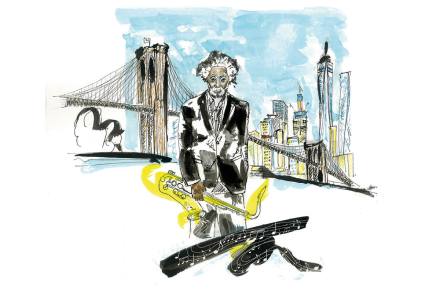
In the mid-1950s, alongside his close friend and intimate confidant John Coltrane, the revered saxophonist Sonny Rollins completely revolutionized notions about how the tenor saxophone could function within modern jazz. In landmark albums like Freedom Suite, Way Out West and Tenor Madness, Rollins pushed the art of melodic improvisation to transcendent new heights, his charismatic sound, his snaking melodies and his rhythmic liquidity ringing the changes as surely as Louis Armstrong had done thirty years earlier. And like Louis, and later Miles Davis, there came a point where Rollins wrestled free of the jazz aficionado’s gaze to become admired by a more general audience.

rollins
Holiday

A look into Billie Holiday’s final year

From our US edition

If ever a singer were difficult to pin down, it was Billie Holiday (1915-59), whose harrowing life story was first told in an unreliable memoir published just three years before her death. With Lady Sings the Blues, the jazz legend known for her emotional honesty not only allowed herself to be misrepresented (after all, she wasn’t even a blues singer), but actively participated in fabricating the fake stories which proliferated through the book. Some of these — such as a misstatement of her place of birth — are still repeated to this day. Two decades after the publication of Lady Sings the Blues a steady stream of more accurate biographies began to appear.

Bob Marley: One Love and the surefire success of music biopics

From our US edition

There is a strange rule in contemporary Hollywood that filmmakers ignore at their peril: biopics might be a popular dramatic form for directors, but they tend to be of little interest to audiences. In the past year alone, the likes of Napoleon, Ferrari, Maestro and Golda have all under-performed commercially, demonstrating that however accomplished the filmmaker (including the Oscar-nominated likes of Michael Mann, Ridley Scott and Bradley Cooper), it is nearly always a non-starter to attempt to persuade viewers to spend their $15 on watching someone’s life story for two hours at the cinema. Oppenheimer proved to be a rare exception — though that’s far from the only way in which Christopher Nolan is exceptional.

bob marley biopics

Relive Lou Reed’s wild, contradictory life

From our US edition

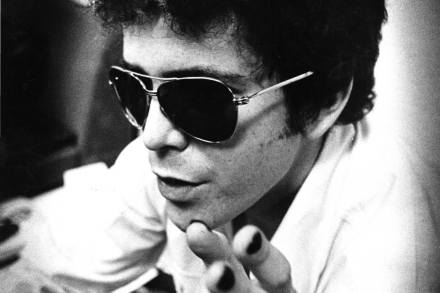
Before “Walk On The Wild Side” changed everything for Lou Reed in 1972, bringing him status and bolstering his bank account, he had been lead singer of the Velvet Underground, a group, as managed by Andy Warhol, that served up songs about drugs, gender-bending and sexual fetish, all designed to crash the boundaries of what polite America considered acceptable. The great thing about Velvet Underground songs was that musically, too, they transgressed: drone-based harmonies progressed glacially as rhythmic impetus stuttered. The big problem with the Velvets, in terms of finding any wider audience beyond self-confessed weirdos who hung out with Warhol, was that virtually nobody wanted to hear drone-based harmonies moving glacially or rhythms that fragmented. Where was the fun in that?

reed
densmore

John Densmore on protecting the Doors’ legacy

From our US edition

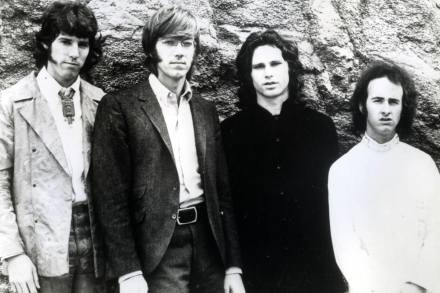
The once-explosive accusation that a rock ’n’ roll band is a sell-out, aimed at artists who make an accommodation with industry, has come to seem a little naive since it was first bandied about in the 1960s. Whether it’s that well-known monument to prudence Iggy Pop extolling the virtues of car insurance, the Zombies promoting Tampax or Bob Dylan shilling for Victoria’s Secret, they’re all at it these days. Elton John wants you to dial UberEats, the Stones will start you up with a $139.99 Keurig coffee machine, and by now it might be easier to list the names of rock stars who haven’t chugged Pepsi on TV than those who have.

Jerry Miller’s tale

From our US edition

One of the saddest things about popular music is the talents it can’t accommodate. Robbie Robertson, of the Band and much else besides, died in August at the age of eighty, and never found a proper home for his gifts after that great initial burst of late-1960s creativity. But at least Robertson was widely recognized by his peers as one of the outstanding electric guitar players of his time, although the contemporary guitarist he most admired himself was Jerry Miller, of the group Moby Grape. Unlike Robertson, Miller, who’s happily still with us today, hasn’t as yet won a Grammy, or been inducted into the Rock & Roll Hall of Fame. But he did play a starring part in what’s surely one of the great show business morality tales of its time.

miller

Stereophonic is a love letter to creation

From our US edition

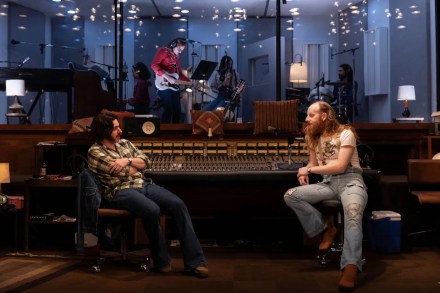
A chart-topping album. A drummer that can’t stand up straight without the aid of his giant bag of coke. Bickering bandmates and lovers. A rock band on the verge of break-up. These are some of the things on offer in just the first few minutes of Stereophonic. While I’m far from The Spectator’s resident theater critic, I do see my fair share of plays each year. Sometimes I’m compelled to write about them, but only when I’ve found something truly delightful. So let me start by saying this: Stereophonic is the best play I’ve seen in years.  On its surface the play is the story of a mid-Seventies rock band coming to terms with success while navigating tumultuous internal relationships with each other.

stereophonic

Britney Spears’s much-anticipated memoir is a desperate cry for help

From our US edition

Biological differences exist between men and women. Hamas lacks a justifiable reason to kill Israelis. Joe Biden won the 2020 election fair and square. Vaccines work. These are truths which, depending on the political class you’re speaking to, you can no longer say in public. Reading Britney Spears’s memoir, The Woman in Me, I thought, “We should add ‘the Free Britney Movement was wrong’ to the unspeakable truths list.” Two years into her freedom, Spears should celebrate her memoir as her umpteenth comeback. She should be sitting down with Oprah, confessing what really led to her 2007 breakdown, and releasing a new album pegged to The Woman in Me.

britney spears
american psycho musical

The birth, death and rebirth of American Psycho: The Musical

From our US edition

American Psycho was never supposed to be a hit. Bret Easton Ellis thought Glamorama would be his big seller, and Psycho was just an odd interlude; an experiment with form that mocked the disconnection, inanity and opulent obliviousness of America’s new, young, hyper-materialist upper crust. It was also a cloaked reflection of repressed homosexuality, written by a gay author who once dated a closeted financier. It’s not even that violent. Most of it is just the interior monologue of this cold man listing the clothes and food and bad music that occupies his hollow mind. And it was intensely funny, but dryly, darkly so. In short, it wasn’t an obvious literary smash.

The great Marty Stuart, possessor of one of popular music’s legendary guitars

From our US edition

He stands five-foot-seven in his stocking feet — five-nine in boots — but with Clarence White’s Telecaster slung around his neck and a thick head of gray hair roostered up, he looks ten feet tall. John Marty Stuart has plucked the strings of every major figure in country music. Growing up in Philadelphia, Mississippi, his heroes were bluegrass legend Lester Flatt and American prophet Johnny Cash. Before going out on his own, Stuart only had two jobs: he joined Flatt’s band in 1972 as a fourteen-year-old mandolin virtuoso, and after Flatt retired in 1978, he joined Cash’s band as a guitarist.

stuart
musicians

Age is catching up with our much-beloved musicians

From our US edition

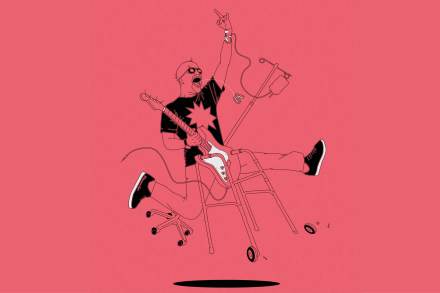
On the Who’s 1965 single “My Generation,” the band’s twenty-one-year-old lead singer Roger Daltrey half-sang, half-sneered, “Hope I die before I get old.” The song, written by the then-twenty-year-old Peter Townshend, has remained a classic for nearly sixty years, boasting both a fantastic tune and unforgettable lyrics. Yet even as the Who continue to tour the world — often in the company of that invaluable accessory for any self-regarding rock band, a full orchestra — it is now with self-aware amusement that the seventy-nine-year-old Daltrey and seventy-eight-year-old Townshend perform it.

Harrison

George Harrison at eighty

From our US edition

All I got to do is to, to love youAll I got to be is, be happyAll it’s got to take is some warmth to make it blow away That’s the chorus of George Harrison’s bubbly 1979 single “Blow Away,” an update of sorts to his Beatles hit “Here Comes the Sun.” At the close of the 1970s, the respite from the “long, cold, lonely winter” had become less assured. There is a pleading tone in Harrison’s voice as he sings “be happy” that infuses “Blow Away” with pathos. That, plus his cavernous stare in the otherwise goofy video, indicates that summiting Mount Everest might have been easier than the chorus’s stated goal.

Sounds and sweet airs that give delight

Caspar Henderson writes beguiling books about the natural world, full of eyecatching detail and plangent commentary. His Book of Barely Imagined Beings: A 21st-century Bestiary came out in 2012. A Book of Noises is a worthy companion – a pursuit of auditory wonders, a paean to the act of listening and a salute to silence. Item: the music of the spheres. (The planets’ orbits, proving unideal and elliptical, suggested to the musically minded astronomer Johannes Kepler an appropriately sad, minor-keyed leitmotif for the Earth, where, he felt, misery and famine held sway’.) Item: the world’s loudest sound.

Let’s start another war to stop Antony Blinken singing

From our US edition

During a surprise musical performance on Wednesday night, secretary of state Antony Blinken tried to convince the State Department he’s got the soul of a blues singer. The stiff-armed, frog-throated diplomat jammed out to a less than rousing rendition of Muddy Waters’s “Hoochie Coochie Man” that left the room full of his subordinates cheering. “I couldn’t pass up tonight’s opportunity to combine music and diplomacy. Was a pleasure to launch the State Department’s new Global Music Diplomacy Initiative,” Blinken tweeted on Wednesday.  https://twitter.com/secblinken/status/1707230831528620109?s=46&t=KTzG0soGgiCKUdkuiUQOwA Blinken’s set followed performances from Dave Grohl of Nirvana and Foo Fighters and pop star Gayle.

antony blinken

Travels in Italy with the teenage Mozart

Between the ages of 13 and 17, Mozart made three trips to Italy, spending some two-and- a-half years in ‘the country at the heart of the opera world’. He would never return as an adult. His mature Italian operas – The Marriage of Figaro, Don Giovanni, Così fan tutte, La Clemenza di Tito – can be traced directly back to these formative teenage encounters and experiences in Bologna, Venice, Rome, Florence and Naples. So argues Jane Glover in Mozart in Italy. A follow-up to 2005’s Mozart’s Women, the book is a lively account of journeys which the composer shared (mostly) with his father Leopold.

Bernie Taupin is more than just ‘Elton John’s lyricist’

From our US edition

It takes only a couple of hours by train from the southern reaches of rural Lincolnshire to central London. But for seventeen-year-old Bernie Taupin, leaving home in June 1967 to try his luck in the big city, the journey might as well have been to a distant planet, such was the gulf between his life as a casual farm-laborer and his ambitions to become an internationally acclaimed songwriter like his heroes Hank Snow or Merle Haggard.

taupin

Should vintage comedy be judged by today’s standards?

The British sense of humour is a source of power, soft and otherwise. The anthropologist Kate Fox observed that our national motto should be ‘Oh, come off it’, and a patriotic raised eyebrow has been cited as our chief defence against demagogues. We see ourselves through a comic lens, a nation of Delboys and Mainwarings, Brents and Leadbetters, Gavins and Staceys. But despite comedy being as central to British culture as music, books on it have few equivalents to Jon Savage’s England’s Dreaming (on punk), Rob Young’s Electric Eden (folk rock) or Simon Reynolds’s Energy Flash (rave). A nice fat volume about our national comic self-image by an astute music writer is exactly what the funny business needs.