Music

Tax return

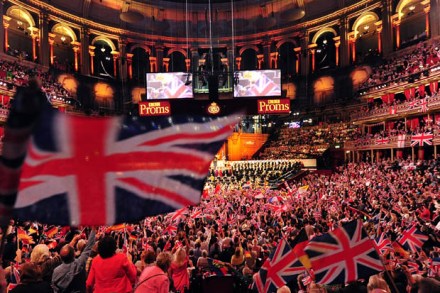
Make no mistake: the Proms, whose 2015 season was launched last night, would not, could not, exist without the BBC, or the licence fee. Just under half the cost of putting on such an ambitious nightly series of concerts throughout the summer, drawing on orchestras from across the globe, commissioning new work, pulling together programmes that mix popular and safe with little-known and challenging, comes from the sale of tickets, the rest is subsidised by taxpayers. To social-justice campaigners this might seem like an outrage.

Première league

This year the Proms are to stage 21 world premières and 11 European, UK or London premières. It is good to see the corporation continuing its mission to encourage new music, though some think they overdo it. I heard one of our leading keyboard players say that when he was asked to première a piece recently, he replied that he would rather dernière it. Clearly the BBC takes a more hopeful view. The most eye-catching new work in the series, leaving Whitacre out of it for now, will surely be the Fourth Symphony of our latest musical knight, Sir James MacMillan.

The self-taught French pianist who wowed the Tchaikovsky music competition

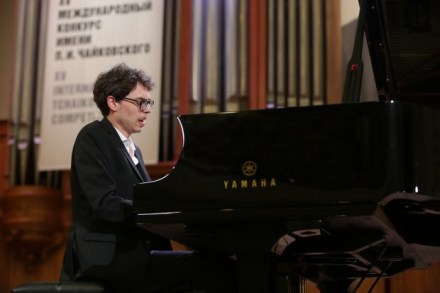
Vladimir Putin was sitting a few rows in front of me last Thursday evening in Moscow listening patiently to three hours of classical music without interval. I could not imagine David Cameron or HMQ doing the same - Britain’s Got Talent is more their cup of tea. But then classical music is as much a part of Russian politics as its attitude to neighbours and this was the winners’ gala of the monumental four-yearly Tchaikovsky music competition, which never ceases to be a political event. That was why I went, after all - to see how today’s politics would play on the choice of top prizes, whether Russia would sweep everything, given present geopolitical sabre-rattling and this being Tchaikovsky’s 175th anniversary.

Starr quality

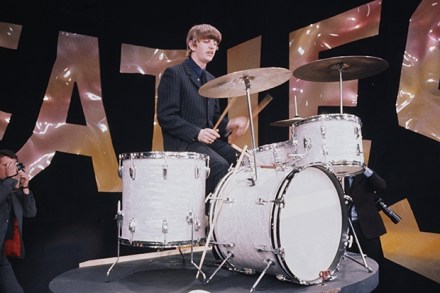
‘He was the most influential Beatle,’ Yoko Ono recently claimed. When Paul and John first spotted him out in Hamburg, in his suit and beard, sitting ‘drinking bourbon and seven’, they were amazed. ‘This was, like, a grown-up musician,’ thought Paul. One night Ringo sat in for their drummer Pete Best. ‘I remember the moment,’ said Paul, ‘standing there and looking at John and then looking at George, and the look on our faces was like ...what is this? And that was the moment, that was the beginning, really, of the Beatles.’ I think Ringo Starr was a genius. The world seems to be coming around to the idea. Two months ago, he was finally accepted into the Rock and Roll Hall of Fame — the last Beatle to be inducted.

Glastonbury knight

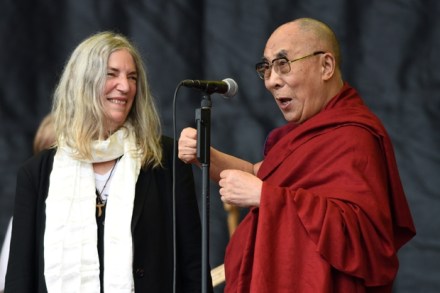
I had meant to write a dispassionate account of this year’s Glastonbury, really I had. But I’m afraid my plans were ruined by a chance encounter on the final day with my old friend Michael Eavis — the distinctively bearded dairy farmer who founded it 45 years ago. Rather sweetly he has got it into his head — long story — that I once helped him save the festival. Gosh, I hope this is true because it would annoy so many people: suck on that, all you Guardian readers, you lefty stand-ups, you Greenpeace activists. Every time you go to Glasto from now on you must offer a silent prayer of thanks to the Prince of Darkness himself. ‘You coming to see The Who tonight?’ said Eavis. Usually, I like to leave early to avoid the traffic.

The world belongs to Taylor Swift now. There will be no free-trial period

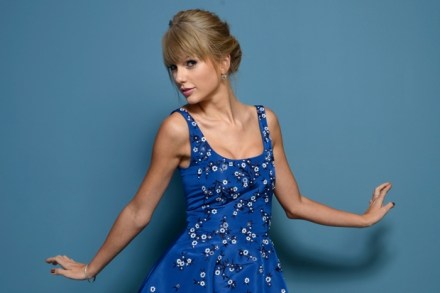
All hail Taylor Swift. How she must give baby boomers the fear. Not just baby boomers. Also those who came next, the Generation Xers, who seemed to define themselves culturally mainly via goatees, apathy and heroin. And my own rather listless, half-generation thereafter, with our bigger beards and binge-drinking. Taylor Swift makes us all look old. Because we are old and the world will be hers. You will have heard about her victory over Apple this week — you must have heard about it, because an opportunity to put Taylor Swift on the front of a newspaper is an opportunity not to be missed, particularly now that Elizabeth Hurley is getting on a bit and Princess Kate isn’t getting out much.

Elysian fields

There is a phrase that has been fashionable for years in wonkland — places like the upper echelons of the civil service and high-end think tanks. The phrase is ‘evidence-based policy-making’. There, I bet that’s got you going. When I was a citizen of wonkland and heard those words from the Sir Humphreys and Lady Susans I would typically roll my eyes or head for the door, because you can generally gather whatever evidence you want to justify whatever policy you want. In the end, you have to believe in something. Have the courage of your convictions and be judged by the results.

Between Kafka and Crossroads

We opera critics love gazing into crystal balls. We’re particularly good at discovering Ed Milibands and backing them to the hilt. Postwar opera is full of them. Take Hans Werner Henze. He was considered the future his entire life. Yet watching a presentation of two of his chamber operas at the Guildhall School of Music last week, it was hard not to think, how? Why? To be fair Henze never intended his early radio opera Ein Landarzt (1961) to work on stage. Originally conceived as a vehicle for Dietrich Fischer-Dieskau, the piece concedes nothing to dramatic interest (even in this theatrical adaptation). An overwrought Kafka monologue — in which a doctor hallucinates for half an hour — is coolly despatched in an orchestral game of pass-the-parcel.

Are schoolgirls fair game for teachers?

Mr Malcolm Layfield, the former violin teacher at Chetham’s music school, will have been celebrating this week after being found not guilty of raping a former pupil. Malcolm admitted to getting young (though over-age) girls drunk and to having sex with them in the back of his car. But he and his lawyer, Ben Myers QC, were keen to stress that the girls were all up for it. The one who cried rape even wore fishnet tights in his presence, for heaven’s sake. So no harm done, eh, Malcolm? All’s well that ends well. Raise a glass of that cheap Scotch you kept in the glove compartment for the kids. Perhaps it’ll help you sleep. But if it doesn’t, there’s something I’d like you to think about, in the small hours perhaps.

Forward thinking

The award of a knighthood to the composer James MacMillan will have ruined last weekend for lots of unsavoury people: the Guardian arts desk, which decided he’d lost his mojo as soon as he turned his back on the left; Kirsty Wark, whose squawking is mimicked in MacMillan’s Scotch Bestiary; the SNP, which he detests; and, most of all, the Nats’ religious front organisation, the Scottish Catholic Bishops’ Conference. OK, enough point-scoring. MacMillan has been honoured because he turns out glorious music. He’s also rare among living composers in having worked out an answer to the question raised when John Cage pushed sound to the point where nothing short of the soloist defecating on stage could shock audiences: ‘Where do we go from here?

Evolutionary road

As Sepp Blatter has so affectingly remarked, the organisation he formerly headed needs evolution, not revolution. There is a consensus that this is also what David Pickard will bring to the Proms, when he takes over after this season. Of course, Pickard’s job is going to be more complex than Blatter’s ever was. The challenge for Pickard is that however hard he tries to please most of the people most of the time, the modalities of running the Proms mean that he cannot be friends with everyone — and for him there will be no short cuts. What do we expect from the Proms these days? Despite all the flurry in the press pack, the underlying formula has actually become quite fixed in recent years.

Eurovision-speak

Like a reluctantly remembered nightmare, last week’s Eurovision Song Contest already seems very distant. But, in the manner of the Sand people in Star Wars, the nations of Eurovision will no doubt soon be back, and in greater numbers. Disappointingly, with scarcely an alien tongue displayed apart from Montenegrin, the chosen language was poor English. Since it is hard (for those not native speakers) to make out the sense of songs in English, the logic seemed to be to write them nonsensically from the outset. Sweden’s winning song had a thing about natural history, but showed a feeble grasp of fundamentals. ‘Go sing it like a hummingbird,’ it said, ‘The greatest anthem ever heard.’ Never mind that hummingbirds don’t sing (hence the name).

Lost boys

In Beryl Bainbridge’s novel An Awfully Big Adventure the producer Meredith Potter issues a doughty injunction on the subject of staging Peter Pan: ‘I am not qualified to judge whether the grief his mother felt on the death of his elder brother had an adverse effect on Mr Barrie’s emotional development, nor do I care one way or the other. We all have our crosses to bear. Sufficient to say that I regard the play as pure make-believe. I don’t want any truck with symbolic interpretations.’ Symbolic interpretation hangs heavily over the rough-and-tumble jumble of Janacek, Beethoven, Stravinsky, Satie, Handel, Vivaldi, sea shanties and klezmer in Lavinia Greenlaw and Richard Ayres’s half-brilliant, half-bewildering operatic adaptation for Welsh National Opera.

Mexican wave

Tours that start in Mexico have a nasty habit of repeating on one. Of all the British groups touring in the United States at the moment, we were the only one to launch our efforts there. But the upshot is that, two weeks later and safely in New York, I am still directing a sea of unnaturally white faces. I am often asked what happens when someone falls ill on stage. The answer is that they leave it, while trying to give the impression that this is all part of the evening’s entertainment. The resulting sense of unease can be felt by everyone in the room, but is perhaps worst for the conductor, whose job it is to fashion an interpretation out of people whose minds are surely elsewhere.

The rudeness of John Eliot Gardiner

Sir John Eliot Gardiner is talented almost beyond measure. His Monteverdi Choir, English Baroque Soloists and stupidly named Orchestre Révolutionnaire et Romantique have notched up one triumph after another over the decades: benchmark recordings of the Monteverdi Vespers and Bach B minor Mass, the finest period-instrument Beethoven symphony cycle and a cantata pilgrimage of live performances of all the Bach sacred cantatas. His recordings of Mozart operas are dazzling. At 72, Gardiner is at his artistic peak. His live re-recordings of the Beethoven Fifth, Seventh and Missa Solemnis eclipse their predecessors and in its second account of the Bach motets the Monteverdi Choir sings with such eerie precision, infused with the spirit of dance, that its rivals must despair.

Mistress of modernism

Everyone keeps talking about classical music’s image problem, and proposals on the table designed to rescue the music from apparent extinction have included the suggestion that conductors ought to face audiences rather than orchestras, and the cunning plan, mooted by Julian Lloyd Webber, that we stop calling it ‘classical music’. But what classical music really needs right now are more performers like Barbara Hannigan, whose embrace of music is absolute; whose solution to the problem of what classical music might represent in our increasingly fragmented culture is not to go into denial but to dive deeper, forever deeper, inside music. Hannigan has anchored her reputation around high-wire modernism.

Barometer | 16 April 2015

Out of tune The use of a song, ‘Love Natural’ by the Crystal Fighters, at the launch of the Labour manifesto backfired when the band’s drummer urged people to vote Green instead. Some other campaign songs whose writers disowned the campaign: — Ronald Reagan used ‘Born in the USA’ by Bruce Springsteen for his re-election campaign against Springsteen’s wishes. — In 2008, Barack Obama was asked to stop using ‘Soul Man’ by Sam Moore. — In the same year Jackson Browne sued the Ohio Republican party for using his ‘Running on Empty’ for John McCain’s election campaign.

The legend returns

Daniel Barenboim is back in town: the South Bank is mounting a ‘Barenboim Project 2015’ in which he’s playing the Schubert piano sonatas and conducting his magnificent Berlin Staatskapelle in Elgar’s Second Symphony and Beethoven’s First Piano Concerto, with Martha Argerich as soloist (if she doesn’t cancel yet again, in which case I assume Barenboim will do it himself). As usual, the arts luvvies are wetting themselves. I remember being at a newspaper morning conference when he was about to play the Beethoven piano concertos at the South Bank. The arts editor — who knew zilch about the respective merits of classical pianists — announced this as if it were the Second Coming. Everyone else made noises of awe and reverence.

End of the Rainbow

The golden age of pop music may be long gone, but the golden age of pop musicians’ obituaries is definitely with us. Soon I shall have to start apologising for returning to this subject with such regularity, but barely a week now seems to pass without some rock legend turning his or her eminent toes up. Last week it was John Renbourn, gruff beardy guitarist for Pentangle, and the week before Daevid Allen, who founded Soft Machine and about 73 different manifestations of Gong. On social media Nick Hornby asked us to name which dead people we had seen live (when they were alive, obviously). His list included Bobby Womack, Luther Vandross, Bob Marley, Joe Strummer, the Ramones, Rory Gallagher and Lee Brilleaux of Dr Feelgood (a lot). Hundreds of people responded.

That unmistakable touch of Glass

Philip Glass is by now surely up there in the Telemann class among the most prolific composers in history. There must be an explanation, preferably a non-defamatory one, for how his technique has enabled him to produce such an enormous quantity of music. A glance at my iPod shows that Varese’s collected works are over in 150 minutes: Berg, Ravel and Debussy each managed to produce between ten and 15 hours of music at most. Glass’s style, which has been called ‘minimalist’, though he doesn’t accept the label, works on a bigger scale. He has written 25 operas, some, like Einstein on the Beach, as long as Die Meistersinger. He owns up to 30 film scores, although the internet movie database connects him with more than a hundred different films.