Murder

‘Evil visited that day and we don’t know why’ – Dunblane 30 years on

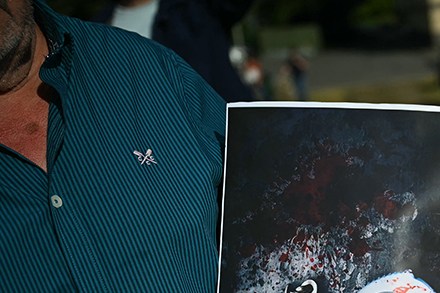
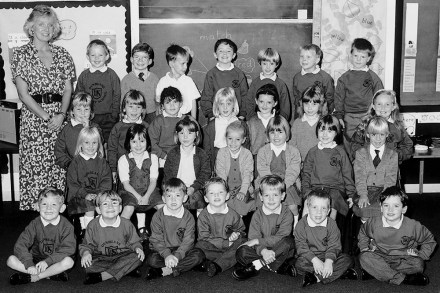
Shortly after 9.30 a.m. on 13 March 1996, a man walked into the gymnasium at Dunblane Primary School, near Stirling, Scotland. He was armed with two 9mm Browning self-loading pistols, two .357 Smith & Wesson revolvers and 743 rounds of ammunition. Within three or four minutes, he’d fired 105 rounds, resulting in the deaths of a teacher, Gwen Mayor, and 16 children. A further three teaching staff and 14 children were injured. He then took his own life. It could have been a great deal worse.  There was a suspicion that he intended to kill most of the school’s 600 pupils but that he’d arrived a few minutes late for

The gentrification of British crime novels

Eighty years ago this month, in February 1946, the left-wing Tribune magazine published George Orwell’s essay ‘The Decline of the English Murder’ in which the writer identified a certain class of crime as most appealing to the tabloid-reading British public – and contrasted the ‘cosiness’ of this type of early 20th-century domestic murder with the brutal sadism of killings committed in Britain during the second world war.  Two years previously, in 1944, while war still raged, in another essay entitled ‘Raffles and Miss Blandish’, Orwell specifically contrasted the ‘hard-boiled’ school of crime fiction with the gentlemanly Raffles stories of E.W. Hornung, featuring a well-mannered upper-crust jewel thief. He linked the noir fiction exemplified by James Hadley Chase in his novel No Orchids for Miss Blandish with the vicious

Horror in Victorian Hampstead: Mrs Pearcey, by Lottie Moggach, reviewed

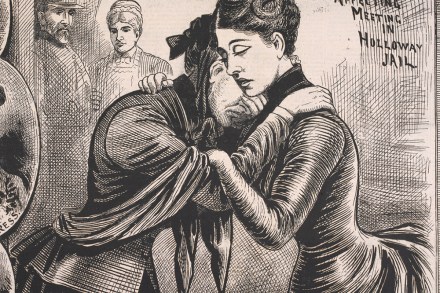
Our appetite for true crime is nothing new. The Victorians devoured it and, as Lottie Moggach’s fourth novel shows, they were as gawking and prone to erroneous judgments as any crowd on social media. Mrs Pearcey is about two women in 1890s London: sparky young Hannah Teale, engaged to a rising journalist on the Star and living with her widowed mother in Camden Square; and impoverished Mary Pearcey, who lodges in a Hampstead boarding house and is accused of the grotesque murder of a woman and her baby. It was a celebrated case in its day, coming soon after the Ripper murders, and it is now revived in Moggach’s vivid,

The turbulent life of the Marquis de Morès – the 19th-century aristocrat turned populist thug

The Marquis de Morès (1858-96) was a man of many abilities, but balancing a chequebook was not one of them. Bested (savaged, frankly) by the Chicago meat-packing lobby and frustrated in his attempt to build a railroad across Indochina, the soldier, duelist and self-styled ‘economist’ returned to his native France in 1886, caused havoc and invented fascism (if we allow the Italian historian Sergio Luzzatto to have his way) – only to meet his nemesis much closer to home. His father-in-law went to court to separate his daughter’s finances from those of her husband; a family council took charge of Morès’s money; and at last it came out that this

The key to Midsomer Murders' enduring appeal

If dramas like Adolescence are the rough televisual equivalent of whoever won the latest Turner Prize, then Midsomer Murders (ITV1) is David Hockney. The first category embodies the kind of worthy, tormented, agenda-pushing stuff we’re supposed to like; the second represents the sort of thing we actually like: undemanding, unpretentious, easy on the eye and brain. The deaths serve as a plot device and as a source of macabre comedy but are most definitely not there to cause you any emotional distress Even though Midsomer Murders has been going since 1997, I only saw my first full episode this week. Though I quite enjoyed it, I don’t feel any compelling

Glamour and intrigue: The Silver Book, by Olivia Laing, reviewed

Olivia Laing has had a productive couple of years. The Silver Book arrives hot on the heels of The Garden Against Time, a memoir-cum-environmentalist treatise published in 2024. It is a novel of stunning imaginative power that was apparently written in just three months. Set in 1975, during the making of two great works of Italian cinema, Federico Fellini’s Casanova and Pier Paolo Pasolini’s Salò, it is suffused with the glamour and intrigue of these filmmakers’ worlds. It offers a fictional retelling of the events that led up to Pasolini’s murder – a crime that remains unsolved – on 2 November. But at heart the book is a love story

Rumpelstiltskin retold: Alive in the Merciful Country, by A.L. Kennedy, reviewed

For Anna, wickedness istypified by the villain ofa fairy tale –Rumpelstiltskin The narrator of Alive in the Merciful Country is a woman weighed down by past trauma ‘like a bag full of broken kaleidoscopes’. Anna is a teacher steering her nine-year-old pupils through the 2020 lockdown while coping with life as the single mother of a troubled teenage boy, trying to rebuild trust after a shattering betrayal: ‘I didn’t ask to be in a spy scenario, or an action scenario, or a political thriller, but I recurringly have been.’ Damaged by life, she has learned to question misuse of power, personal and political: quis custodiet ipsos custodes indeed. Fans of

Songs of murder, rape and desertion

A century ago, the Orkney poet George Mackay Brown was settling into his first term at Stromness Academy. His schooldays were to prove a dismal grind, but English lessons brought moments of magic. He was especially intrigued by poems – ballads, mostly – signed simply ‘Anon’. The name of the poet was lost – and perhaps there hadn’t been just one but a host of craftsmen in the making of each of these wonders. They were the creation of a tribe, the inheritance of a community, songs ‘seraphically free/ Of taint of personality’. Today, as publishers bust themselves to promote the cult of individual authors, it’s a thrilling, liberating notion.

Who’s deceiving whom?: The Art of the Lie, by Laura Shepherd-Robinson, reviewed

In this age of lies and delusions, the trickster may seem to be a peculiarly modern creature, but he or she is almost as old as literature itself. Long before phishing or fake news, stories about cunning foxes, Loki, Anansi the Spider-Man and Odysseus brought delight; Puck, Tom Ripley and Sarah Waters’s fingersmith Sue Trinder are some of their descendants. Encountering such a figure is always a joy, and in Laura Shepherd-Robinson’s latest novel, The Art of a Lie, there are two. Hannah Cole is a shopkeeper in 18th-century London, struggling to keep her confectionary business open. Her husband Jonas has been murdered, and we soon learn that not only

No place is safe: The Brittle Age, by Donatella di Pietrantonio, reviewed

This slim, unsettling novel opens with Lucia trying to navigate the ‘mess’ of her daughter Amanda’s return home to their apartment near Pescara, in Italy’s Abruzzo. Pieces of torn bread, a heaped-up blanket and other strange ‘traces’ are indications of Amanda’s emotional disarray after hastily leaving Milan on the eve of lockdown. But she’d already abandoned her university studies by the time she’d been violently mugged. Lucia attempts to achieve the difficult balance of caring for, but not suffocating, her daughter, resigning herself to Amanda’s ‘unpredictable comings and goings’ while leaving her ‘something nourishing in the fridge in case she skips breakfast’. But she has already spectacularly misjudged this. When

Bloodbath at West Chapple farm

Fifty years ago, the blasted bodies of three unmarried siblings, members of the Luxton family, were discovered at a Devon dairy farm, set in a lush stretch between the ‘lavender haze’ of Exmoor and Dartmoor. The youngest member of the family, Alan, was 55. He lay in his pyjamas and work boots on the cobbles in the farmyard. Robbie, 65, with cuts to his face, and Frances, 68, clad in a nightgown rucked up to her waist, were found together in the garden. All the doors to the primitive thatched family farmhouse were locked from inside. The ‘tragic trio’, as they were described by the tabloid press, were the last

Labour’s growing pains, survival of the hottest & murder most fascinating

43 min listen

This week: why is economic growth eluding Labour? ‘Growing pains’ declares The Spectator’s cover image this week, as our political editor Katy Balls, our new economics editor Michael Simmons, and George Osborne’s former chief of staff Rupert Harrison analyse the fiscal problems facing the Chancellor. ‘Dominic Cummings may have left Whitehall,’ write Katy and Michael, ‘but his spirit lives on.’ ‘We are all Dom now,’ according to one government figure. Keir Starmer’s chief aide Morgan McSweeney has never met Cummings, but the pair share a diagnosis of Britain’s failing economy. Identifying a problem is not, however, the same as solving it. As Rachel Reeves prepares her Spring Statement, ministers are

The dogged women on the trail of Dr Crippen

On 18 November 1910, 300 women marched on the Houses of Parliament to demand the right to vote. Their protest was met with shameless brutality: punches, kicks, beatings and sexual assault from policemen and male bystanders. Three weeks earlier, a young woman named Ethel Le Neve had been tried for her part in the most sensational crime of the new century, the ‘London Cellar Murder’. The portrait of Le Neve presented by her barrister had been one of ‘perfect Edwardian feminine innocence’, docile, gentle, lacking in agency – a reassuring contrast to the strident, determined suffragettes, whose refusal to conform to societal expectations were to culminate in the attacks at

Survival of the cruellest in 16th-century Constantinople

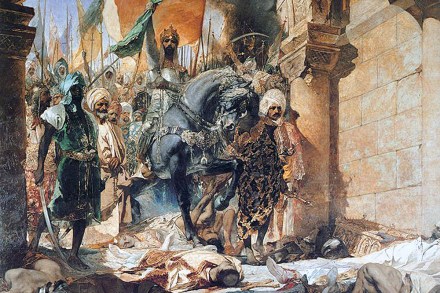
The 16th-century Ottoman ruler Sultan Suleyman liked to impose himself on foreign monarchs from the start, always beginning official letters with the uncompromising assertion: ‘I am the great lord and conqueror of the whole world.’ In this sparkling account of his middle years, the second in an ambitious three-volume biography, Christopher de Bellaigue never actually describes Suleyman as ‘the magnificent’, his most widely known epithet. But he certainly conjures up his awesome presence at home and abroad in animated prose saturated with vivid colour and detail. So, in 1538, we encounter the sultan in his mid-forties, a swan-necked figure in a white lozenge-shaped turban, riding to war in the Balkans.

The weirdness of the pre-Beatles pop world

Quizzed about pop by the teen music magazine Smash Hits in 1987, the year of her third consecutive electoral victory, Margaret Thatcher singled out ‘Telstar’, a chart-topper from a quarter of a century earlier, for special praise. She pronounced it ‘a lovely song… I absolutely loved that. The Tornados, yes.’ As a whizzily futuristic sounding instrumental ode to a transatlantic communications satellite, and only the second British recording to top the American Billboard charts, its charm for Thatcher was perhaps as much political as musical. That it was the work of an independent producer might also have appealed to her love of freewheeling, self-reliant private enterprise. Roger George ‘Joe’ Meek

Murder, incest and paedophilia in imperial Rome

I came to Suetonius’s Lives of the Caesars as a schoolboy after watching I, Claudius, the BBC series based on Robert Graves’s pair of novels about imperial Rome. Incredibly, it’s almost half a century since this was compulsory Monday night viewing in our household. The mere sight of the snake slithering across the opening credits was enough to make my younger brother bury his head in a cushion. Graves had spiced up Suetonius’s racy accounts of violent murder, incest and poison. But, in the world before trigger-warnings, the BBC outdid him in bloodlust. The most gruesome scene in the TV drama – of Caligula doing some amateur surgery on his

A macabre quest for immortality: Old Soul, by Susan Barker, reviewed

Susan Barker’s Old Soul opens with pages from a diary: ‘T’ records a late-night conversation with a woman known as ‘E’ as they watch Venus rise. While they talk, we learn that Venus ‘spins slowly, at the pace of a walking man’, so one day is longer than a year. E imagines she is there, walking towards a sun that never sets. When T says that sounds lonely, E is adamant it wouldn’t be. This strange fragment sets the tone for a sinister horror story in which one woman – who goes by many names but is often simply ‘the woman’ – has an unnaturally prolonged life, serving an entity

A post-Brexit entertainment: The Proof of My Innocence, by Jonathan Coe, reviewed

This is a novel that spans the Truss administration, from its heady dawn to its decline and fall 49 days later. The Proof of My Innocence starts as a satire, not so much of Truss and her world but the ideologists who thought that the prime minister’s brief, shining moment was their long-cherished future. They meet in a collapsing Cotswolds castle to hear from delegates such as Josephine Winshaw, who intones that everything now is woke: ‘Paying your TV licence was woke. Getting vaccinated was woke… buying avocados was woke, and reading novels was woke.’ Another speaker praises a reactionary novelist to a much smaller audience. Into this milieu steps

Radio 4's Lord Lucan series is rescued by a brilliant narrator

It was 50 years ago this week, on 7 November 1974, that Lord Lucan fled what was destined to become the most talked about crime scene of the 20th century. A coroner’s inquest jury named him as the killer of Sandra Rivett, his children’s nanny, but his disappearance ensured that he was never convicted of the crime – or of the attempted murder of his wife, Veronica. Stripping away the sensationalism of the story needn’t render it boring Understandably, given the mystery that still envelops his precise actions and whereabouts, Radio 4 has chosen to mark the anniversary with a soft question rather than to provide answers. Soft, but also

The court favourite who became the most hated man in England

The Duke of Buckingham, wrote Alexandre Dumas, lived ‘one of those fabulous existences which survive… to astonish posterity’. In the summer of 1614, a young man from a modest gentry family was invited to a hunting party in Northamptonshire to meet a very special guest. George Villiers was affable, not terribly bright and superlatively beautiful. His mother Mary, a practical and ambitious woman, knew what his looks could do for the family, and she aimed high. The mark was King James I, a monarch who openly loved men. The king had lavished his then favourite, Robert Carr, with titles, wealth and great offices, but the finest pair of legs in