Money

A fogey’s guide to cryptocurrency

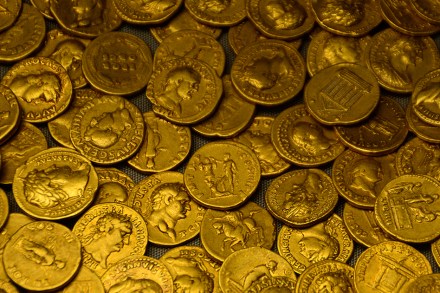
All innovations seem unseemly to fogeys. When bitcoin, the first of the cryptocurrencies, was launched in 2009, we dismissed it as a deplorable and transient phenomenon. Its inventor, who called himself Satoshi Nakamoto, would not reveal his real name. Perhaps he did not exist and whoever hid behind the pseudonym was having a joke at our expense. When Satoshi created the first bitcoin on 9 January 2009, he embedded within its code a headline from a recent Times: ‘Chancellor on brink of second bailout for banks.’ Crypto appeals to people who distrust banks, as well one may. ‘Never trust the bankers,’ Winston Churchill warned in old age. History suggests one

Want to get rich? Invest like an American

Ramit Sethi wants to make you rich. He is not a household name in Britain, but the Stanford psychology graduate is one of the biggest personal finance influencers in the US. He hosts a successful podcast, Money for Couples, has written bestselling books and even has a Netflix show, How to Get Rich. All his projects share the same message: by changing your mindset and taking a few practical steps, you can power yourself toward prosperity. To British ears, his style might seem brash. It is financial advice with a substantial side of life coaching. But beyond the difference in tone, Sethi spreads a simple message rarely heard in finance

Is any other investment as good as gold?

Last year might have proved a good time to own shares in the chip-maker Nvidia, along with the booming American tech giants. Or a piece of the defence manufacturers as the world re-arms. Or to hold a position in some of the rapidly growing economies of South America or Asia, or even one of the hyped-up crypto currencies. There were plenty of places investors expected to make money over the past year. As it turned out, however, there was one asset that outpaced them all, even though it generates no income: gold, and to an even greater extent, its junior sibling silver. With government debt soaring out of control, the

Long live the joint bank account!

My husband and I share a bank account, and I don’t care who knows it. This detail lumps us in with many Boomer couples who have typically shacked up together financially – for better or worse, richer or poorer – for the duration of their married life. As (geriatric) millennials, our joint bank account therefore renders us something of an anachronism, but we’re used to this by now. We are outdated and unfashionable in our approach to many things, including (but not limited to) childcare, housework and car management. Research by TSB in 2024 bears out just how unmodish we are: just one in every eight people in a partnership share their finances entirely with their partner, while the vast majority (88 per cent) prefer to maintain some level of financial independence and keep their own, private bank account for jollies and dresses.   Whoops! See what I

Where are you on the tightwad scale?

I once stood in a queue behind a Scotsman checking out of a hotel in Germany. After he had finished scrutinising his bill in agonising detail, he demanded that it be reprinted, this time removing the €1 discretionary charge which had been added in support of the local homeless. More recently some friends of my daughter’s met a Yorkshire-born Spectator writer at a local fête. They mentioned the connection, expecting some mild pleasantries. Not so. ‘’Appen that reminds me: he still owes me for a taxi.’ When I heard this, I was bemused. Then I remembered I had indeed shared a taxi with the Yorkshireman in question, requesting a minor

Why Christmas comes early for thousands in Spain

Every time I hear about someone winning ten million pounds/euros/dollars in a lottery, I think (and I’m sure I’m not alone in this): ‘Yeah, but… wouldn’t it have been better if ten people had won one million?’ Well, that’s more or less what happens in Spain. Tomorrow nearly 2,000 people will share the first prize in the Christmas lottery, each winning €400,000 (£350,000). The same number stand to share the second (€125,000 each) and third (€50,000 each) prizes. So in total almost 6,000 Spanish households will suddenly be looking forward to a much better life. No wonder there are such explosions of joy the length and breadth of Spain every year on

Would you pay for your office Christmas party?

If Christmas is a time for giving then it seems the message isn’t getting through to nearly enough office managers. For the umpteenth year running, I’m getting the annual stream of resigned-sounding complaints from friends who have office-based careers. Office life has its perks, of course; unlike my mostly-bed-and-airport-based freelance life, you actually know what you’re going to be paid at the end of each month. But my decision to accept the Faustian pact of being a sole trader never feels more validated than when my pals tell me about the plan for their office Christmas party – and the demand that they pay for it themselves. Millions of workers

Save our charity shops!

If, like me, your tailor of choice is the British Heart Foundation or Save the Children, it is beginning to feel like the end of days. Old people are still dying, their wardrobes still being emptied into bin bags – but we vultures are being starved of their corduroy carrion. Charity shops are in crisis. Scope has shut more than 50 stores this year already. Two more – in Beverley and Fleet – are closing this week. Taunton, Portsmouth, Skipton and Bangor are all completely Scopeless. The Charity Retail Association (CRA) is gloomy, explaining that the British Heart Foundation, Barnardo’s, Oxfam and Cancer Research UK – the big four –

In defence of fat cats’ growing pay packets

News from the High Pay Centre – the revolutionary guard of left-wing thinktanks – that average FTSE100 chief executive pay rose 16 per cent to a record £5.9 million for 2024-25 comes as a double blessing for Rachel Reeves. On the one hand, she can cite executive greed as a pretext for her forthcoming autumn tax raid, while at the same time claiming that if rewards are soaring, then business conditions under Labour can’t be as bad as boardroom whingers say. On the other, she can rejoice that each UK-domiciled boss is contributing to the Exchequer a sum roughly equal to the tax take from 440 average earners. Meanwhile, is

My plan for a wealth tax – with a difference

Reading Careless People, an exposé of life within Facebook written by a Kiwi, it occurred to me that one potential advantage that the UK, Australia, Canada and New Zealand have over the US is we do not unthinkingly idolise the very rich. Americans sometimes find this confusing: it always irked transplanted American bankers in London that local employees were eager to make a few million quid, but lost interest beyond a certain threshold. Once they had a rectory in the Cotswolds, an Aga, two labradors and a Range Rover it was game over, you win. This is because the US is more of a money/power economy, whereas the Commonwealth countries

Was the car finance judgment fair?

I must modestly doubt that the Supreme Court justices took account of my 12 July column in their ruling on the issue of hidden car finance commissions. But the effect, limiting compensation claims to the more egregious cases of overcharging, is to do exactly what I hoped: namely to head off ‘a tsunami of claims that could cripple lenders and provoke a mini banking crisis’. Chancellor Rachel Reeves evidently hoped so too; given that up to 90 per cent of new UK car sales are financed by loans offered through car dealerships, a collapse of that market would have put another ding in an already battered economy. The total claims

Britain is hooked on car finance

It’s unnerving to think how close Britain came to financial disaster last Friday, ahead of a Supreme Court ruling on – of all things – car financing. In October, the Court of Appeal found that motor finance firms could be liable for hidden commission payments to car dealers. If the Supreme Court had agreed, the biggest lenders, including Lloyds Banking Group, Santander, Barclays and Close Brothers, would have been on the hook for some £44 billion, with Lloyds already putting aside £1.15 billion for compensation payments and Close Brothers selling off its asset management arm this year. In an unprecedented intervention, Rachel Reeves urged the court to avoid handing out

Is Len McCluskey a Manchurian candidate for the Tory party?

At Stansted on Monday, a currency kiosk offered me €270 for £300. ‘Wrong way round,’ I said, having swiftly figured €300 for £270 would represent an exchange rate of 1.11, close enough to the current market level of 1.14. ‘Nah, mate, airport rate, innit?’ This week’s first lesson is never buy euros at the airport; but the second lesson is that wherever you buy them – especially if you have, say, a Mediterranean superyacht charter in prospect – you’re in for a painfully expensive summer. Back in March you could have had €1.20 for your pound. Since then sentiment towards sterling has been soured by expectations of bad economic news

Don’t compensate drivers for mis-sold car loans

Surprisingly big numbers are the theme of this week’s column, several having flashed up to disturb the pleasures of a summer season of parties, music and sport. The first is the 69,000 tally of jobs shed in the UK hospitality industry since the increase in employer’s national insurance contributions in October’s Budget – the most destructive legislative measure for business in recent memory, except perhaps for the Employment Rights Bill that’s expected to receive Royal Assent before parliament’s recess this month. The UKHospitality trade association thinks losses could rise to between 150,000 and 200,000 by the autumn, as 70 per cent of member businesses cut more staff and pub closures

Marriage, motherhood and money: Show Don’t Tell, by Curtis Sittenfeld, reviewed

Show Don’t Tell, a collection of 12 short stories by the American writer Curtis Sittenfeld, explores marriage, sex, money, racism, literature and friendship from the 1990s to the present. There is a fine line here between memoir and fiction, with many of the female protagonists being Midwestern, bookish Democrats – quite like Sittenfeld herself. In the eponymous story, Ruthie, a writer, dismisses the notion that ‘women’s fiction’ is perceived as giving off ‘the vibe of ten-year-old girls at a slumber party’. She reflects on internalised misogyny: ‘It took a long time, but eventually I stopped seeing women as inherently ridiculous.’ This volume can indeed be described as ‘women’s fiction’, whose

Beware the £5 coffee

It wasn’t until I received a notification from the Monzo app that I realised I’d spent nearly £10 on two coffees. This wasn’t in the Wolseley or even within the M25, but in Two Magpies, a café in Holt, our local market town in Norfolk – for two regular lattes (admittedly with an extra shot, since it was Monday morning) for myself and a friend. Just last year, I was taken aback when my caffeine fix crossed the £4 threshold, with the barista casually mentioning that coffee prices were rising. But £4.70 feels like it’s firmly in the ‘taking the mickey’ territory. I haven’t been back since (I’m currently writing

What’s the point in spending a fortune on a wedding?

I follow the YouTube postings of a maverick young economist called Gary Stevenson, author of The Trading Game. Whatever you think of Gary, he is absolutely right about one thing. Economists, by using what are called ‘Single Representative Agent’ models, have taken a dangerous wrong turn. Such simplistic models, which contain the convenient but absurd assumption that what is good for the average person must be proportionately good for everybody else, have allowed economists to make confident pronouncements on policy while ignoring social and intergenerational inequality completely. In one of the Brexit TV debates, a woman in the audience was derided by the cognoscenti because, on being told that leaving

BMW’s Oxford retreat signals deep trouble for UK carmaking

Among British car factories, Nissan at Sunderland is the most productive and Jaguar Land Rover at Solihull probably the most advanced. As for industrial landmarks, the former British Leyland complex at Longbridge is reduced to a research and development facility for Chinese-owned MG; but ‘Plant Oxford’ at Cowley, the original home of Morris Motors now owned by BMW of Germany, still produces 1,000 Minis per day. And BMW’s decision to halt a £600 million project to build electric Minis there is, I fear, a moment of destiny for the whole UK auto industry. The truth is that the transition to electric cars has descended into chaos. Total UK car production

Is Britain funding organisations that wish us harm?

Frivolous state funding isn’t only going to chancers, the plain lucky and the devious, but also to those who would see Britain – and the West – come to harm. Just over a year ago, the National Secular Society (NSS) compiled a dossier for the Charity Commission which called for 44 charities that had ‘fuelled anti-Semitism and division’ and shown support for ‘Hamas and other anti-western actors’ to be investigated. In every case these organisations have kept their charitable status. The charities in the dossier have the stated purpose of ‘the advancement of religion for the public benefit’. In the NSS’s view, this is being used as cover for political

Confessions of a 'gazunderer'

‘John’ has a dirty little secret – one so shameful that he has insisted on anonymity in order to tell his story. Last year, while in the process of buying a three-bedroom family house in Whitchurch, Hampshire, the 42-year-old office worker committed an act which, while perfectly legal, could kindly be described as ruthless. ‘We made an offer for the house, a bit below the asking price, and it was accepted,’ explains John. ‘But over the weeks that followed we started to have second thoughts. A few friends and family members were surprised at how much we were paying for the property. ‘It got to the point where I was