Money

If the Greeks and Romans could cope without a Budget, we can too

From our UK edition

Ancient states did not produce ‘budgets’. Ninety per cent of Greeks and Romans lived in self-sufficient farming communities; the rest sought work in the cities. No one expected the state to provide them with ‘services’ except in the case of famine or natural disasters, while state budgeting played a role only when war threatened or an attack planned. In 483 bc Athens’s miners at Laurium struck a massive vein of silver, and the Assembly decided to distribute it among the population. Then the far-sighted Themistocles intervened, suggesting it would be better spent on building 200 triremes with which to create a maritime empire that would rule the Aegean. The Assembly agreed.

Why are Brits so bad at investing?

From our UK edition

Looking around Britain today, we can identify plenty of three-letter initialisms making our lives miserable. The BBC, with its hand in your pocket and potently mad programming; the NHS, which sucks in an ever-growing £205 billion a year of taxpayers’ money but seems to be incapable of reform; the WFH epidemic, which is devastating to productivity. However, there is one three-letter acronym which could solve a lot of our problems as a nation – the Individual Savings Account, or Isa. Previously, it was Sid. In 1986, the Thatcher government launched a highly effective campaign advertising shares in British Gas called Tell Sid. It persuaded some 4.5 million people to consider investing in this newly denationalised utility, reintroducing the British public to retail investing.

Girls, just say no to lab-grown diamonds

From our UK edition

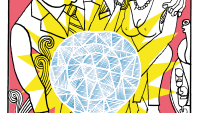
These days, when I spot a proper bobby-dazzler of a diamond on a woman’s ring finger, I feel a bit sick. Not with envy, but with the queasy certainty that I am looking at a comically large, factory-made fake. A real diamond is one of the most ancient things in this world. Under the heat and pressure of billions of years trapped in the earth, scraps of carbon transformed into a precious stone. Everything we have valued in diamonds – the hardness, the fiery glitter, the rarity – comes from that long and improbable journey. The impersonations – although we’re meant to call them ‘lab-grown’ or ‘synthetic’ – are mainly produced in Indian or Chinese machines and cost a fraction of the real thing.

How to cope with ruinous hen dos

From our UK edition

‘Hello girls!’ A few weeks ago, a WhatsApp chat named ‘Millie’s hen’ whirred into life on my phone. ‘We’re so excited to reveal the details of what will hopefully be an amazing long weekend!’ Three nights in the south of France next June, 15 women and a £500 ‘contribution’ for some, but by no means all, food, drink and activities. On flights, airport transfers, the rest of the food, drink and activities, we were expected to fend for ourselves. All in, Millie’s hen do would cost me close to £1,000. I scrolled down to the bottom of the eight-page PDF document that had been distributed by the organisers: ‘Once everything is booked, there might be a tiny variation in price. Thanks for understanding!’ I felt my blood pressure rise.

All the big hitters are here: scenes from the golden age of boxing

From our UK edition

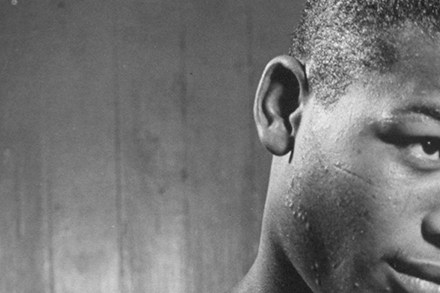
In 1891, in Thomas Edison’s makeshift film studio – a shack in West Orange, New Jersey – two men put on gloves and solemnly set about the serious business of battering each other senseless while Edison’s camera steadily watched. The resulting film, Men Boxing, lasted just a few seconds. There was no crowd, no purse and no title at stake; the fighters don’t even have names. Yet the entire history of modern boxing – the transformation of an act of violence into a spectator sport – was captured in that moment. Cinema had found its ideal subject and boxing the perfect machine to turn it into a global phenomenon. This is where John Sutherland begins 97 Fights, his odd, brisk, learned and frequently appalling history of modern boxing.

We are ignoring the biggest threat the world faces

In my mid-twenties, my one-bedroom in Astoria, Queens, developed a roach problem. I don’t mean the odd single scurry disappearing irretrievably beneath the fridge, either. Oh, it started that way. But I didn’t take measures when the situation was manageable because roaches gave me the creeps, and so many activities beckoned that were much more fun. Between a small shelf and the kitchen wall I stored spare brown paper bags – from which I began to detect a rustling. At some point, the bags began to move. Beside them, the wall gathered an undulating shadow that I trained myself never to look at directly; like Faye Dunaway in Little Big Man, I would ‘avert my eyes at the necessary moment’. One night a friend came to dinner and stared at that wall in frank revulsion.

Why some small tradesmen are turning to bartering

From our UK edition

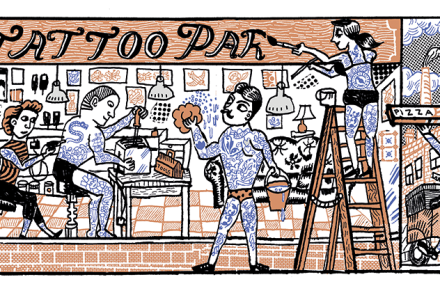
Holly, a 25-year-old sign writer and muralist, recently spent a couple of days staying in a shepherd’s hut an hour from her home. She didn’t pay for it – well, not in the way you or I would. The owner had a gypsy caravan with doors that needed painting. Holly could do the job. An agreement was struck, no money changed hands, and both sides walked away feeling they’d got a fair deal. Holly is one of a growing number of small tradesmen who have quietly decided to opt out of the traditional cash economy – or at least keep one foot outside it. She has been ‘paid’ in chiropractor sessions, pizza and someone cutting her grass. When she painted the Christmas windows of her local café, the owner told her to pop in for a free lunch ‘for the next ten goes’.

Make weddings short again 

From our UK edition

As every single one of my friends – and their spouses – is a tasteful soul, it goes without saying that every wedding I have ever attended has been the last word in elegance. You do hear things, though. Of Balham-based chartered accountants behaving like Victorian land magnates by renting stately homes for their nuptials. Of multi-venue events in five-star resorts by the lapping shores of the Mediterranean Sea. Of women having to buy, rent and borrow ten dresses for the summer that makes up wedding season. I could go on. So I am not surprised to read that one in three people is now turning down wedding invitations because they’ve become so expensive.

How to reclaim your life

I stopped charging my phone beside my bed four years ago and have never regretted it. Alarm clocks seemed destined to go the way of the DVD, but I am on a solo mission to restore them to bedside tables around the world. The harsh tone of the alarm is certainly no match for what Spotify can give us, but it’s worth avoiding the 30 minutes of doomscrolling that the phone inevitably causes. Since making the switch from the waking blue-light bath, I have rediscovered those early hours of the morning, with their associated peace and silence, before children and work invade my limited headspace. Carving out that half hour before the noise begins has helped restructure my priorities in life. Every year the Pope chooses a preacher for the Roman Curia’s annual Lenten retreat at the Vatican.

Welcome to Diocletian’s cashless society

From our UK edition

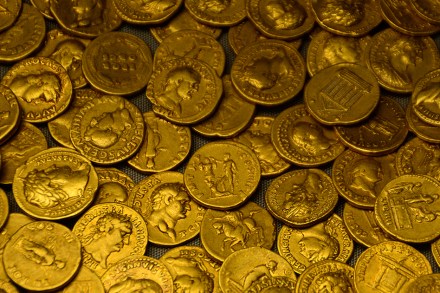
Money is a pagan god because it has value only as long as people believe it does. Refuse to believe, and the value disappears. In the 3rd century ad, the Roman empire was under intense pressure, and emperors resorted to increasing taxes and debasing coinage to fund its protection. The result was terrifying inflation. Cash became worthless. Soldiers refused to be paid in it and the state to accept tax in it. So ‘requisitioning of supplies’ – goods, materials, labour – became, in effect, taxation ‘in kind’ to pay for the military; and the army plundered at random to ‘collect’ it. The emperor Diocletian rationalised the system by organising this requisitioning of supplies into a coherent tax scheme.

The ‘Trump sleaze factor’ grows and grows

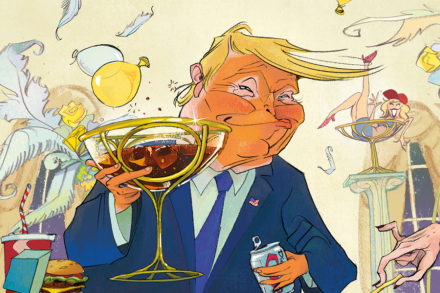
Earlier this month, I wrote a cover story for The Spectator warning that Donald Trump’s increasingly brazen flouting of ethical standards portended a political disaster for Republicans in the midterms. Since then, the corruption news has only gotten worse.   Just this week, the financial disclosure form Trump quietly filed for the first quarter of 2026 revealed his personal account had made an eye popping 3,600 stock trades valued at between $220 million and $750 million (his corporate holdings aren’t subject to disclosure).

How to solve the student debt crisis

From our UK edition

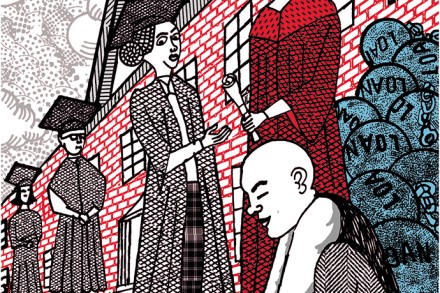
England’s student debt is staggering. It comes to £270 billion – that’s larger than the budget for the NHS and two and a half times larger than the education budget. This arsenal of taxpayer-backed cash has seen the creation of 34 new universities just to feed an ever-hungrier mass of undergraduates. It’s forecast that by the late 2040s, this loan balance will reach £500 billion. These loans are not standard financial arrangements. They don’t affect the debtors’ credit ratings, only their mental health when they check their bank balance. Crucially, most loans are also wiped after 30 years from graduation.

Frugal chic, the movement changing the way women shop

From our UK edition

It is, apparently, a novel concept in our age of overconsumption, that life can still be enjoyable even if you don’t have stupid money. ‘Frugal chic’ is the new lifestyle trend summed up by the 25-year-old influencer Mia McGrath, who coined and trademarked the term, as ‘living luxuriously while spending intentionally’. Frugal chic supposedly teaches young women – whose financial literacy typically lags behind young men’s – how to make their money go further with practical advice on investing and saving.

The rise of the pocket money app

From our UK edition

I am standing in the village Co-op with my eight-year-old daughter when she asks, inevitably, to be bought a magazine. As most parents will know, magazine is a generous term for this iteration: a collection of sorry pages whose sole purpose is a vehicle for plastic toys. I say no, but then she blindsides me. ‘Fine, I’ll pay for it with my pocket money,’ she declares, whipping out her pre-paid card like a good capitalist. As I slip the packet of fags I have bought for myself into my pocket, I realise that I am morally snookered. For is she not free to spend her pocket money as she likes? And am I not free to spend my money as I like? Libertarians, all. Most of us born before the advent of digital banking will have firm ideas about pocket money.

The taxman is coming for the self-employed

From our UK edition

Spare a thought for Mrs McClafferty & Co. Like thousands of small business owners, she has spent years managing things the old-fashioned way: jotting down figures in a Silvine cash book, stuffing receipts into a shoebox and sorting it all out when the tax return comes around. But according to HMRC, taxpayers like her are partly responsible for a £24 billion black hole in UK tax receipts. Which means the taxman is coming for them. If you are self-employed and had an income of more than £50,000 last year, get ready for Making Tax Digital (MTD). From 6 April, you will have to file an income and expenses update four times a year, then an adjustment, then the annual return. You must use HMRC-approved software to do it all.

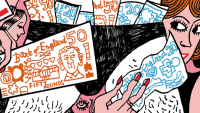
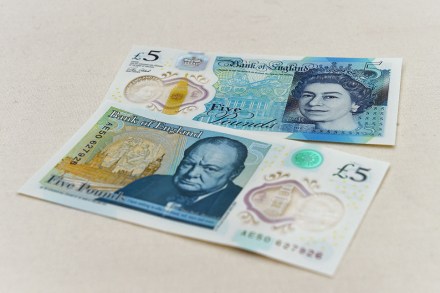
The only living being on our banknotes should be the monarch

From our UK edition

This Middle East conflict ought to be much easier than the oil embargo which followed the Yom Kippur war of 1973. The Arabs came quite close to winning, whereas Iran has no chance. The embargo, imposed on all countries, including Britain, which had supported Israel in the war, was backed by almost all Arab states, few of which were fanatically Islamist, and by the Soviet Union. It lasted for six months. America depended on Saudi Arabia alone for 25 per cent of its oil (only a bit over 5 per cent of imports today). The price rose by 400 per cent. The economic disruption was massive. In 2026, by contrast, almost all Middle Eastern states detest Iran and want their oil to flow without let or hindrance. There is plenty of money and power in the world to reopen the Strait of Hormuz.

The subway deserves some respect

A few weeks before the end of the year, I was invited to a house party at which I had the misfortune of becoming embroiled in a conversation with a man I’ll call Joe, because his name was Joe and I don’t feel inclined to offer him the dignity of a pseudonym. There’s a theory I’ve corroborated since moving to New York in 2020. Every conversation at a party in this city eventually gravitates toward one of five subjects: traffic, the weather, real estate, sex or the mayor. The ultra-rich are among the subway’s most devoted riders Joe told me he works in finance (which he pronounced “fin-ants”) and it seemed he wasn’t bothered about the weather. He wasn’t a tax-optimizing Connecticut commuter, so had no unsolicited opinions to share about traffic.

The golden rule: there’s no reason to stop buying precious metals

Last year might have proved a good time to own shares in the chip-maker Nvidia, along with the booming American tech giants. Or a piece of the defense manufacturers as the world re-arms. Or to hold a position in some of the rapidly growing economies of South America or Asia, or even one of the hyped-up crypto currencies. There were plenty of places investors expected to make money over the past year. As it turned out, however, there was one asset that outpaced them all, even though it generates no income: gold, and to an even greater extent, its junior sibling silver. With government debt soaring out of control, the precious metals are more valuable than ever – and so long as that is true, they will keep on climbing. There is no question it was the stand-out asset of last year.

A fogey’s guide to cryptocurrency

From our UK edition

All innovations seem unseemly to fogeys. When bitcoin, the first of the cryptocurrencies, was launched in 2009, we dismissed it as a deplorable and transient phenomenon. Its inventor, who called himself Satoshi Nakamoto, would not reveal his real name. Perhaps he did not exist and whoever hid behind the pseudonym was having a joke at our expense. When Satoshi created the first bitcoin on 9 January 2009, he embedded within its code a headline from a recent Times: ‘Chancellor on brink of second bailout for banks.’ Crypto appeals to people who distrust banks, as well one may. ‘Never trust the bankers,’ Winston Churchill warned in old age. History suggests one can trust neither governments nor central banks to maintain the value of money.