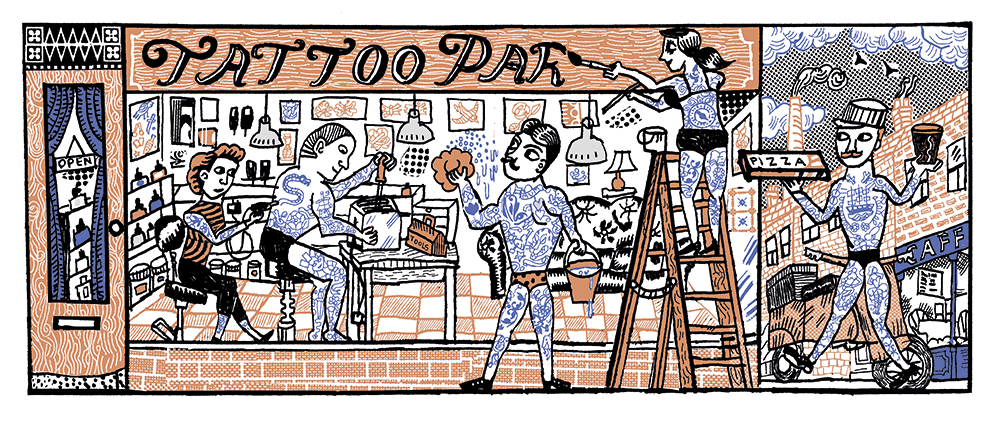


Holly, a 25-year-old sign writer and muralist, recently spent a couple of days staying in a shepherd’s hut an hour from her home. She didn’t pay for it – well, not in the way you or I would. The owner had a gypsy caravan with doors that needed painting. Holly could do the job. An agreement was struck, no money changed hands, and both sides walked away feeling they’d got a fair deal.
Holly is one of a growing number of small tradesmen who have quietly decided to opt out of the traditional cash economy – or at least keep one foot outside it. She has been ‘paid’ in chiropractor sessions, pizza and someone cutting her grass. When she painted the Christmas windows of her local café, the owner told her to pop in for a free lunch ‘for the next ten goes’.
The bartering world seems, for some reason, to be dominated by tattooists, happy to exchange their work for an interesting collection of goods. Amira, 22, is trading a tattoo of a budgie skeleton for a set of bird skulls. Lucy, 28, has exchanged tattoos for car repairs – ‘I hate spending my money in a garage’ – and for stays in Airbnbs. And when Gemma (who goes by Gee Whizz), 45, was refitting her studio last autumn on a tight budget, she put out a call on social media: ‘Chances are there’s going to be people who’ve been wanting some tattoo work who can’t afford it, but they have these skills to help.’ An electrician materialised. So did, more recently, a woman with a printing business, who is getting a cover-up tattoo in exchange for branded mugs and stickers – merchandise Gemma takes to conventions that she ‘would usually have to fork out for’.
The artists’ barter movement has become somewhat viral on social media, thanks to the story of a Hertfordshire screen printer who swapped a £2,000 original for 30 handmade oak frames and credits the trade with saving his career. Perhaps the barterers are on to something. Artistic work is, as Lucy admits, ‘a luxury’ and often the first to go when people are feeling the pinch. Bartering could be a way for luxury trades to survive a cost-of-living crisis: the customer keeps her tattoo, the artist keeps her customer, and the one loser is the intermediary taxman who would otherwise have taken a slice.
Running a small business in Britain has become a death by a thousand cuts. Card processors take their percentage; the bank charges you to deposit what’s left. ‘It’s just all these little, tiny ways to chip at what people are managing to earn,’ says Holly. ‘You can see why so many small businesses just give up.’ Many have: the Centre for Retail Research estimated that there were 17,350 shop closures last year. Against that backdrop, bartering looks less hippy-dippy and more like a rational economic choice.
It is part protest too, though. ‘Tax is a big part of it,’ says Holly. ‘You see these massive corporations who don’t even pay tax here reaping the benefits of so many things that the country has to offer and giving nothing back. It feels like a bit of a kick in the teeth.’ Lucy is blunter: ‘I don’t want to pay excess fees to the big man. I’d rather just trade something with people on my level, in the working class, and not have to give our money to people who don’t need it.’ She has views on VAT, too – ‘You pay VAT on everything you ever pay for. What’s the point of paying that when we can trade with people?’ Gemma sees it more politically. She says that we live in a ‘neoliberal, capitalist consumer society’, but that ‘we don’t have to buy into it fully’. A lot of societies, she says, were built on reciprocity and we can embrace that again.
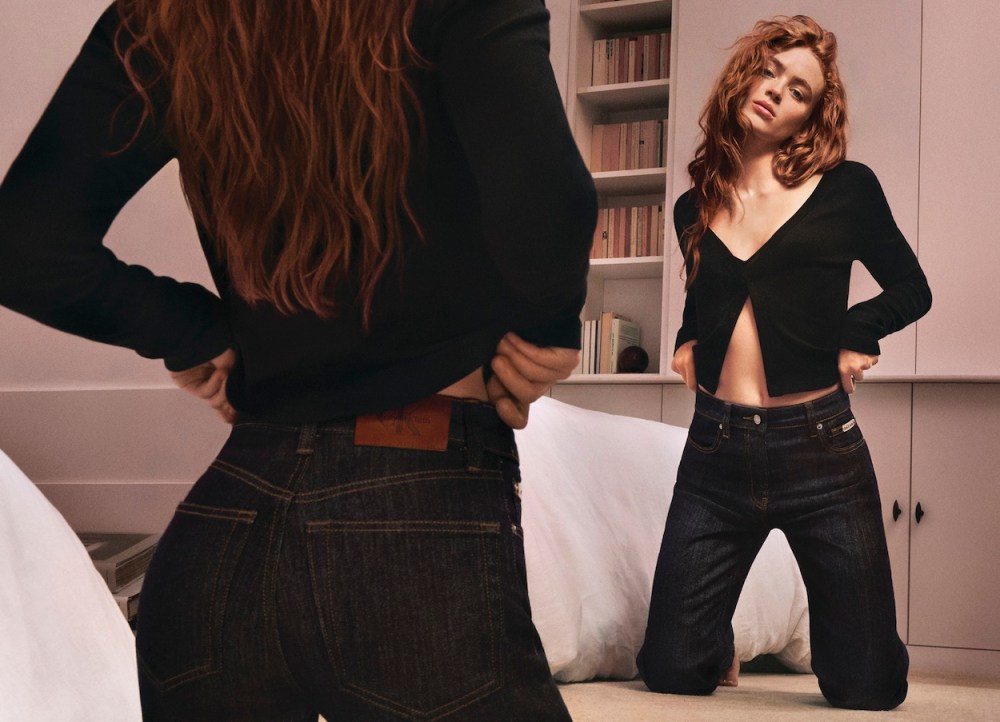
Holly has been ‘paid’ in chiropractor sessions, pizza and someone cutting her grass
There is, however, a snag, and Gemma has half-glimpsed it. If a skills exchange turned out to be taxable, she muses, that ‘could obviously be very problematic’. What if someone painted her wall in exchange for a free tattoo ‘but because I’ve done it on my business premises, it’s like a business transaction’? She finds the idea ‘absolutely mad’.
Sorry to break it to the barterers, but in fact the taxman does not care if you are paid in pounds, pizza or Airbnbs. A barter is valued at what the recipient would have paid in cash, and taxed accordingly. HMRC’s VAT guidance offers the example of a garage proprietor who might agree to repair a newsagent’s van in return for cancelling last month’s newspaper bill. Payment in kind is still payment. According to the HMRC rules: ‘You must both account for VAT on each separate supply you make to each other.’
And so the informal economy begins to falter. These small business owners, in a punishing tax system, assumed that a swap between neighbours was nobody’s business but their own. The doors of that gypsy caravan may look lovely, but somewhere in Whitehall an official could be trying to assess the market value of a night in a shepherd’s hut.





Comments